Ever wondered how workers can dig deep beside a building without the soil shifting or the structure becoming unstable? That is where shoring comes in.
If you are asking what is shoring in construction, this guide gives you a clear answer in simple terms.
You’ll learn what shoring supports, why it is used, where it is needed, and the main types contractors use.
I’ll also explain how shoring works, what factors help determine the right system, and the safety checks that should not be missed.
My goal is to help you understand shoring before you make a construction decision. You’ll also see how shoring differs from scaffolding, shielding, and sloping, so the differences are easy to understand.
What Is Shoring in Construction?
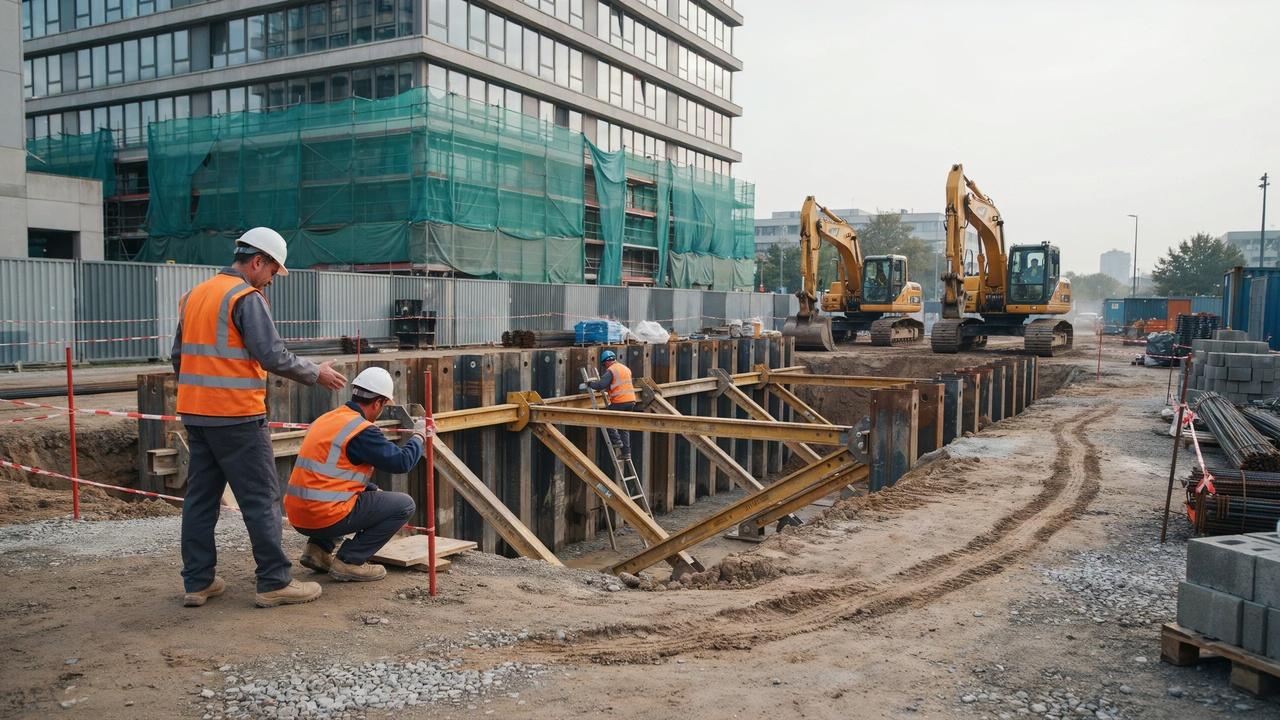
Shoring in construction is a temporary or permanent support system used to stabilize soil, excavations, walls, or structural elements and reduce the risk of collapse or unwanted movement.
In excavation work, shoring supports the sides of a trench or excavation. In structural work, it can temporarily carry loads while a wall, beam, foundation, or other component is repaired, modified, or replaced.
Shoring can be temporary or permanent. Temporary shoring remains in place only until the permanent structure or another approved support system can safely carry the required loads. Permanent shoring may become part of the completed structural system.
Common shoring materials include steel, timber, concrete, and engineered hydraulic equipment. The appropriate system depends on soil conditions, excavation depth, groundwater, structural loads, nearby structures, available space, and the project's construction sequence.
Because shoring supports potentially unstable soil or structural loads, its design, installation, inspection, and removal should follow the applicable engineering requirements and safety rules for the project.
Where Is Shoring Used?
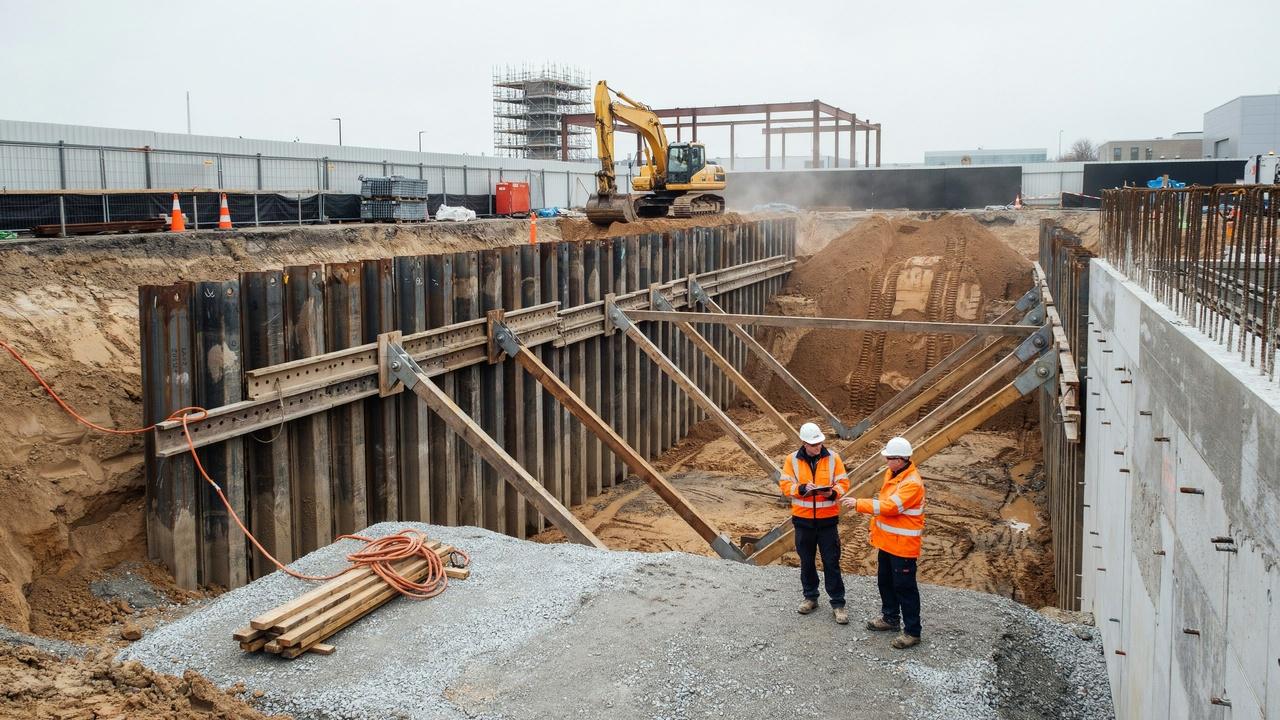
Shoring is used when excavation or structural work could cause soil movement, collapse, or loss of structural support. The system selected depends on the site's conditions, the work being performed, and the loads that need to be supported.
Common applications include:
- Excavation and trenching: Supports excavation sides and helps reduce the risk of cave-ins.
- Foundation work: Helps stabilize soil or nearby structures during foundation construction.
- Structural repairs: Supports part of a building while damaged structural components are repaired.
- Load-bearing wall modifications: Temporarily carries loads while a wall is altered or removed.
- Building renovations: Provides support during major structural changes that could affect existing loads.
- Deep excavation: Helps retain soil when excavation depth or surrounding conditions increase the risk of movement.
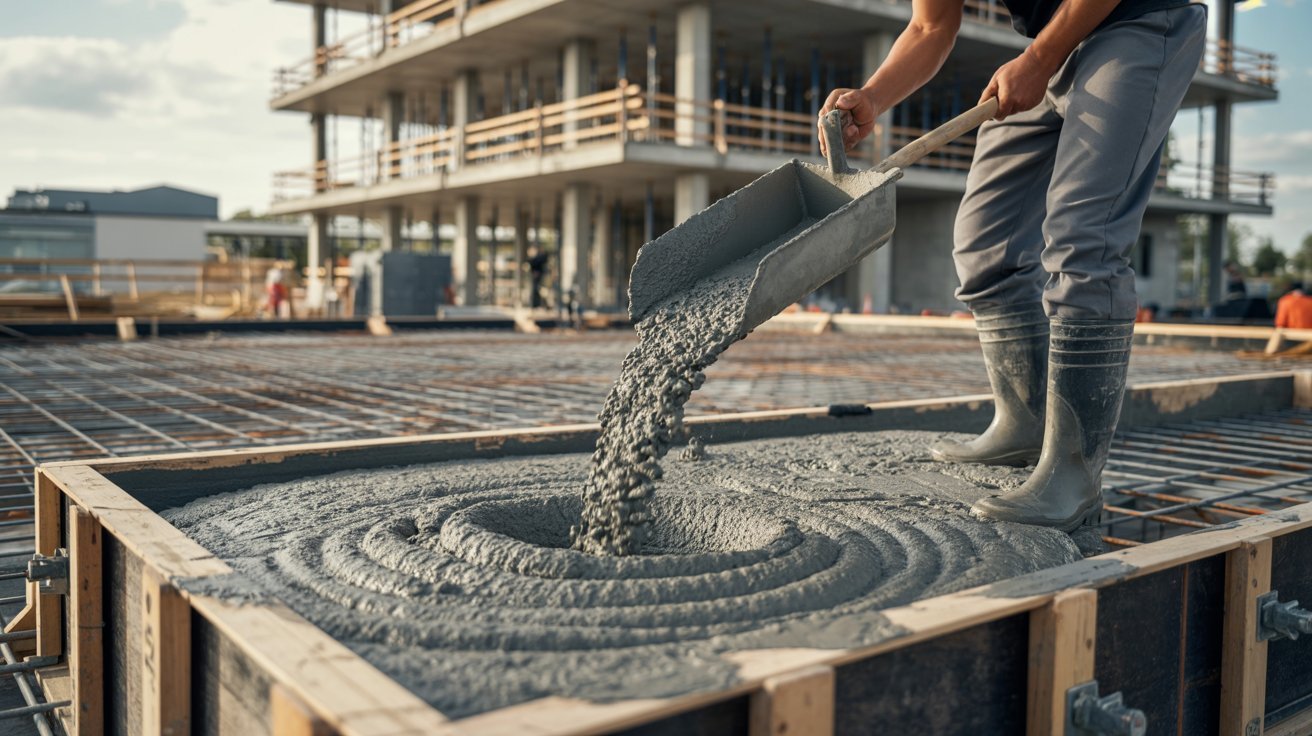
- Concrete construction: Supports formwork and freshly placed concrete until the required strength is reached.
The need for shoring depends on the excavation method, soil conditions, structural loads, surrounding property, and applicable safety requirements.
Types of Shoring in Construction
Shoring systems vary based on soil conditions, excavation depth, groundwater, structural loads, and site constraints, with each type designed for specific support needs.
Common types include hydraulic shoring, sheet piles, soldier piles, soil nails, secant piles, structural shoring, and formwork shoring, each selected according to project requirements.
1. Hydraulic Shoring

Hydraulic shoring uses hydraulic cylinders with rails or other support members to brace excavation sides.
The hydraulic components push against the excavation walls and provide support as work continues. This system is commonly used in trenches because it can be installed and adjusted as excavation progresses.
OSHA specifically recognizes aluminum hydraulic shoring as a pre-engineered system for supporting excavation sidewalls. The system must still match the site conditions and applicable design requirements.
2. Soldier Pile and Lagging Shoring
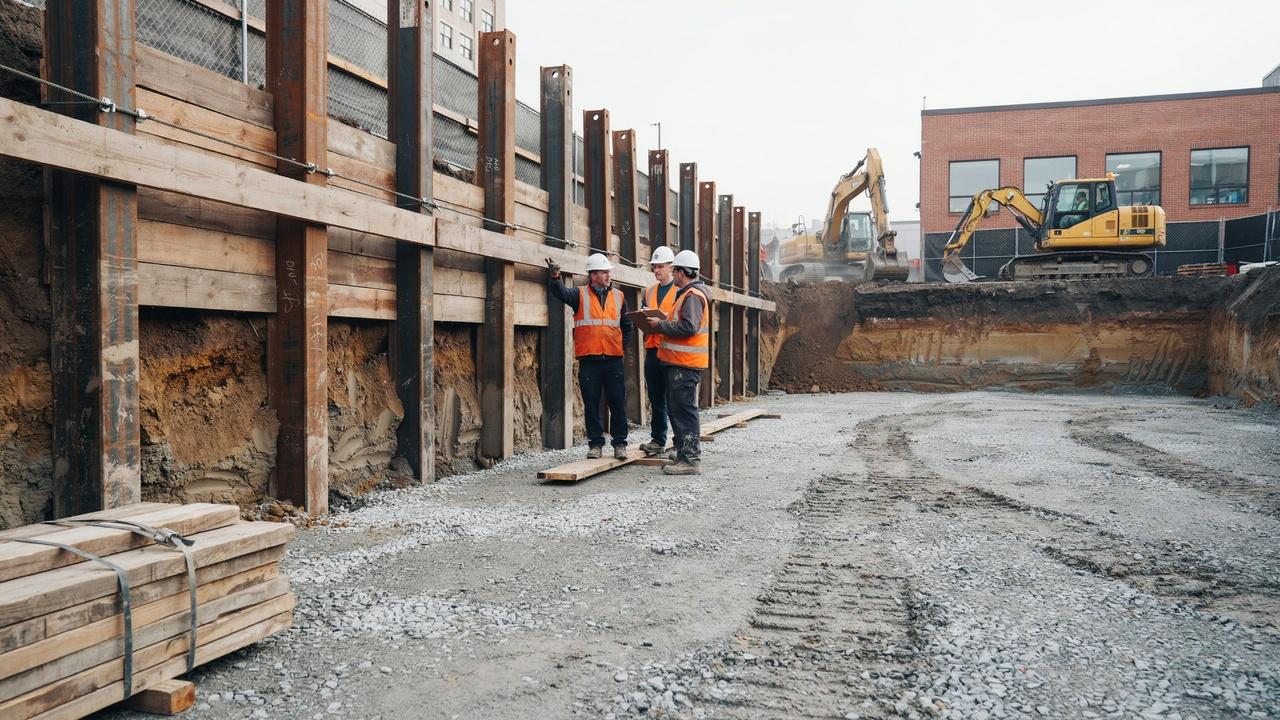
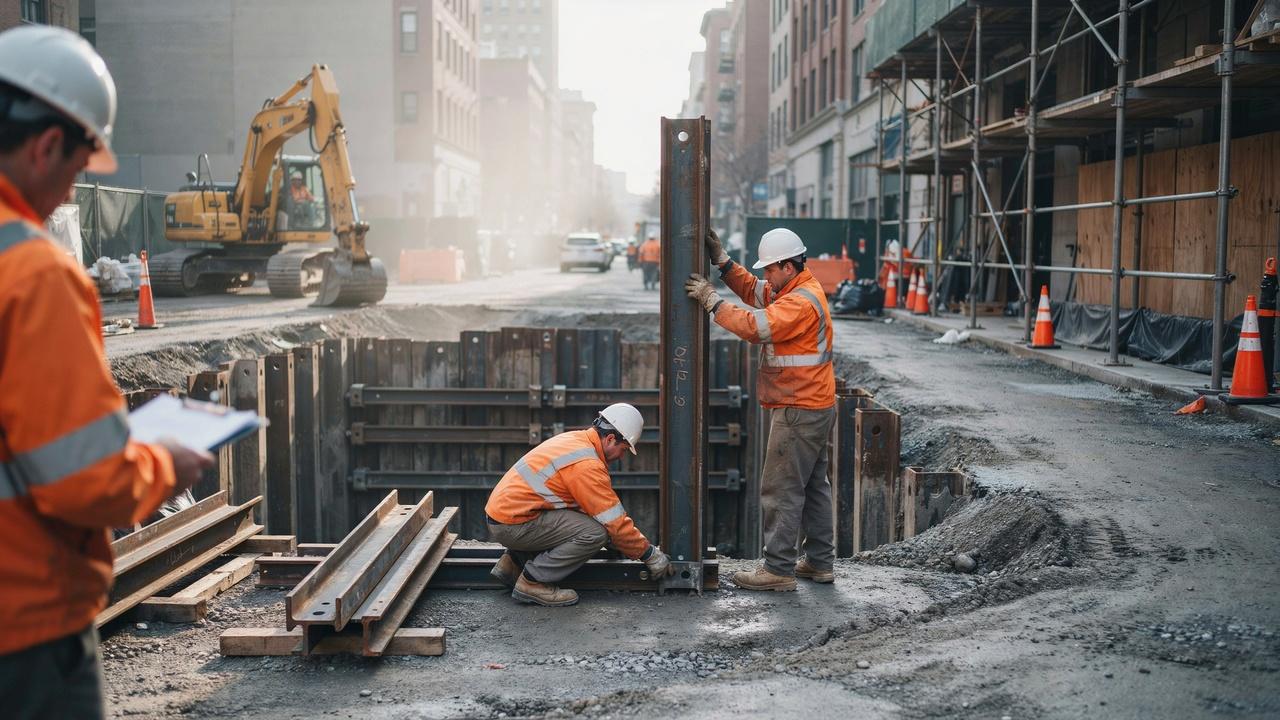
Soldier pile and lagging systems use vertical steel piles installed at spaced intervals, with lagging placed between them as excavation proceeds.
The piles carry the main loads, while the lagging holds soil between the piles. This method is commonly used for excavations where contractors need a retained soil wall and have enough space for installation.
The design must account for soil pressure, excavation depth, nearby loads, groundwater, and movement limits.
3. Sheet Pile Shoring
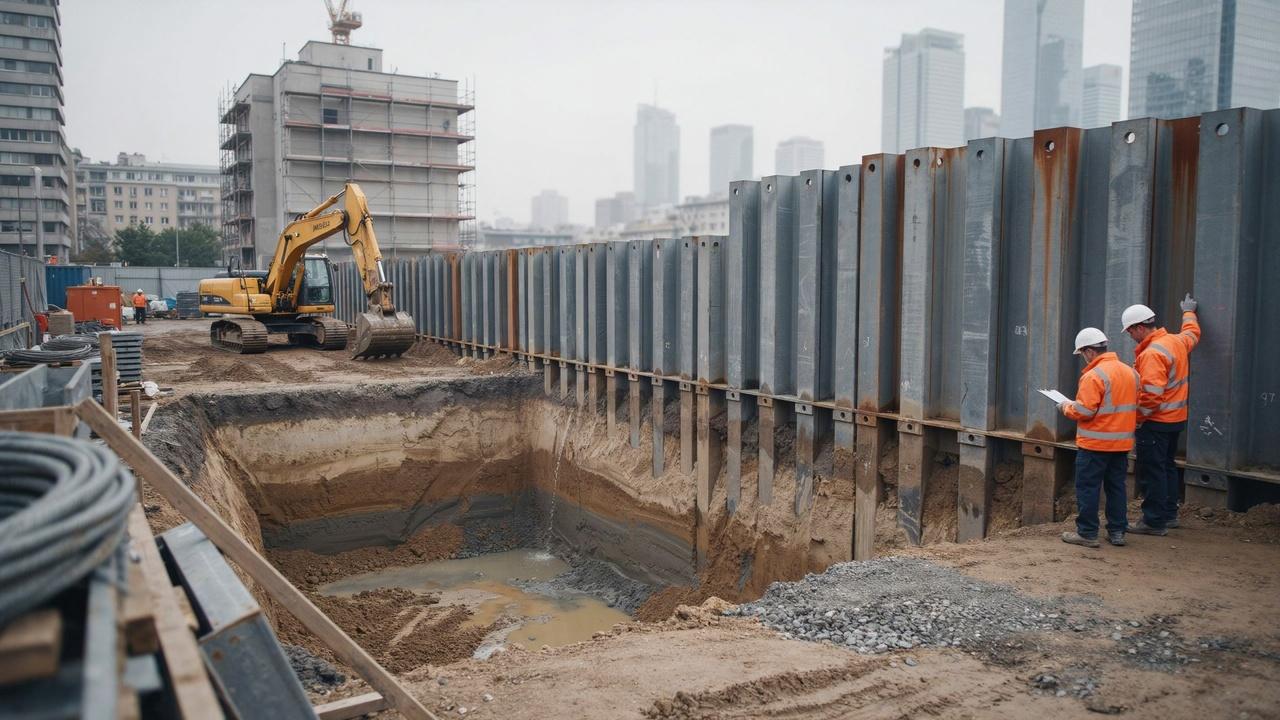
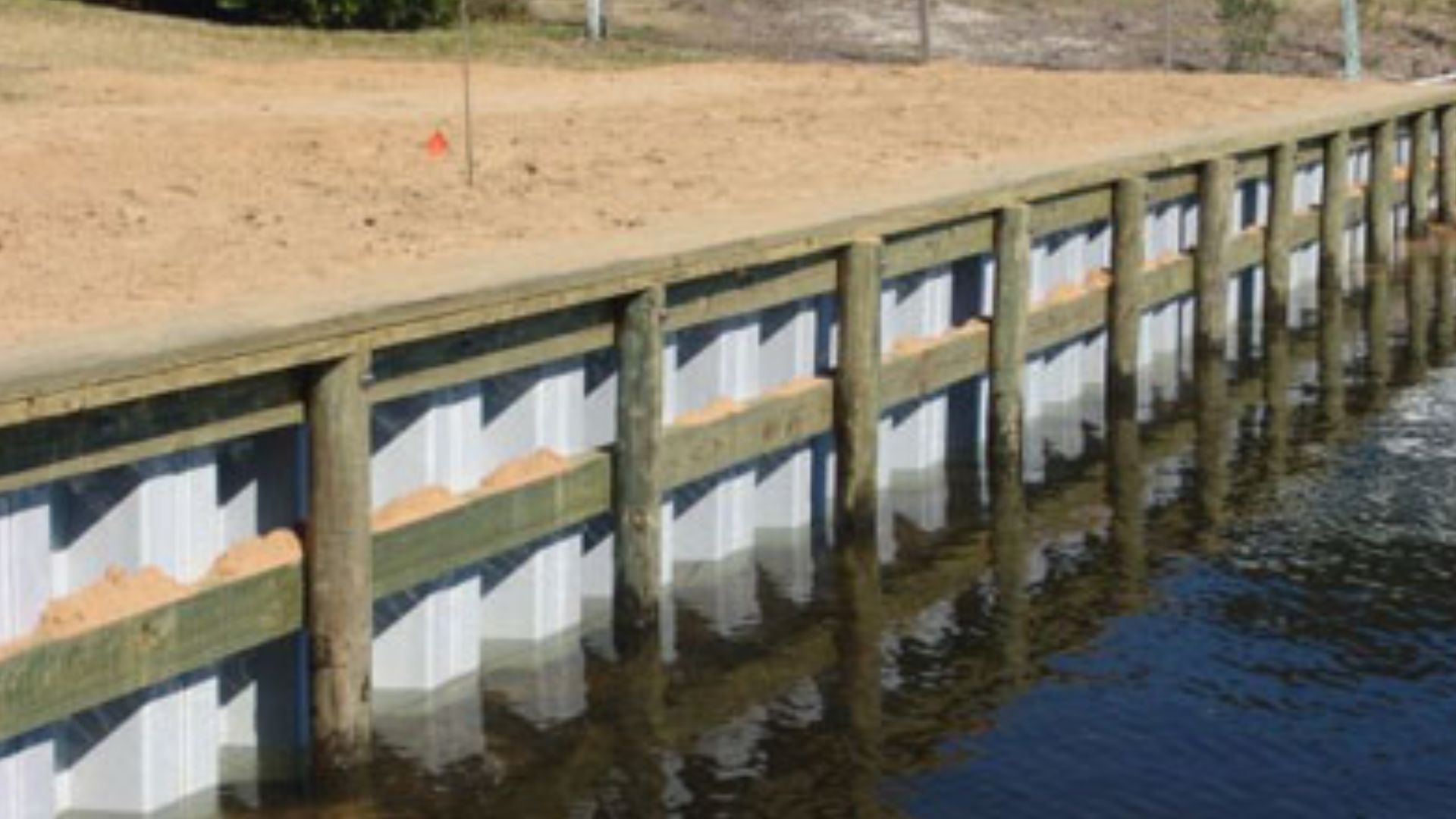
Sheet pile shoring uses interlocking steel sheets driven into the ground to form a continuous retaining wall.
The sheets hold back soil and can also limit water movement into an excavation when properly designed and installed. This makes sheet piles useful for some projects near groundwater or water-sensitive areas.
The system can also be installed where a continuous wall is needed along a narrow excavation. Design conditions, installation method, soil type, and nearby structures affect its use.
4. Secant and Contiguous Pile Shoring
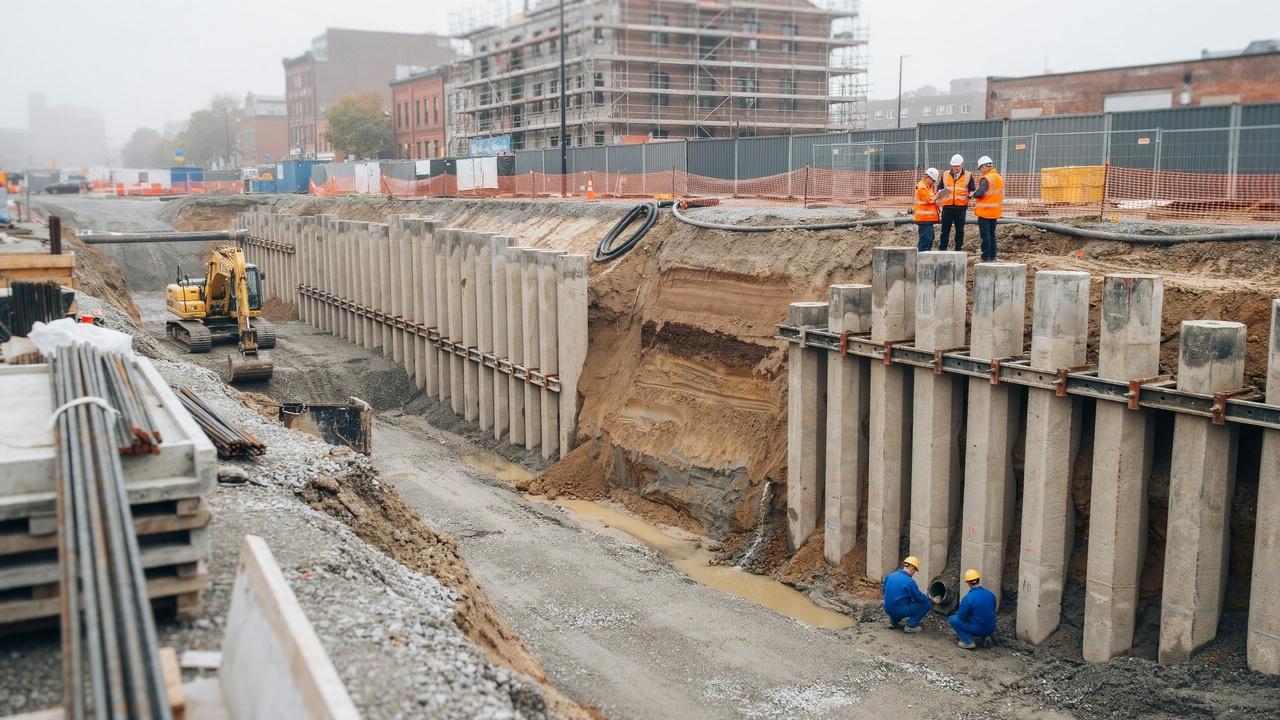
Secant and contiguous pile systems both use closely spaced piles to retain soil. Secant piles overlap to form an interlocking wall, while contiguous piles are installed close together with small gaps between them.
Secant walls generally provide better control of soil and groundwater movement because the piles overlap.
Contiguous piles can suit sites where groundwater control is less demanding. Both systems can be used for deeper excavations, but the choice depends on soil, water, loads, space, and required wall performance.
5. Soil Nail Shoring
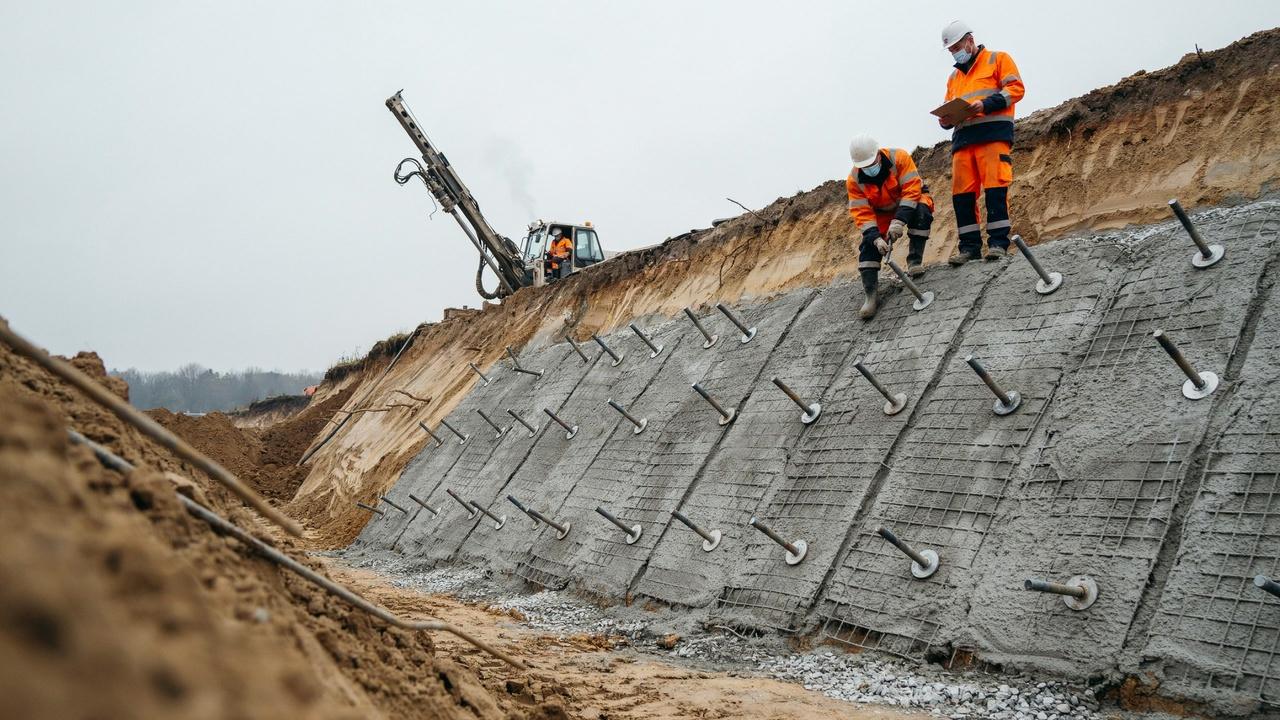
Soil nail shoring reinforces existing soil by installing steel bars or nails into the ground and connecting them to a facing system.
The nails help hold the soil mass together and reduce movement. This method is often used to stabilize slopes, excavation faces, and retaining areas where cutting the soil farther back is not practical.
The design must consider soil strength, groundwater, nail spacing, excavation stages, and the loads near the supported area.
6. Raking, Flying, and Dead Shoring
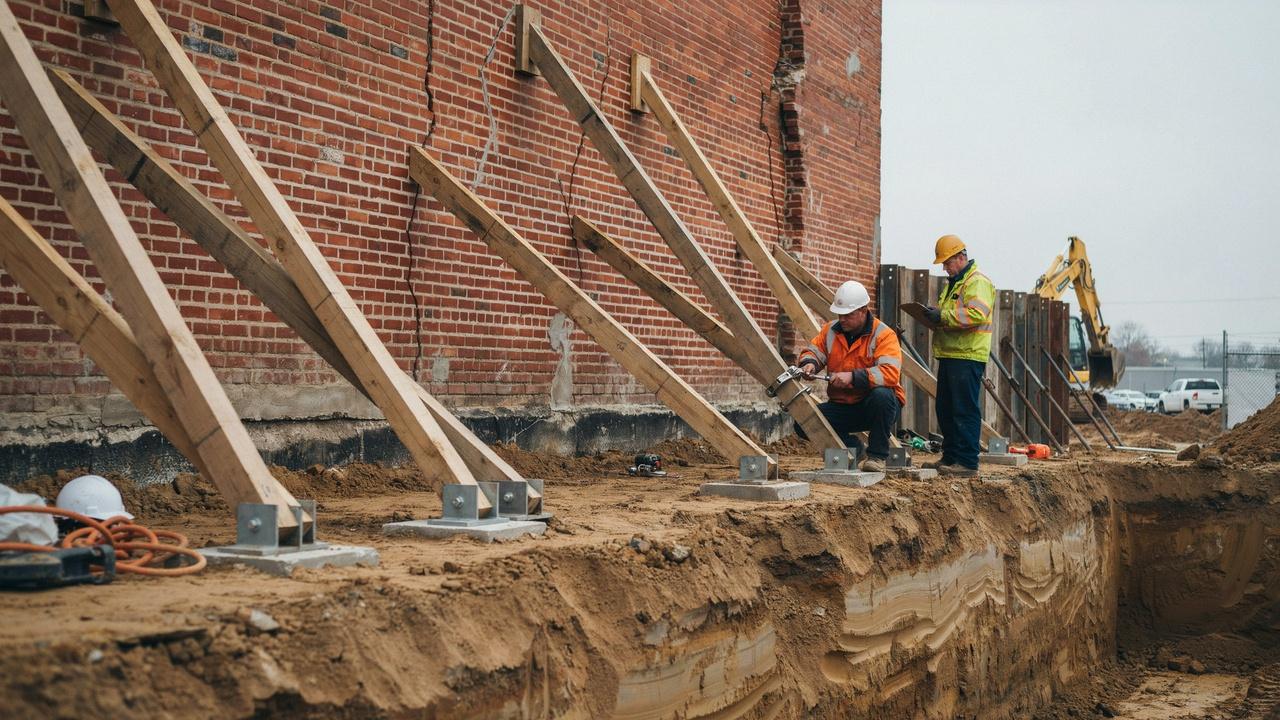
Raking, flying, and dead shoring are structural support methods used in different situations. Raking shoring uses angled members to brace an unstable wall from the ground.
Flying shoring uses horizontal members to brace two parallel walls when the space between them must remain open.
Dead shoring uses vertical supports to carry loads while structural work takes place. The support arrangement must match the loads, wall condition, available space, and planned construction sequence.
7. Concrete Pour Shoring and Reshoring
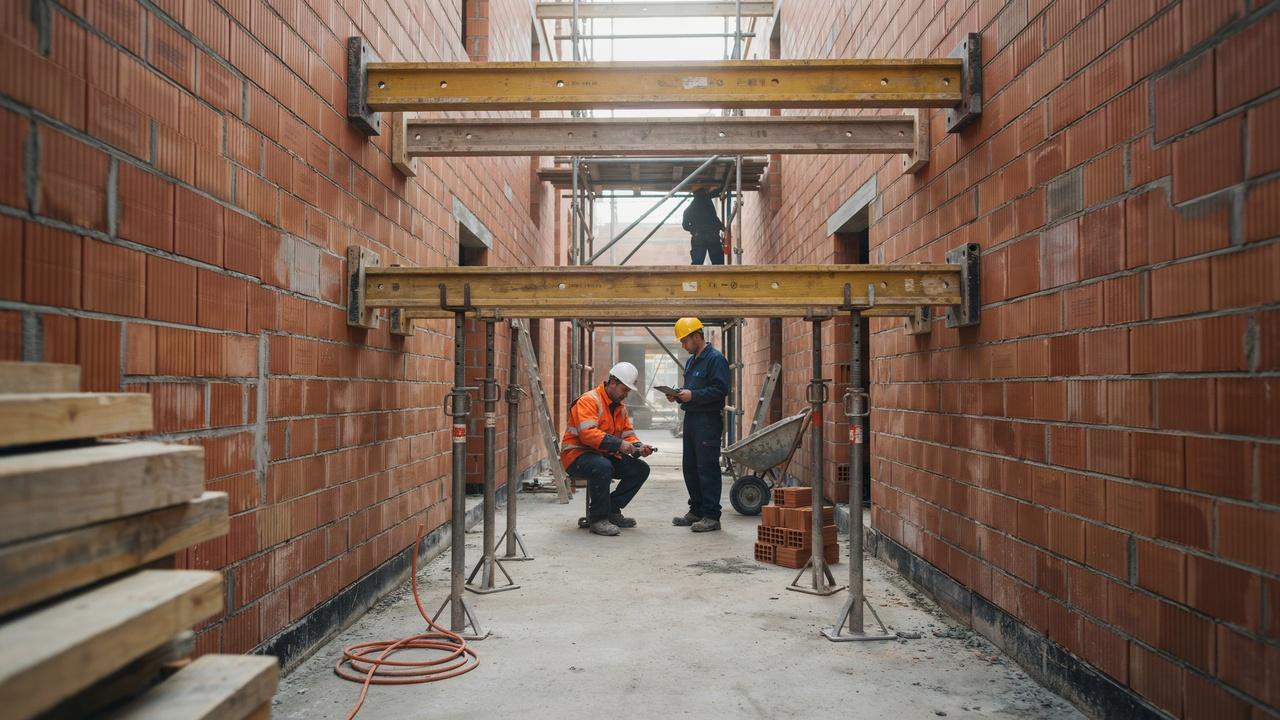
Concrete pour shoring supports formwork while freshly placed concrete is still being supported by the temporary system.
Reshoring adds support as loads are redistributed or as forms and original shores are removed. OSHA requires formwork and shoring to be designed and supported for expected loads, and shoring equipment must be inspected before erection and around concrete placement.
Shores should not be removed until the concrete has enough strength to carry its weight and applicable loads.
How Does Shoring Work?
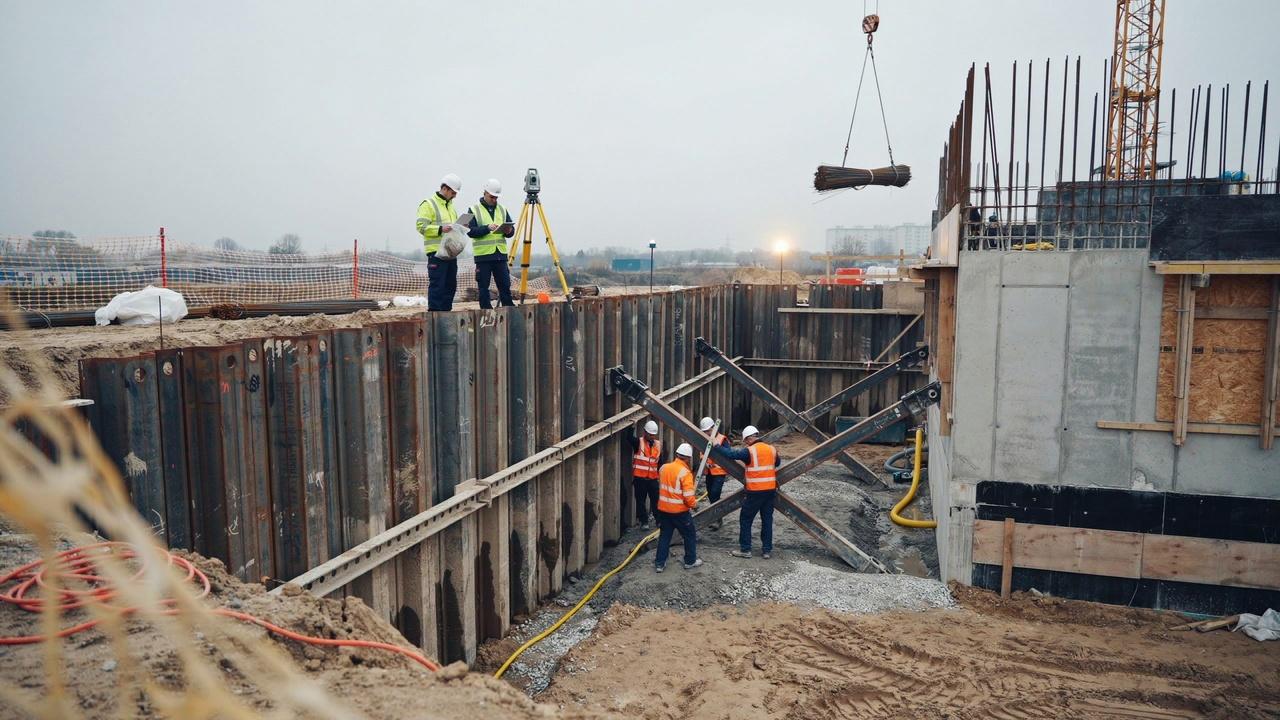
Shoring works by transferring soil or structural loads into an engineered support system so that movement remains within acceptable limits.
The system must be selected, designed, installed, inspected, and monitored according to the conditions of the project.
The basic process is:
- Assess site conditions: Check the excavation, soil, groundwater, existing structures, utilities, nearby loads, and available access.
- Determine soil and structural loads: Assess the forces that the shoring system may need to resist.
- Select the appropriate system: Choose a method based on soil, excavation depth, loads, groundwater, available space, and construction stage.
- Design the support system: Develop the support arrangement for the expected loads and site conditions. Complex or deeper work may require professional engineering.
- Install the shoring: Install the system according to the approved design and required sequence.
- Inspect and monitor the system: Check for damage, movement, settlement, groundwater, or other changes that could affect stability.
- Remove or modify the shoring when appropriate: Do this only when the permanent structure or another approved support system can safely carry the required loads.
How Is the Right Shoring Method Selected?
The right shoring method is selected by matching the support system to the soil, depth, loads, groundwater, nearby structures, available space, and construction stage. There is no single shoring method that works for every site.
Key factors include.
- Soil type and stability: Soil strength affects how the excavation behaves.
- Excavation depth: Deeper excavations can require more complex support.
- Groundwater: Water can affect soil strength and excavation stability.
- Structural loads: Buildings, equipment, stored materials, and traffic can add pressure.
- Nearby buildings and utilities: Existing assets may limit excavation methods and allowable movement.
- Available working space: Tight sites may require systems that fit within limited areas.
- Construction stage: The support needed can change as excavation or structural work progresses.
- Site access: Equipment and installation methods must fit the site.
- Applicable safety requirements: OSHA and local requirements may affect the protective system and its design.
Shoring vs. Scaffolding, Shielding, and Sloping
These systems may appear together on a construction site, but they serve different purposes.
| System | Main Purpose |
| Shoring | Supports soil or structural elements |
| Scaffolding | Provides worker access and work platforms |
| Shielding | Protects workers inside an excavation |
| Sloping | Reduces excavation collapse risk by cutting soil back |
Shoring actively supports excavation sides or structural elements. Shielding, such as a trench shield, protects workers by creating a protected space inside an excavation. Sloping changes the excavation shape to reduce cave-in risk, while scaffolding provides a working platform rather than structural support for excavation walls. OSHA treats support systems, sloping, benching, and shield systems as different forms of excavation protection.
Shoring Safety Requirements
Safe shoring depends on proper design, installation, inspection, and monitoring. Workers should never assume that a support system is safe simply because it is already in place.
- Follow the engineered design: Do not change, remove, or add support members without proper approval.
- Inspect shoring before use and after site changes: Look for damage, movement, settlement, water, or other warning signs.
- Provide safe access and egress: Workers need a safe way to enter and leave the work area.
- Monitor soil and structural movement: Changes in cracks, settlement, wall movement, or soil conditions can signal a problem.
- Consider groundwater, weather, and nearby loads: These conditions can change the forces acting on the support system.
- Keep workers and equipment safely positioned: Avoid placing loads where they can increase pressure on the excavation or support system.
- Follow applicable OSHA and local requirements: OSHA requires protective systems for covered excavations and sets requirements for support systems and related excavation hazards.
Conclusion
Shoring is a support system used to stabilize soil, excavations, walls, and structural elements during construction, repair, or renovation work.
What is shoring in construction? It involves selecting a suitable system based on soil conditions, excavation depth, groundwater, structural loads, nearby structures, and available space.
Proper design, installation, inspection, and monitoring help maintain stability throughout the project.
If you are planning excavation or structural work, consult a qualified professional to determine the right shoring system for your site.
Frequently Asked Questions
What is the difference between shoring and underpinning?
Shoring temporarily supports soil or structural elements, while underpinning strengthens or extends an existing building foundation.
How deep can an excavation be without shoring?
The required protection depends on soil type, excavation depth, site conditions, and applicable safety rules; there is no single safe depth for every site.
Can shoring prevent groundwater from entering an excavation?
Some systems, such as sheet piles and secant pile walls, can limit groundwater movement, but additional water-control measures may still be needed.
Who designs a shoring system?
A qualified engineer or competent professional designs or selects the system based on soil conditions, loads, excavation depth, nearby structures, and project requirements.