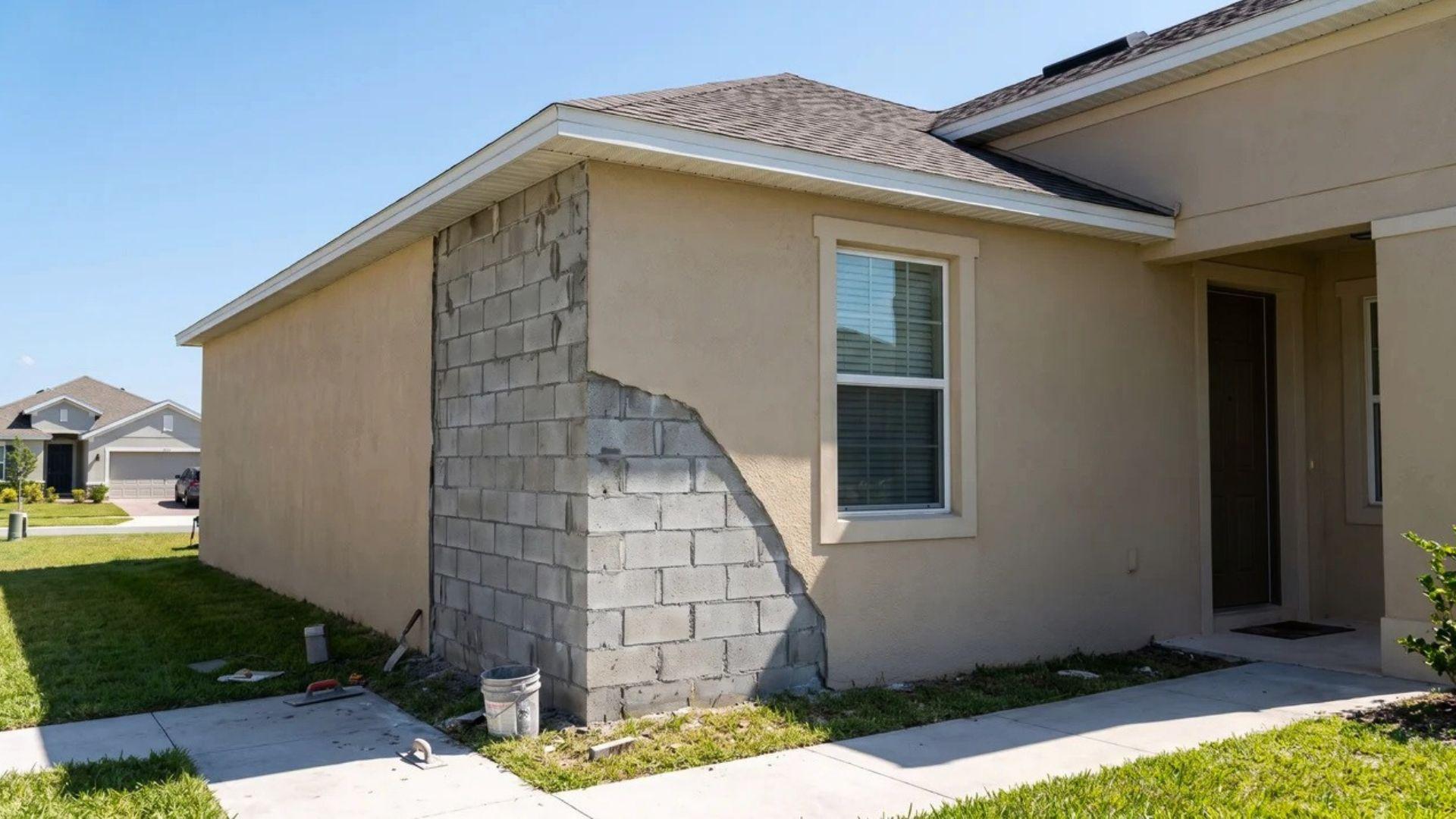

The force of application is what makes shotcrete different from conventional concrete, not the mix, not the ingredients, but how the material lands.
Folks asking what is shotcrete assume it is simply a faster way to pour. It is not. Shotcrete compacts on impact, which means the spray itself does the work that formwork and vibration rods do in traditional construction.
Understanding how it works, where it fits, and where it does not will save you from picking the wrong method on a project that demands the right one.
What Is Shotcrete?
Shotcrete is concrete or mortar conveyed through a hose and projected at high velocity onto a surface using compressed air.
The word gets used two ways. As a material, it refers to the concrete or mortar mix. As a process, it refers to the method of spraying that mix onto a surface. Both meanings are in active use, and the context usually makes clear which one applies.
What the word always points to, in either case, is the application method. That is what defines shotcrete as a category.
The mix itself is not unusual. What is unusual is that no formwork is needed to hold it in place. No vibration rod consolidates it after placement. The force of the material hitting the surface at speed does both jobs at once.
That is the mechanism that separates shotcrete from every other method of placing concrete.
How the Two Shotcrete Methods Work
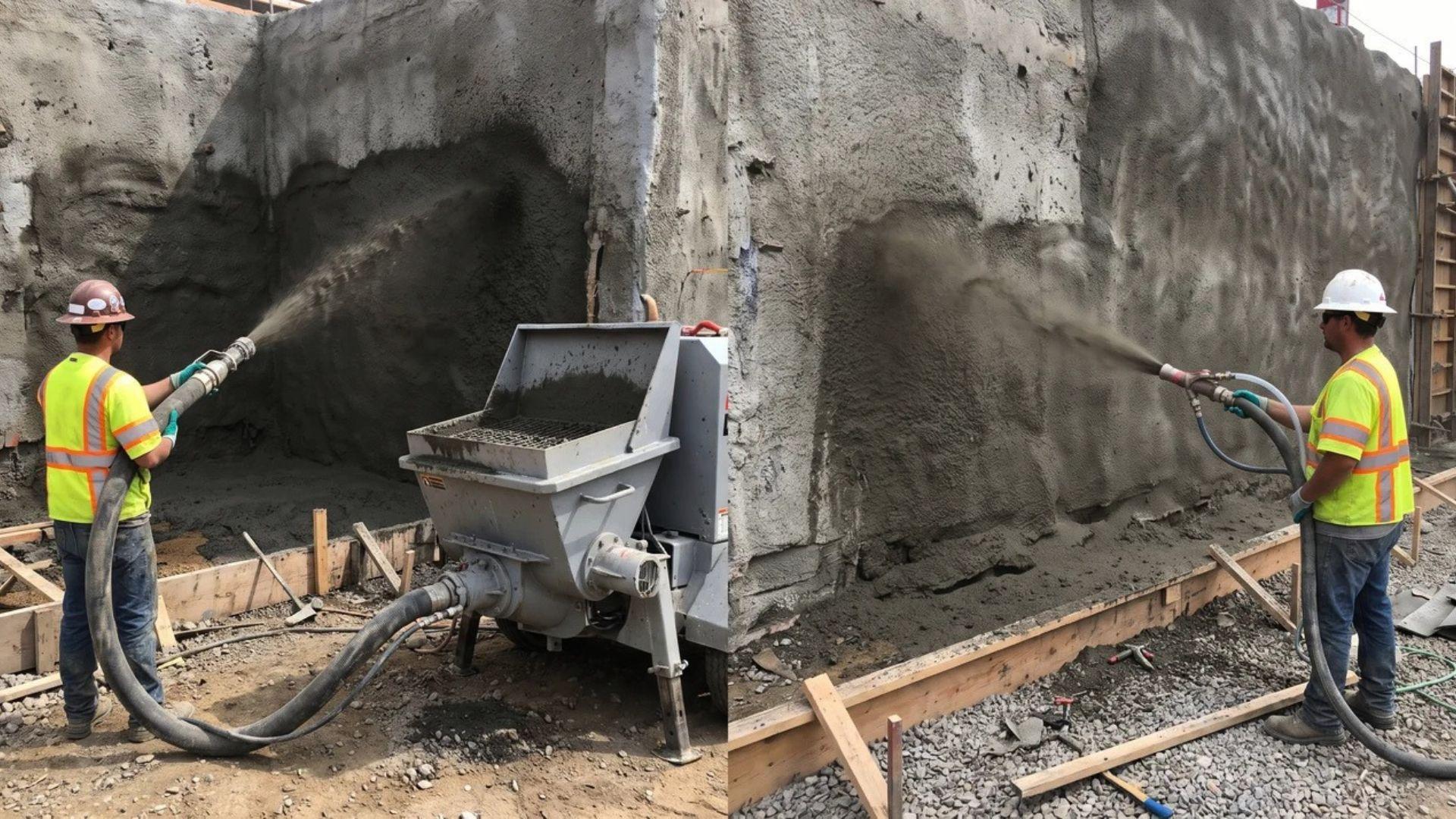
Shotcrete comes in two forms, wet-mix and dry-mix, and the difference between them comes down to one thing:where water enters the process.
Wet-Mix Shotcrete
In wet-mix shotcrete, water is combined with the cement and aggregates before the mix enters the hose. By the time material leaves the nozzle, it is fully mixed and ready to bond.
Here is what that means in practice:
- Water-to-cement ratio is fixed before application. The batch plant controls the mix. The nozzle operator is not making adjustments on the fly.
- Output is consistent across the pour. What comes through the hose is what hits the wall, every time.
- Rebound is lower than dry-mix. Less material bounces off the surface, which means less waste on site.
- Best suited for high-volume, uniform conditions. Tunnel lining and large infrastructure projects are where wet-mix is most commonly used.
When consistency and output volume matter most, wet-mix is the stronger choice.
Dry-Mix Shotcrete (Gunite)
In dry-mix shotcrete, cement and aggregates travel through the hose dry. Water is added at the nozzle by the operator, just before the material hits the surface.
Here is what that means in practice:
- The operator controls the water ratio in real time. On irregular or unpredictable surfaces, that flexibility allows adjustments as conditions change.
- Skill dependency is high. If the water ratio varies across a single application, compressive strength varies with it.
- Variable strength is a real risk, not a theoretical one. Two sections of the same pour can end up with different strength profiles when the operator is undertrained or working under pressure.
- Rebound is higher than wet-mix. Experienced operators minimize this. Inexperienced ones produce significantly more waste.
Dry-mix gives you flexibility. It also gives you more ways for things to go wrong if the operator behind the nozzle is not experienced.
Where Shotcrete Is Used and Why
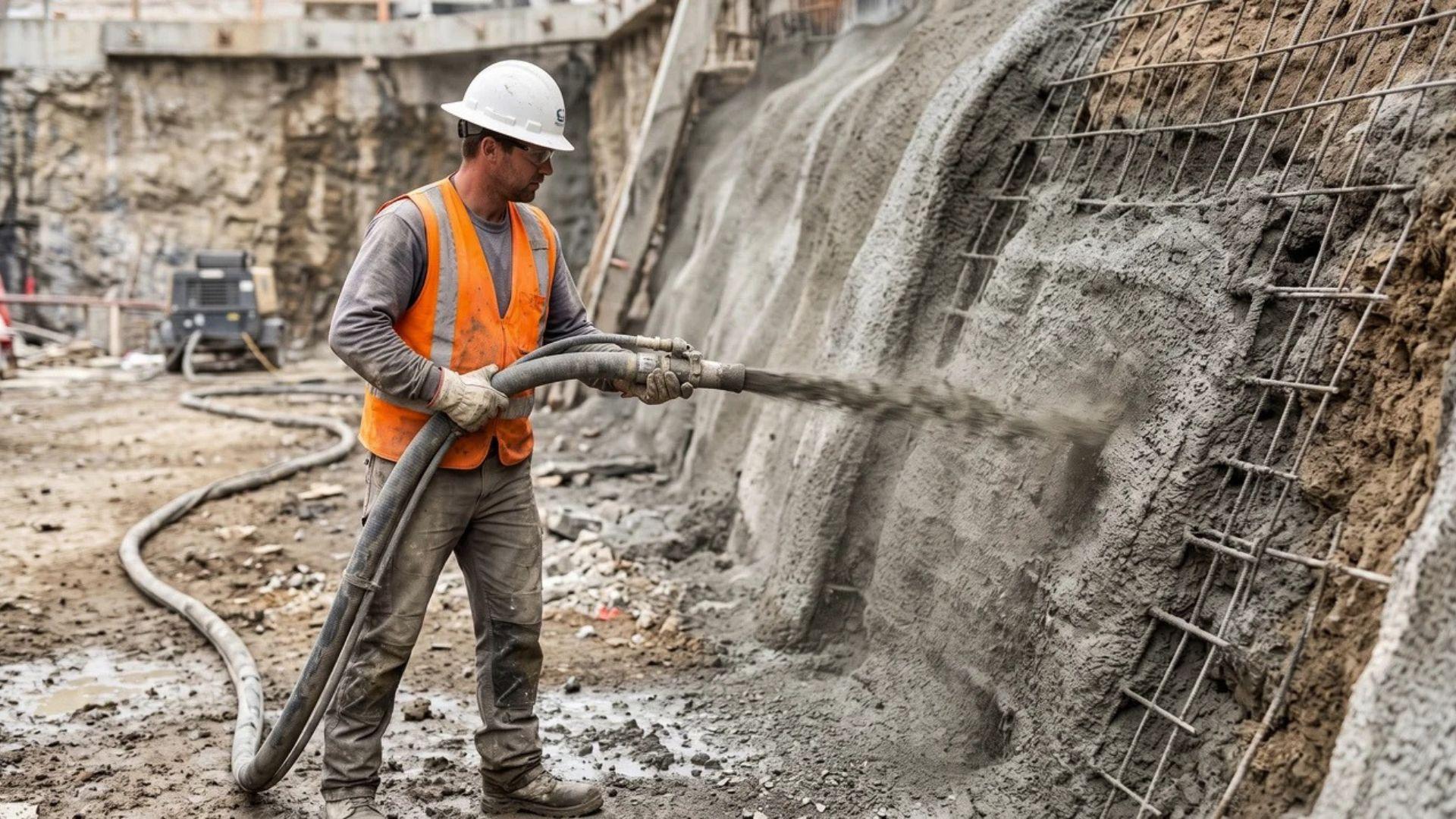
Shotcrete is chosen when conventional formwork is not practical, not possible, or not worth the cost. That one principle connects almost every application you will see it in. The surface is curved, overhead, underground, or already built.
Tunnels and Mining
Shotcrete is sprayed directly onto rock walls and ceilings immediately after excavation. It bonds to the irregular surface without any form in place and provides immediate structural support.
Speed matters here. The sooner the rock face is stabilised, the safer the site.
Swimming Pools
Pool shells are curved and custom by nature shotcrete is a natural fit for inground pool construction because it conforms to the rebar framework regardless of shape and holds its position on curved and vertical surfaces while it cures.
Poured concrete cannot do that without extensive formwork built to match every curve.
Slopes and Retaining Walls
On hillsides and cut faces, shotcrete is applied to stop erosion and prevent movement, it is often used alongside shoring in construction when a slope or excavation face needs both immediate stabilisation and longer-term structural support.
There is no flat surface to pour against.
The ability to coat an uneven slope without erecting formwork first is what makes shotcrete the practical choice here.
Structural Repair
This is where conditions change most. When shotcrete is applied to an existing concrete structure, the bond depends heavily on surface preparation.
The substrate has to be clean, sound, and properly profiled before application. In new construction, you control the substrate from the start.
In repair work, you inherit whatever condition the structure is in. That step cannot be skipped.
How Shotcrete Compares to Poured Concrete
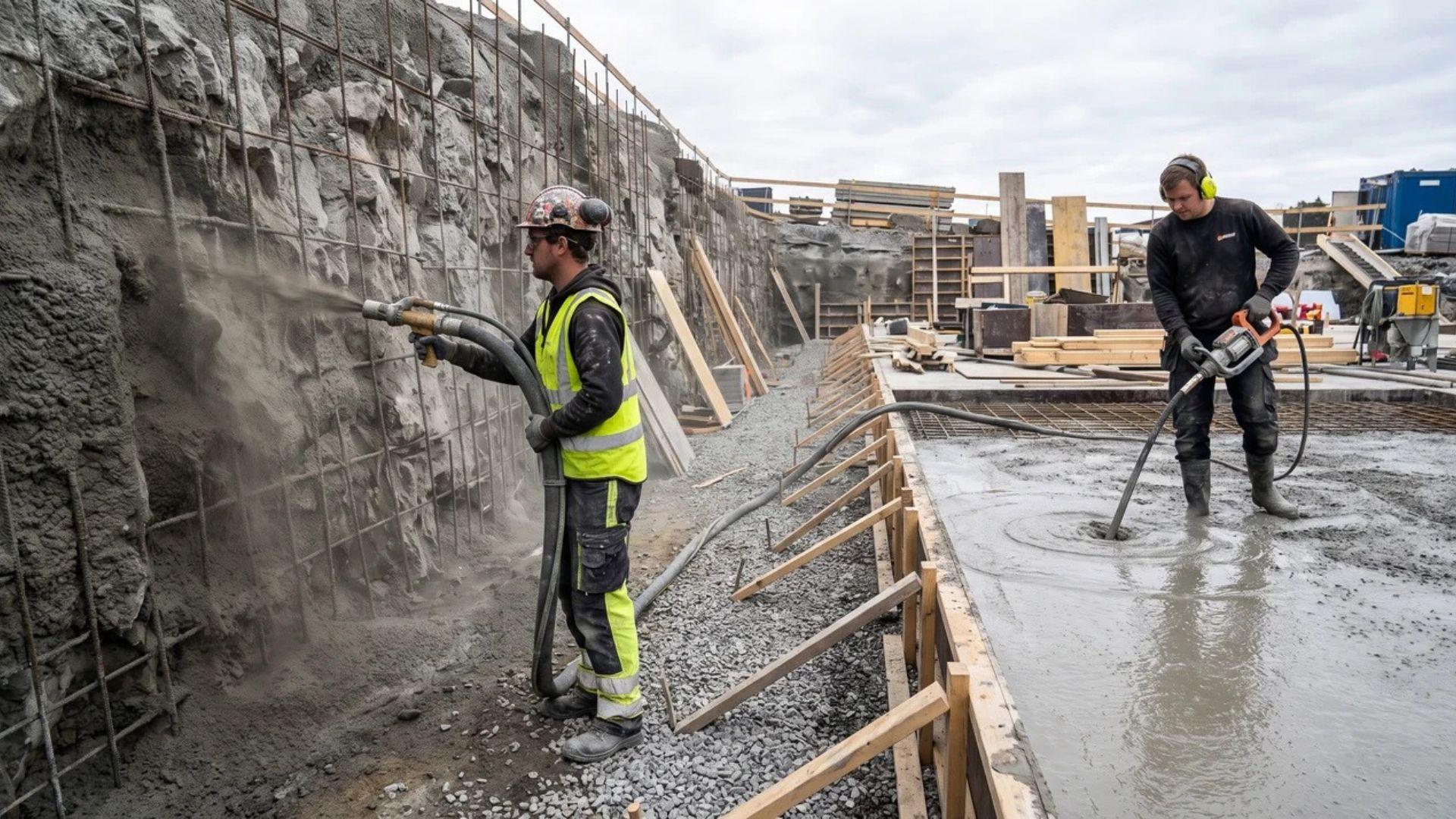
The core difference between shotcrete and poured concrete is placement method, not material composition. The mix is often the same. What changes is how it is placed and how it gets compacted.
Here is how the two methods differ across the factors that matter most on a real project.
| Factor | Shotcrete | Poured Concrete |
| Compaction method | High-velocity impact at point of application | Mechanical vibration after pouring |
| Formwork required | No | Yes, in most applications |
| Best surface orientation | Vertical, overhead, curved, irregular | Horizontal slabs and flat surfaces |
| Compressive strength | Can exceed 4,000 PSI with skilled application | Consistent strength across applications |
| Strength consistency | Depends on operator skill and technique | More predictable across pours |
| Typical applications | Tunnels, pools, slopes, structural repair | Floors, footings, flat structural slabs |
| Material rebound waste | Present, varies by method and operator | None |
The table shows where each method has a genuine edge. Shotcrete handles surfaces where formwork is impractical.
Poured concrete is the more controlled choice when the surface is horizontal and conditions are straightforward.
Neither method is better overall. They solve different problems, and the right choice depends on what the surface demands.
Final Verdict
Shotcrete earns its place not because it is advanced, but because some surfaces simply do not give you another option.
Folks who ask what is shotcrete leave with a definition.
The more useful thing to leave with is a decision framework:when formwork becomes a problem, shotcrete becomes the answer.
If you are planning a project and the surface is curved, overhead, or irregular, start there.
Talk to a contractor who has applied shotcrete in similar conditions and ask the hard questions before the pour begins.
Frequently Asked Questions
What is the difference between shotcrete and gunite?
Gunite is simply the dry-mix form of shotcrete, where water is added at the nozzle rather than before the hose. Shotcrete is the broader term covering both wet and dry processes, though the two words are often used interchangeably on site.
Is shotcrete stronger than regular concrete?
Shotcrete can reach compressive strengths above 4,000 PSI, putting it on par with standard structural concrete. The strength comes from correct application technique, not the material itself.
How long does shotcrete take to cure?
Shotcrete generally reaches the initial set within a few hours and gains most of its strength over 28 days, similar to conventional concrete. Curing conditions like temperature and moisture affect the timeline significantly.
Can shotcrete be used for swimming pools?
Yes, and it is one of the most common methods for pool construction because it conforms to curved shell shapes without formwork. It is sprayed onto a rebar framework and holds its position on vertical and curved surfaces while curing.