You're planning a building project. Everyone talks about foundations. But no one explains what sits beneath them.
That's the footing, and it matters more than most people realize.
In this article, I'll walk you through everything about footing in construction. What it is. Why it's critical. The main types. How deep it should go. And what happens when it's done wrong.
I'll make it simple and clear. No jargon. No fluff. Just honest, useful information you can actually apply.
Whether you're a homeowner, a student, or just someone who wants to understand how buildings stay standing, you're in the right place.
What Is a Footing in Construction?
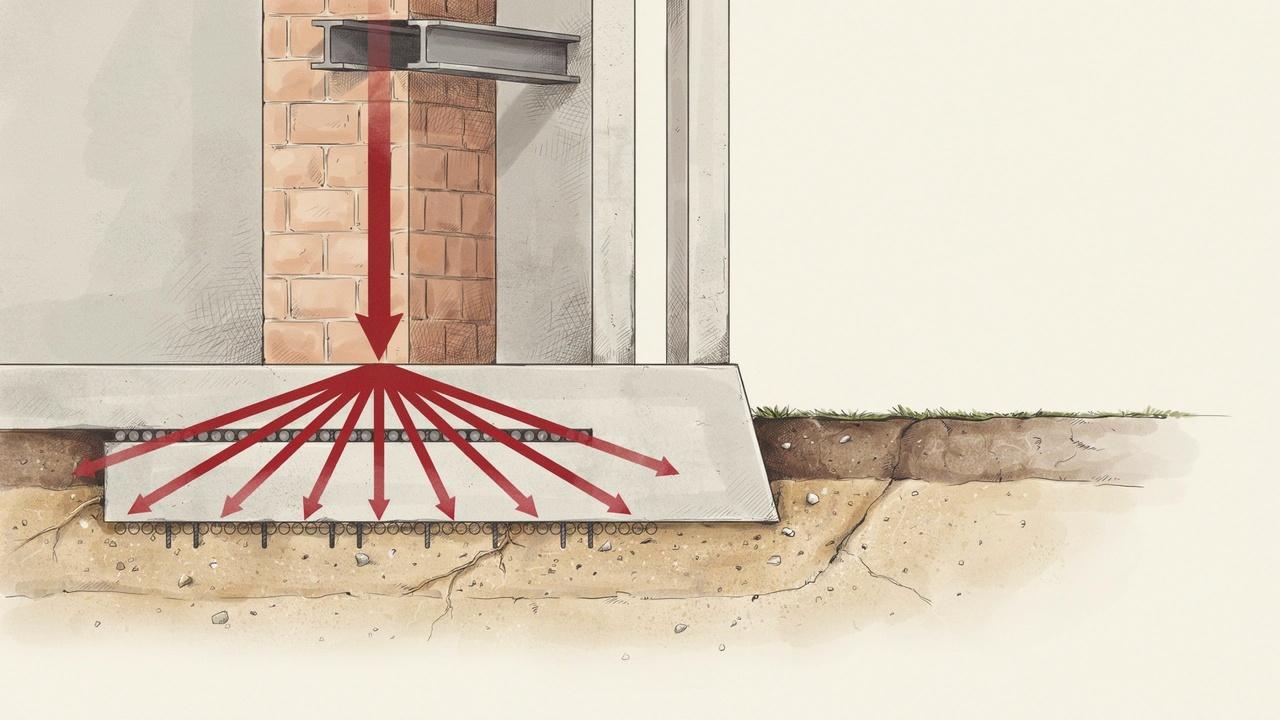
A footing is a structural element placed at the base of a shallow foundation system. It spreads loads from walls or columns over a larger area of supporting soil, helping keep soil pressure within the limits used for the structural design.
Footings are commonly made from reinforced concrete, although the materials and dimensions vary depending on the project, soil conditions, structural loads, and foundation type.
Steel reinforcement bars, or rebar, are embedded in concrete to provide tensile strength and help control cracking under load.
In simple terms, a footing forms the connection between the structure above and the supporting ground below. Its primary purpose is to provide a stable bearing surface and transfer building loads safely into the soil.
Why Are Footings Important in Construction?
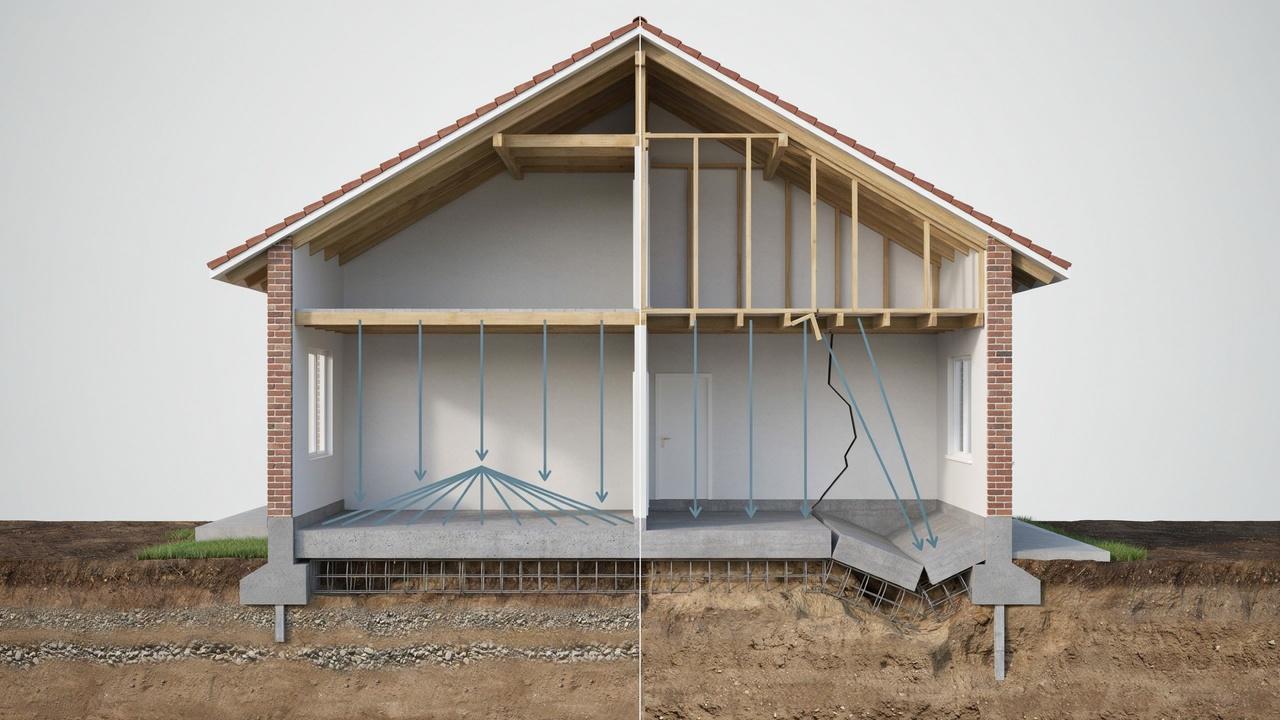
Footings are important because they provide a stable bearing surface for foundation walls and columns and help control settlement.
Proper footing design also reduces the risk of excessive or differential settlement, which can cause cracks, uneven floors, and other structural problems.
The soil beneath a structure has a limited bearing capacity, so footing dimensions must be designed to transfer loads safely into the ground.
A properly designed footing distributes these loads over an appropriate area and helps maintain stability as the building carries its intended loads.
Differential settlement occurs when one part of a structure settles more than another. This movement can cause foundation and wall cracks, sloping floors, and other signs of structural movement.
Proper footing design helps reduce these risks by accounting for soil conditions, structural loads, and site characteristics.
What Are the Main Types of Footings?
There are several types of footings used in construction, and each one is suited to specific conditions, loads, and site requirements.
1. Isolated Footings
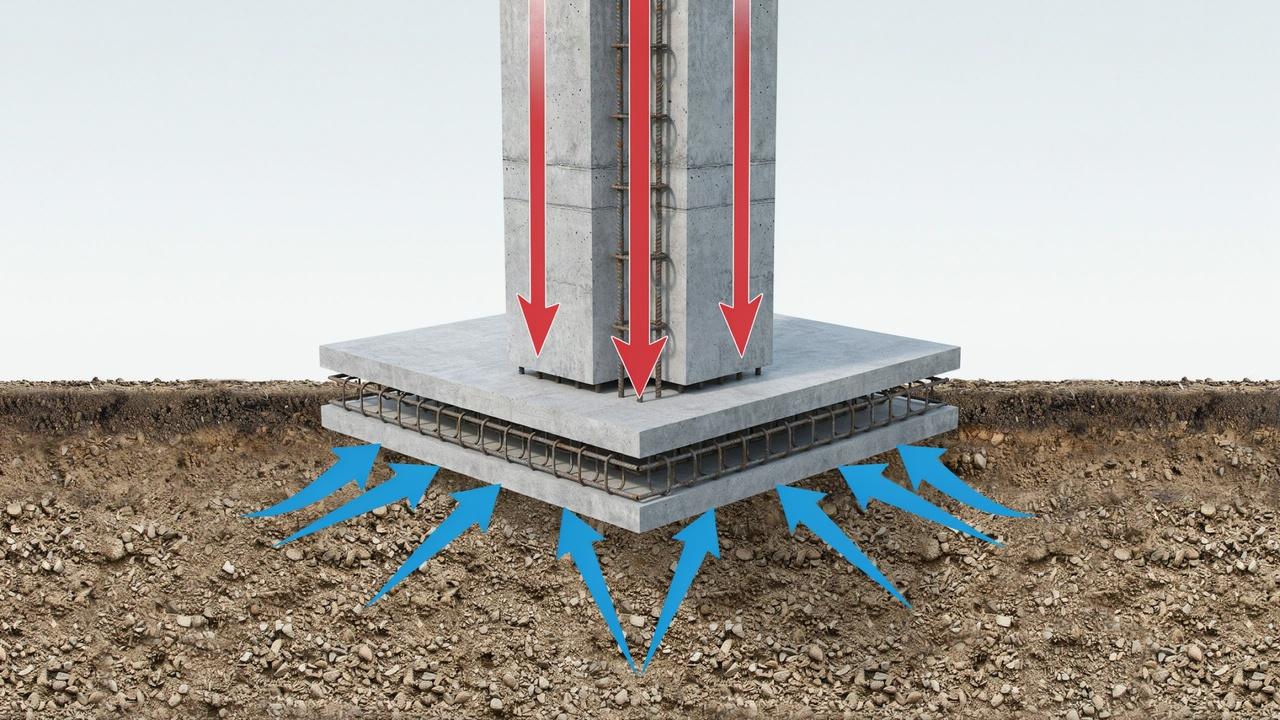
Isolated footings support a single column or post. They are one of the most common footing types in construction, particularly in residential work where they are often called pier footings. Each footing is independent.
It sits beneath one structural element and carries only that load. They work well when columns are spaced apart and soil conditions are stable enough to support individual loads without needing a shared base.
You will see isolated footings often in commercial buildings, industrial structures, and multi-storey frames where columns carry the primary loads. In crawl space homes, interior block piers typically sit on their own isolated pier footing.
2. Combined and Strap Footings
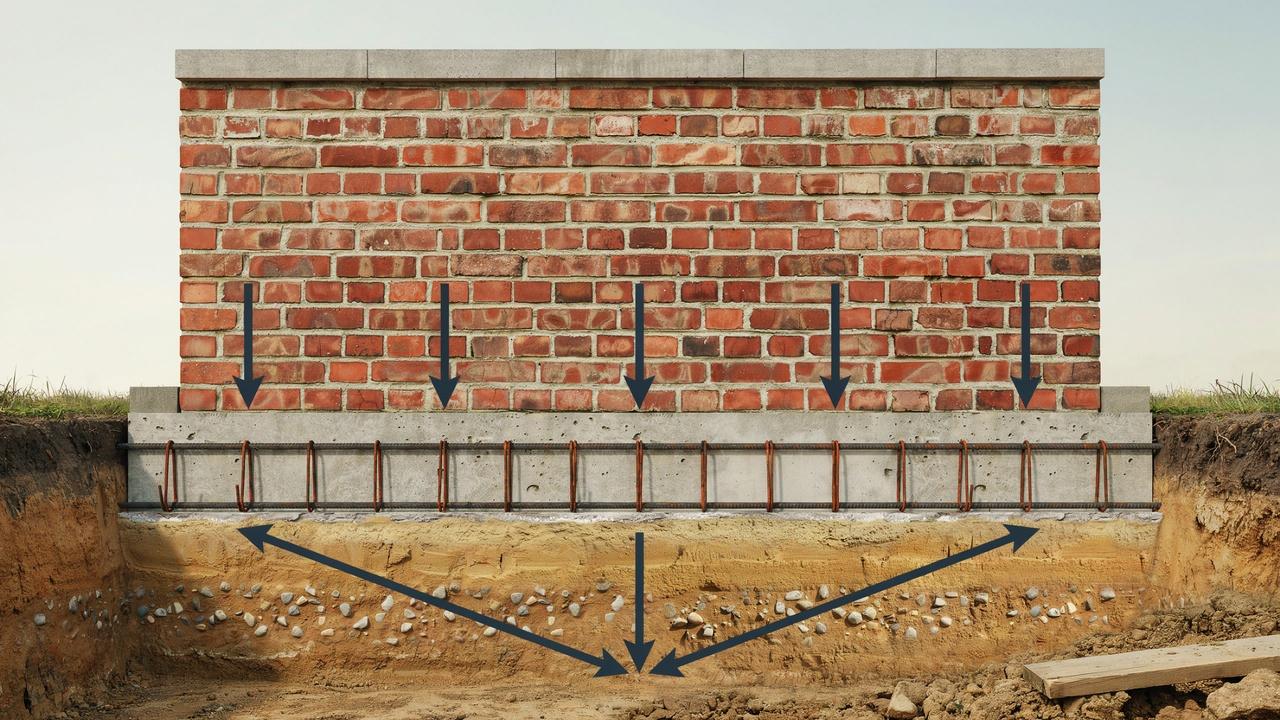
A combined footing supports two or more columns on a single footing base. It is used when columns are too close together for separate footings, or when one column sits near a property boundary.
A strap footing connects two separate column footings using a structural strap or beam. This setup transfers load between the footings to keep pressure on the soil balanced.
Both types are practical solutions when site conditions or space constraints make isolated footings difficult to use properly.
3. Strip or Continuous Footings
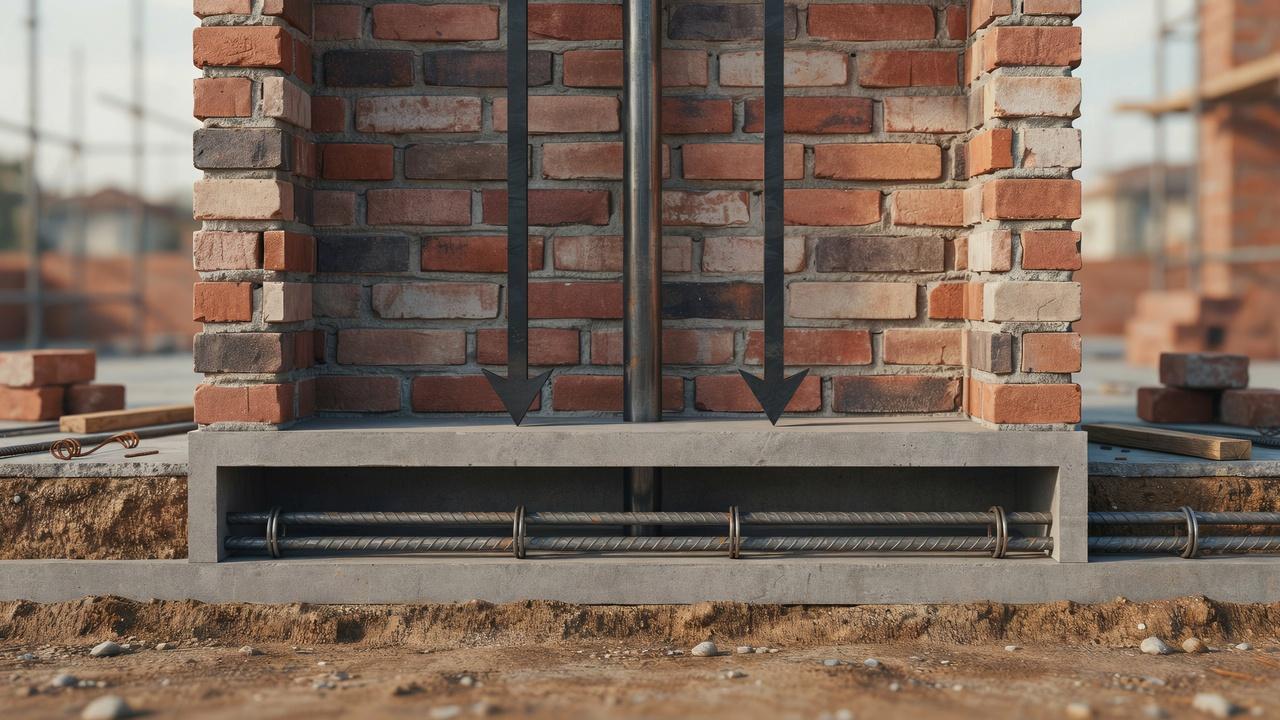
Strip footings run continuously beneath load-bearing walls rather than beneath individual columns. They spread wall loads along a long, narrow band of soil. In residential construction, this is sometimes called a perimeter footing because it runs around the entire outer edge of the home.
A typical residential version might measure 16 inches wide by 8 inches deep, though exact dimensions depend on the structure and local code. This type is very common in residential construction and low-rise buildings.
Brick homes, block walls, and timber-framed houses with masonry foundations often use strip footings. They are simple to construct and work well in stable soil conditions where the wall loads are moderate and evenly distributed along the wall's length.
4. Raft or Mat Foundations
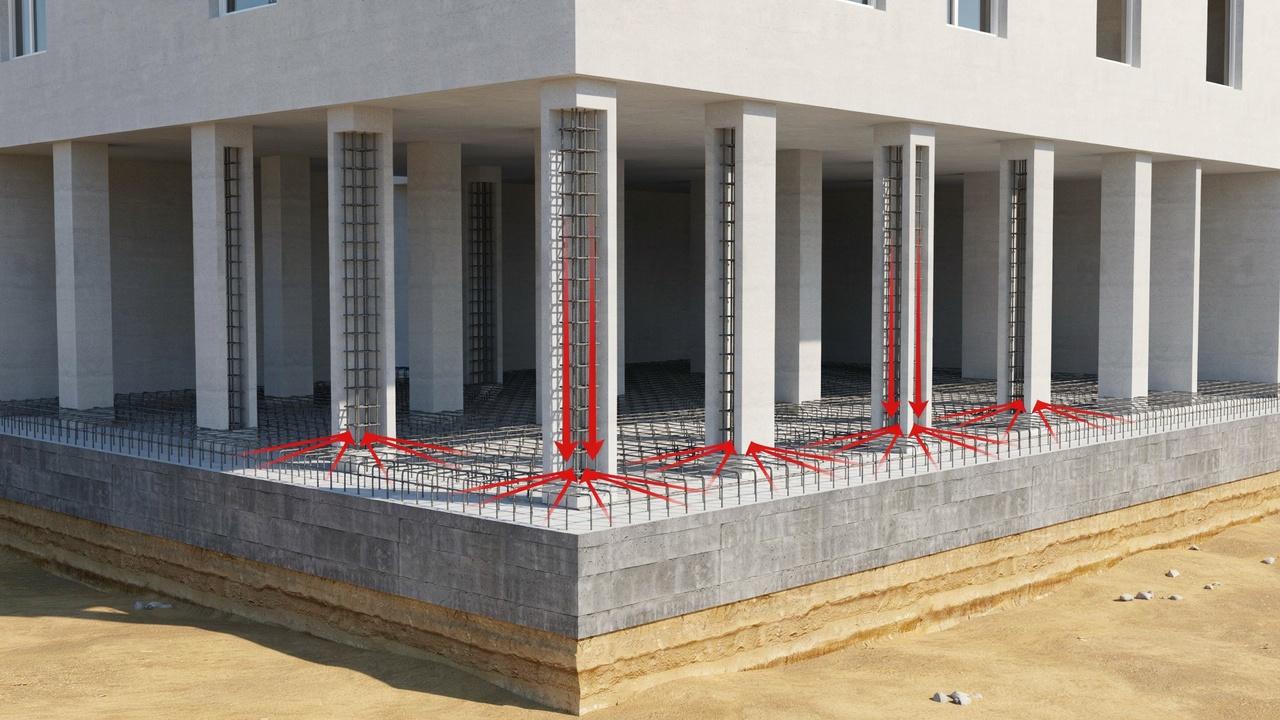
A raft or mat foundation is a large, flat concrete slab that extends across the full footprint of a building. Instead of individual footings, the entire slab acts as one combined footing.
This approach is useful when columns are closely spaced, when soil bearing capacity is low, or when individual footings would overlap.
By spreading the load across a much larger area, a raft foundation reduces pressure on the soil. It is common in soft ground conditions and in structures where differential settlement needs to be minimized.
5. Stepped Footings
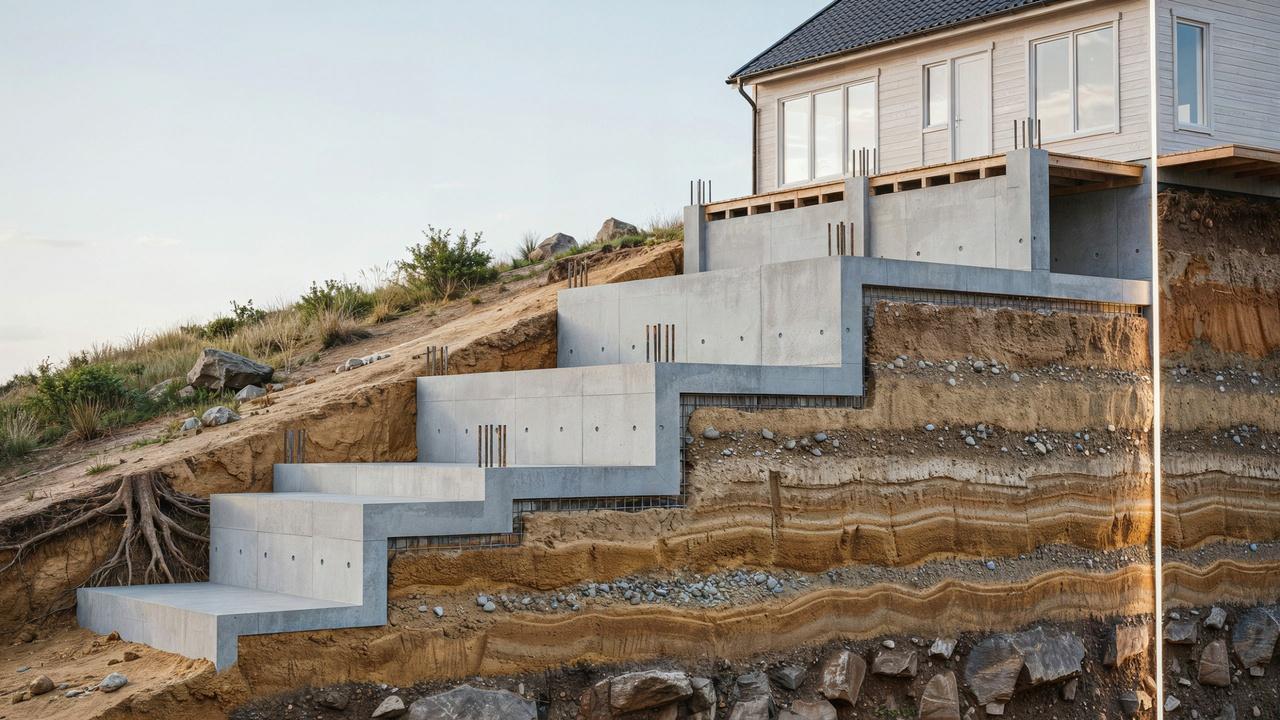
Stepped footings are used on sloped or uneven building sites. Instead of following a flat horizontal line, the footing steps down in increments to follow the natural slope of the terrain.
Each step maintains the required footing depth and provides solid bearing on competent soil. This approach avoids the cost of excessive excavation or filling to create a level base.
Stepped footings are practical for hillside homes, sloped lots, and any site where significant changes in elevation exist across the building's footprint.
What Factors Affect Footing Design?
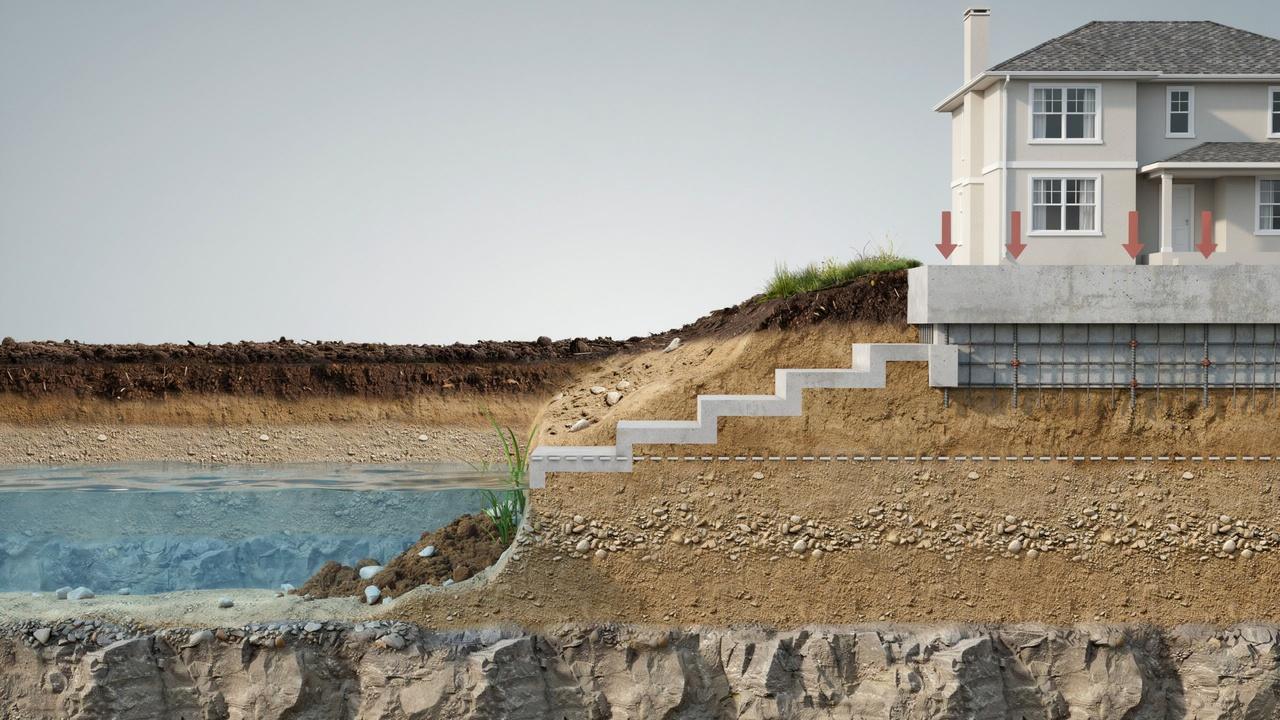
Several key factors influence how a footing is designed, and no two projects are identical.
Soil bearing capacity: This determines how much pressure the ground can safely support, typically measured in pounds per square foot. Weaker soils need larger footings to spread the load. Stronger soils, like dense gravel, can handle more concentrated loads with smaller footings. Silt-like soils tend to have lower bearing capacity and require extra attention during the design phase.
Structural loads: The total weight of the building, including walls, floors, columns, and the number of stories, directly affects how large and deep a footing must be. Heavier buildings need stronger footing systems.
Ground conditions: Settlement potential, soil type, and overall site stability all play a role. Loose, compressible, or expansive soils require more careful footing design than dense, stable ground.
Frost depth: In colder regions, the ground freezes to a certain depth in winter. Footings must be placed below this frost line to avoid frost heave, which can lift and crack the structure above. When water in the soil freezes, it expands. That expansion pushes upward with enough force to shift an entire foundation.
Groundwater: High water tables affect excavation difficulty, soil stability, and the long-term performance of the footing. Concrete footings can absorb water from surrounding soil, which weakens them over time. Water conditions must be understood before finalizing the design.
Site slope: Sloped terrain may require stepped footings, retaining elements, or other design adjustments to ensure proper bearing and load transfer across uneven ground.
Building codes: Local codes, including the International Building Code in many jurisdictions, set minimum requirements for footing depth, width, reinforcement, and materials. These standards exist for safety and must be followed in every project.
How Are Footings Constructed?
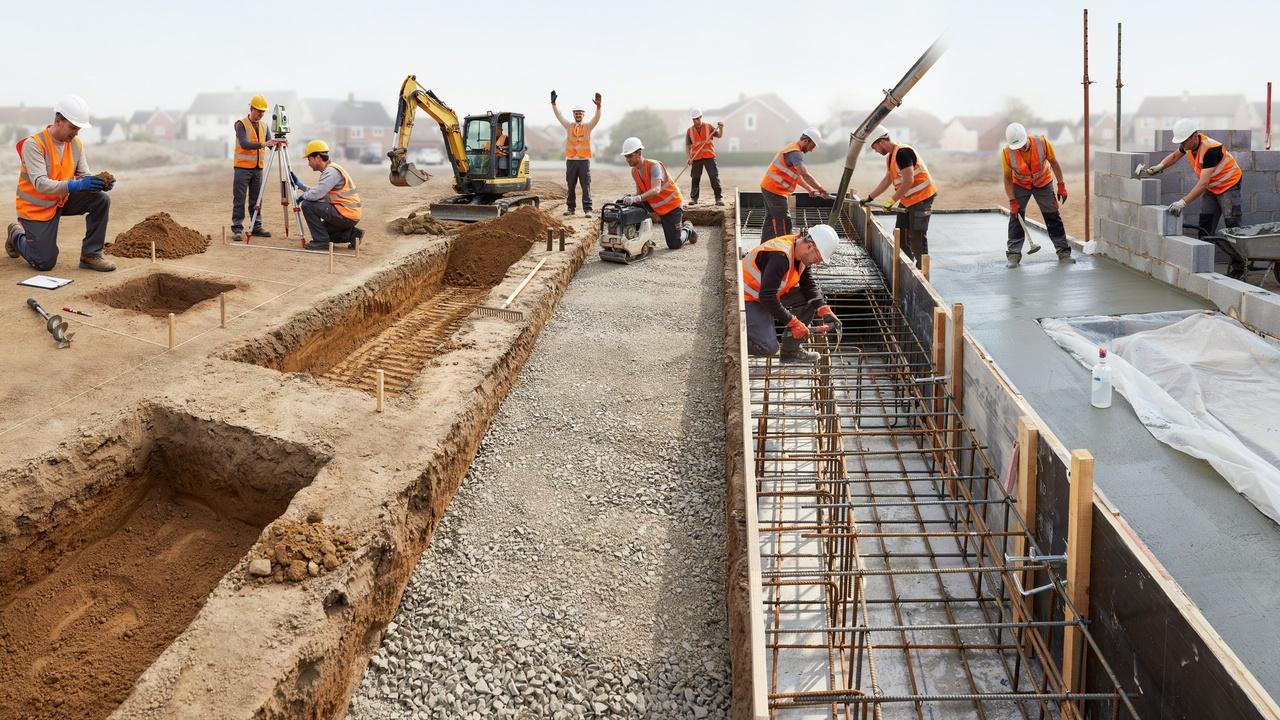
Building a footing correctly requires careful preparation, accurate execution, and proper inspection at each stage.
- Evaluate the site and soil: A site assessment and soil investigation identify the ground conditions, bearing capacity, and any potential issues before design or construction begins.
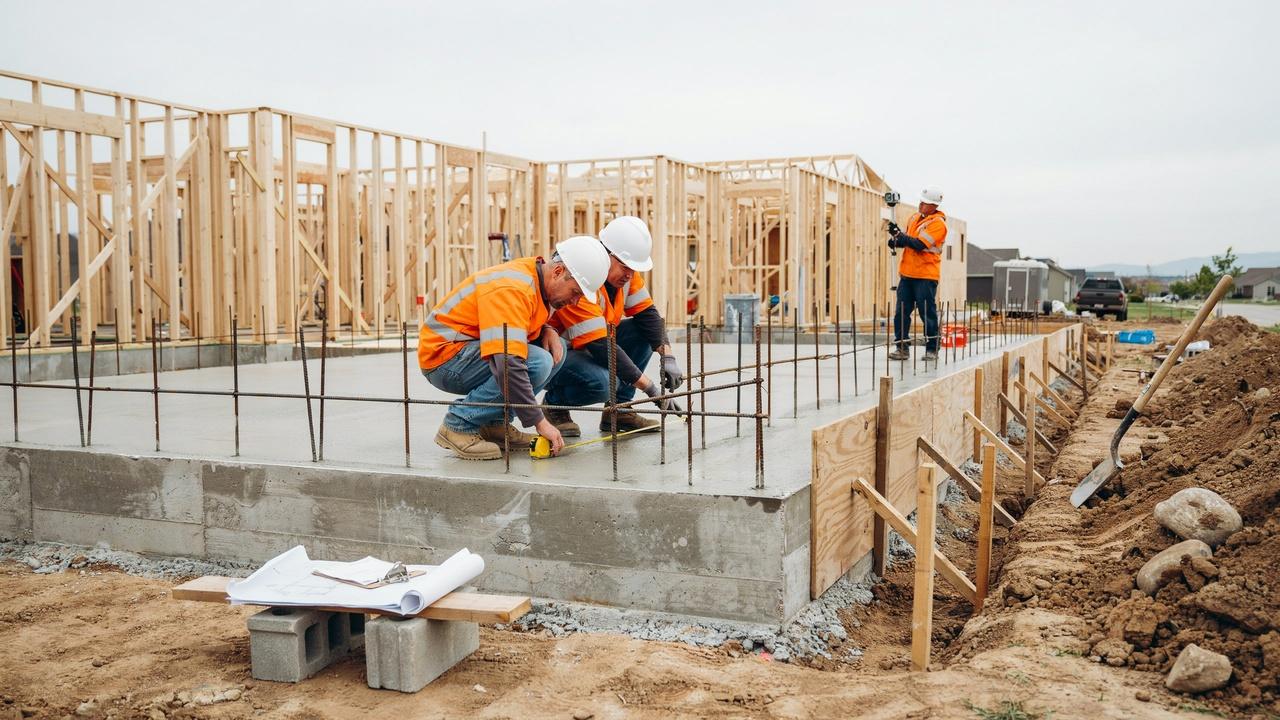
- Mark the footing layout: The footing locations are set out on the ground using measurements from the building plans, ensuring the footings align correctly with the structure above.
- Excavate to the required depth: The ground is dug to the depth specified in the design, which accounts for frost depth, soil conditions, and structural requirements.
- Prepare the footing base: The bottom of the excavation is leveled and compacted. In many cases, a thin layer of lean concrete, sometimes called a blinding layer, is placed first. This gives a clean, stable surface to work from and keeps the reinforcement off the bare earth.
- Install reinforcement and formwork where required: Steel reinforcement bars are placed according to the structural design. Formwork is set up to hold the concrete in shape during placement.
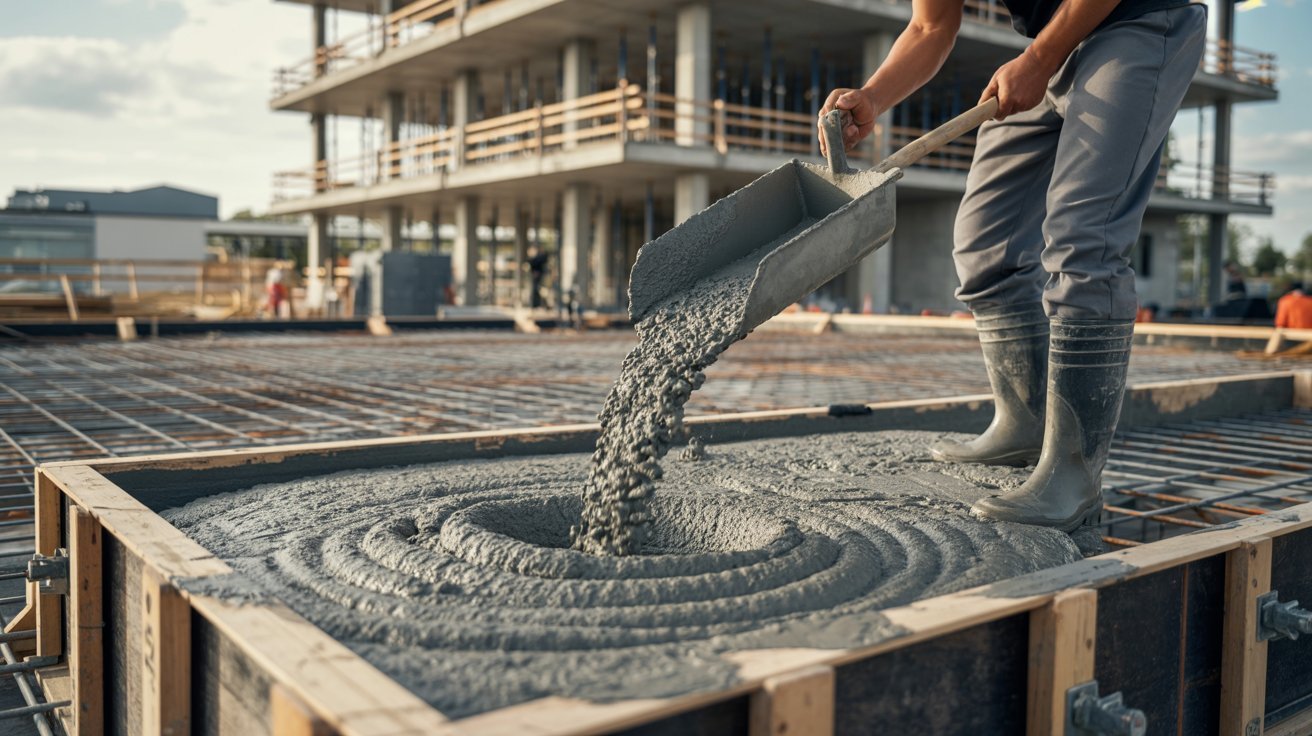
- Place the concrete: Concrete is poured into the forms and consolidated to remove air pockets. The mix must meet the specified strength requirements for the project.
- Cure and inspect the footing: The concrete is kept moist during curing to develop proper strength. Inspections confirm the footing meets design and code requirements before work continues.
- Construct the foundation above it: Once the footing is approved, foundation walls, piers, or slabs are built on top to complete the foundation system.
How Deep and Wide Should a Footing Be?
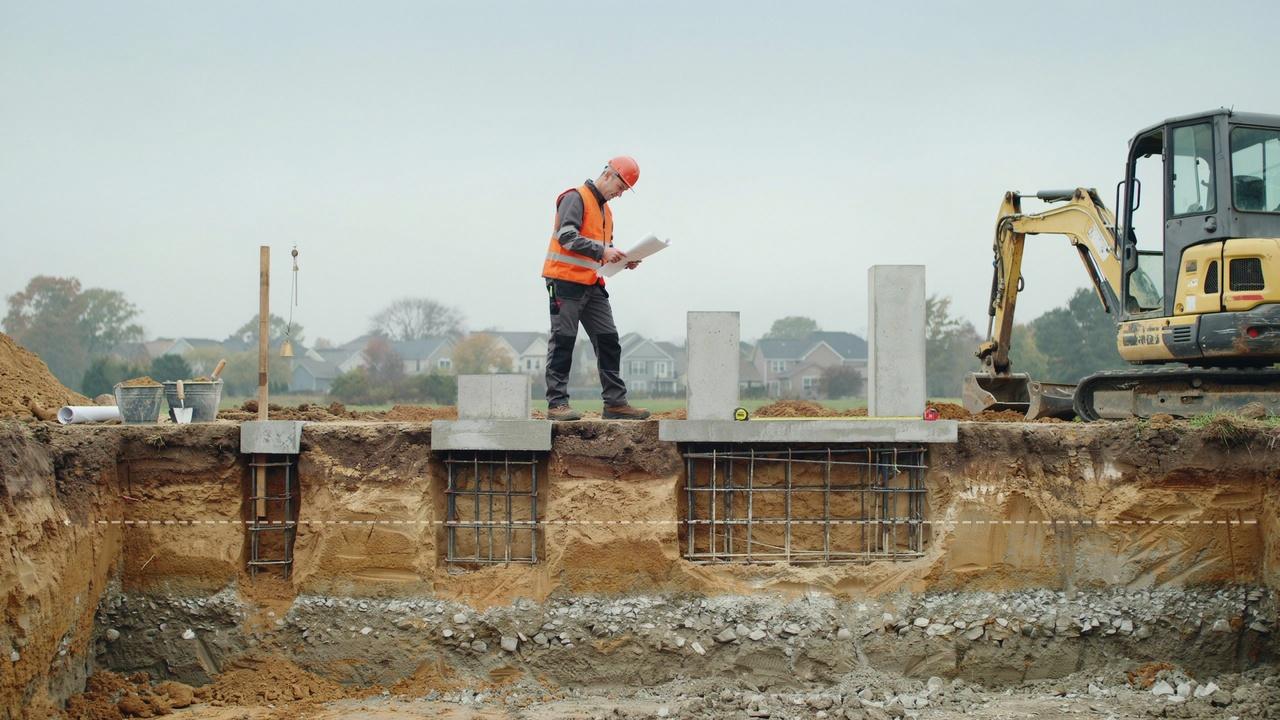
There is no single correct size for every footing. Required depth and width depend on soil conditions, structural loads, footing type, frost requirements, site conditions, and applicable building codes.
Because these factors vary between projects, a footing dimension that works on one site may not be appropriate on another. Soil bearing capacity, building loads, and local requirements all affect the final design.
Footing dimensions should come from the project's structural design rather than a generic measurement.
A qualified design professional can evaluate the soil information, building loads, site conditions, and applicable requirements to determine the appropriate footing size and depth.
What Is the Difference Between a Footing and a Foundation?
People often use these terms interchangeably, but they refer to different things.
| Footing | Foundation |
| Located at the base of the foundation system | Supports the structure above |
| Transfers loads into supporting soil | Transfers structural loads toward the ground |
| Often wider than the wall or column above | Can include walls, slabs, piers, or other elements |
| Designed around soil and structural loads | Designed around the building and site |
One important clarification: not every foundation system uses conventional footings. Deep foundation systems such as piles or drilled piers transfer loads to deeper soil layers and work differently from shallow footing-based foundations.
What Happens If Footings Are Improperly Designed?
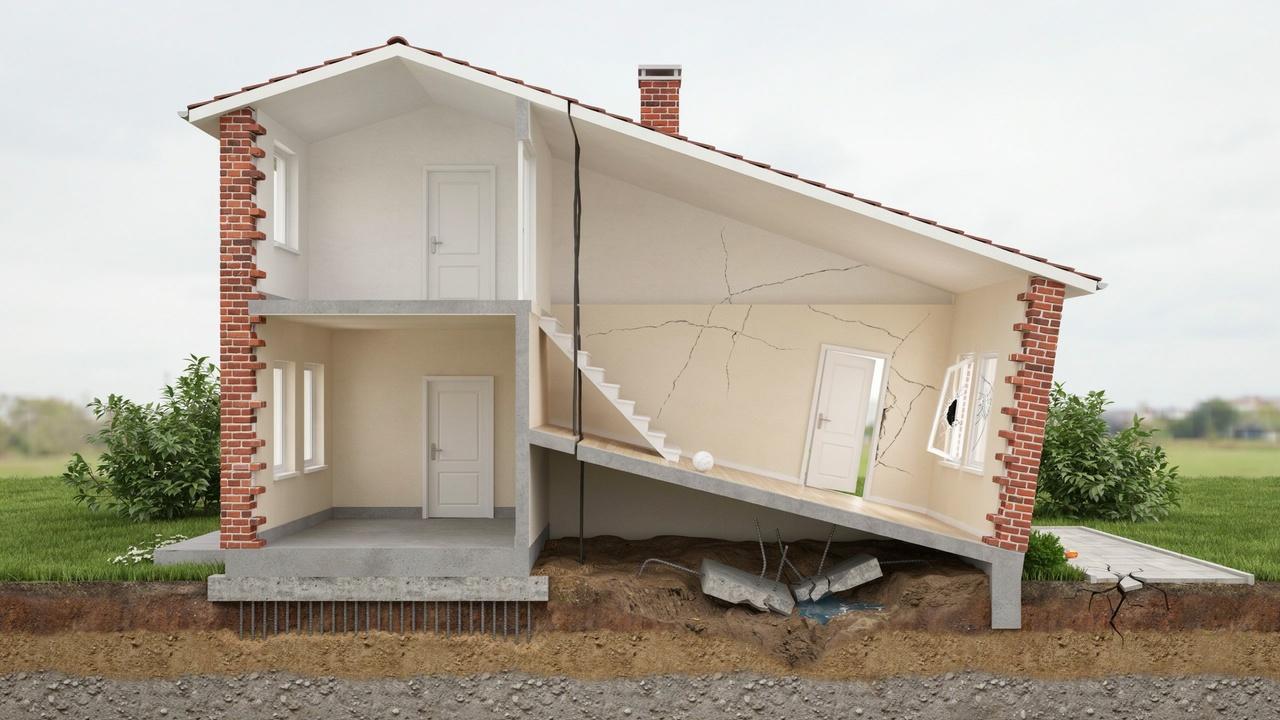
Poor footing design or construction can cause serious structural problems because the footing transfers building loads into the supporting soil.
Common consequences include.
- Excessive or differential settlement: Parts of the building may settle unevenly, causing movement and distortion.
- Foundation and wall cracks: Uneven support can contribute to cracking in foundations, walls, and floors.
- Uneven floors: Settlement can cause floors to slope, sag, or become visibly unlevel.
- Structural movement: Doors and windows may become difficult to operate as the structure shifts.
- Tilting or instability: Severe movement can cause portions of a structure to tilt or become unstable.
- Expensive repairs: Serious footing problems may require excavation, underpinning, or other structural repairs.
Because footing problems can affect the entire structure, footing dimensions, reinforcement, soil conditions, and construction quality should be verified before foundation work continues.
When Should You Use a Different Foundation System?
Conventional shallow footings are not suitable for every site. When near-surface soil cannot safely support the required loads, or when structural loads need to reach stronger soil at greater depth, another foundation system may be more appropriate.
An alternative foundation system may be considered when:
- Near-surface soil has insufficient bearing capacity.
- Structural loads are too large for a practical shallow footing system.
- Groundwater or saturated soil makes shallow excavation difficult.
- Stronger load-bearing soil or rock is located deeper underground.
Deep foundation systems such as driven piles, bored piles, and drilled piers can transfer loads to deeper supporting materials. These systems are specialized solutions and require project-specific engineering.
Conclusion
Footing in construction provides a stable bearing surface that transfers structural loads into supporting soil.
Its size, depth, type, and reinforcement depend on soil conditions, building loads, site characteristics, frost requirements, and local requirements.
Because every project has different conditions, footing dimensions should follow the project’s structural design rather than a generic measurement.
Understanding these factors helps prevent settlement and foundation problems. If you’re planning a construction project, review the footing design with a qualified professional before construction begins.
Frequently Asked Questions
Can you pour concrete footings in cold or rainy weather?
Concrete footings should not be poured in freezing temperatures or heavy rain because water dilutes the mix and frost prevents proper curing, both of which weaken the final strength.
Do all buildings legally require footings?
Most building codes, including the International Building Code, require footings for permanent structures, though small sheds or temporary buildings may be exempt depending on your local jurisdiction.
How long do concrete footings last?
A properly designed and poured concrete footing can last 50 to 100 years or more, but poor drainage, expansive soils, or inadequate reinforcement can shorten that lifespan significantly.
What is the minimum thickness of a concrete footing?
The International Building Code sets the minimum footing thickness at 6 to 8 inches for most residential structures, but the actual required thickness depends on the load, soil type, and local code requirements.