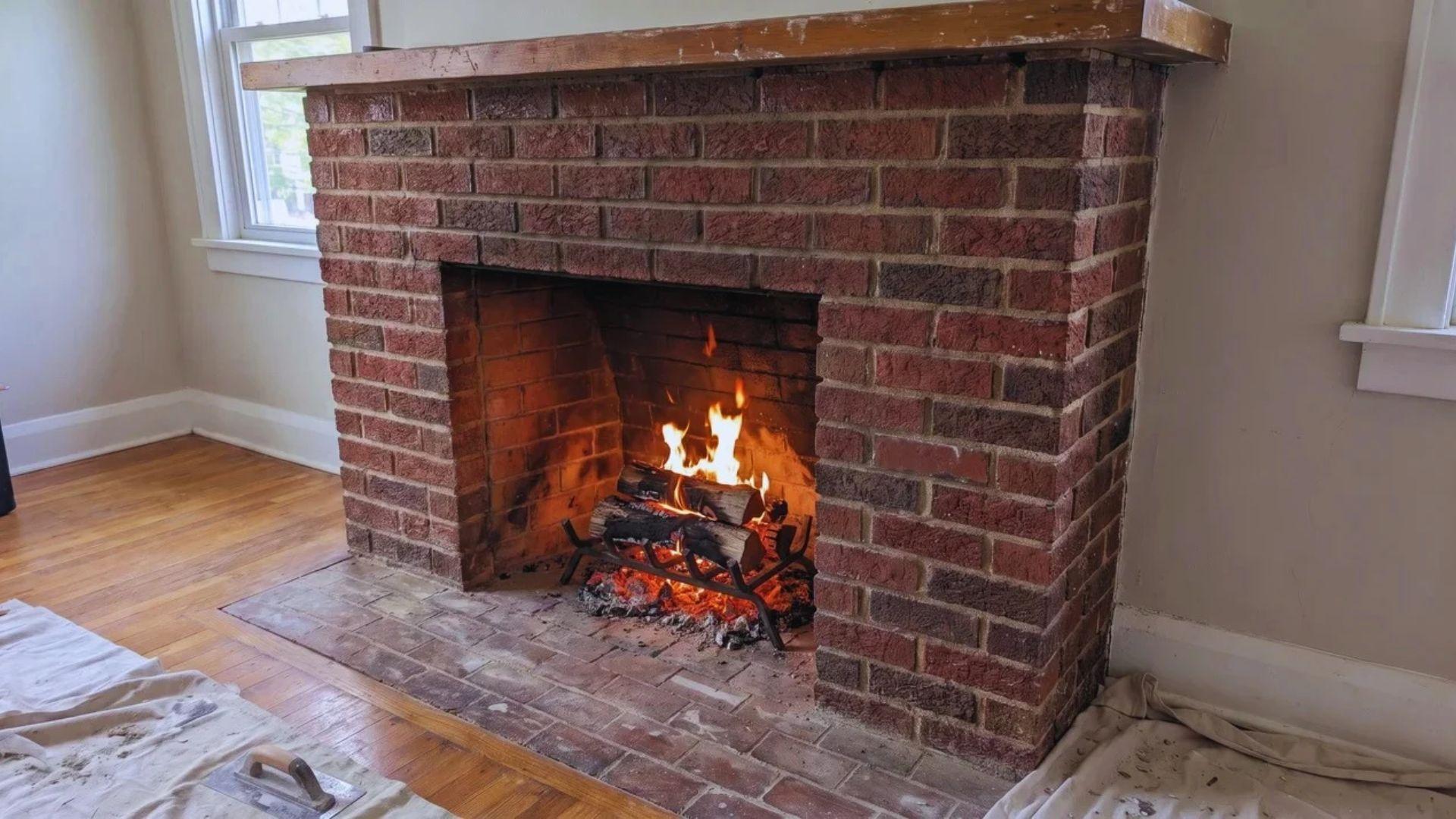
Yes, you can plaster over a brick fireplace, as long as the brick is bonded first and the coats are built in order.
The finish people photograph is the least important layer, because the thin coat nobody sees is what keeps the rest attached.
That is why a plaster over brick fireplace job can look fine on day one and still crack later.
Below, you’ll find the materials, the coat sequence, and the mistakes that cause cracks, so you can plan the whole job before spending a dollar.
First, check how you use the fireplace.
Can You Plaster Over a Brick Fireplace?
Yes, you can plaster over a brick fireplace if you bond the surface first, and two conditions decide the method:How much heat the fireplace sees and what shape the brick is in.
The method has three parts:
- bonding agent
- base coat
- finish coat
applied in that order.
Here is how those two conditions change the job:
- Wood or gas fireplace: This needs a heat-tolerant base such as sand-and-cement, because heat drives the chemically bound water out of gypsum plaster and weakens it.
- Decorative or electric fireplace: This can take lightweight gypsum plaster.
- Brick condition: Joint depth and loose mortar set how much base coat you need.
Plaster covers the face and surrounds only, never the inside of the firebox.
Check clearances to mantels and trim against local code and NFPA 211, the standard for chimneys, fireplaces, vents, and solid fuel-burning appliances.
For background on how the brick, firebox, and chimney work together, see this guide to masonry fireplace construction.
Heat use and brick condition point you toward a base coat, but the bonding agent and the finish are separate choices.
Each layer has its own material, so sort them before you shop.
Which Plaster Works Best Over Brick?
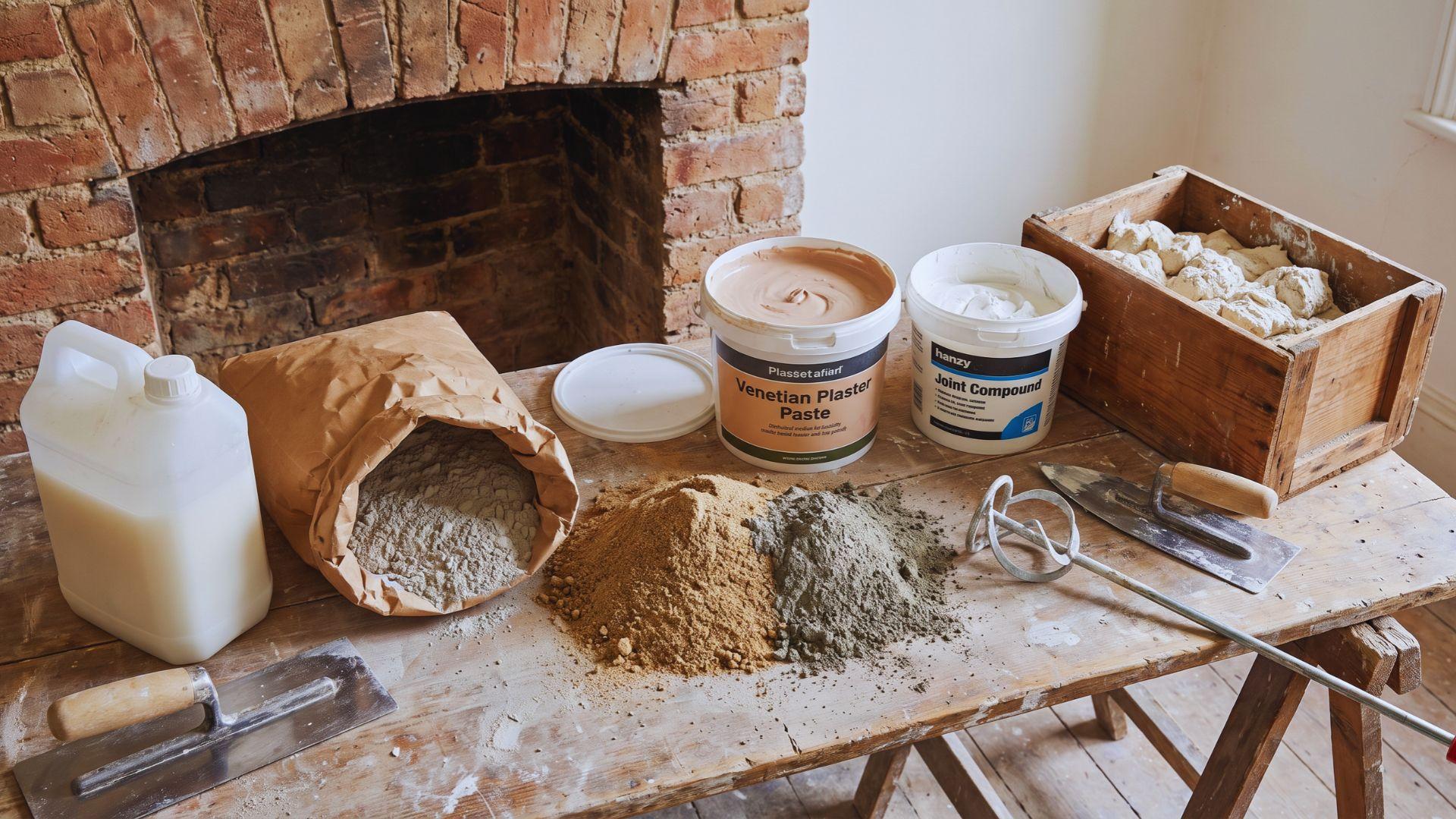
Plaster over brick is built in layers, and the bonding agent, base coat, and finish coat each use a different material. This table sorts them by job.
| Layer | Material | Best For |
| Bonding agent | Larsen Plaster-Weld or similar liquid lath | Gripping dense, glazed, or painted brick |
| Base coat | Structo-Lite lightweight gypsum plaster | Decorative or electric fireplaces |
| Base coat | Sand-and-cement mix | Working wood or gas fireplaces |
| Finish coat | Venetian plaster | Polished, smooth surface over a flat base |
| Finish coat | Ready-mix joint compound | Smooth matte surface over a built-up base |
| Finish coat | Lime plaster, lime stucco, or limewash | Soft, textured Old World look |
| Skim system | Ardex Feather Finish or Modern Masters Texture Effects | Relatively flat brick with shallow joints |
Two things pick your row. Heat exposure decides the base, so a working fireplace belongs with the sand-and-cement row. Joint depth decides the finish.
Venetian plaster is a finish layer, not a brick cover, and it only looks right over a smooth surface.
For heat limits, colors, and design styles, see how a Venetian plaster fireplace surround is planned from base to burnish.
Brick laid with joints around 3/8 inch, as described in brick wall construction, needs base coats first to fill and level them, while relatively flat brick can take a thin skim system instead.
Each product also has limits worth checking.
Ardex’s UK data sheet caps one application of Feather Finish at 3 mm (about 1/8 inch), and Ardex sells it as a floor-smoothing compound, so confirm wall use with the maker.
Modern Masters Texture Effects is a water-based acrylic, so check its label for heat limits.
USG advises against setting-type compounds such as Durabond for thin skim coats, since they can dry before setting and lose their bond.
USG’s Structo-Lite sheet does not name brick among its listed bases, so confirm with USG before using it.
Materials picked, the real work starts at the brick. Prep takes a little time, but it decides whether every coat after it holds.
How to Prepare Brick Before You Plaster

Preparation comes down to cleaning the brick, letting it dry fully, and protecting the edges, and skipping any one of them sets up a bond failure later.
Work through it in this order:
- Clean the surface: Use a wire brush to knock off dust, soot, and loose debris, then wipe the brick with denatured alcohol or water and let it dry completely. Soot can keep the bonding agent from reaching the brick, so sooty brick deserves a second pass.
- Check the mortar: Crumbling joints need repair first, and step cracks often signal movement that plaster will not hide, so read up on step cracks in brick before you cover them.
- Handle painted brick: Paint is slick, so scuff it up or choose a bonding agent the label rates for painted surfaces. If your home was built before 1978, the paint may contain lead, so read EPA’s lead-safe DIY renovation guidance before you sand or scuff.
- Plan the corner beads: Set them at the outside edges of the surround, anchored in the mortar joints rather than the brick.
Larsen says Plaster-Weld can go over oil, rubber, vinyl, and latex paints, with a 60-day wait after fresh paint, but formulas differ, so check the label.
Plasterers typically anchor corner beads in the mortar joints because nails driven into brick can crack it. The beads go on in the steps below.
With the brick clean, dry, and edged, the surface is ready for plaster. The coats go on in a set order, and each one protects the next.
How to Plaster Over a Brick Fireplace Step by Step
The full sequence is a bonding agent, a scratch coat, a brown coat, and a finish coat. Flat brick with shallow joints can shortcut this with a thin skim coat.
Each layer exists to keep the next one from failing, so confirm cure and recoat times on the manufacturer’s data sheet rather than relying on a generic number.
Step 1: Apply the Bonding Agent and Corner Beads

Dense or glazed brick gives plaster little to grab, and the bonding agent creates the grip surface the base coat needs. Without it, the first coat can release as it cures.
- Apply the liquid lath: Brush or roll a product such as Larsen Plaster-Weld over the entire surface, including the joints and edges.
- Check coverage: The product leaves a continuous pink film, which makes thin or missed areas easy to see.
- Set the corner beads: Fix them in the mortar joints at the edges of the surround.
Plaster-Weld is rated for interior use only, and on a wood or gas fireplace, you should confirm its heat limits with the manufacturer.
Step 2: Build the Scratch and Brown Coats

- Scratch coat: Trowel it onto the bonded brick, pressing it into each joint and groove so the surface fills level. Use Structo-Lite on a decorative fireplace and the sand-and-cement mix on a working one.
- Roughen the surface: Do this before the scratch coat sets, because that texture gives the brown coat something to hold.
- Brown coat: This layer builds the thickness and flattens the wall.
Thin passes beat one thick layer, since a heavy single coat dries unevenly and is more likely to sag or crack.
Step 3: Finish With Venetian Plaster or a Skim Coat
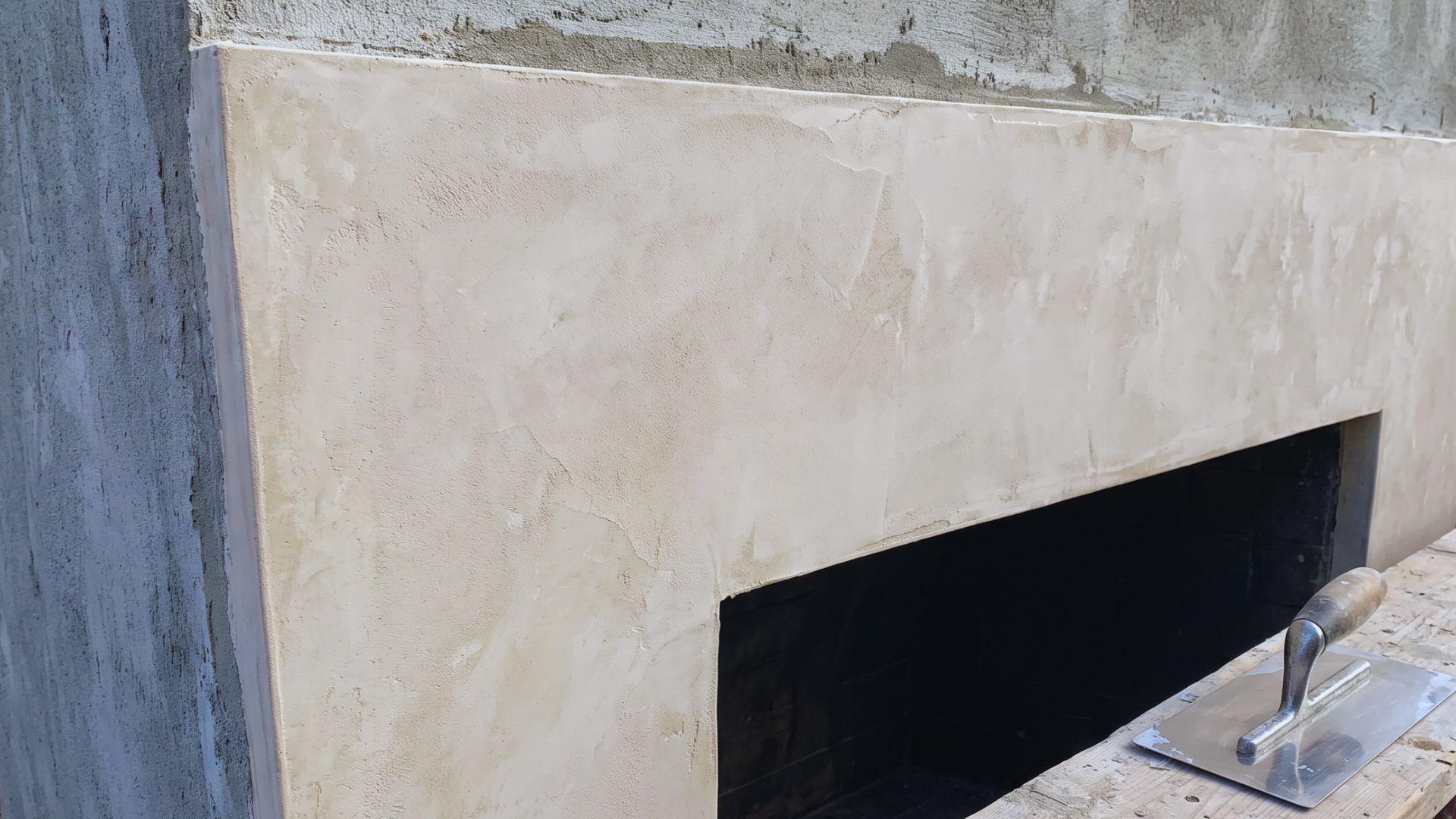
Finish coats run from polished to textured.
Venetian plaster, ready-mix joint compound, and a feather finish all give a smooth surface, with Venetian plaster the most polished, while a lime finish gives a softer, Old World look.
Your choice of finish comes down to the surface underneath:
- Venetian plaster: It looks right only when the base beneath it is smooth, because the thin finish follows every ridge and joint line it covers. Apply it in thin passes with a flexible trowel.
- Skim coat for flat brick: Skip the thick build and apply a skim product such as Ardex Feather Finish or Modern Masters Texture Effects with a flexible trowel, after confirming on the label that it suits brick walls. Push the first pass into the joints, then use later passes to level the surface.
Those layers cover the work from bonding to finish, and each one has a matching way to fail. The common failures are specific, and you can spot most of them while the plaster is still going on.
Why Plaster Cracks or Peels on a Brick Fireplace

Plaster fails on brick mainly because of poor bonding, over-thick coats, or a base that does not match how the fireplace is used.
Each cause traces back to a step above:
- Skipped bonding agent: Smooth or glazed brick has nothing to hold the scratch coat, so the plaster can lift away over time.
- One heavy coat: Piling on a single thick layer instead of building in passes lets it dry unevenly and crack.
- Nails in the brick: Driving corner bead nails into the brick rather than the mortar can crack the brick itself, and that crack tends to show through the plaster.
- Unsmoothed base: Putting Venetian plaster over a rough base shows every ridge and joint line.
Heat is a separate failure path.
A working fireplace goes through repeated heating and cooling, and gypsum loses water when heated, a process covered in research on gypsum calcination under fire exposure.
A gypsum base chosen for a decorative fireplace can lose strength and crack there, so match the base to how you use the fireplace.
Before you finish, check the work with this routine:
- Let each coat set fully before adding the next.
- Tap the surface lightly with your knuckles or a trowel handle and listen for hollow spots.
- Repair any loose or hollow areas first, since a finish coat only hides them for a while.
Every one of these failures sits in the layers under the finish, not in the finish itself. That’s the main thing to carry into your own project.
Bond First, Finish Last
A plaster over brick fireplace job is won or lost before the first visible coat, so the unglamorous steps deserve the most patience.
Brick that is clean, bonded, and matched to the fireplace’s heat use gives any finish, from Venetian plaster to limewash, a fair chance to last.
A rushed base can undo the best finish. Pick your fireplace type, check clearances against local code, and read one product data sheet before you buy.
Then grab a wire brush and a bonding agent, and start cleaning the brick this weekend.
Frequently Asked Questions
How Much Does It Cost to Plaster Over a Brick Fireplace?
A DIY job mostly costs materials, while hiring a plasterer adds labor on top. Get current local quotes before you budget, since prices vary by region and fireplace size.
What Is the Best Way to Cover a Brick Fireplace?
It depends on the look you want and how you use the fireplace. Tile, stone veneer, and stucco each change the surface differently, and any material near a working firebox needs a manufacturer heat rating.
How Can You Modernize a Brick Fireplace on a Budget?
Painting the brick, swapping the mantel, and replacing worn hearth tile are smaller jobs than a full rebuild. Doing one upgrade at a time spreads the cost and lets you judge the result.