Building a brick wall looks straightforward, but without the right steps, things can go wrong fast.
Uneven courses, cracked mortar, and leaning walls are common problems that come from skipping the basics.
This guide on brick wall construction covers everything you need, from planning and materials to laying each course correctly and finishing the surface.
Having worked on both DIY garden walls and larger structural projects, I know how much a clear, step-by-step process matters.
By the end, you will know exactly how to plan, prepare, and build a brick wall that holds up well and looks great for years.
What Is Brick Wall Construction?
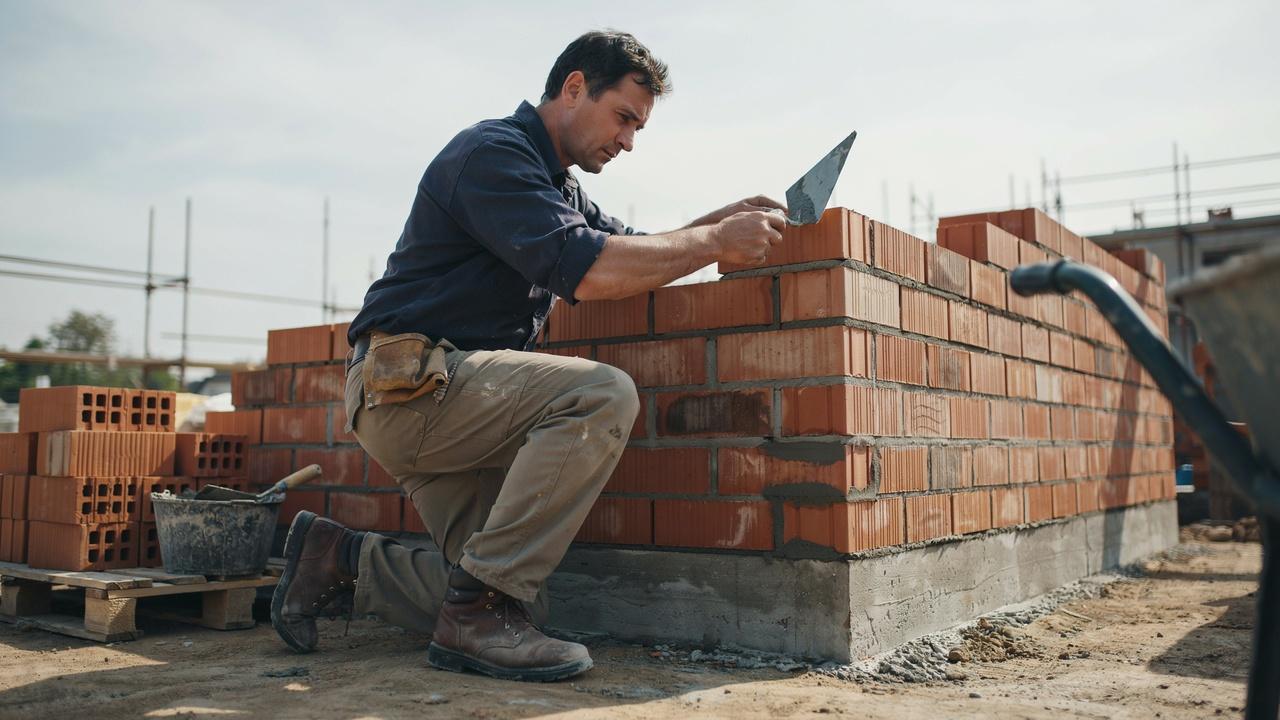
Brick wall construction is the process of laying bricks in rows using mortar to create a strong, durable wall.
Brick wall construction is the practice of stacking bricks in a set pattern and binding them together with mortar.
It is one of the oldest building methods in the world and still widely used today for homes, garden walls, retaining structures, and commercial buildings.
The process involves more than just stacking bricks. It requires careful planning, the right materials, proper foundation work, and consistent technique throughout the build.
A well-built brick wall can last for decades. A poorly built one can crack, lean, or fail within a few years.
Brick walls serve many purposes. Some are load-bearing and hold up the structure above them. Others are decorative, like garden or boundary walls.
Some act as cladding over a structural frame. Understanding what type of wall you are building changes how you plan and construct it.
What Do You Need to Build a Brick Wall?
Having the right materials and tools before you start saves time and prevents mistakes mid-build.
Standard clay bricks are the most common choice for residential construction, while concrete bricks work well where extra strength or cost savings matter.
Engineering bricks are denser and more water resistant, making them suitable for retaining walls and below-ground use.
Mortar, made from cement, sand, and water, holds everything together, and the mix ratio changes depending on the application and exposure conditions.
Always buy 5 to 10 percent more bricks than needed to cover cuts and breakages.
For tools, you will need a brick trowel, spirit level, rubber mallet, bolster chisel, club hammer, tape measure, chalk line, mixing trough, margin trowel, and jointing tool.
On the safety side, always wear safety glasses, gloves, steel-toe boots, and a dust mask when mixing dry mortar, and keep a first aid kit nearby on site.
How Do You Plan a Brick Wall Before Building?
Good planning before laying a single brick prevents costly mistakes and keeps the build on track.
Determine the Wall's Length, Height, and Thickness
Start by defining the exact size of the wall. Measure the length and decide how tall the wall needs to be.
For a garden or boundary wall, height affects stability. Taller walls need a wider base and may require piers or reinforcement.
Thickness is also important. A single-skin wall is one brick wide. A double-skin wall is two bricks wide with a cavity or solid fill between them.
Load-bearing walls need more thickness than decorative ones. Sketch out your dimensions before ordering materials.
Choose the Right Brick for the Project
Not all bricks work in all situations. Face bricks are made for visible surfaces and come in a wide range of colours and textures.
Common bricks are used in hidden or structural areas where appearance does not matter.
Engineering bricks are used where strength and moisture resistance are important, such as below the damp-proof course.
For exterior walls in wet climates, choose bricks rated for freeze-thaw conditions.
For garden walls, check that the brick is suitable for outdoor exposure. Your supplier can advise on the right type for your project.
Calculate Bricks, Mortar, and Material Waste
Accurate calculation prevents shortages and cuts down on excess costs. A standard formula for brick quantity is based on the wall's surface area and the brick size you are using.
As a rough guide, a standard single-skin wall using full-sized bricks requires approximately 60 bricks per square meter, including mortar joints.
For a double-skin wall, double that figure. Add a 10 percent waste allowance for cuts and breakages.
For mortar, estimate one bag of cement per 50 bricks as a starting point, though this varies by joint thickness and mortar mix.
Use a materials calculator online or consult your supplier for more precise figures based on your brick type and wall design.
Check Local Building Codes and Permits
In the United States, most structural brick walls and retaining walls above a certain height require a building permit.
Regulations vary by city, county, and state. Check with your local building department before starting work.
Even decorative or garden walls may have rules about maximum height, distance from property lines, or foundation requirements.
Ignoring code requirements can result in fines or being required to demolish the wall. Get the necessary approvals first.
Locate Underground Utilities Before Digging
Before any excavation, contact your local utility locating service. In the U.S., you can call 811 to have underground lines marked for free.
This service identifies the location of gas, water, electrical, and communication lines before digging begins.
Striking an underground utility line is dangerous and costly. Make this call at least a few days before you plan to dig. Once lines are marked, work carefully around them.
How Do You Prepare the Foundation for a Brick Wall?
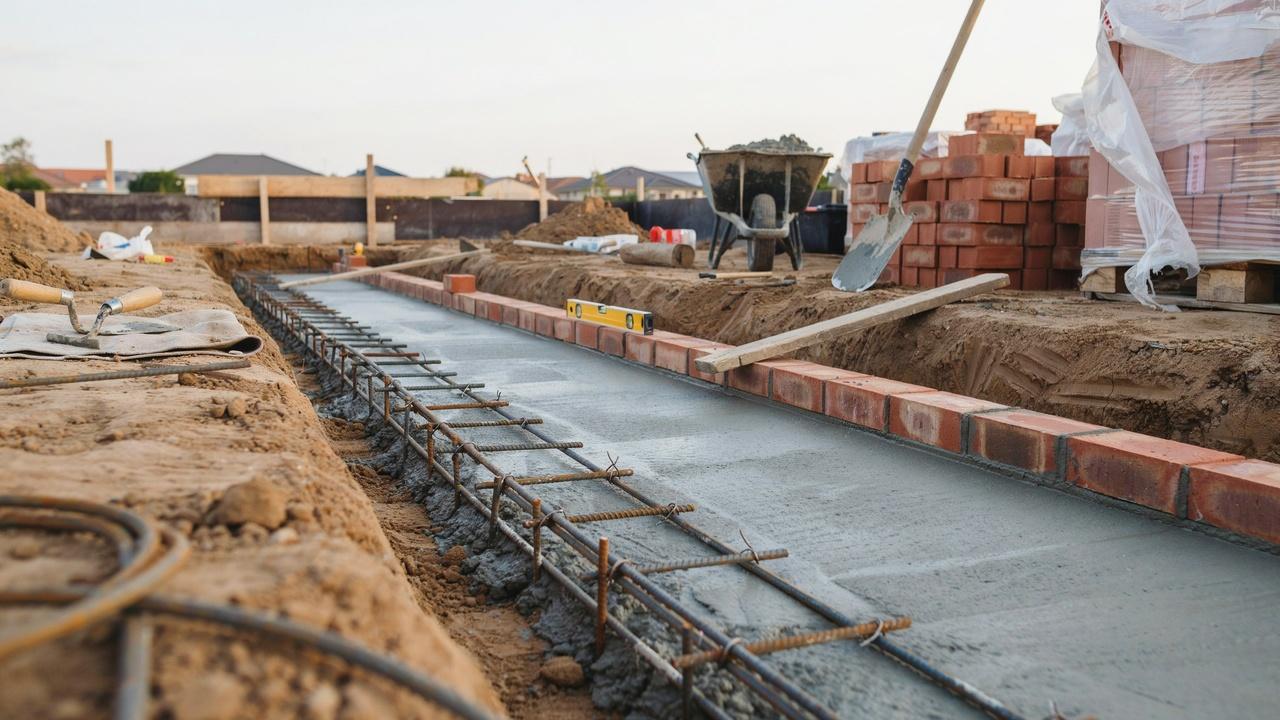
A solid foundation is what keeps a brick wall standing straight and stable for the long term.
Use timber pegs and string lines to mark the wall footprint, then excavate the trench to the correct depth based on wall height, soil type, frost depth, and local code. Never use a universal depth figure.
Once dug, compact the soil at the base and pour a concrete footing that is wider than the wall to spread the load.
Before the concrete sets, check that the surface is level in all directions using a spirit level or laser level.
On sloped ground, step the footing so each section starts level. Always wait a minimum of three days before bricklaying, and longer in cold or wet weather.
How Do You Mix Mortar for Bricklaying?
The right mortar mix makes a big difference to the strength, durability, and workability of your brick wall.
In the United States, mortar is classified under ASTM C270 into three main types. Type N is a general-purpose mix for above-grade exterior walls.
Type S offers higher strength for walls subject to wind or seismic loads. Type M is the strongest and is used for masonry in contact with the ground.
A standard Type N mix ratio is one part Portland cement to one part lime to six parts masonry sand.
Properly mixed mortar should hold its shape on the trowel without slumping.
Discard any mortar that has stiffened beyond re-tempering, and mix smaller batches more frequently to keep mortar fresh and workable throughout the build.
How to Build a Brick Wall Step by Step
This is where the real work begins. Follow each step in order and take your time.
Step 1: Set Out the Wall and Establish the Starting Point
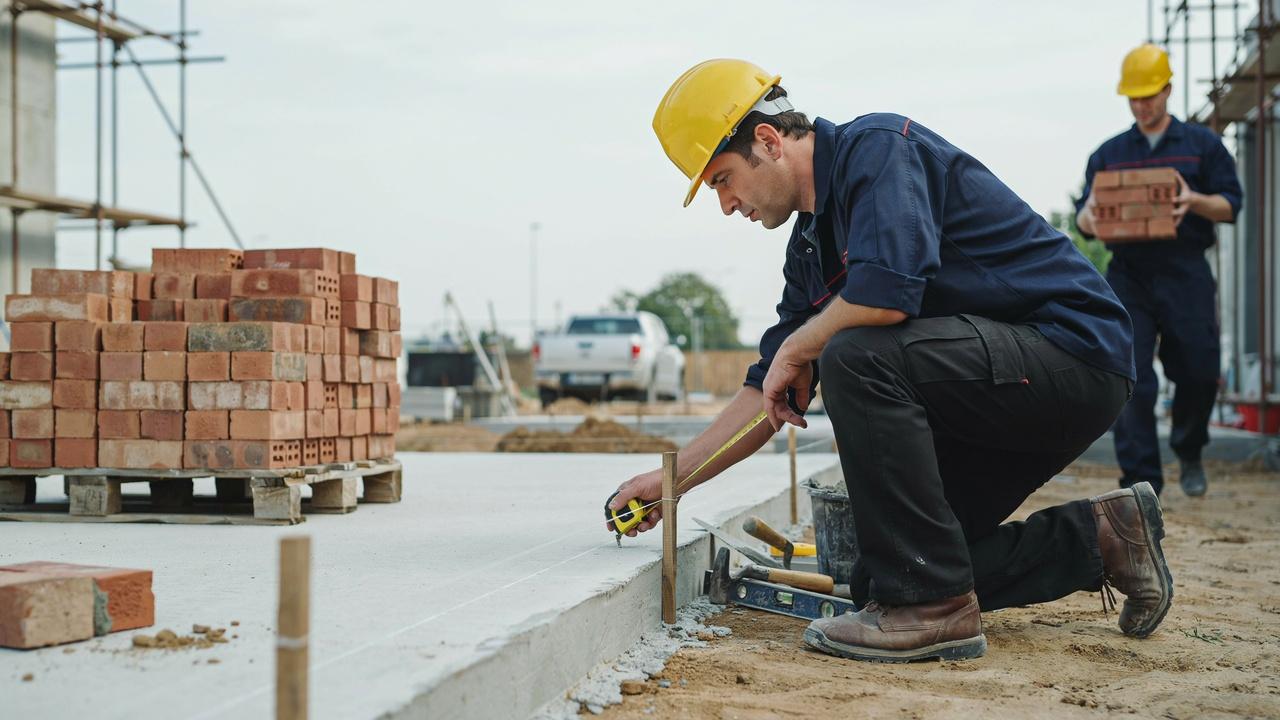
Mark the exact position of the wall on the cured foundation using chalk or a pencil line.
Check that the layout is straight and square to any adjacent structures. Use a tape measure to confirm dimensions.
Step 2: Dry-Lay the Bricks to Check the Layout
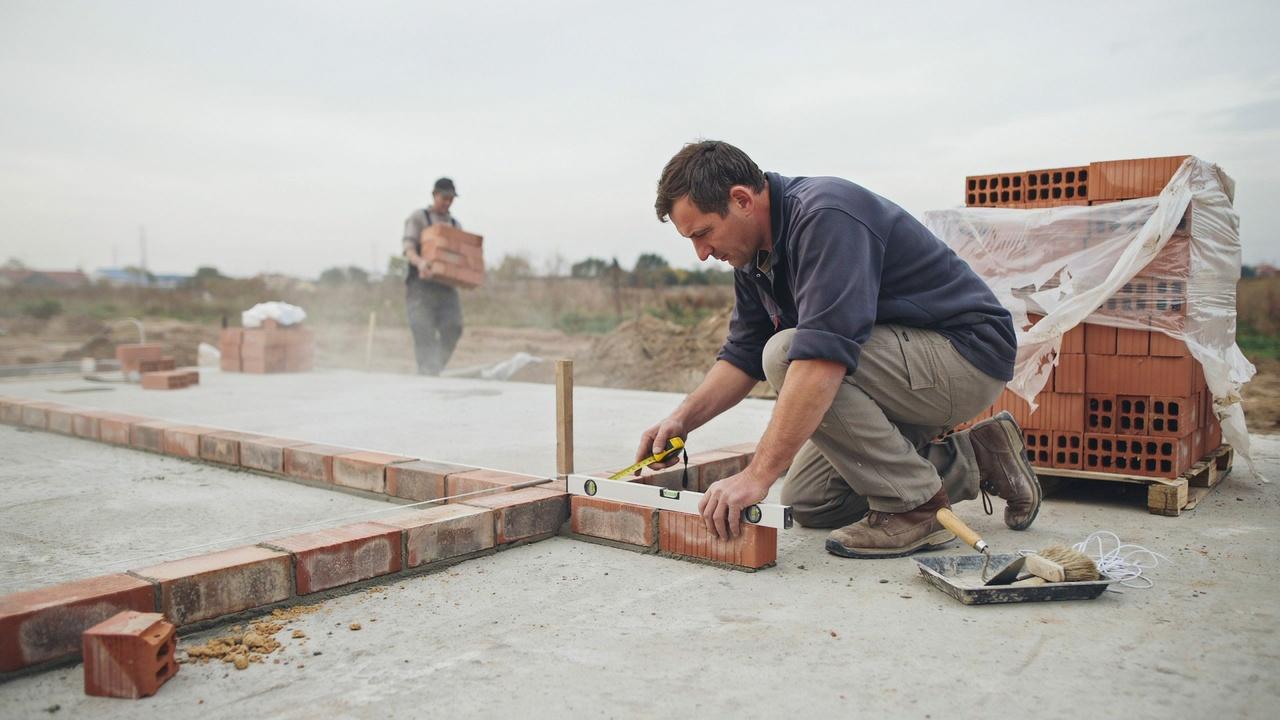
Before mixing any mortar, lay a course of bricks along the foundation without mortar. This is called a dry run.
It lets you check the spacing, identify where cuts will fall, and adjust the layout to minimize the number of cut bricks at the ends.
Mark the positions on the foundation so you know where each brick goes once the mortar is mixed.
Step 3: Set Up the String Line

A string line guides each course of bricks. Fix it to corner profiles or stakes at each end of the wall, set at the height of the first course.
The top edge of each brick should line up with the string line.
Keep the line tight. A sagging or loose line leads to wavy, uneven courses that are hard to correct later.
Step 4: Spread the First Mortar Bed
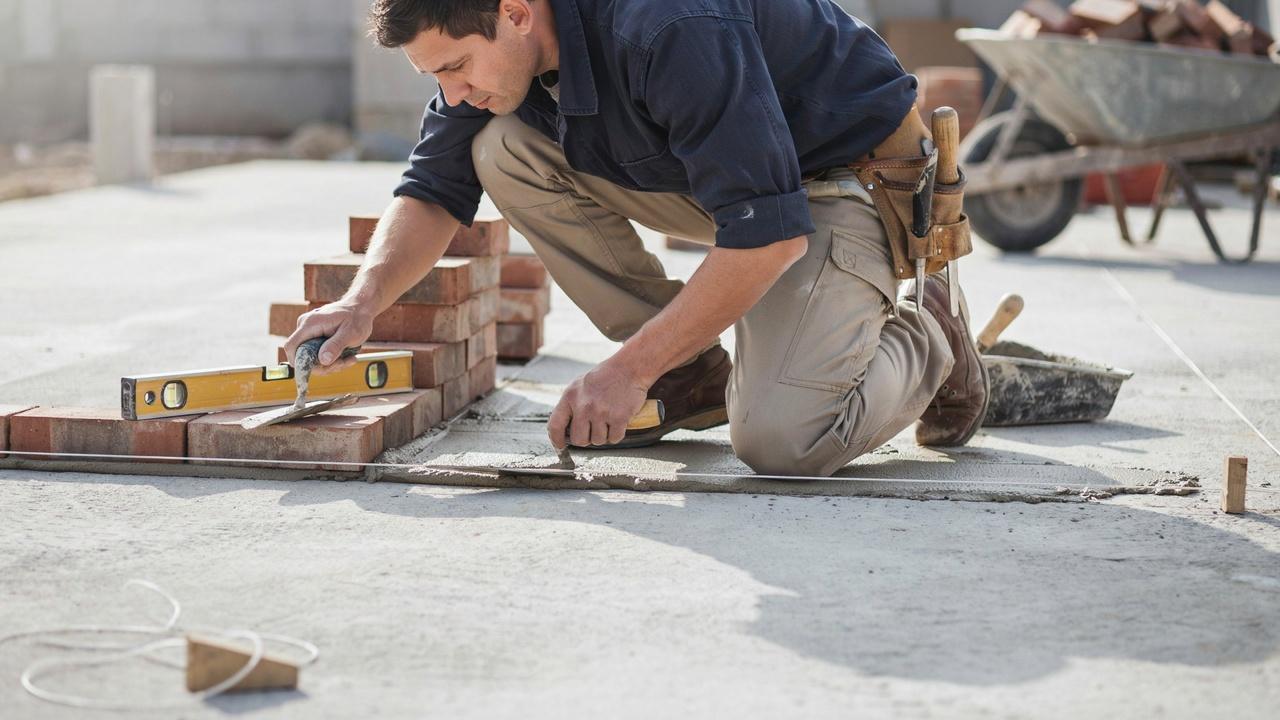
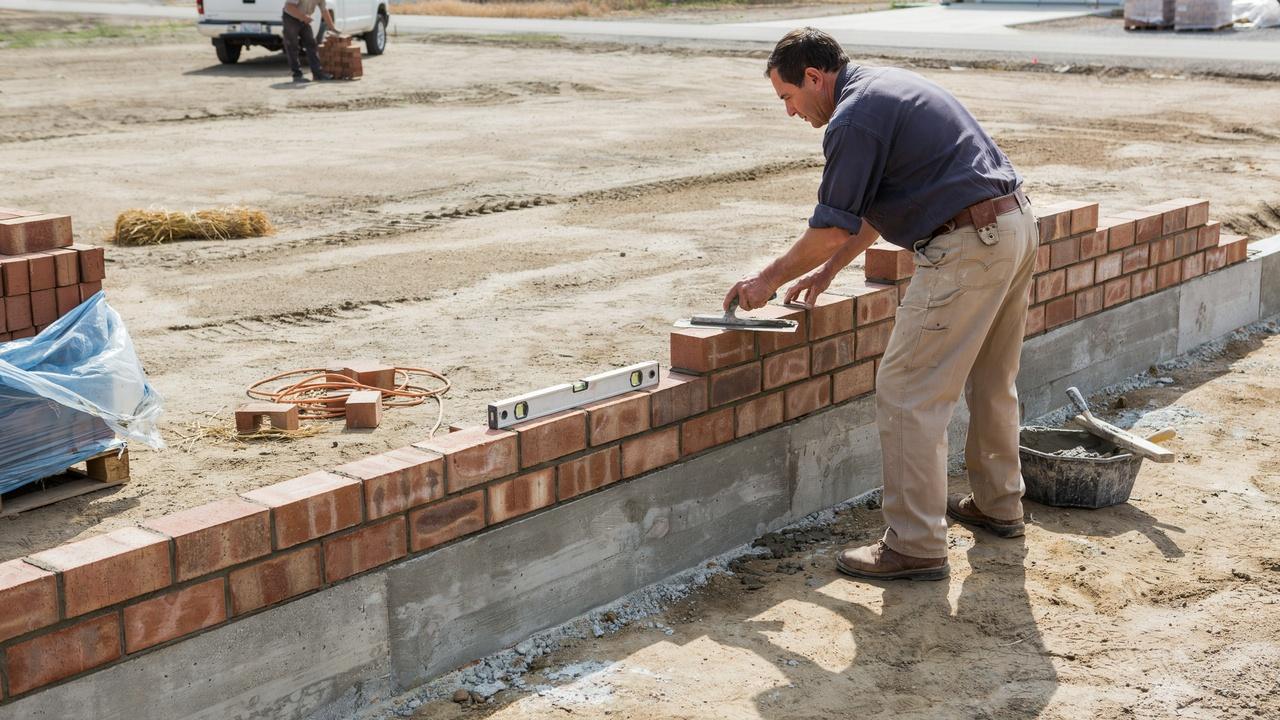
Use a brick trowel to spread a bed of mortar along the foundation where the first course will be laid.
The bed should be approximately 10mm thick and slightly wider than the brick. Furrow the mortar lightly with the tip of the trowel to help it bond as the brick is pressed down.
Step 5: Lay and Level the First Course
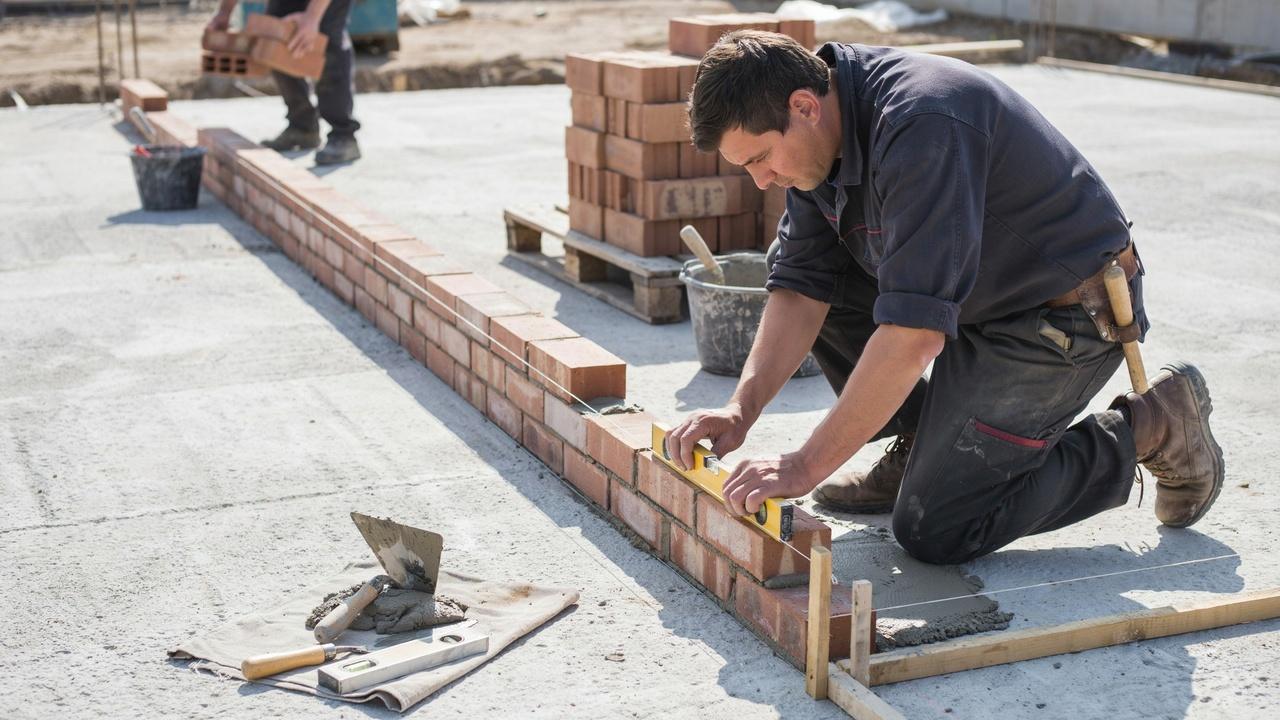
Press the first brick into the mortar bed and tap it down gently with a rubber mallet.
Check it with a spirit level in both directions, front to back and side to side. Adjust as needed before the mortar begins to set.
Continue laying bricks along the first course, buttering the end of each brick with mortar before placing it against the previous one.
Keep the mortar joints consistent at around 10mm. Check the level frequently.
Step 6: Build the Corners or Leads
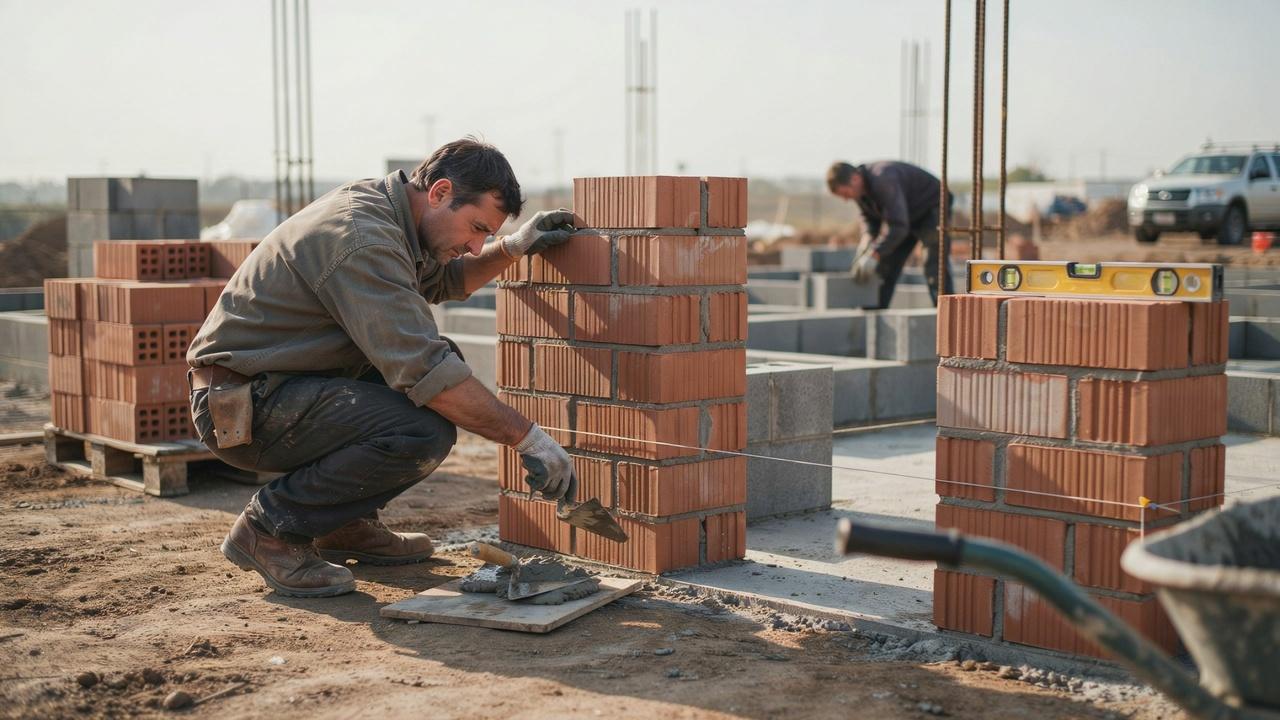
Before filling in the middle of the wall, build up the corners, called leads, by several courses.
These serve as a guide for the rest of the wall. Each lead is built at a stepped pyramid shape, with each course set back by half a brick from the one below.
Check the corners for level and plumb at every course. The accuracy of the leads determines the accuracy of the entire wall.
Step 7: Apply Mortar to the Brick Ends
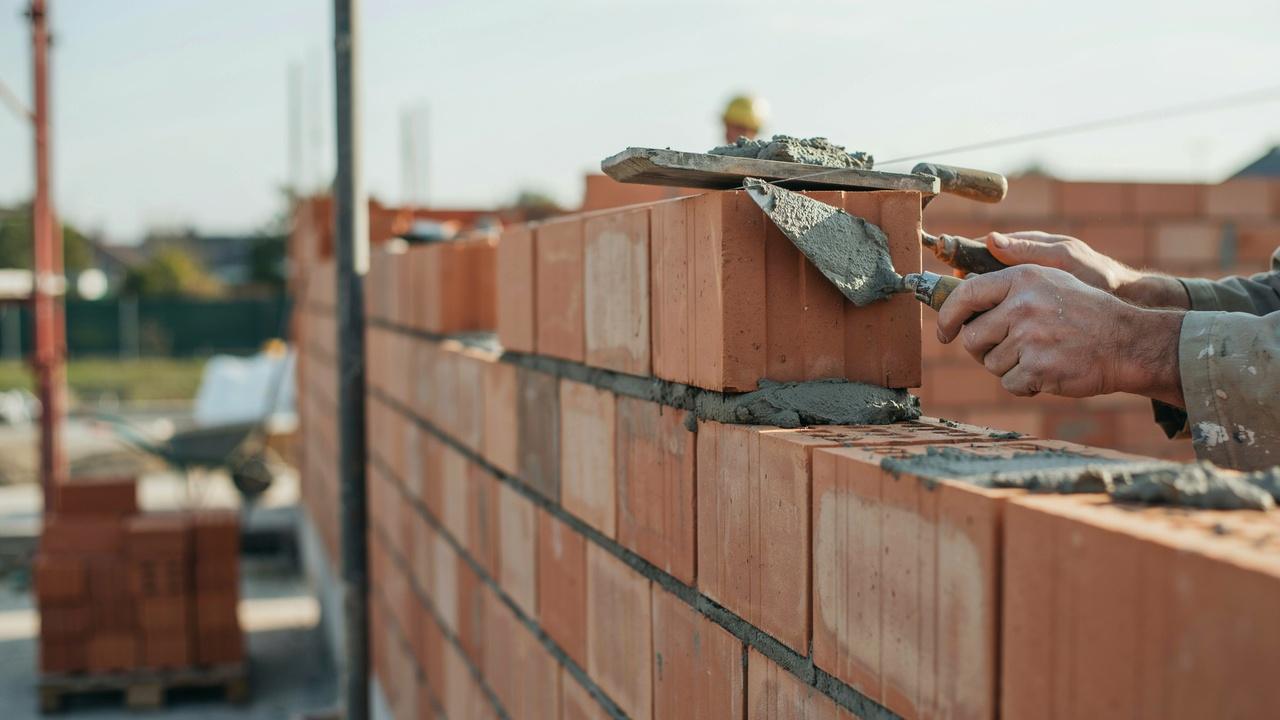
When laying bricks between the corners, apply mortar to the end of the brick being laid. This is called buttering.
Press the buttered end firmly against the brick already in place. The mortar should squeeze into the joint slightly. Trim off the excess with a trowel.
Step 8: Lay the Next Courses With Staggered Joints
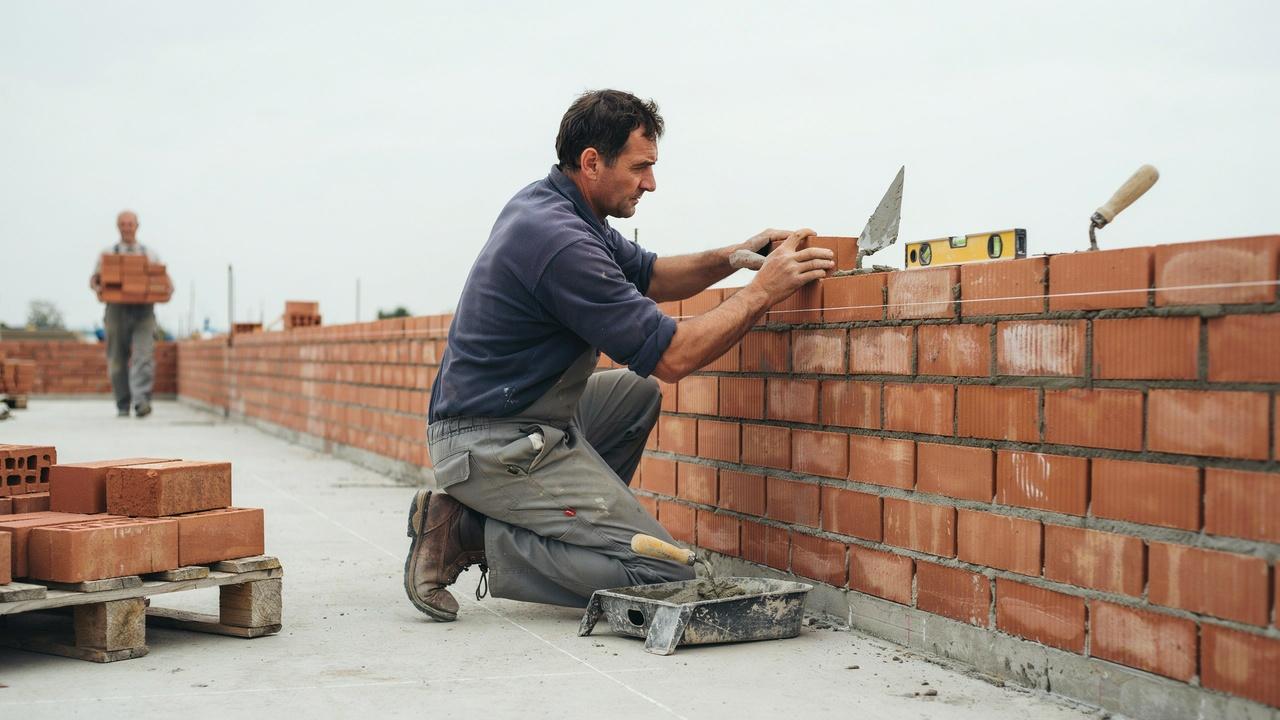
Each new course of bricks should be offset so that the vertical joints do not align between courses.
This is called staggered or broken bond. It is what gives a brick wall its structural strength.
In a standard stretcher bond, each brick is offset by half a brick from the course below. This means each brick spans the joint in the course underneath it, locking the wall together.
Step 9: Keep Each Course Level, Straight, and Plumb
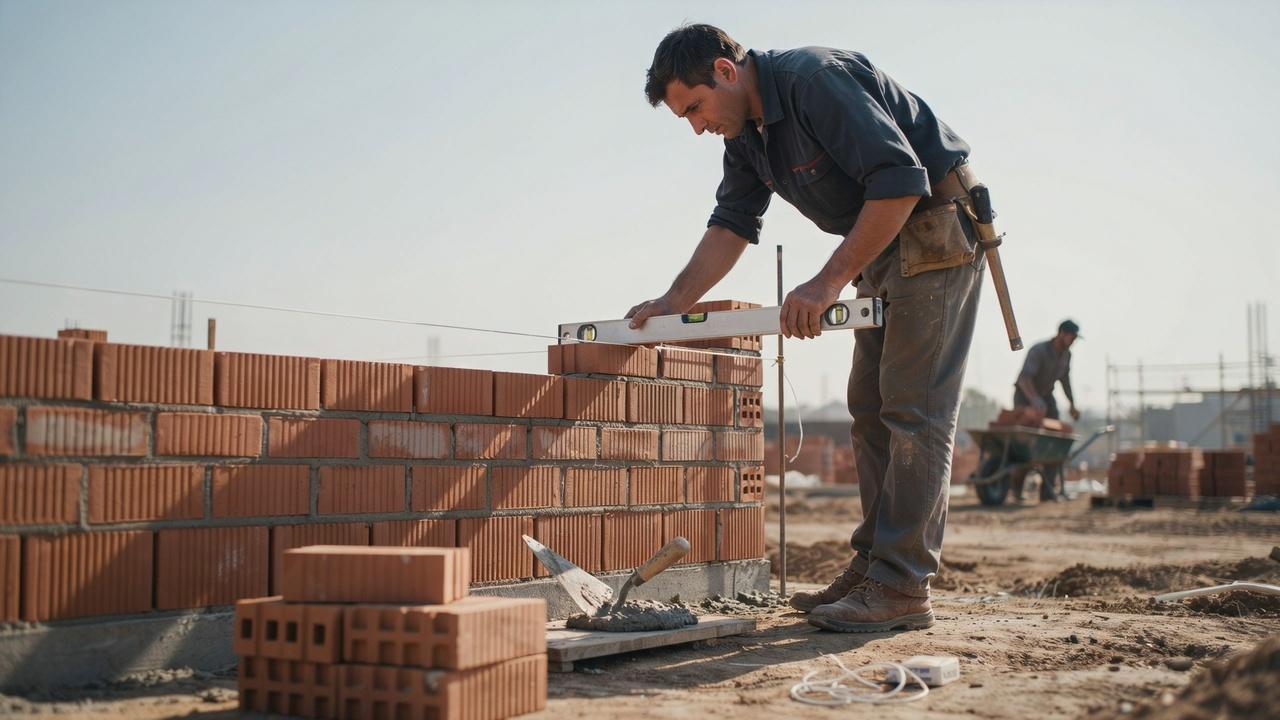
Use your spirit level after every course to check three things. The course must be level horizontally.
The wall face must be plumb vertically. And the wall must be straight from end to end.
Use the string line to keep each course in line. Small errors are easy to correct early. Once several courses are built on top, mistakes become much harder to fix.
Step 10: Cut Bricks for Ends, Corners, and Openings
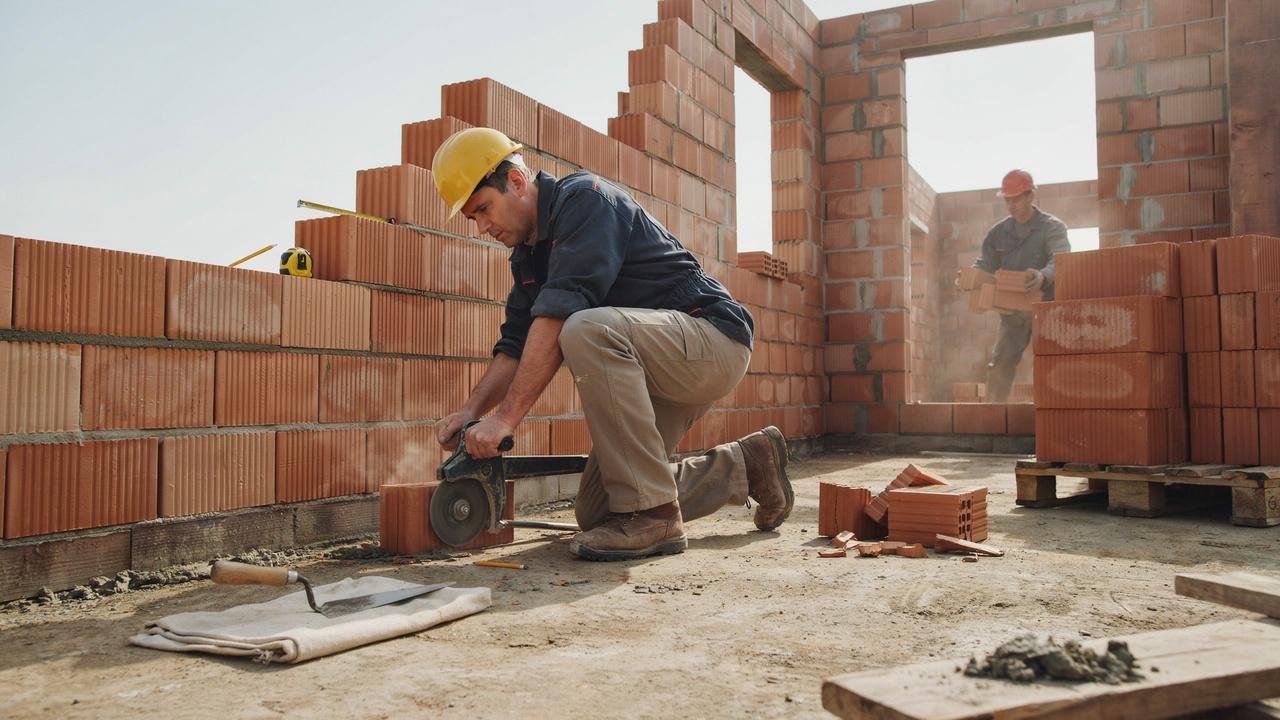
Where a full brick does not fit, you will need to cut one. For clean cuts, use a masonry angle grinder or a brick splitter. Mark the cut line with a pencil and score it before cutting.
For rough cuts on hidden areas, a bolster chisel and club hammer can work. Always wear safety glasses when cutting bricks.
Step 11: Continue Building to the Required Height
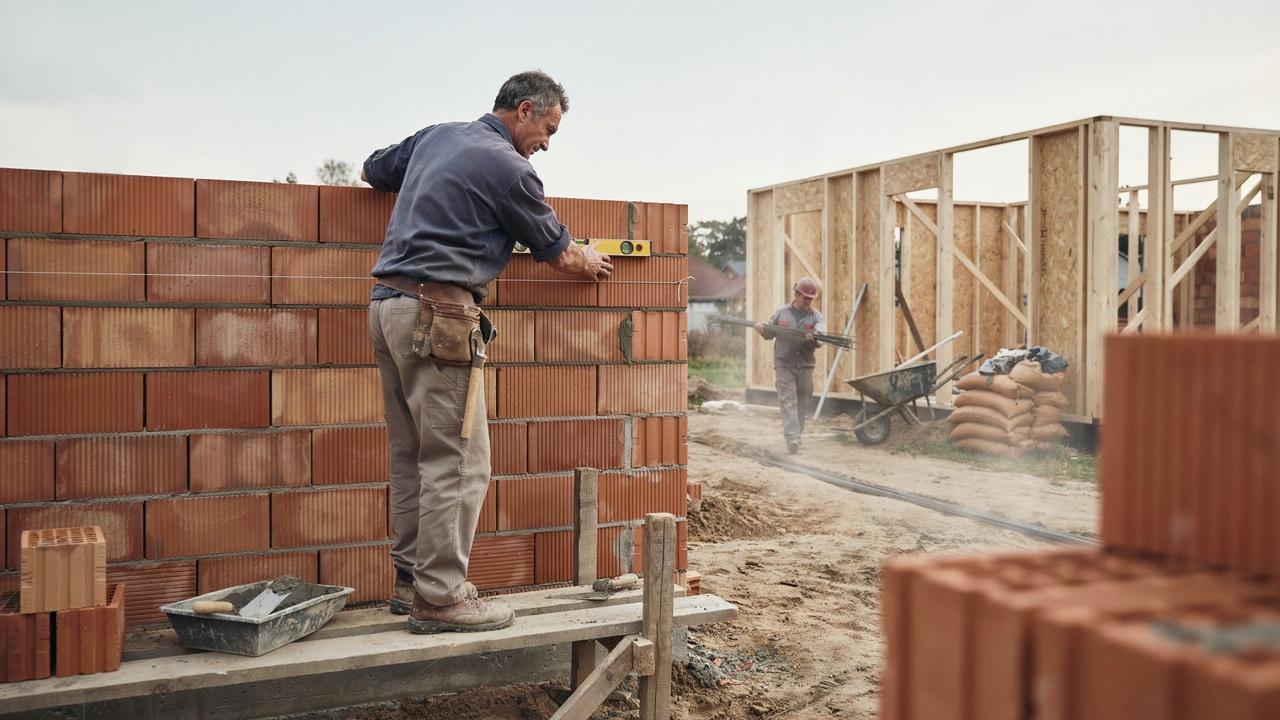
Work upward course by course. Move the string line up with each new course.
Keep checking level, plumb, and alignment at each stage. Do not build too many courses at once without letting the mortar below begin to set.
A safe practice is to build no more than six to eight courses per day on a new wall, depending on the mortar type and conditions.
Building too fast puts weight on mortar that has not yet developed enough strength, which can cause the lower courses to squeeze out or the wall to lean.
Step 12: Complete the Top Course
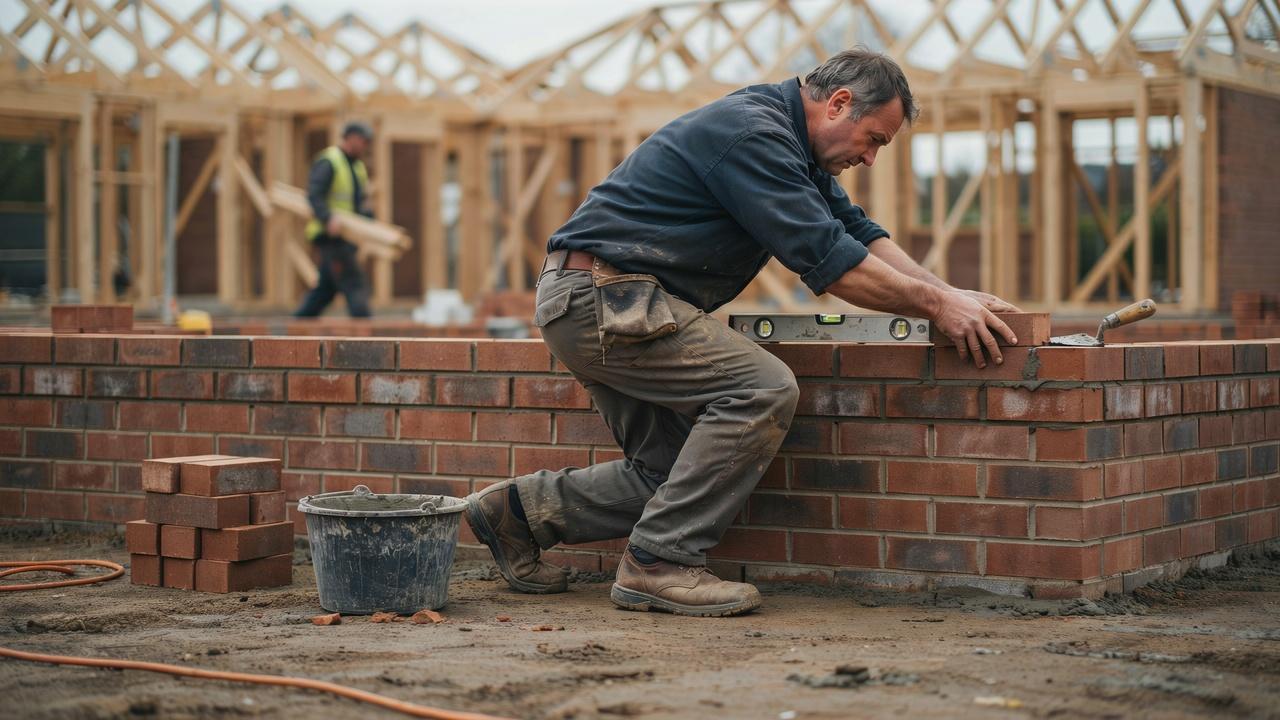
The final course, called the coping, protects the top of the wall from water penetration. A coping can be made from special coping bricks, precast concrete, or natural stone, depending on the project.
Make sure the coping overhangs the wall slightly on each side to direct water away from the wall face. This simple detail significantly extends the life of the wall.
How Do You Finish Brickwork After Laying the Bricks?
Finishing the brickwork properly protects the wall and gives it a clean, professional look.
- Once mortar begins to firm up, run a jointing tool along each joint to compress and shape it. Wait until the mortar holds a thumbprint before tooling. A concave joint is the best choice for exterior walls as it sheds water effectively.
- Trim away any mortar that squeezes onto the brick face while it is still fresh. Use a trowel to slice it off cleanly and keep a damp cloth nearby to wipe light smears before they harden.
- After the wall is complete and mortar has cured, clean the brick face using clean water and a stiff brush. For stubborn stains, use a diluted masonry cleaning solution and always test it on a small area first.
- Protect fresh brickwork during curing by covering it with damp burlap or plastic sheeting in hot weather to slow moisture loss. In cold weather, use frost protection blankets and avoid bricklaying when temperatures are expected to drop below 40°F.
- For brick veneer and exterior walls, flashing and weep holes are required by U.S. building codes. Flashing directs water out of the wall cavity through weep holes placed at the base of the wall and around openings. Missing these details is a leading cause of long-term moisture damage.
Which Brick Bond Should You Use?
The brick bond you choose affects both the strength and the look of your finished wall.
Stretcher Bond
Stretcher bond is the most common bond for modern brick walls. Each brick is laid lengthwise, with the long face visible.
Every course is offset by half a brick from the one below. It is fast to build, easy to keep level, and works well for single-skin walls and brick veneer.
English Bond
English bond alternates courses of stretchers, bricks laid lengthwise, with courses of headers, bricks laid widthwise.
This creates a very strong wall because the header courses tie the two wythes together. It is used for solid masonry walls and works well where structural strength is the priority.
Flemish Bond
Flemish bond alternates stretchers and headers within each course. Every stretcher is centred over a header in the course below.
It looks more decorative than stretcher or English bond and is often chosen for visible walls where appearance matters. It is slightly more labour-intensive to lay correctly.
How to Choose a Brick Bond
For a standard single-skin garden wall or brick veneer, stretcher bond is the practical choice.
For solid double-skin walls where structural strength is needed, English bond performs well.
For decorative walls and historic restoration work, Flemish bond is a popular option. The bond you choose should match the structural needs of the project, not just the look.
What Are the Most Common Brick Wall Construction Mistakes?
Even experienced bricklayers run into problems. Knowing what to avoid saves time and rework.
- Building on a weak or uneven foundation causes the wall to crack or shift. Fix the foundation first.
- Using the wrong mortar type leads to weak joints, especially in walls exposed to the elements or in contact with the ground.
- Inconsistent mortar joints make the wall look uneven and reduce its structural integrity.
- Skipping the string line leads to wavy, misaligned courses that are very hard to correct once the mortar has set.
- Failing to check plumb and level at each course means errors build up and become obvious higher up the wall.
- Not staggering vertical joints creates a line of weakness in the wall. Always maintain a broken bond.
- Moving bricks after the mortar begins to set breaks the bond. Once the mortar starts to firm, the brick position is fixed.
- Building too many courses too quickly loads fresh mortar before it has developed strength. Allow each section to set before continuing.
- Ignoring water drainage and flashing requirements on exterior walls leads to long-term moisture problems.
Can You Build a Brick Wall Yourself?
The honest answer depends on the type of wall and your experience level.
Small decorative walls, raised garden beds, and low garden boundary walls are good starting points for a beginner.
They are low risk, do not require permits in most areas, and mistakes can be corrected without major consequences.
Freestanding walls up to around one meter in height are manageable for a confident DIYer with good preparation and careful technique.
Anything taller or that borders a public space is more complex and carries more risk.
Brick veneer on a home requires proper flashing, ties, and moisture management details.
Mistakes in this area can lead to costly water damage inside the building structure. This type of work is usually best handled by an experienced mason.
Load-bearing brick masonry is structural work. It requires engineering design, proper materials, and professional installation. Do not attempt load-bearing walls without professional involvement.
Retaining walls hold back soil and are subject to significant lateral pressure. Anything beyond a very small retaining wall should be designed by an engineer and built by a qualified contractor.
Tall or structurally complex brick walls follow the same principle. Know the limits of your skill level, and do not let cost savings put the safety of the structure or the people around it at risk.
How Can You Make Brick Wall Construction Easier and More Accurate?
A few practical habits make a real difference to the quality and speed of your build.
- Practice on a small test section before starting the actual wall. This helps you get a feel for mortar consistency and brick placement.
- Always dry-lay bricks before mixing mortar to confirm the layout and minimise cuts.
- Keep the string line tight and correctly positioned at all times. Even a small sag in the line will throw off the course alignment.
- Check every course with a spirit level rather than waiting until problems become visible.
- Prepare enough bricks and mortar before beginning a session. Running out mid-course forces you to work with mortar that has partially set.
- Keep mortar joints consistent throughout. Varying joint thickness makes the wall look uneven and affects overall height.
- Work at a steady pace rather than rushing. Speed increases errors and usually means more rework.
Conclusion
Brick wall construction is a skill that rewards patience and preparation.
By following a clear plan, using the right materials, and taking the time to check your work at each stage, you can build a wall that is strong, straight, and built to last.
Whether it is a garden wall or a more involved project, the steps covered in this guide give you a solid foundation to work from.
If this article helped you, leave a comment below with your questions or share it with someone planning a build.
For more practical guides on masonry and construction, check out our related articles.
Frequently Asked Questions
How long does it take to build a brick wall?
A small garden wall can take one to two days. Larger structural walls take longer depending on size, weather, and mortar curing time between sessions.
How many bricks can a beginner lay in a day?
A beginner can realistically lay 100 to 150 bricks per day while maintaining acceptable accuracy. Speed improves with practice over time.
Do you need to seal a brick wall after it is built?
Not always. Sealant helps in high-moisture areas but can trap water if applied incorrectly. Check with a mason or supplier before applying any sealant.
Can you build a brick wall in cold weather?
You can, but mortar must be protected from freezing. Work when temperatures stay above 40°F and use frost protection covers on fresh brickwork overnight.
What is the standard height for a garden brick wall?
Most garden walls are between 600mm and 1200mm tall. Above 1 meter, additional structural considerations such as piers may be needed for stability.