
You've probably seen "CBS construction" in a listing or on a permit and just moved past it. Folks do.
But if you're buying, building, or just trying to understand what you're looking at, it's worth knowing what it actually means. What is CBS construction, exactly?
It stands for Concrete Block Structure, and once you understand how it's built and why it's used where it is, a lot of things about certain properties start making more sense.
Here's what you need to know.
What Is CBS Construction?

CBS stands for Concrete Block Structure, a building method where exterior walls are constructed from hollow concrete masonry units (CMUs) stacked in courses and bonded with mortar.
The blocks form the structural core of the wall. Steel rebar is threaded vertically through the hollow cells inside each block, and those cells are then filled with grout, locking the rebar in place.
This combination gives the wall both compressive strength and the ability to resist lateral forces like wind pressure.
A stucco finish is typically applied over the exterior face, sealing the surface against moisture and giving it a clean, finished appearance. This is why CBS homes are sometimes listed as Concrete Block and Stucco in Florida real estate.
The term itself appears in property listings, building permits, and contractor quotes. Depending on the region and who's using it, you might also see it written as CBS home or CBS house. The label varies. The wall system it describes does not.
What CBS Construction Actually Consists Of

A CBS wall isn't just blocks stacked on top of each other. It's a layered assembly and each layer depends on the ones around it to do its job.
The Concrete Masonry Units (CMUs)
CMUs are the hollow rectangular blocks that form the wall's core. Standard units run 8 inches high, 8 inches wide, and 16 inches long. The hollow cells running through them aren't a design flaw. They're where the reinforcement goes.
Modern CMUs are made from Portland cement and aggregate. That matters because they're often confused with legacy cinder blocks, which were made from fly ash, a coal combustion byproduct.
Cinder blocks absorb more moisture and carry less load. They're not the same material, and they don't perform the same way.
Mortar, Grout, and Rebar Reinforcement
If you want the full picture on how the block wall itself goes up, CMU wall construction breaks that down step by step. Mortar bonds the blocks together as they're stacked.
Once the wall reaches the right height, steel rebar is threaded vertically through the hollow cells. Those cells are then filled with a fluid concrete mix that locks the rebar in place.
Here's what most descriptions leave out:concrete is strong under compression but weak under tension. When wind pushes laterally against a wall, the wall bends slightly.
That bending creates tension. The rebar handles it. Without the rebar, the wall resists compression well but cracks under lateral load. Without the grout, the rebar floats loose inside the cell and can't transfer force into the block.
Leaving cells unfilled is a shortcut that happens in the field. It looks fine from the outside. Structurally, it breaks the assembly.
The Stucco Finish Layer
Stucco is applied over the exterior face of the block wall once the structure is complete. It seals the surface against moisture intrusion and gives the wall its finished appearance.
It adds some impact resistance, but it's not a structural layer. The wall performs the same with or without it.
What CBS Construction Is Not
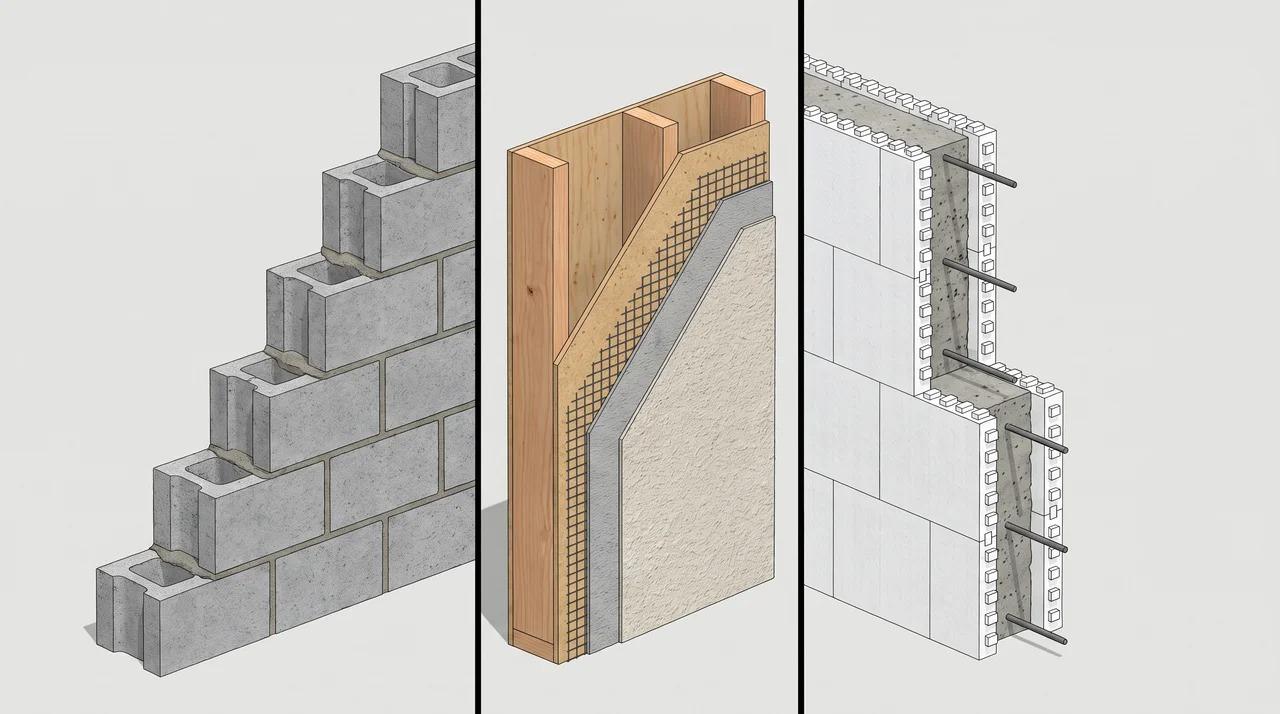
CBS is not the same as cinder block construction even though people use the terms interchangeably. The blocks are different materials with different performance profiles.
Calling a CBS wall a cinder block wall is like calling a steel beam an iron bar. Related history, different products.
It's also not what you're looking at when you see a stucco exterior. Stucco gets applied over wood-frame walls too through systems like EIFS or traditional three-coat stucco.
From the street, a CBS home and a stucco-over-frame home look identical. The difference is entirely behind the surface.
CBS is also distinct from ICF construction Insulated Concrete Form which uses foam forms filled with poured concrete rather than stacked masonry units.
The two methods both involve concrete walls, but the materials, process, and performance characteristics are different enough that they shouldn't be grouped together.
Why CBS Construction Is Used Where It Is
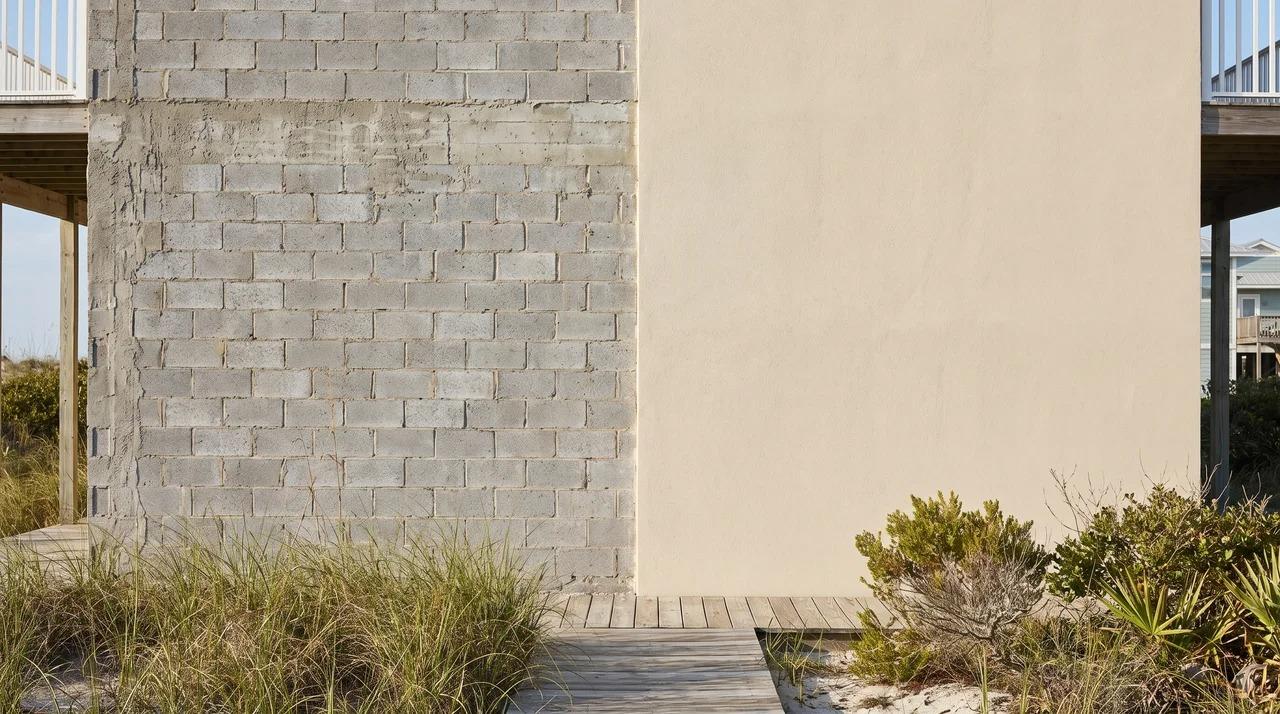
CBS dominates in certain markets because the wall's physical properties solve real problems those climates create.
Wind is the clearest example. A CBS wall has mass and continuity that wood framing doesn't. There are no wood members to split, no gaps between studs for pressure to exploit.
When high-velocity wind hits a CBS wall, the wall's weight and solid cross-section resist both the force and the debris that travels with it.
Florida's building codes have progressively reflected this. In many coastal counties, CBS isn't just common, it's effectively required for new residential construction.
Termites are the second driver. In high-humidity coastal environments, wood-frame homes need active treatment and ongoing monitoring. CBS walls give termites nothing to eat. That changes both the maintenance picture and how insurers price the risk.
Fire resistance follows the same logic. Concrete blocks don't ignite or spread flame. In dense residential areas, that changes how a fire behaves once it starts.
None of this makes CBS the right choice everywhere. But in the markets where it's dominant, it's dominant for a reason.
Final Verdict
CBS construction isn't complicated once you see it for what it is. It's a wall system built to handle conditions that wood framing wasn't designed for.
At its core, it's concrete, steel, and mortar working as one assembly. That's what makes it hold up where other systems don't.
In coastal markets, CBS almost always pairs with a slab-on-grade foundation. Same thinking, same environment, built to last the same way.
Now you know what the listing actually means when it says CBS. That's more than most buyers can say walking in.
Have questions about your specific project? Talk to a licensed contractor who knows your local market.
Frequently Asked Questions
Is CBS construction good?
For the right climate, yes. CBS walls handle wind, fire, and moisture better than wood framing, and in hurricane-prone or high-humidity areas they're consistently the smarter long-term choice.
What are the disadvantages of cinder block homes?
Older cinder block homes absorb moisture more readily than modern CMU construction, and when cracks appear because of foundation shifts, repairs require masonry skills most general contractors don't have.
Does CBS construction cost more to build than wood frame?
Generally yes, because heavier materials, slower installation, and specialized labor all push the upfront cost higher, though insurance savings and lower maintenance over time can close that gap significantly.
Can you tell if a home is CBS just by looking at it?
Not reliably, because stucco gets applied over wood-frame walls too, and the only way to confirm CBS construction is to check the building permit or have an inspector look at the wall assembly directly.