
Post and beam vs timber frame sounds like a choice between two different kinds of wood buildings. It usually isn’t.
The Timber Framers Guild calls timber framing a specialized version of post and beam. The timbers can look alike. The way they’re joined is what changes.
That one detail shapes who can build your frame, how it ages, and how quotes compare. I’ll show you how to tell the two apart and choose with confidence.
Let’s start with what each term actually means.
Post and Beam vs Timber Frame: What’s the Difference?
Post and beam and timber frame are both heavy-timber systems. They differ in how the timbers are joined.
Timber frame is a building method where large posts and beams carry the whole structure. The timbers are cut to lock into each other, wood to wood.
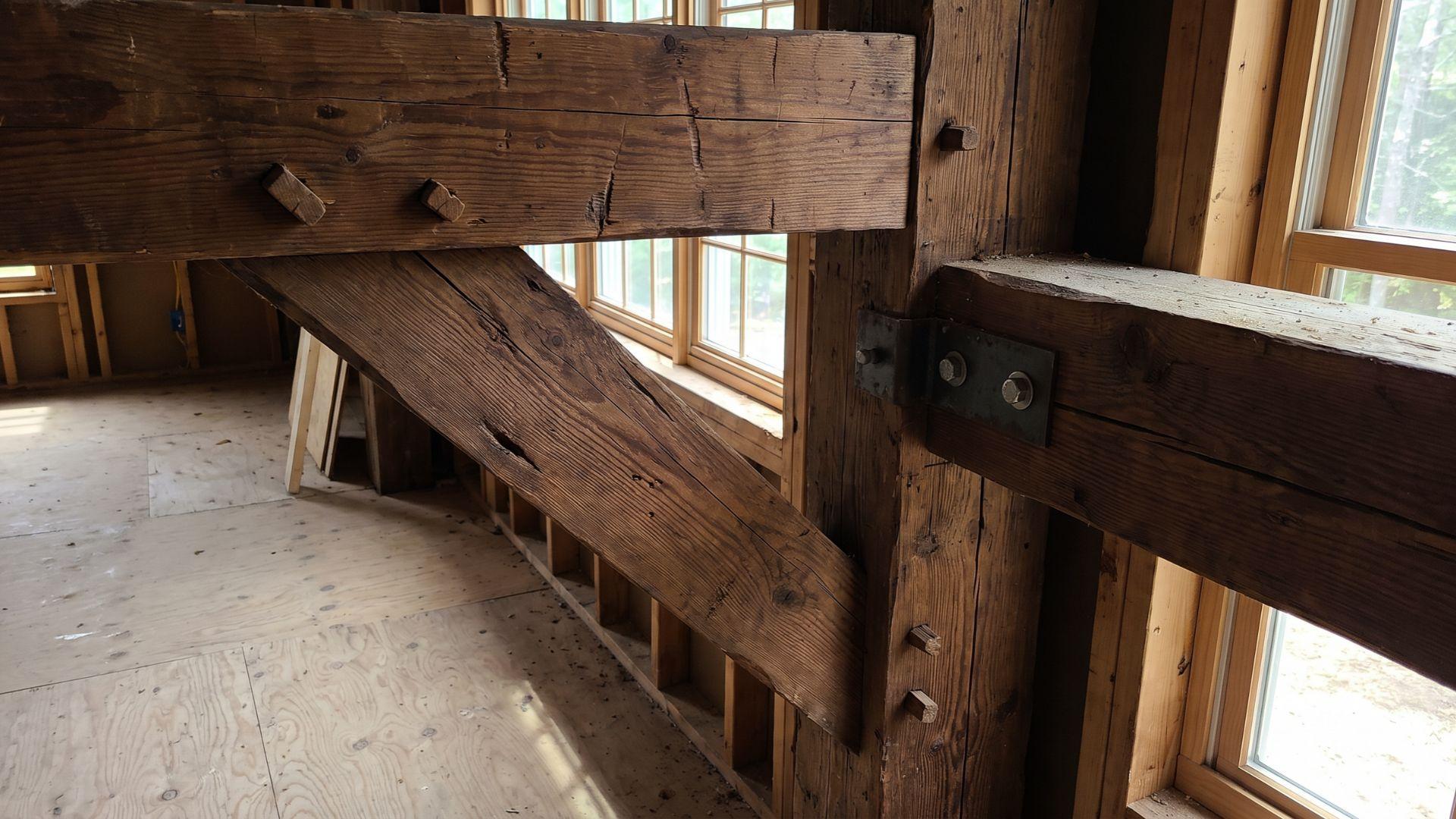
Post and beam also use large posts and beams to carry the load. Here, the timbers are joined with metal connectors instead.
Timber framing is the older tradition. It goes back centuries, long before modern hardware existed.
Post and beam is the newer, engineered version of the same idea.
In both, the frame holds the weight, so interior walls don’t have to.
The two names get used loosely, and some builders blur them. Ask how the timbers actually connect, not what the brochure calls it.
What Are the Key Differences Between Post and Beam and Timber Frame?
The key difference is the connection method: wood joinery versus metal fasteners. That one choice decides the labor, the build time, and the finished look.
| Factor | Timber Frame | Post and Beam |
| Connection method | Wood-to-wood joints such as mortise and tenon, locked with wooden pegs | Steel plates, brackets, bolts, or hidden fasteners; some builders use half-lap joints with concealed hardware |
| Metal use | Little or none | Visible or concealed hardware is part of the system |
| Labor and skill | Specialized carpenters cut precise joints by hand or CNC | Simpler engineering and standard hardware; less specialized labor |
| Build time | Longer, because of custom joinery work | Faster assembly |
| Finished look | Seamless and artisanal; the joinery is the feature | Modern-rustic or industrial; metal visible or hidden |
Start with the joint. A wood-to-wood joint has to fit tightly, so every cut must be exact.
Exact cuts take skilled carpenters and plenty of shop time. That is why timber frame builds run slower.
In post and beam, metal hardware does the holding. The timbers can be cut more simply, so the work moves faster.
The look follows the same path. When wood does the joining, the joints show and metal stays out of sight. When metal does the joining, the hardware either shows or gets hidden.
Here is the contrast that matters. In a timber frame, the joint is both the structure and the decoration. In post and beam, the hardware holds and the timber only carries.
The timber itself is the same in both. Size and species don’t make the two feel different. The connection does.
Some builders mix methods, so the table shows typical practice, not a rule.
How Much Do Post and Beam and Timber Frame Cost?

No official source publishes a set price gap between the two systems. Your design, region, and builder decide the price.
The parts below cover what drives the cost and how to get a real quote for your project.
What Drives the Price of Each System
Timber framing is a skilled trade with its own apprenticeship. Carpenters cut each joint by hand or on a CNC machine.
Post and beam holds timbers together with bolts and steel connections. Those connections still have to be designed for the load.
Connector size, wood species, and timber thickness all affect how strong a metal connection is. That design work is part of what you pay for.
The Timber Framers Guild says a timber frame is comparable in cost to a well-built custom home. That means one with cathedral ceilings, open space, and similar finishes.
Your other design choices change the total too. The frame is only one part of the bill.
Why Quotes Are Hard to Compare
Two quotes for the same house can cover different work. The Guild notes that companies offer different services within a timber frame package.
One quote may cover design and cutting only. Another may add delivery, raising, and engineering.
Foundations matter too. The Guild says timber frame foundations must account for point loading where the posts sit. That differs from conventional buildings.
A cheaper-looking quote may leave out work you will pay for later. Compare what each quote covers before you compare totals.
How to Get a Real Price for Your Project
Give each builder the same plan for both systems. Then ask them to itemize the quote.
Use these questions with every builder. They turn two different quotes into one comparison.
- What does the frame package include:design, cutting, hardware, and delivery?
- How are the timbers connected: wood joinery, metal hardware, or both?
- Who engineers the frame and its connections?
- Are the crane and crew for raising the frame included?
- What does the foundation need under the posts?
With the answers in writing, you can put two quotes side by side and compare them line by line. If a builder can’t answer one of these questions, that’s a red flag.
What Do Post and Beam and Timber Frame Have in Common?
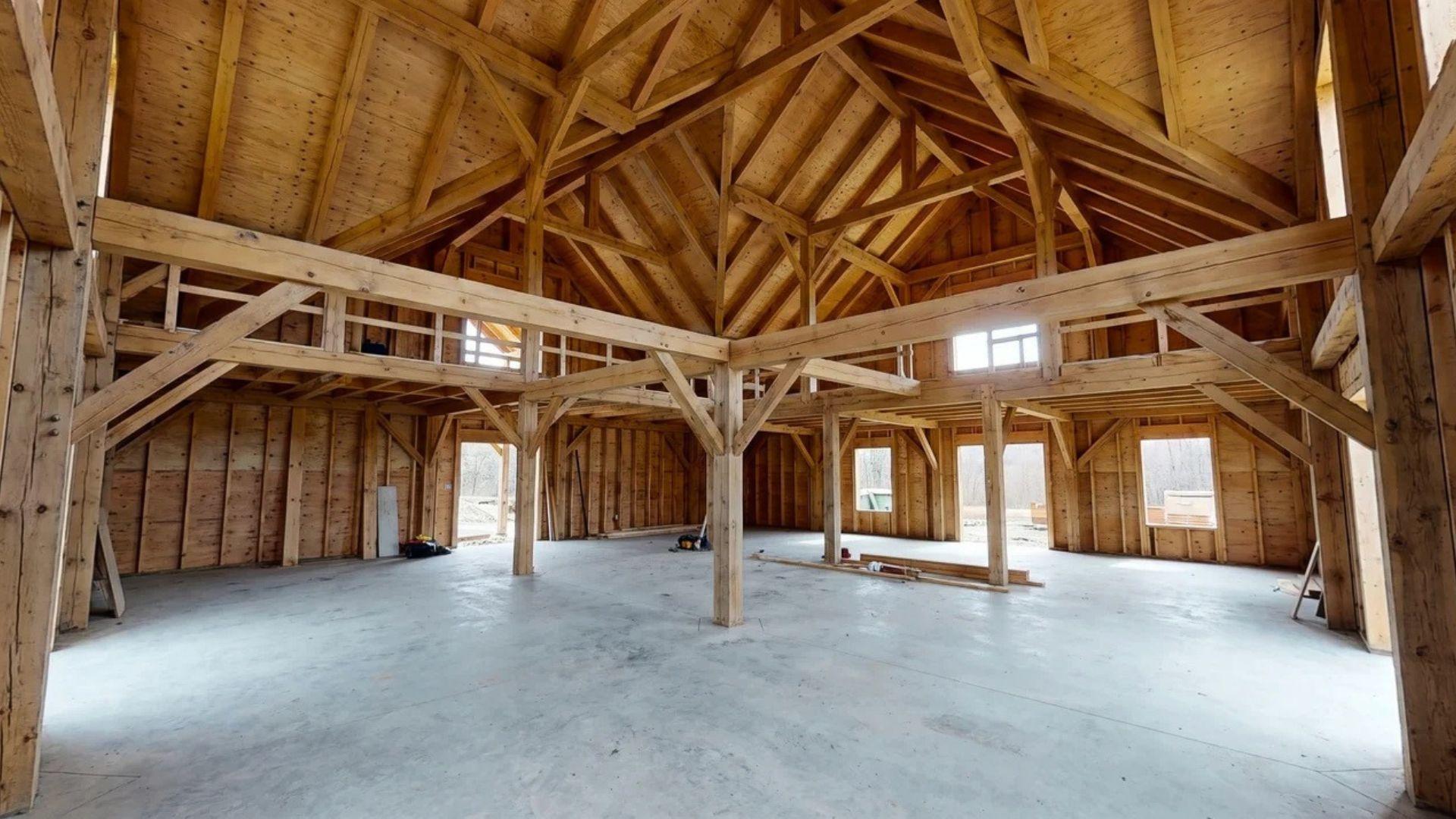
Both systems deliver open interiors, vaulted ceilings, and exposed timber. If those are your goals, either one gets you there.
Here is why. Posts and beams carry the load in both. Interior walls stop being structural, so the floor plan can stay open.
Open has limits, though. Span and beam size still shape how wide a room can go before you need another post.
Vaulted ceilings and exposed timber come from the heavy timber itself, not from the joint type. That’s why you can have them either way.
Exposed doesn’t mean everywhere. Timbers stay visible in the main living space. They can be covered in a bathroom, a closet, or where you want a plain wall.
Layout rarely decides this choice. If you’re stuck, stop comparing floor plans. Compare joinery, cost, and who can build it near you.
How Do Post and Beam and Timber Frame Hold Up Over Time?
Both systems can last for generations. How long yours lasts depends on moisture protection and upkeep more than on the framing label.
Each one ages by a different route. The two parts below cover how, and what to check on each.
How Timber Frame Joints Age
Wood moves. As timber dries, it shrinks and settles a little.
Pegged wood joints move with it. The joint and the timber change together, so the connection stays tight. That is a big reason timber frames have such a long track record. Plenty of old frames still stand.
Still, not all timber is equal. Wood that was well dried before cutting holds up better than wood that wasn’t. Over the years, check the joints and pegs.
Look for gaps opening up, cracks near the pegs, or any sign of moisture.
How Post and Beam Connections Age
Metal doesn’t move the way wood does. The timber still shrinks as it dries, but the hardware doesn’t. That can leave connectors loose over time. They depend on staying protected and tight.
Hardware quality matters a lot here. Cheap or poorly coated metal can corrode, and moisture speeds that up.
So moisture protection decides how long a post and beam frame holds. Keep water away from the connectors.
Check the connectors and fasteners now and then. Look for rust, loose bolts, or gaps where the timber has shrunk.
Which Should You Choose: Post and Beam or Timber Frame?

The decision turns on three things: your budget, whether visible joinery matters to you, and who can build it near you.
Choose timber frame if:
- The joints are part of the design, and you want people to see them.
- Your budget covers skilled labor.
Choose post and beam if:
- Budget or build speed matters more to you.
- Standard hardware is fine, and a modern-rustic look suits the project.
Use these as a starting point. Each pick has a point where it stops being the right one.
The biggest one is local crews. I’ve seen the better option on paper turn into the wrong one because no skilled timber-frame crew was nearby.
If a few builders in your area cut real joinery, timber frames can cost more and take longer than you planned. Post and beam may win by default.
Watch the quotes too. A “timber frame” quote that leans mostly on steel plates is not what it says. The same goes for a “post and beam” quote with hand-cut joinery.
Whichever you pick, get the connection method written into the contract. That one line protects you from buying something you didn’t ask for.
Final Verdict
Post and beam vs timber frame comes down to one question: how are the timbers joined? Once you know that, the rest falls into place.
Here’s the useful part. A brochure label tells you little. A written description of the connections tells you what you’re really buying.
So before you pick a style, pick your questions. Ask each builder how the frame is joined, who engineers it, and what the quote covers.
Request quotes for both systems today, and ask for the answers in writing.
Frequently Asked Questions
Are timber frame and post and beam homes fire resistant?
Large timbers char on the outside while the core keeps its strength, which is why building codes recognize heavy timber. Exposed steel connectors can be a weak point in a fire, so ask how they are protected.
Is post and beam construction cheaper than stick framing?
Usually not. Heavy timbers and connectors typically cost more than conventional stick framing, though prices vary by timber grade, hardware, and design.
Is it harder to sell a timber frame house?
Not necessarily. The buyer pool is narrower, which can slow a sale in some areas, but local market and design matter more.
Can you combine timber frame and post and beam in one building?
Yes. Some builders use hand-cut joinery in visible areas and metal connectors where loads are heavy or access is tight. Ask which joints are wood and which use hardware, and get it in writing.