Not sure which masonry construction type fits your building project? You are not alone. Many builders, property owners, and insurance professionals struggle to tell these types apart.
The differences are not always obvious, and a wrong classification can cause real problems down the line.
This article breaks down all 7 masonry construction types in plain language.
You will learn what makes each one different, how they are used, and why the classification matters for safety, cost, and code compliance.
Whether you are picking materials or reviewing a building code, this guide gives you the answers you need.
With years of construction knowledge behind this content, you can trust that every detail here is accurate and practical.
Masonry Construction Type Explained
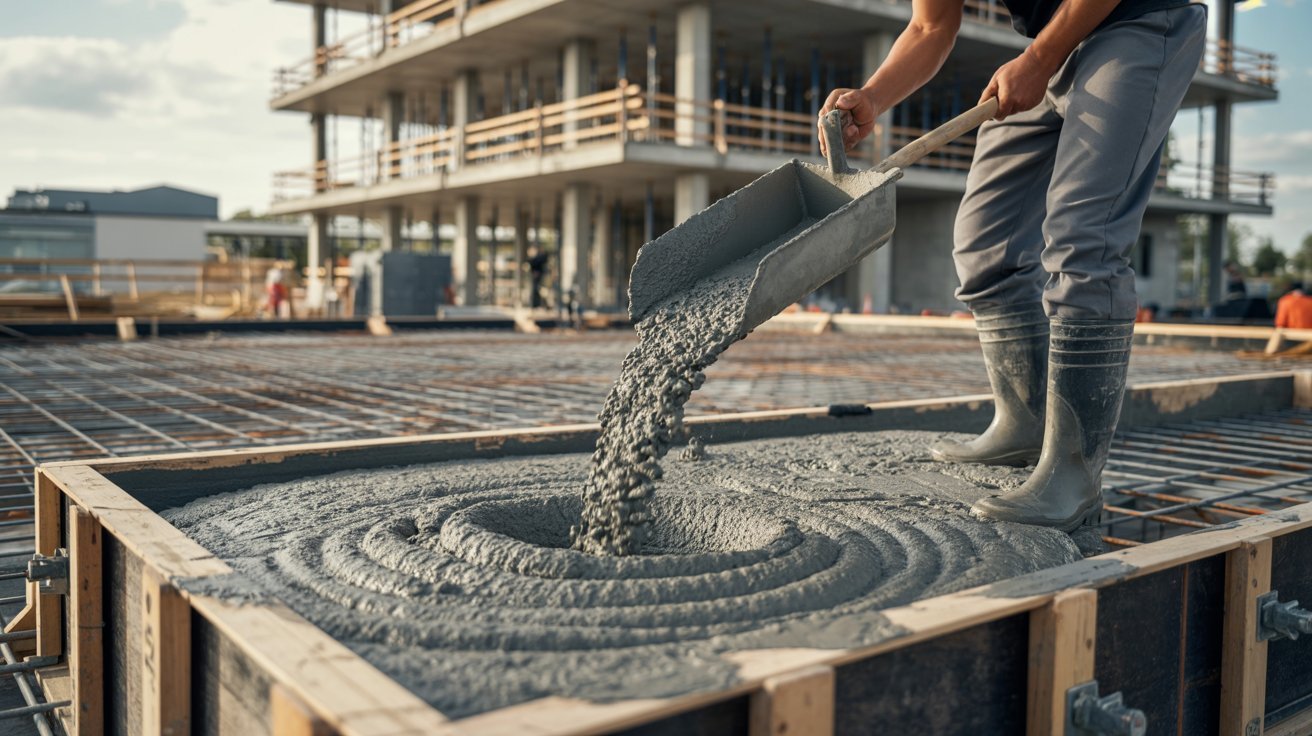
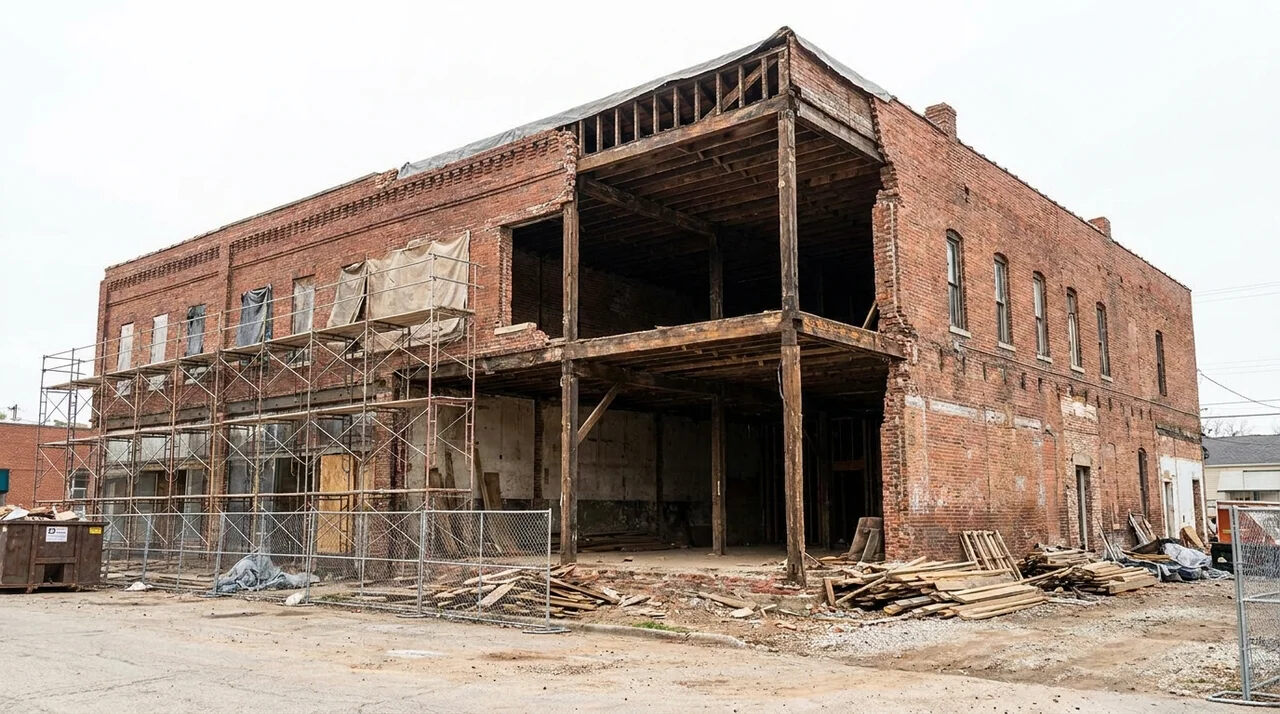
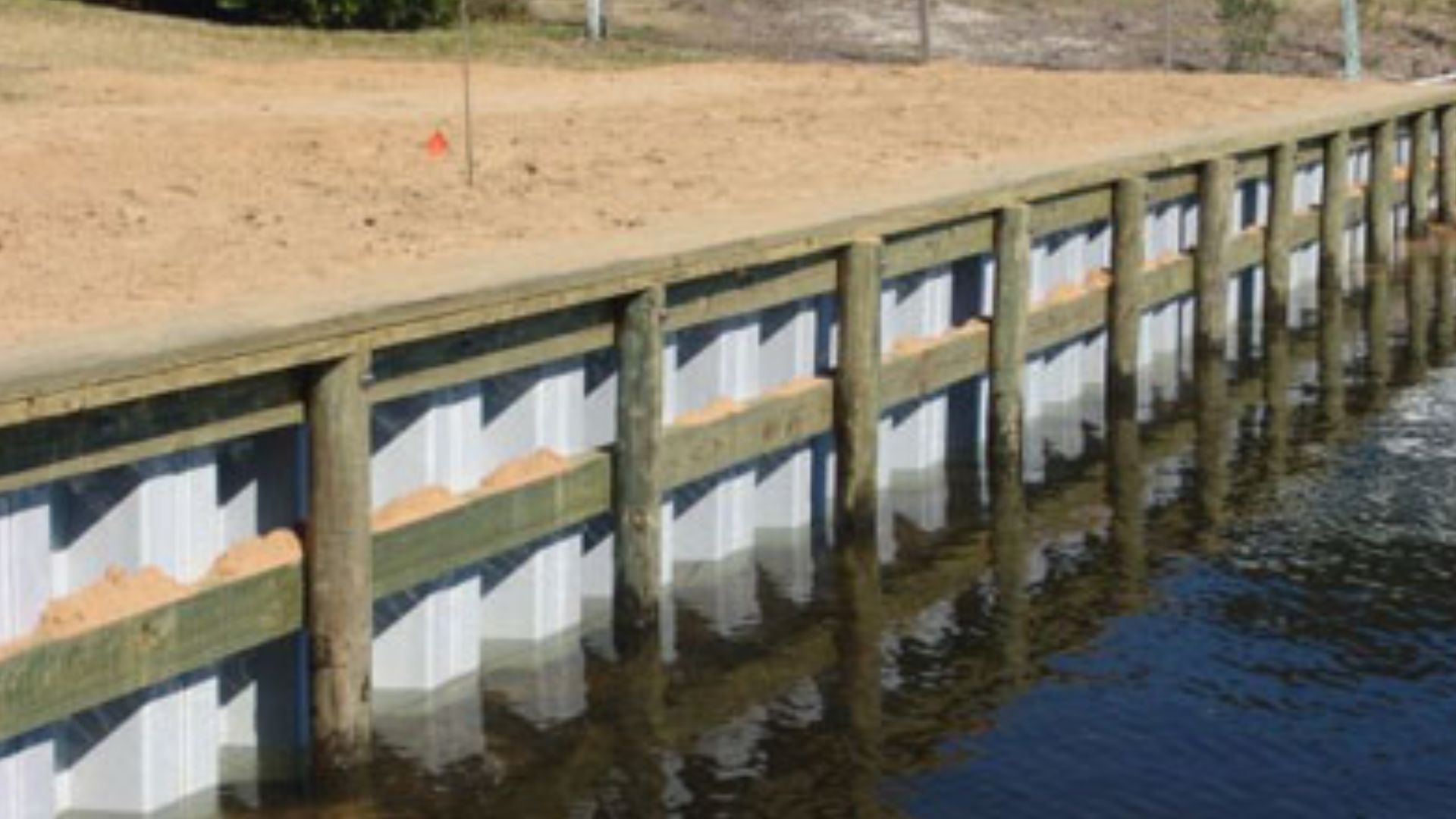
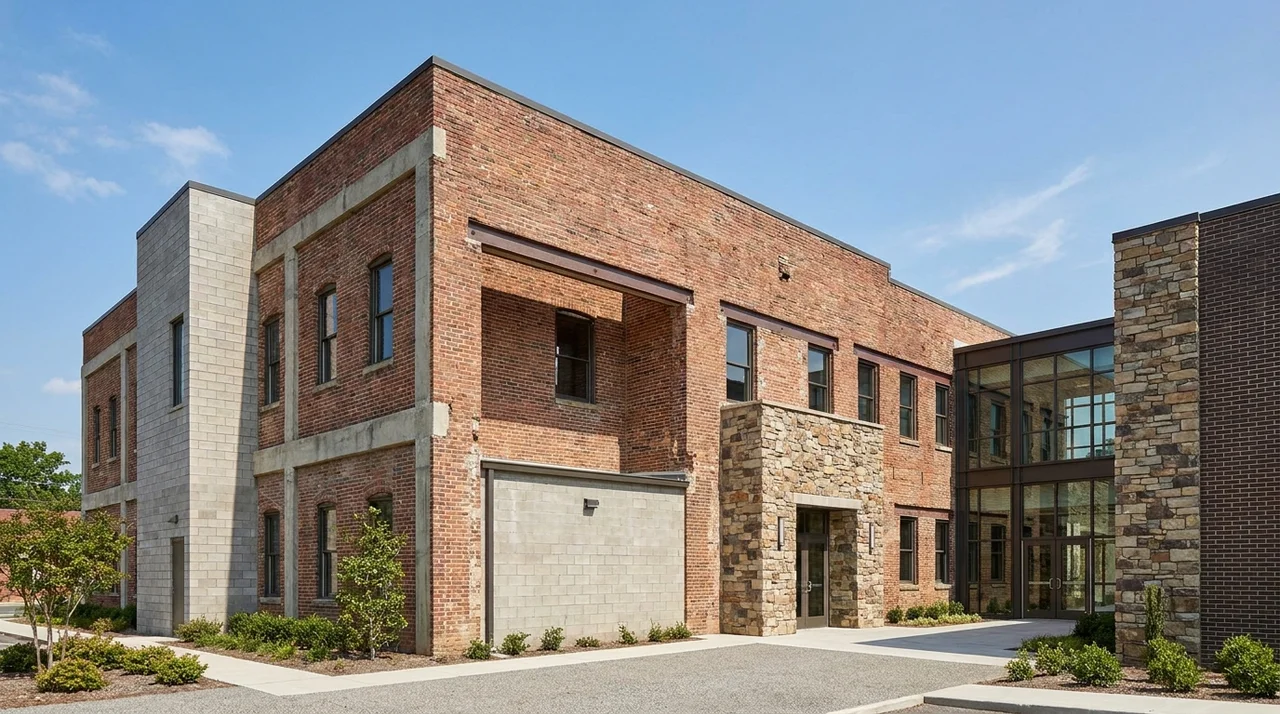
Masonry construction uses solid materials like brick, stone, and concrete blocks bonded with mortar to create strong, fire-resistant, and long-lasting buildings.
Mortar is the binding agent that holds every unit together, and its type matters. Type M mortar works for foundations, while Type N handles general walls.
From small homes to large industrial facilities, masonry buildings hold up well over time and need less maintenance than most other building types.
A masonry construction type refers specifically to how a building is built using these materials as its main structural system, where the walls carry the load and the materials used define the classification.
This affects everything from building permits to insurance rates, making it critical for contractors and property owners to get it right. Construction classifications are set by building codes and insurance standards.
Organizations like the International Building Code and the Insurance Services Office sort buildings by material and structure, with each class reflecting fire resistance and structural strength.
Getting the type wrong is not just a paperwork mistake. It can lead to failed inspections, higher premiums, and costly project delays.
7 Masonry Construction Types to Know
Each masonry construction type has its own materials, purpose, and structural role. Here is a breakdown of all seven.
1. Brick Masonry Construction
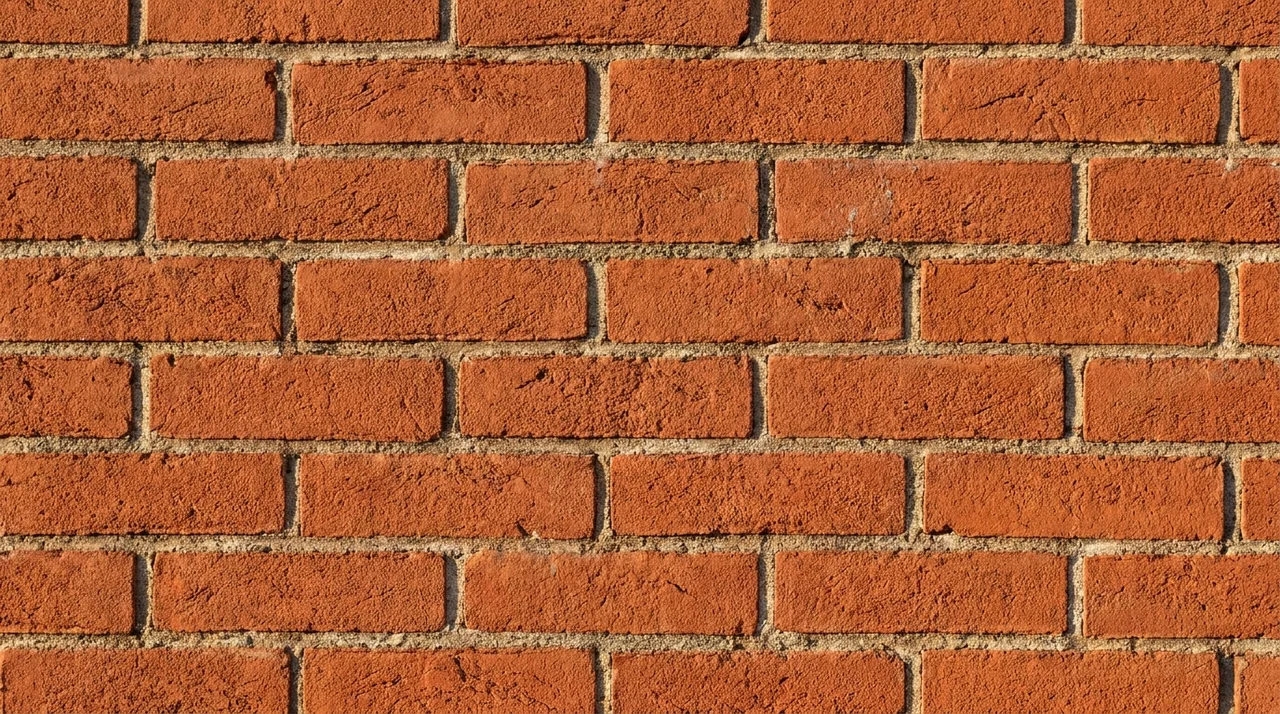
Brick masonry is one of the most common types. It uses clay or concrete bricks bonded with mortar. Bricks come in standard sizes, which makes construction consistent and reliable.
Bricks can be laid in different bond patterns. Running bond, Flemish bond, and English bond each offer a different mix of strength and appearance.
This type works well for homes, schools, and office buildings. It offers good fire resistance and a classic look. Brick walls can be load-bearing or used as a veneer over another structure.
2. Concrete Block Masonry Construction

Concrete block masonry uses hollow or solid concrete masonry units (CMUs) instead of bricks. These blocks are larger, which speeds up construction and reduces labor costs.
This type is popular for warehouses, basements, and retaining walls. Concrete blocks handle moisture well and provide solid insulation when filled with concrete or foam.
3. Stone Masonry Construction
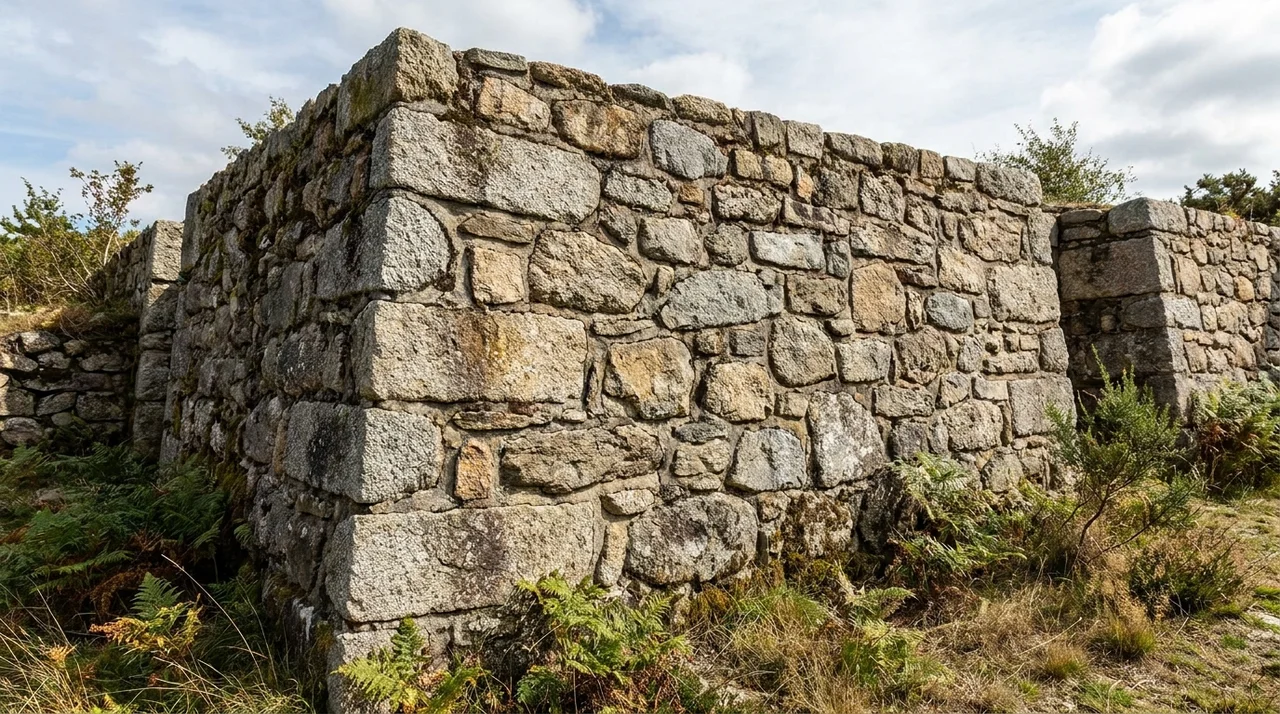
Stone masonry uses natural or cut stone as the main material. It is one of the oldest building methods in history.
Two main forms exist, rubble masonry, which uses rough and irregular stones, and ashlar masonry, which uses precisely cut and smooth stones laid in clean patterns.
Stone construction is extremely durable and requires little maintenance. It is often used in heritage buildings, foundations, and landscaping walls.
4. Reinforced Masonry Construction
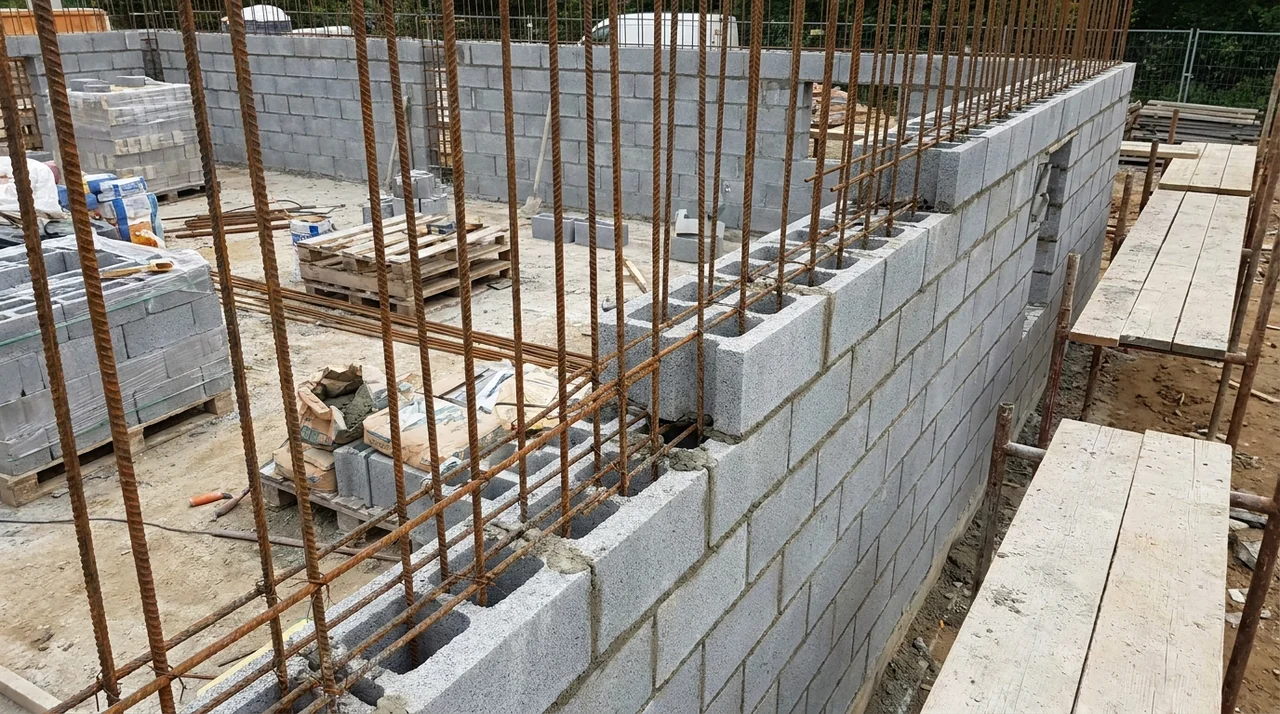
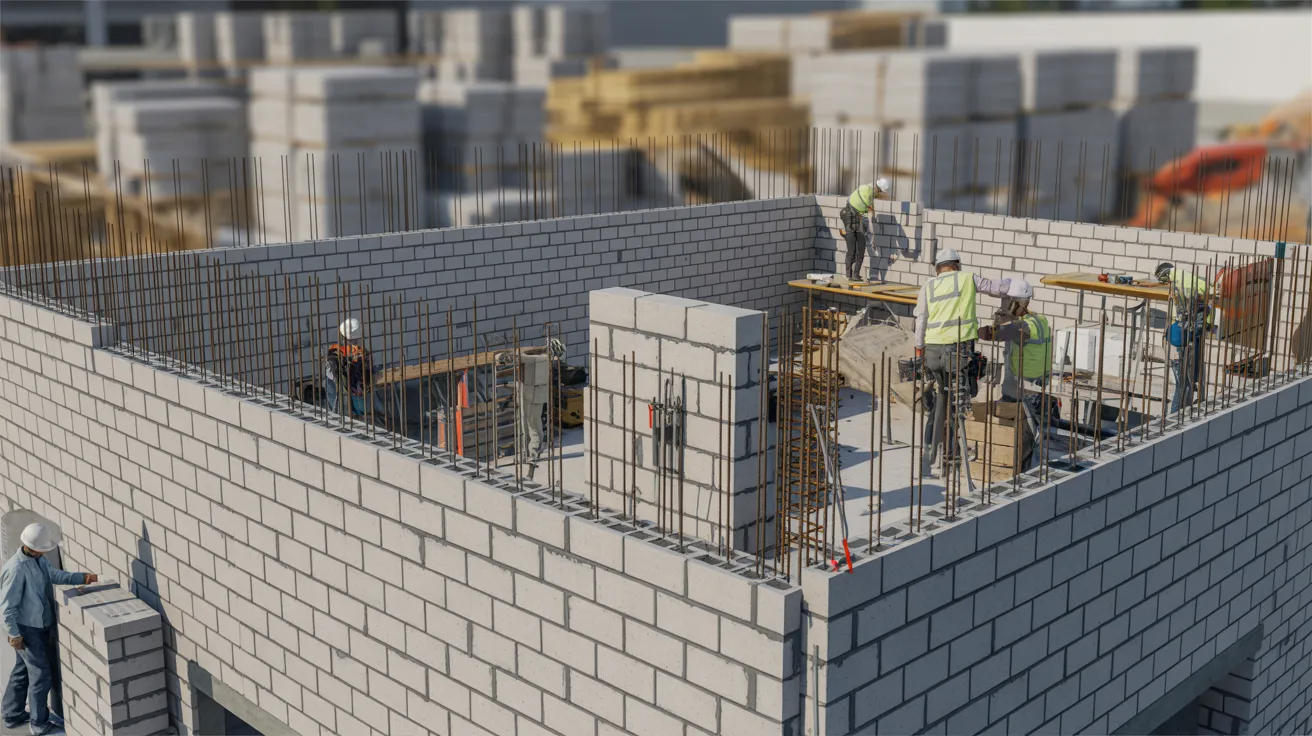
Reinforced masonry adds steel rebar or mesh inside the masonry walls. The steel works with the masonry to handle tension and compression. This makes the structure much stronger than standard masonry.
It is used in areas with high wind loads or seismic activity. Reinforced masonry meets stricter building code requirements and is common in commercial and industrial buildings.
5. Load-Bearing Masonry Construction
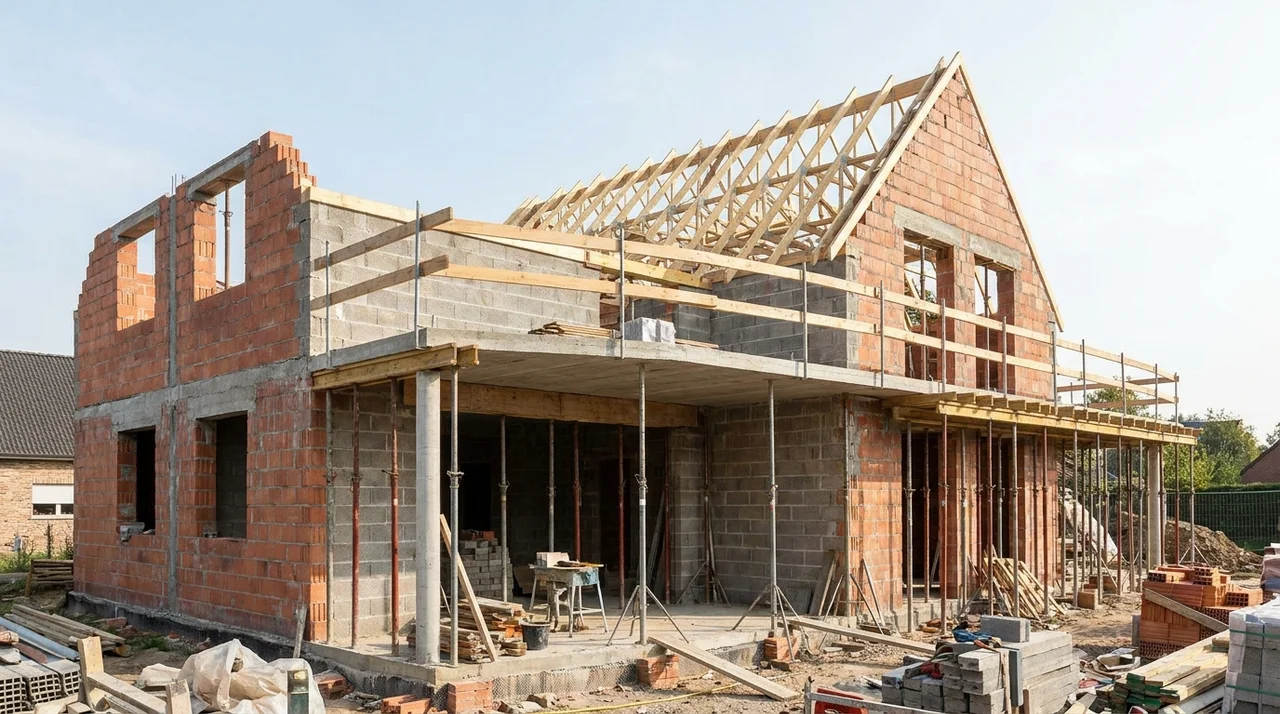
In load-bearing masonry, the walls carry the weight of the floors and roof. There is no separate steel or concrete frame. The masonry itself is the structural system.
This type is cost-effective for low-rise buildings. However, it requires careful design to ensure the walls can handle all the loads placed on them.
6. Nonload-Bearing Masonry Construction
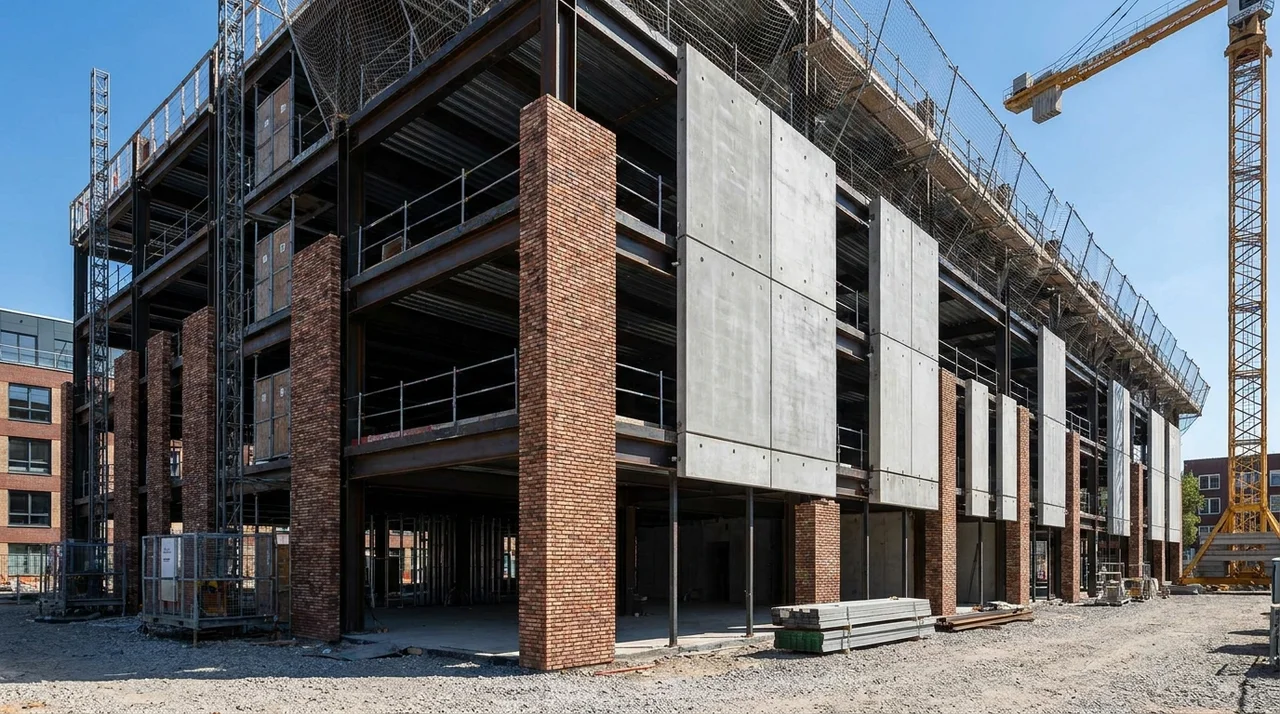
Nonload-bearing masonry walls do not carry structural loads. They act as partitions or exterior cladding. A separate frame, usually steel or concrete, holds up the building.
This type gives designers more flexibility. It is often used in high-rise buildings where the frame does the structural work and the masonry adds protection and finish.
7. Composite Masonry Construction
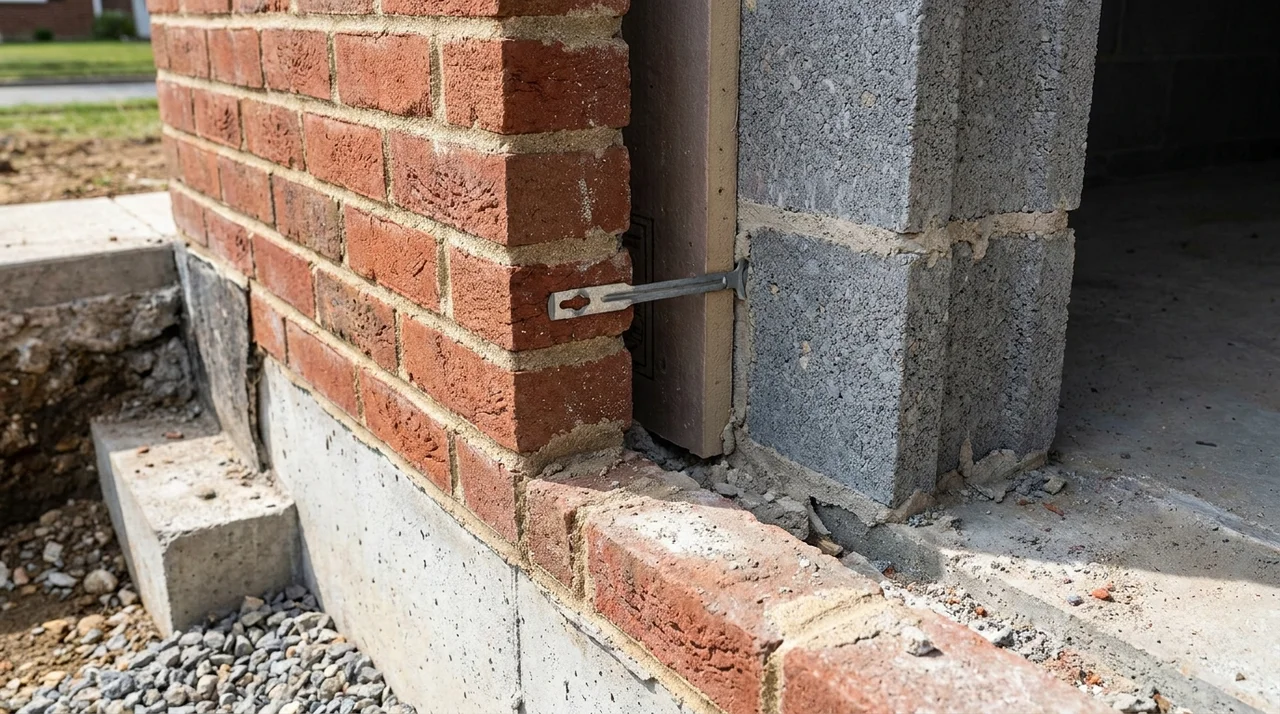
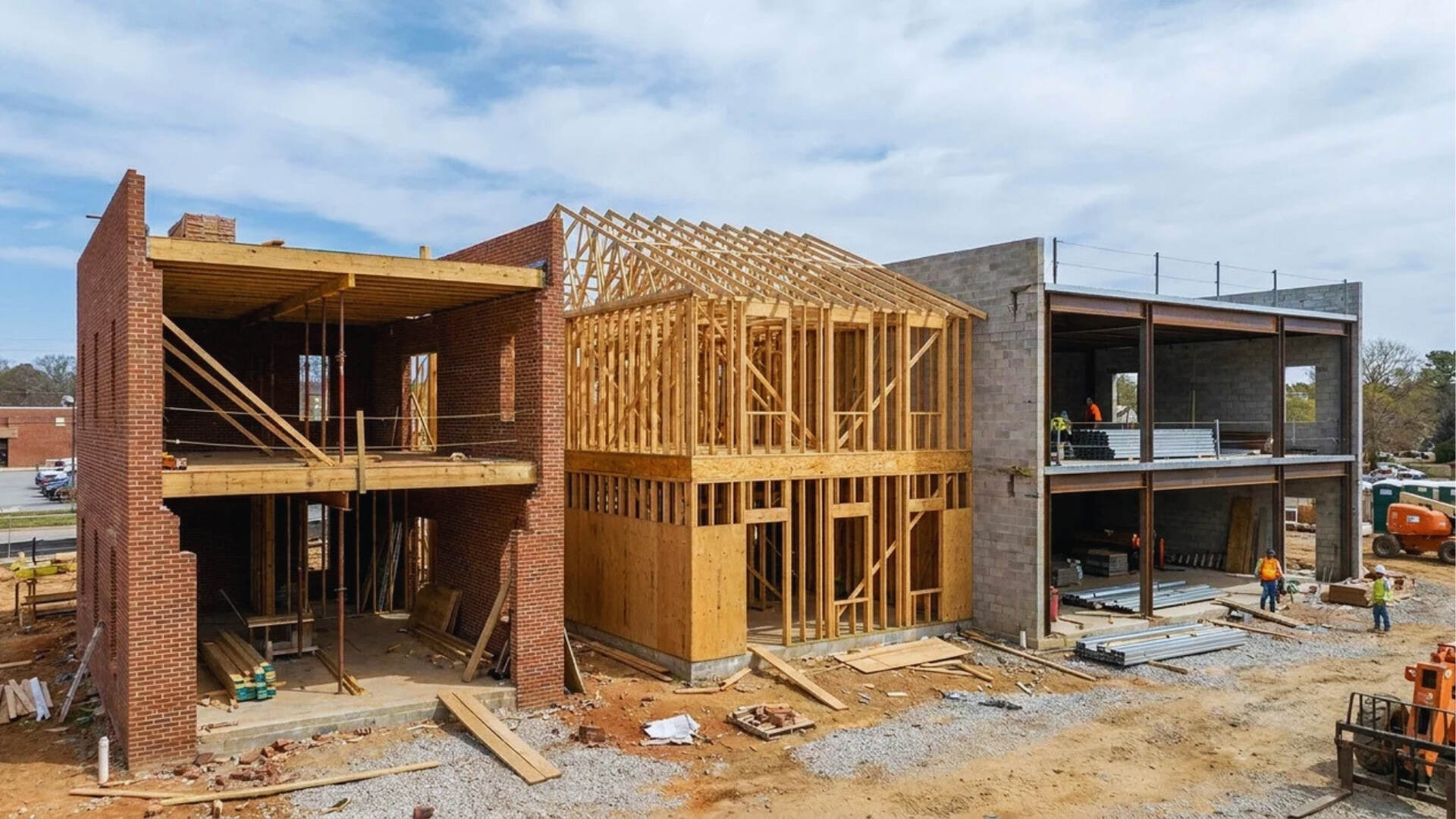
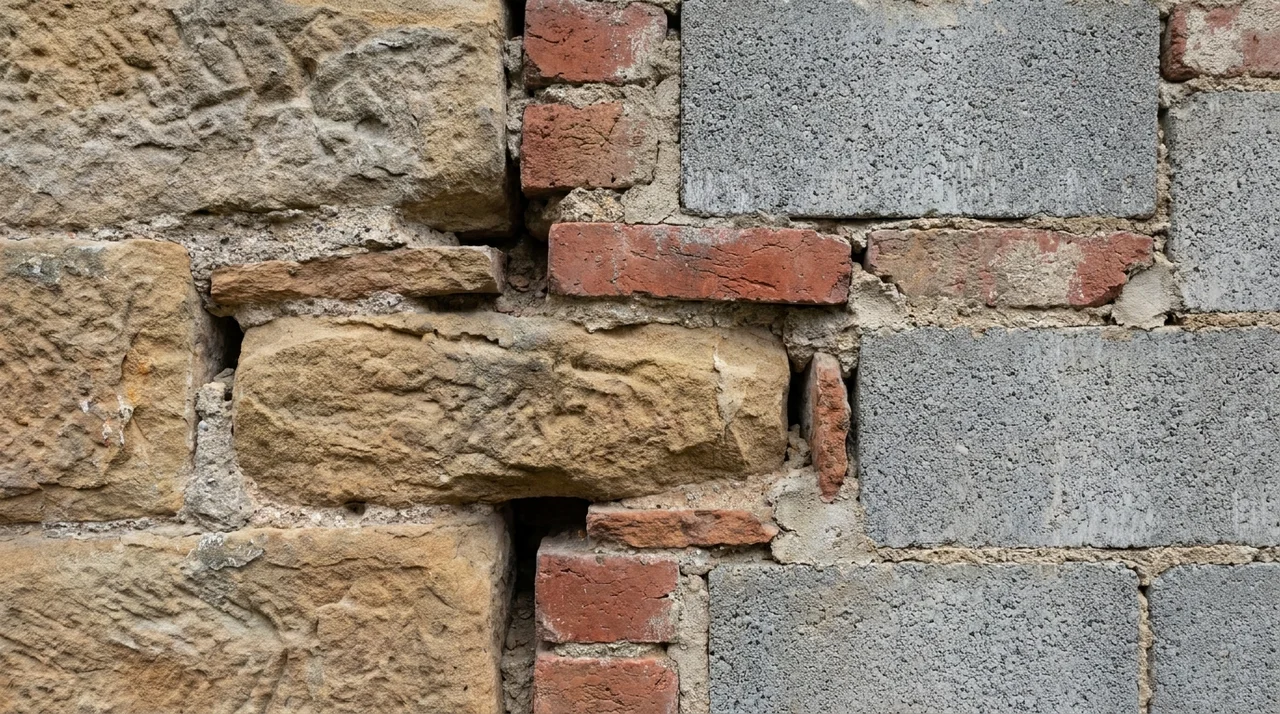
Composite masonry combines two or more types of masonry materials in a single wall.
For example, a wall might have brick on the outside and concrete block on the inside. The two layers work together as one unit.
This type balances cost, strength, and appearance. It is used when one material alone cannot meet all the project requirements.
How Do Masonry Construction Types Differ?
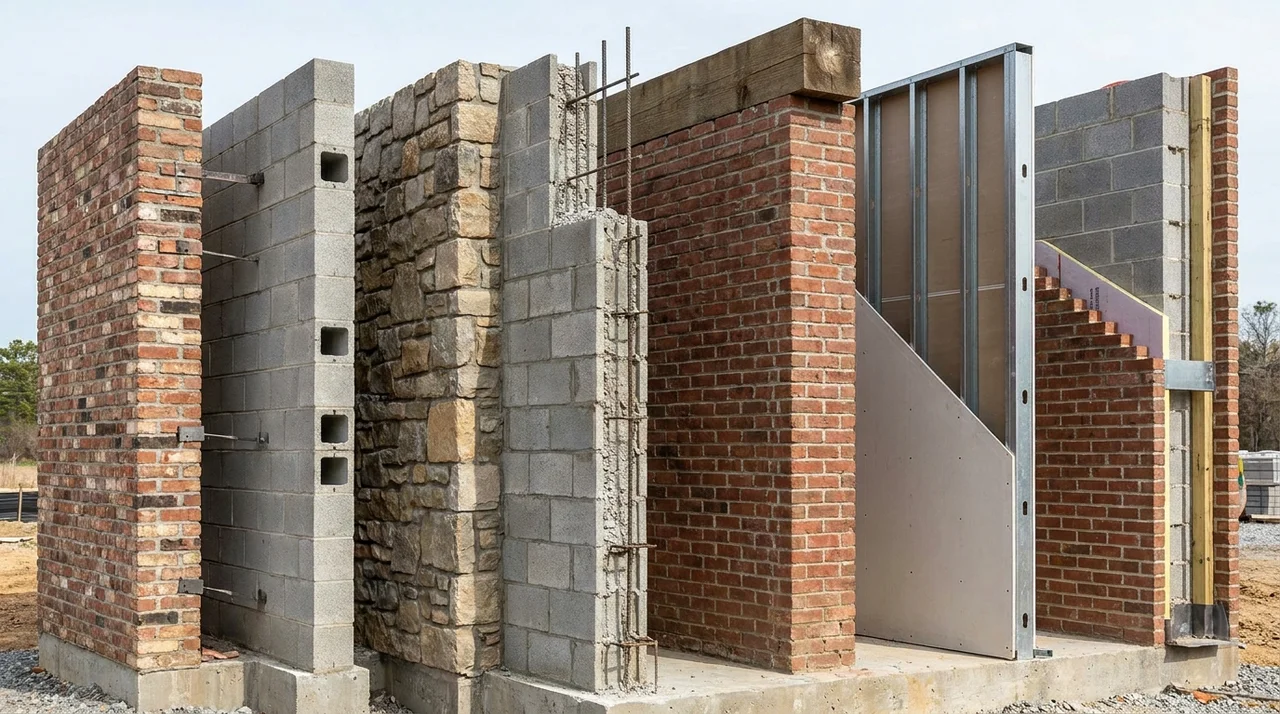
The seven masonry construction types are not interchangeable. They differ in materials, structural roles, and performance under stress.
Brick masonry uses fired clay bricks, concrete block masonry uses precast CMUs, stone masonry uses natural rock, reinforced masonry adds steel rebar, and composite masonry mixes two or more materials.
The choice affects cost, weight, and durability, with local supply often driving the decision.
Load-bearing types carry the full building weight, nonload-bearing types protect the frame, and reinforced masonry handles the heaviest loads.
Stone lasts the longest with minimal upkeep, while brick and block hold up well over decades. All masonry types need proper sealing and joint maintenance to prevent water damage.
Masonry walls also provide strong thermal mass. They absorb heat during the day and release it slowly, which helps regulate indoor temperatures and can cut energy costs over time.
Fire resistance is a major advantage across all types. Brick, block, and stone do not burn, and building codes reward this with better fire ratings, lower insurance costs, and occupancy options that wood-frame buildings often cannot qualify for.
Masonry Construction vs Other Building Classes
Masonry is just one of several construction classes. Comparing it to others helps clarify what makes it stand out.
| Construction Type | Main Materials | Structural System | Fire Resistance | Key Difference |
| Masonry | Brick, concrete block, or stone | Masonry walls support the structure | Generally high | Relies heavily on masonry for structural strength and fire resistance |
| Frame Construction | Wood or light steel | Wood or steel framing | Generally lower | Faster and often less expensive to build, but may require added fire protection |
| Joisted Masonry | Masonry walls with wood or metal joists | Masonry exterior with joisted floors and roof | Moderate | Combines masonry exterior walls with combustible or potentially combustible interior framing |
| Noncombustible Construction | Steel, concrete, and other noncombustible materials | Steel or concrete structural system | High | Uses noncombustible structural materials rather than masonry as the primary system |
| Masonry Noncombustible | Masonry walls with steel or concrete floors and roof | Masonry walls with noncombustible structural systems | Very high | Combines masonry walls with noncombustible floors and roofs for stronger fire protection |
How to Choose the Right Masonry Type
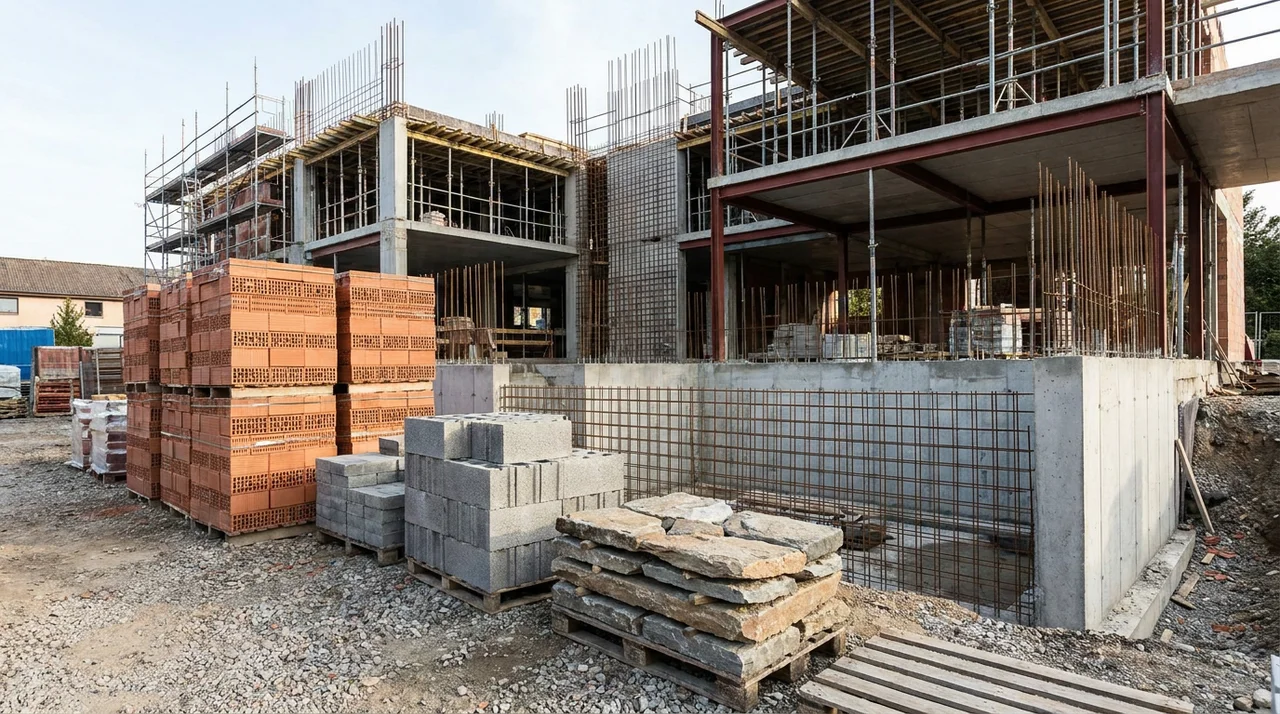
Picking the right masonry construction type involves more than just budget. Structural demands, environment, and local codes all play a role.
Start with load requirements. If walls must carry floors and roofs, load-bearing or reinforced masonry is the right call.
For partition walls or cladding, nonload-bearing masonry is enough, and a structural engineer can help confirm the exact needs.
Next, consider fire and moisture resistance. Concrete block handles damp conditions well, brick performs strongly in fire situations, and reinforced masonry covers both.
Coastal areas, humid climates, and fire-prone regions each have specific demands that should shape your material choice. In very cold areas, look at cavity wall designs.
A cavity wall places a gap between two masonry wythes to block moisture and improve insulation, making it a strong option for harsh climates.
On cost, stone masonry costs more upfront but lasts the longest, concrete block is the most affordable for large builds, and brick sits in the middle for both price and durability.
Always factor in long-term maintenance, not just the initial price, since a cheaper material that needs frequent repairs can end up costing more over time.
Finally, check local building codes before making a final decision. Seismic zones often require reinforced masonry, and historic districts may mandate specific brick or stone types.
Skipping this step can lead to expensive changes later in the project.
Common Masonry Classification Mistakes
Misclassifying masonry construction is more common than you might think. These errors can affect safety ratings, insurance, and code compliance.
Assuming Every Brick Building Is Masonry
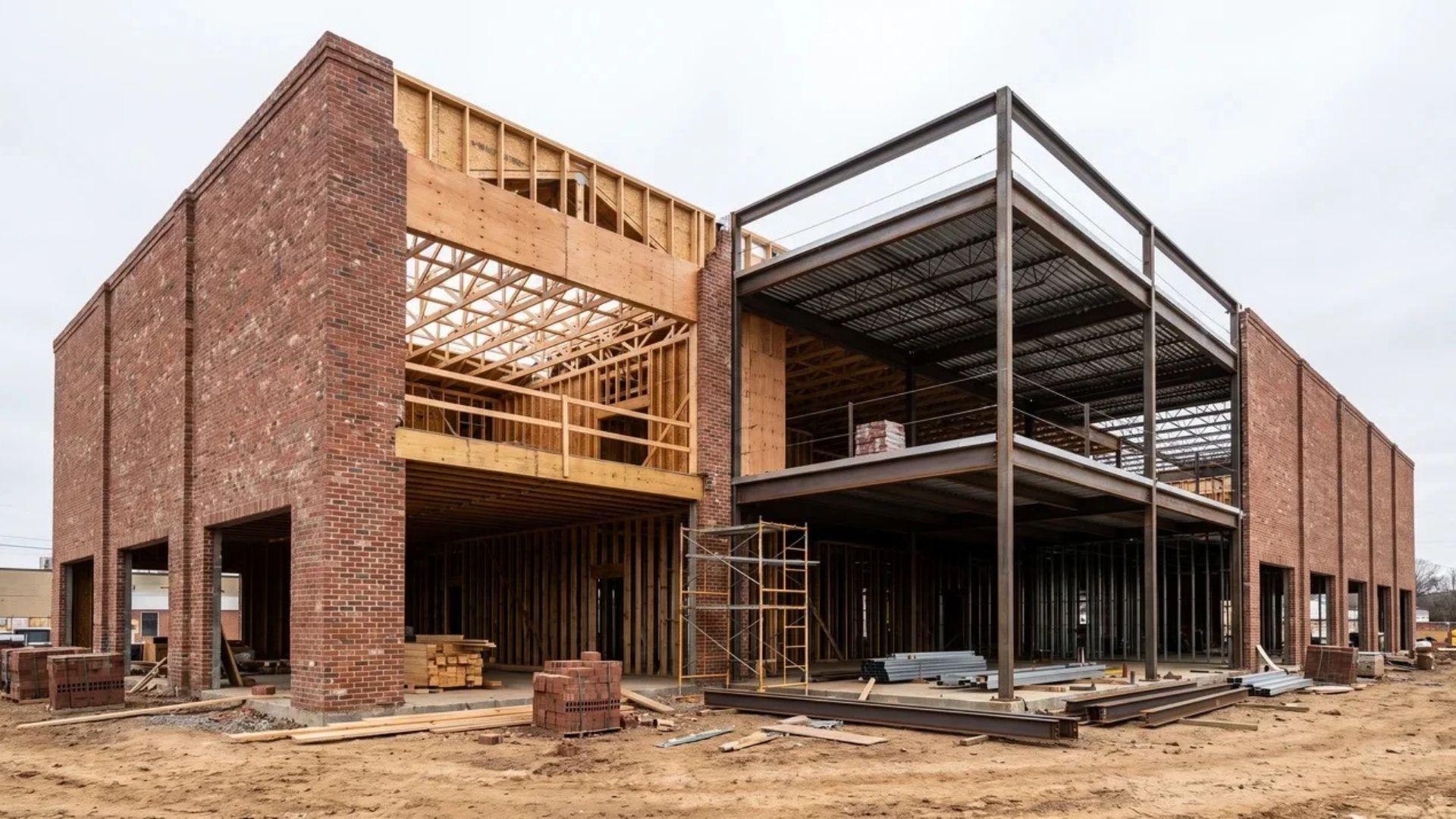
A brick exterior does not always mean full masonry construction. Many buildings use brick as a veneer over a wood or steel frame. The veneer is a thin decorative layer.
It does not carry loads. The frame carries the load, not the brick. This is technically a frame or noncombustible building with a brick finish, not a masonry construction type.
Confusing Structural and Decorative Masonry
Decorative masonry adds to the look of a building but carries no load. Structural masonry is part of the building's support system.
Mixing these up leads to wrong classifications and potential structural oversights during inspections.
Overlooking Reinforcement and Framing
A wall that looks like a plain concrete block might have steel rebar inside. Skipping a close inspection can lead to misidentifying the construction type.
Reinforced masonry behaves very differently from unreinforced masonry under load and in seismic events.
Classifying Buildings by Exterior Appearance
Exterior walls show only one part of the construction picture. The floors, roof, and interior framing also matter.
A masonry exterior with wood joists inside is joisted masonry, not full masonry. Always look at the whole building, not just the surface.
Expert Tips for Identifying Masonry Types
Getting the classification right takes more than a quick look. Use these steps to identify masonry construction types accurately.
- Inspect wall thickness and bonding. Thick walls suggest load-bearing masonry. Thin walls with a visible frame point to nonload-bearing. Tap for hollow sounds indicating block masonry or CMUs.
- Review original construction plans. Building plans are the most reliable source. If unavailable, check with the local building department.
- Look behind finished surfaces. Drywall can hide the actual construction type. Access a utility space to see what lies underneath.
- Match visible materials to known types. Steel rebar inside block walls means reinforced masonry. Two bonded materials indicate composite masonry. Clean, precisely cut stone points to ashlar masonry.
- Call a licensed professional when unsure. A structural engineer can provide an accurate classification for insurance, renovation, or occupancy purposes.
Conclusion
Understanding each masonry construction type helps you make smarter choices for any building project.
From brick to composite masonry, each type has a specific role, set of strengths, and best use case.
Now that you know the differences, you can apply this knowledge to your next project with confidence.
If you found this guide helpful, share it with someone who works in construction or property management.
Got a question or a tip to add? Leave a comment below and join the conversation.
Frequently Asked Questions
Can masonry construction be used for multi-story buildings?
Yes, reinforced and load-bearing masonry are used in multi-story buildings. Structural design must account for increasing loads on lower floors.
How does weather affect the choice of masonry type?
Freeze-thaw cycles can crack certain bricks. Concrete block with sealed joints handles cold and wet climates better than standard brick. Cavity wall construction adds another layer of protection in harsh conditions.
Is masonry construction suitable for earthquake-prone areas?
Reinforced masonry with steel rebar is approved for seismic zones. Unreinforced masonry performs poorly in earthquakes and is often restricted.
How long does masonry construction typically last?
Well-maintained masonry buildings can last 100 years or more. Stone masonry structures have stood for centuries with minimal repair needs.
Does masonry construction affect property insurance rates?
Yes, masonry buildings usually receive lower insurance premiums than wood-frame buildings due to better fire resistance and durability ratings.