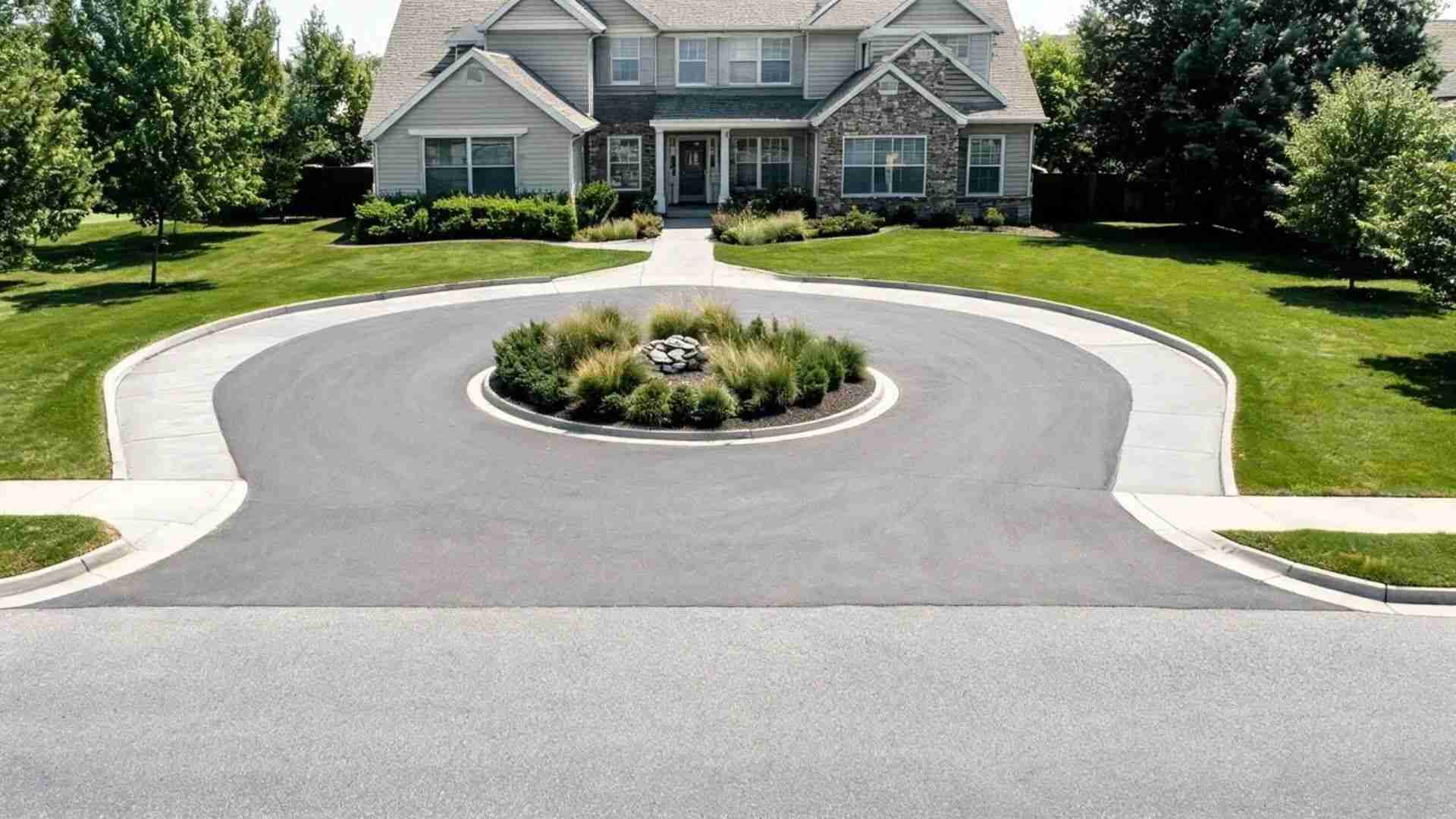
Scroll through horseshoe driveway ideas online and nearly every photo shows a wide front lawn, a stone-trimmed island, and room to spare.
Then you walk out to your own yard, tape measure in hand, and the picture falls apart.
What those galleries rarely mention: The plants and paving you pick matter less than the spacing between the two street entries, because that gap decides what the loop can hold.
Get that right, and the rest becomes a fun set of choices.
To see why that gap matters, start with how the layout is built.
What Is a Horseshoe Driveway and How Does It Work?
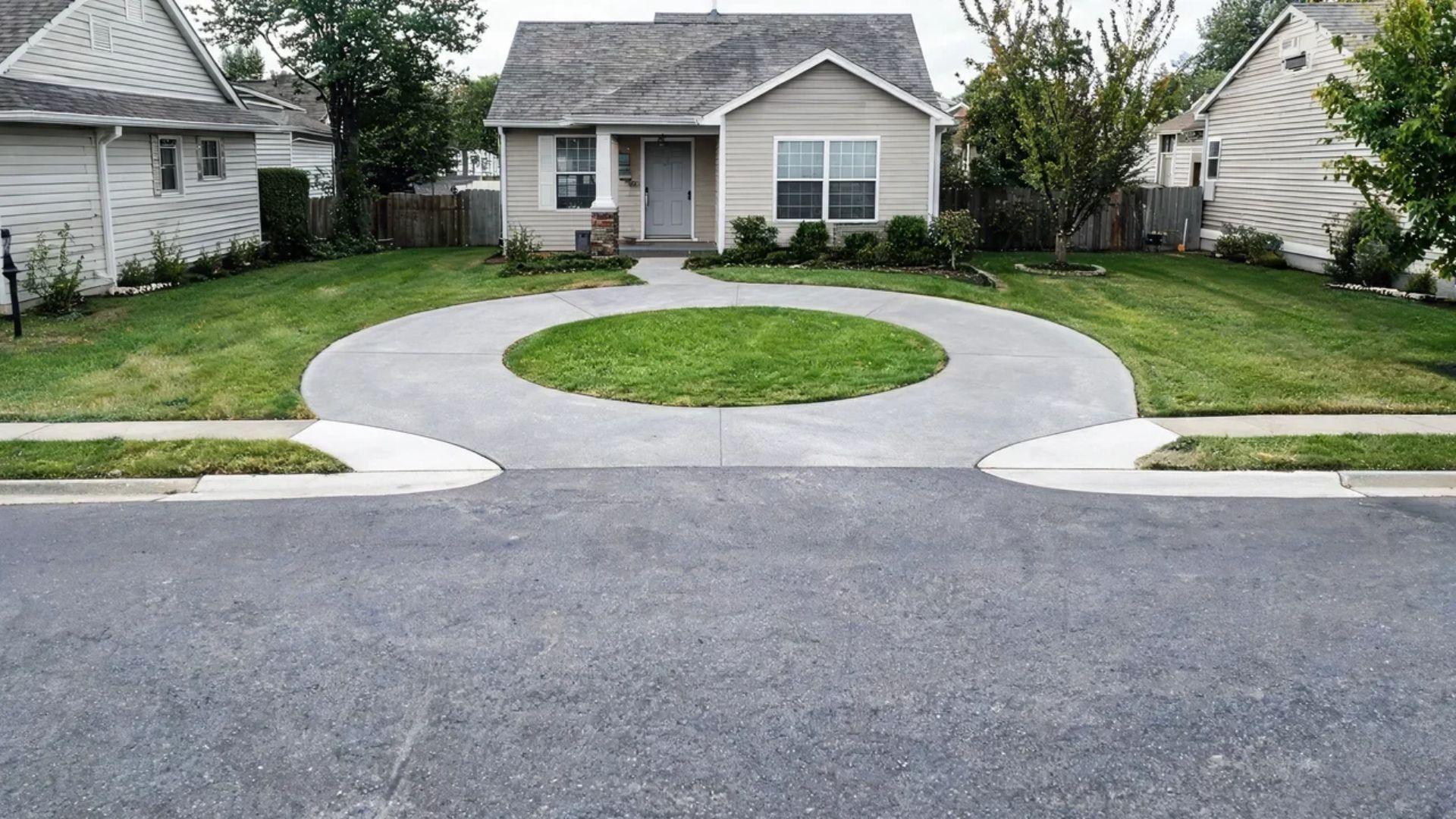
A horseshoe driveway is a U-shaped drive that joins the street at two points and passes the front entry between them.
That pull-through layout lets drivers enter and exit facing forward, so nobody has to back out onto the street.
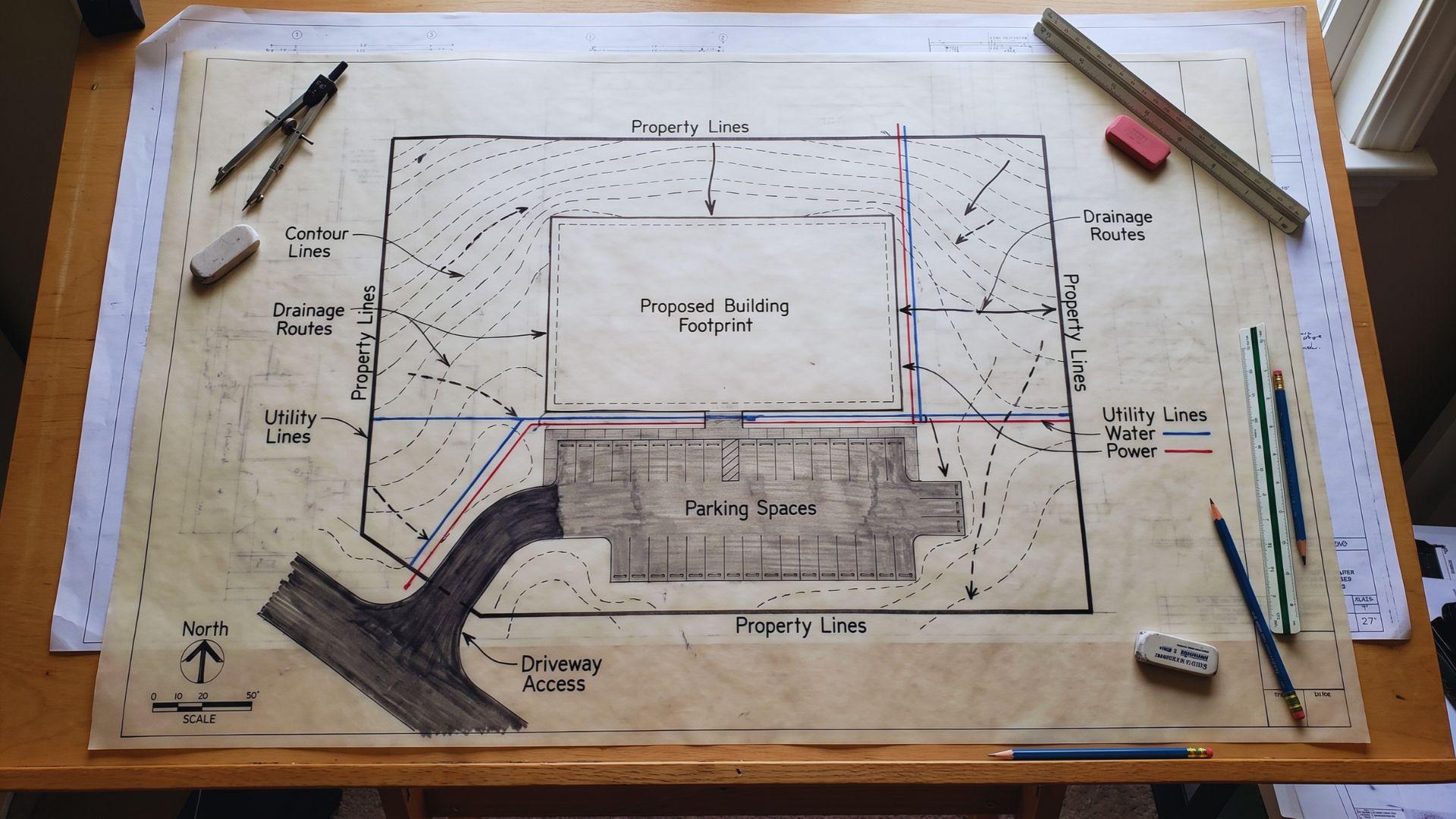
The shape depends on the frontage width between the two entries, so measuring comes before designing, and this guide on how to measure land covers the method.
It breaks down on narrow frontage, where two entries leave no usable island, and the small horseshoe driveway section below covers that case.
That’s the shape, plus the one measurement that limits it. The seven ideas below cover the surface, island, edges, and style, so you can take one choice from each.
Horseshoe Driveway Ideas for Surface, Island, Edge, and Style
Horseshoe driveway ideas come down to four decisions: The surface, the center island, the edges and lighting, and the overall style.
You can mix one choice from each group, so treat the seven numbered ideas below like a gallery.
Each one describes what it looks like and which homes it suits, so you can pair it with a photo from your own search.
1. Gravel or Crushed Stone
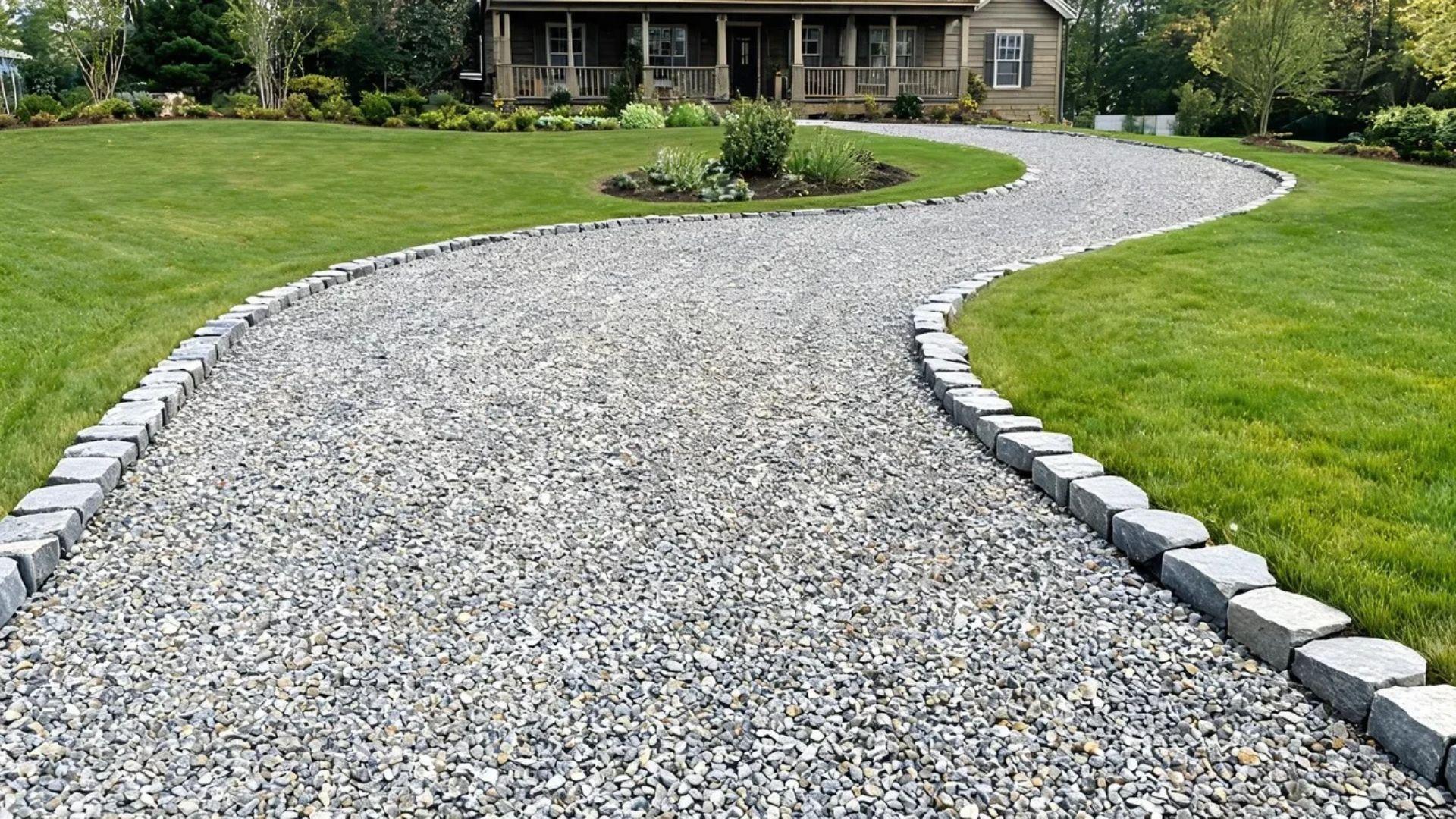
A loose, rustic surface that drains well and sits naturally beside cottage, country and rural homes.
The curve needs firm edging, such as steel, stone or timber, so the stone stays off the lawn.
Turning tires push loose stone toward the outside of the bend, so expect to rake it back now and then.
2. Interlocking Concrete Pavers

Modular units can be laid as the full surface or as a cobblestone-style band along the border for a more refined look.
Standard pavers with sand joints shed water toward the edges, while permeable pavers use stone-filled joints over an open stone base so rain soaks through, as this FHWA permeable pavement overview explains.
Skip permeable pavers where the water table sits within about 2 feet of the pavement base.
3. Asphalt With a Paver or Stone Border
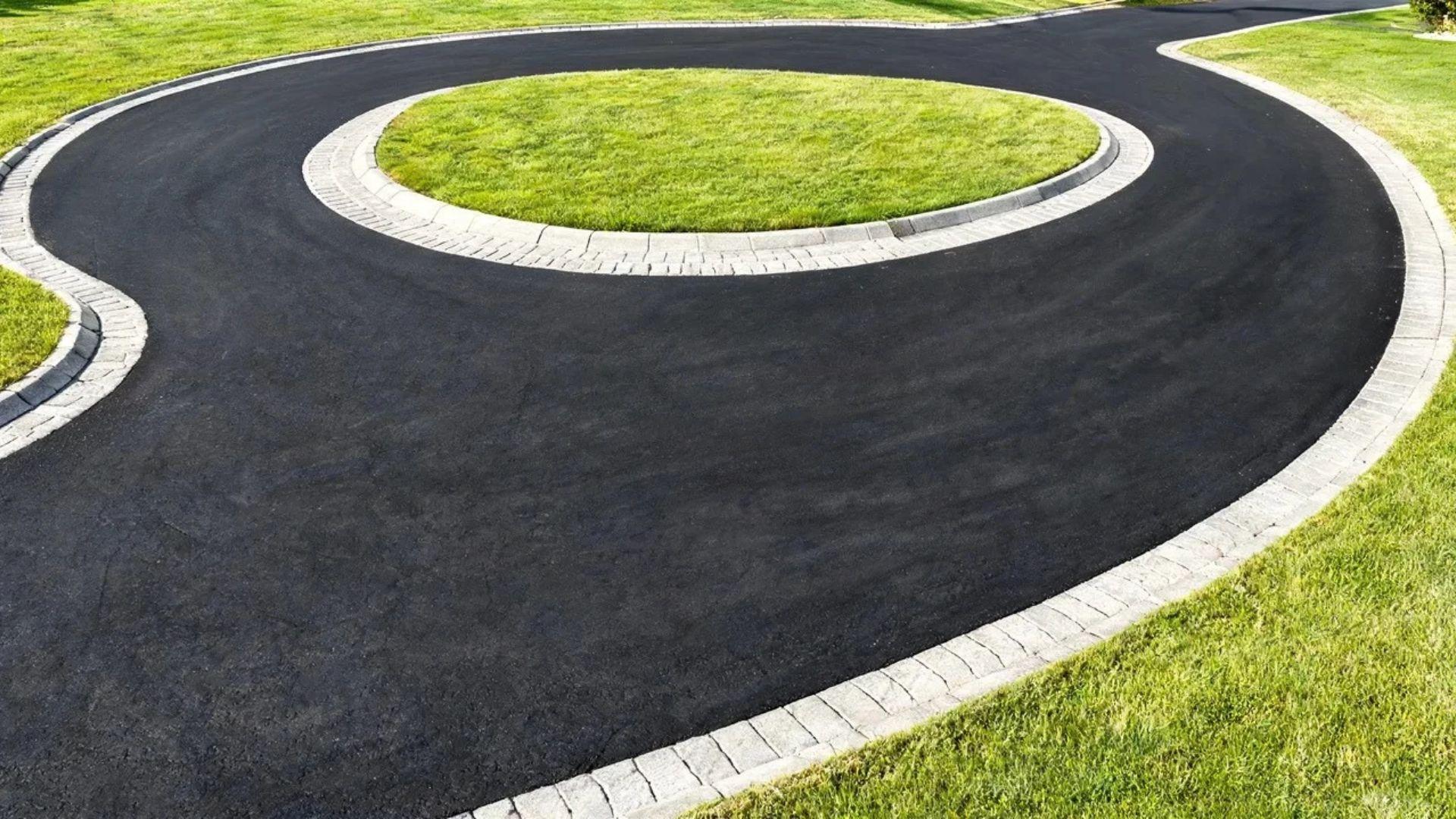
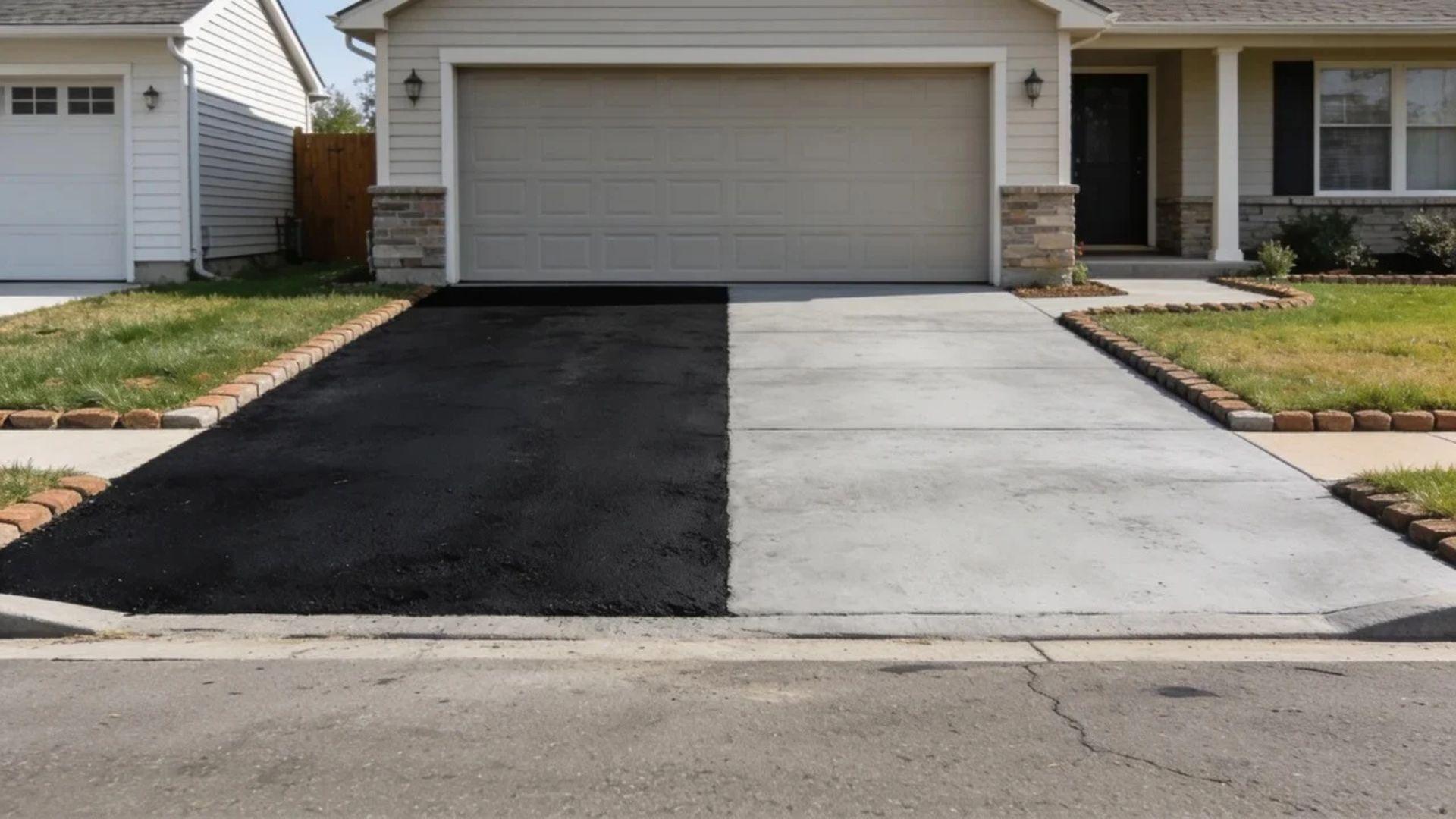
Asphalt is a smooth, dark surface that gives clean lines against a green lawn and handles a curve without joints.
It suits almost any home style that wants a quiet, uncluttered drive.
A contrasting paver or stone band along the curve sharpens the edge and keeps loose material in place, and the same border works well beside gravel.
4. Low Evergreen Hedges and Layered Beds
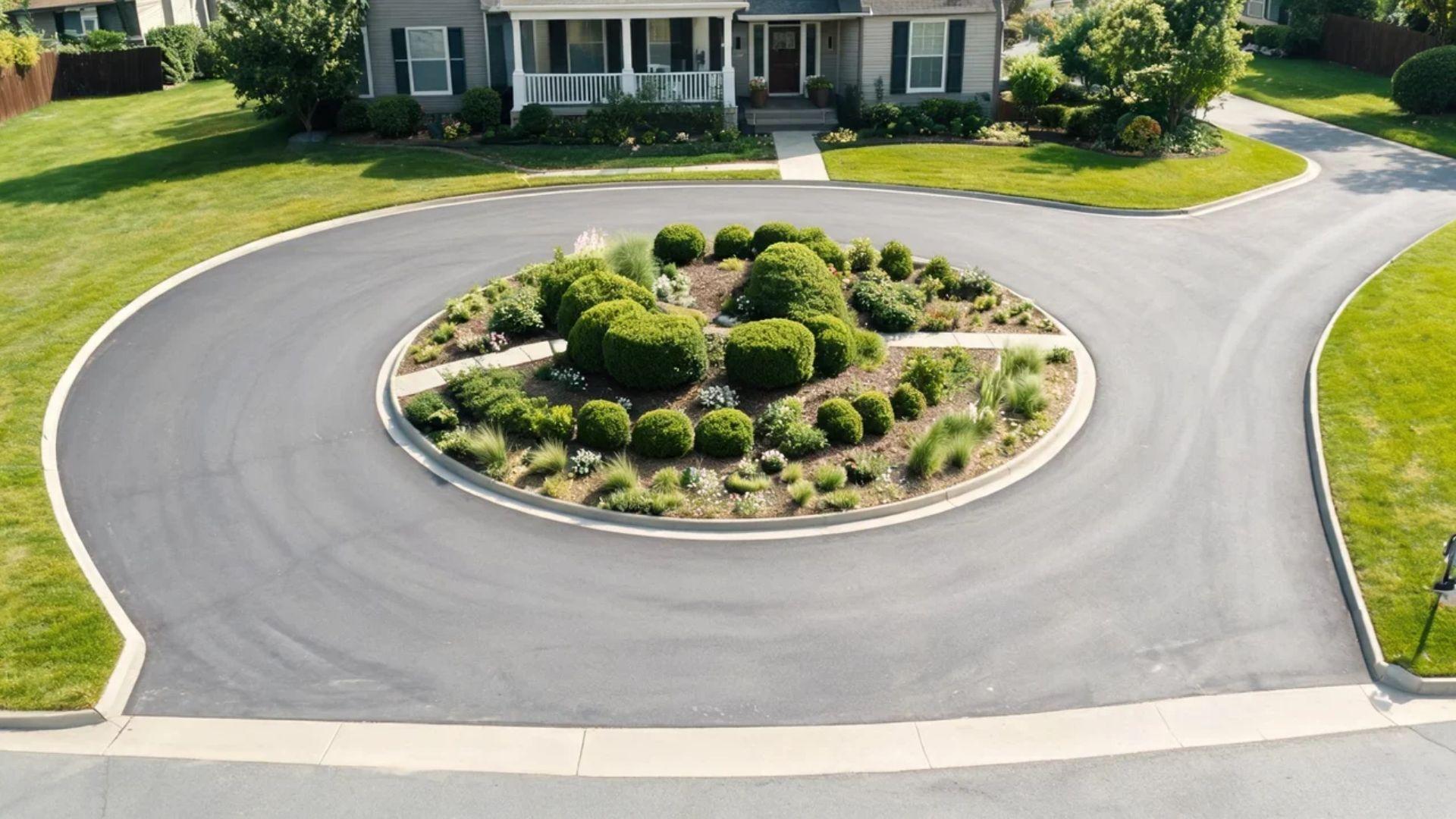
The island is the part of the yard the drive curves around, so plant height has to stay low enough to keep sightlines clear for drivers at both entries.
That limit, more than taste, decides which plants fit.
Boxwoods or dwarf evergreens clipped to a tidy height hold their color through winter and suit traditional fronts.
Low shrubs, ornamental grasses, and seasonal color such as spring tulips or fall mums work in a tight palette so the island reads as planned.
Check each plant’s mature height on the tag before you buy.
Full-size Limelight hydrangeas reach 6 to 8 feet at maturity, according to NC State Extension, so pick a compact cultivar such as ‘Little Lime’, which the same source says grows about half as tall, and confirm its height before planting.
5. Stone or Boulder Focal Point
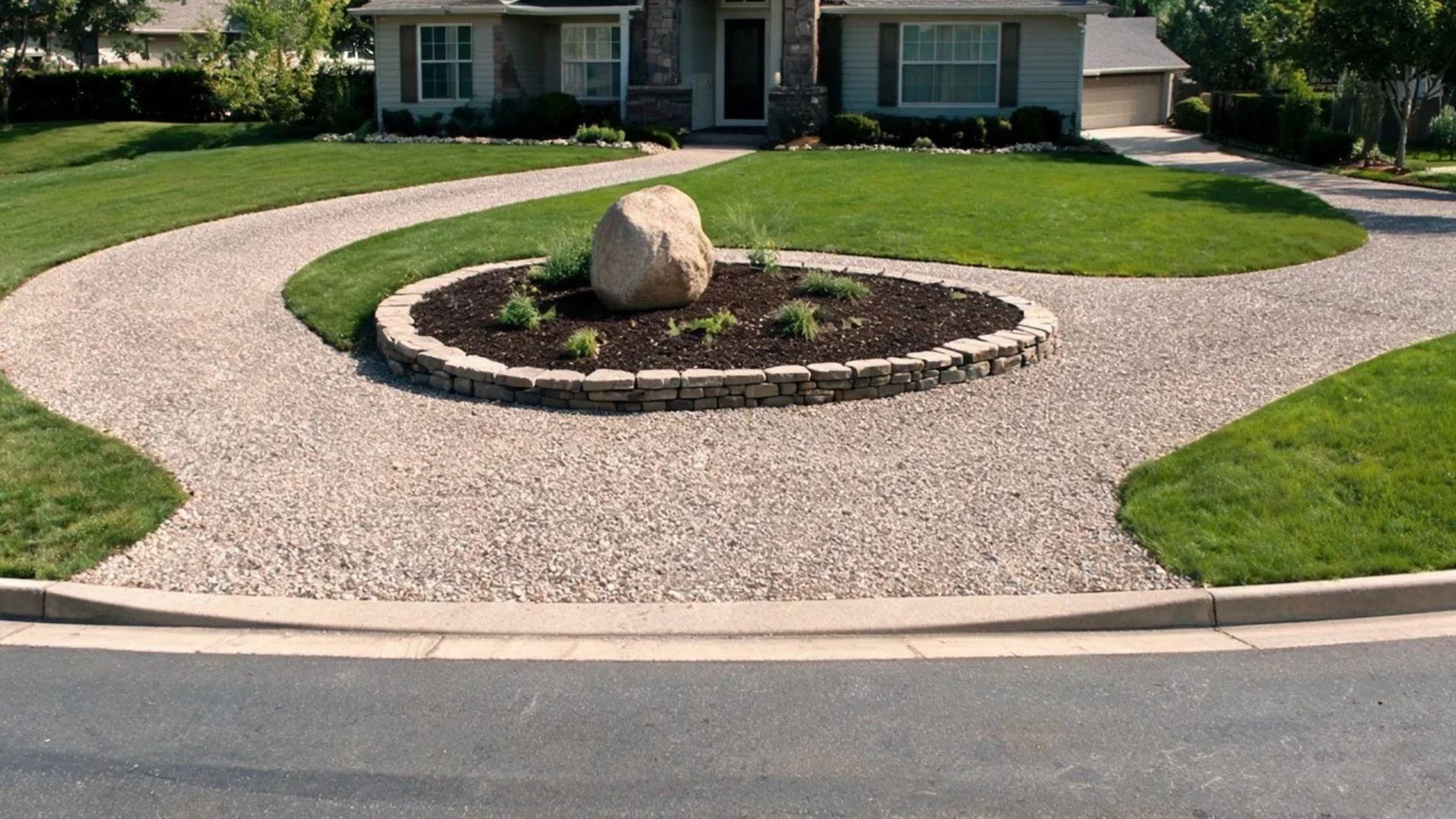
A decorative boulder or a low stone retaining wall at the center adds height through masonry instead of tall plants.
Keep it low so it stays under the sightline. It suits gravel drives and rustic or farmhouse fronts, and a retaining-wall island can hold soil for a few short plants on top.
6. Stone Pillars and Low-Voltage Path Lights
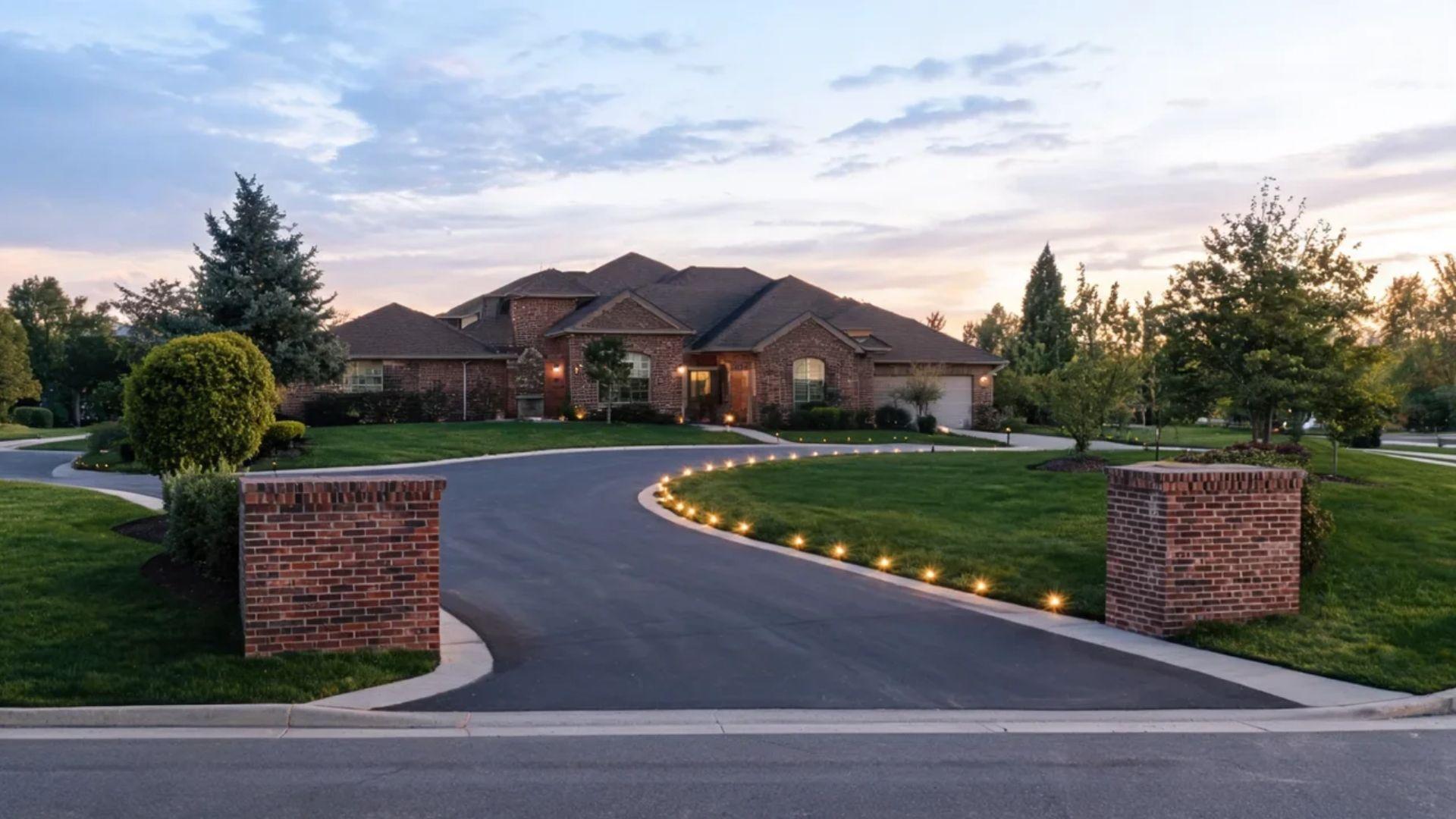
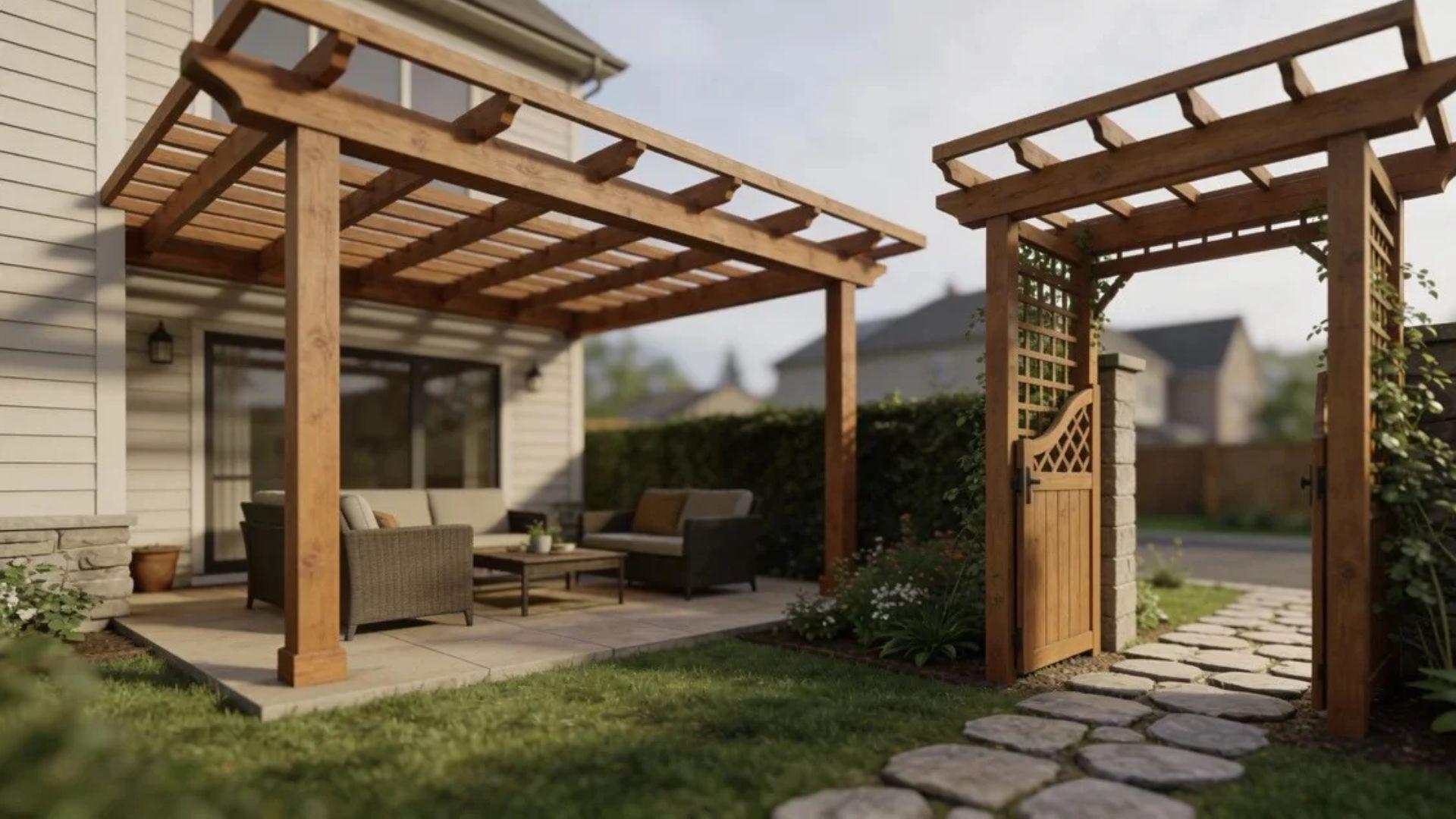
Matching pillars or low brick walls frame the two street openings and mark where the drive begins.
They suit larger frontages and stone or brick homes, where the material repeats what is already on the house.
If you choose brick, this overview of brick wall construction explains how the walls go up.
Set them back from the pavement edge so they stay out of drivers’ sightlines, and check your town’s sight-distance rules for driveway entries, since some codes limit anything that blocks the view.
Warm, staggered LED path lights on the inside of the curves mark the edge without the airport-runway glare of evenly spaced lights.
They also show drivers where the curve tightens after dark.
Small Horseshoe Driveway for Narrow and Shallow Yards
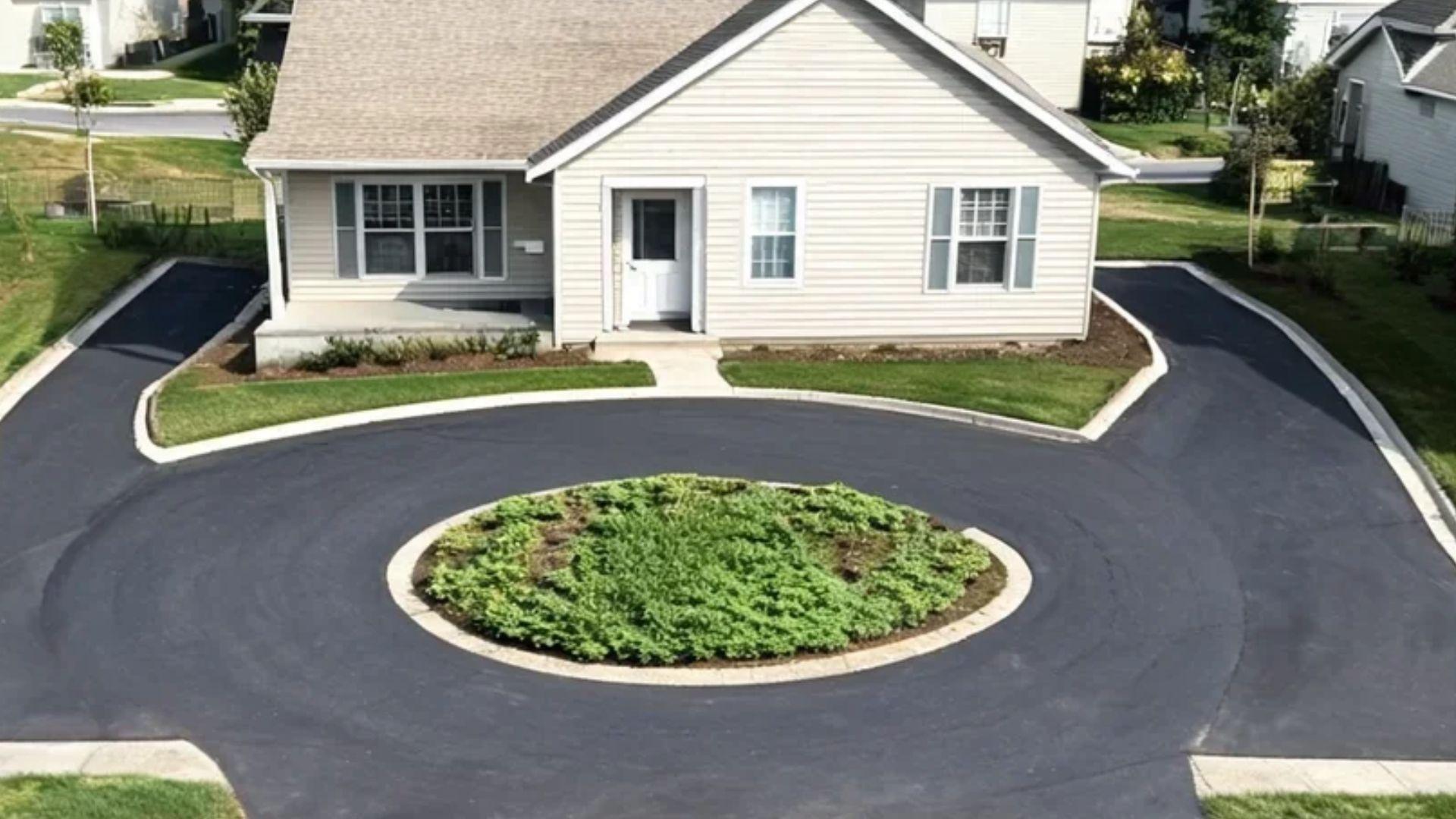
A small horseshoe driveway works only when the two entries sit far enough apart for a usable turning path. Planting and surface choices come after that.
How Small Can a Horseshoe Driveway Get?
On a small lot, the distance between the two entries and the tightness of the curve set both the island size and the path a vehicle can turn through.
Size the layout first, then pick the decorative ideas.
Minimum turning dimensions depend on your vehicles and local standards, so ask your municipal public works office instead of trusting a rule of thumb.
- When it works: A smaller loop holds up when the island stays low and simple.
- When it fails: The loop breaks down when the curve is too tight for the vehicles that use it.
- How to test it: Mark the planned curve with a garden hose or marking paint, then drive your largest vehicle along it slowly before committing.
Design Choices That Keep a Small Loop Usable
Once the turning path works, a few light-handed choices keep the loop from feeling crowded.
- Island planting: Use one low ground cover or short grasses so the island does not crowd the curve.
- Surface: Light-colored or permeable surfaces keep the bend looking open, and permeable options also cut down on puddles in a tight turn.
- Entry treatments: Choose narrow options, such as low brick walls in place of wide pillars, so the openings do not feel squeezed.
- Lighting: Limit it to a few path lights on the inside of the curve, which avoids clutter in a small space.
Once the footprint works on paper, it still has to work on your real ground. Slope, local rules and climate can each rule out an idea from the list above.
How to Match a Horseshoe Driveway to Your Lot
Three lot conditions slope and drainage, local entry rules, and climate can change which horseshoe driveway idea is workable.
Check each one before you commit to a design.
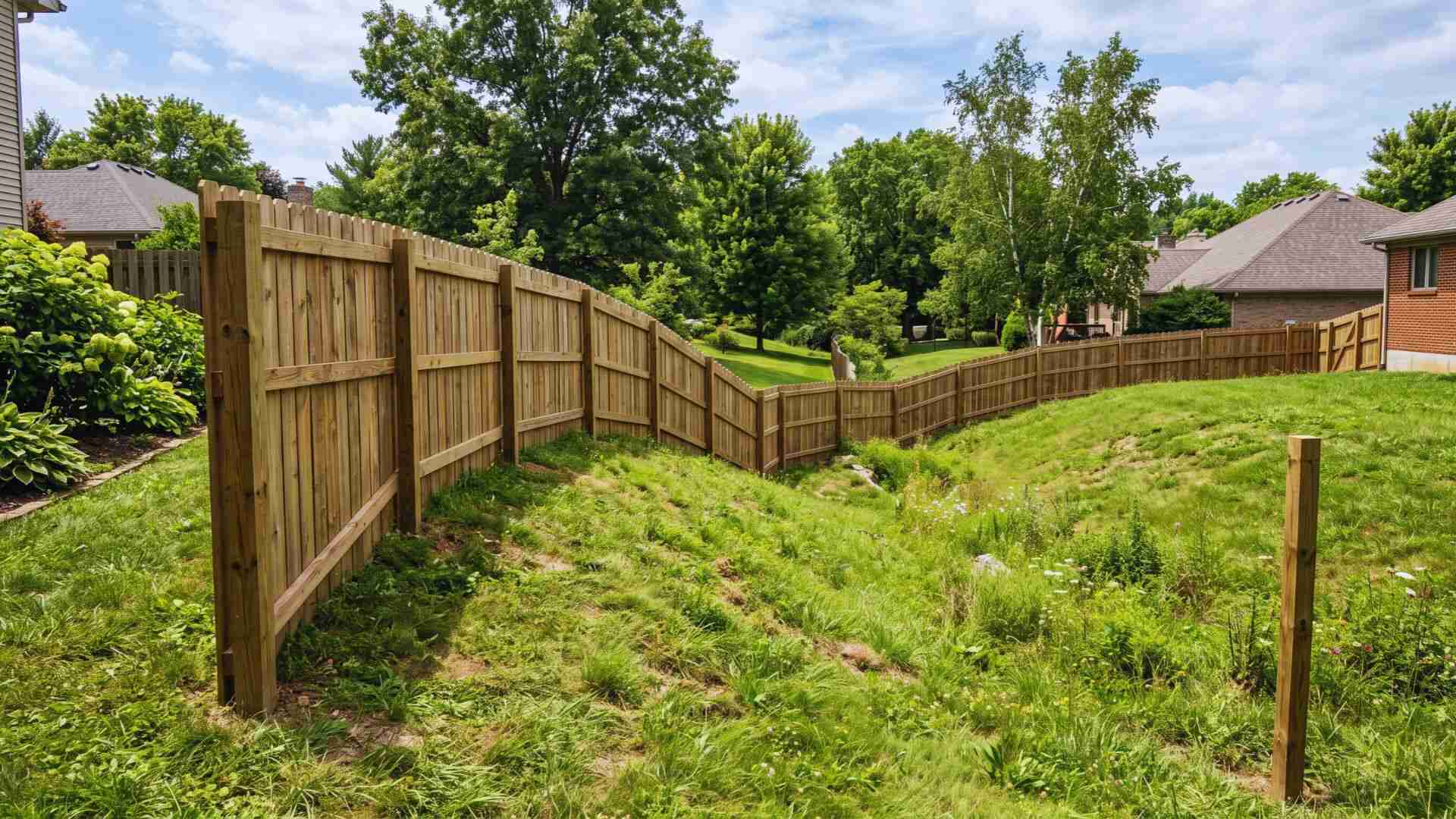
- Slope and drainage: Water collects on the inside of the curve, so a sloped or low-lying yard may need a permeable surface or some form of runoff control, such as a drain or a shallow swale along the edge.
- Local entry rules: Curb-cut and setback rules for a second driveway entry vary by municipality. Some cities allow only one driveway per lot, while others allow more on wider lots, so ask the local building or public works office what it allows before you design anything.
- Climate: It changes how each surface holds up. Snow clearing can scatter loose gravel, and freeze-thaw cycles can shift pavers that sit on a poorly prepared base.
With the lot checked, you know which of those seven ideas survive. That leaves one job, which is turning your short list into a plan.
Pick the Loop First and the Plants Last
The best horseshoe driveway ideas are the ones your frontage can hold.
A photo of a lavish loop tells you little until the entry spacing, the sightlines, and the turning path check out on your own ground.
Measure first, pick one idea per group, and buy plants last.
Do that and the plants, paving, and lights stop being guesses and start fitting the space you have.
Grab a tape measure this weekend, mark your two entries, and sketch the loop before you call a contractor.
Frequently Asked Questions
What Is a Horseshoe Driveway Called?
A horseshoe driveway is also called a U-shaped, half-circle, or semicircular driveway. People use the names interchangeably, though a full circular drive closes the loop completely.
What Is the Cheapest Type of Driveway to Install?
Gravel or crushed stone is usually the lowest-cost surface to install. Asphalt and concrete cost more upfront, so weigh that against the upkeep each one needs.
Does a Horseshoe Driveway Add Value to a Home?
It can add curb appeal and everyday convenience, but resale value depends on the neighborhood, lot size, and build quality. A local real estate agent can tell you how buyers in your area view one.
How Do You Keep Weeds Out of a Gravel Horseshoe Driveway?
Landscape fabric under the gravel only suppresses weeds for a few years, because debris collecting on top lets seeds root. Keep the stone clean, edge the curve firmly, and pull seedlings early.