
Choosing between post frame and stick frame construction is not always easy. Both methods work well, but the right choice depends on your building goals, budget, and how you plan to use the space.
A system that works perfectly for a home may not be the best fit for a workshop, barn, or large storage building.
In this guide, you will learn the key differences between post frame and stick frame construction. We will cover cost, durability, interior space, building speed, maintenance, and the best uses for each method.
This will help you avoid costly mistakes and choose the framing system that fits your project with confidence.
We’ve spent years researching construction methods and building materials to create practical, easy-to-follow home improvement guides.
Why Choosing the Right Framing Method Matters
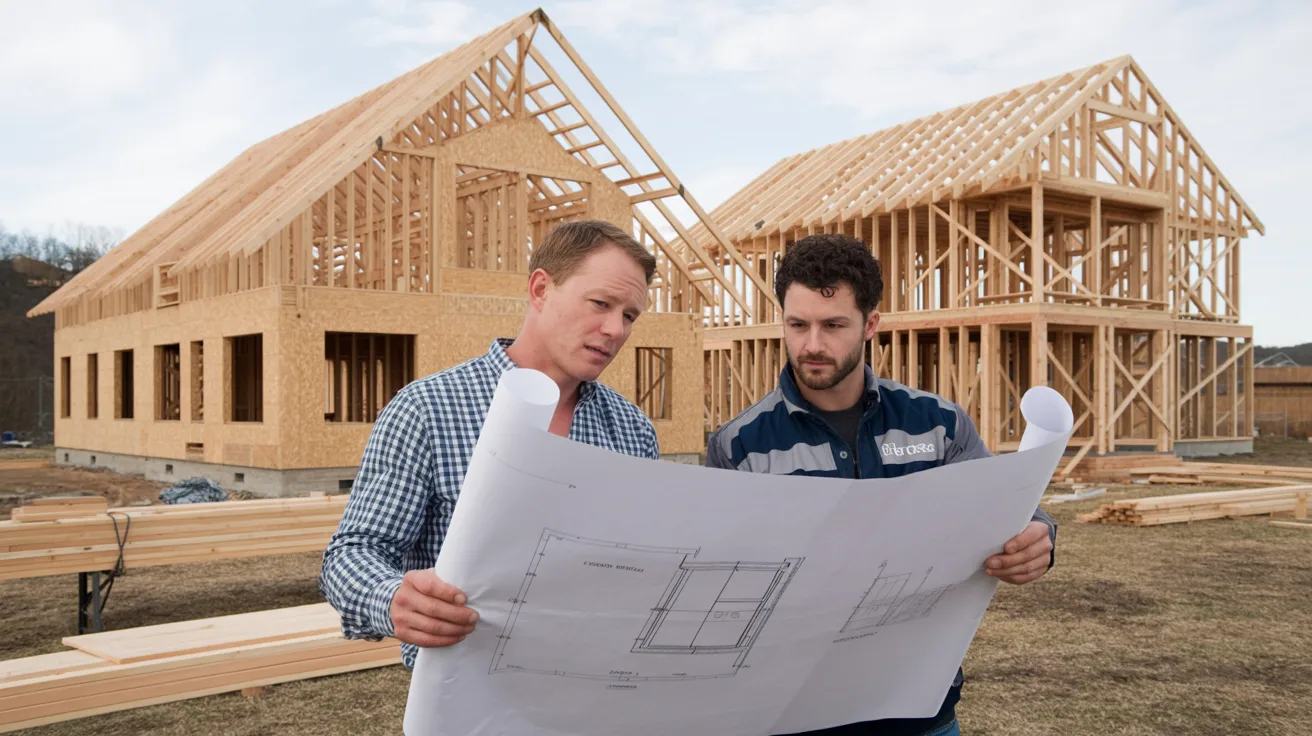
Before you decide between post frame and stick frame construction, it is important to understand how much this choice impacts your entire project.
The framing system affects not just the structure itself but also your long-term costs, energy efficiency, maintenance needs, and even how usable your space feels every day.
A poor decision at this stage can lead to limitations in design, unexpected expenses, or a building that does not fully match your needs.
On the other hand, the right choice ensures smoother construction, better performance, and long-term value.
This is why comparing both methods carefully is a critical first step in any building plan.
What Is Stick Frame Construction?
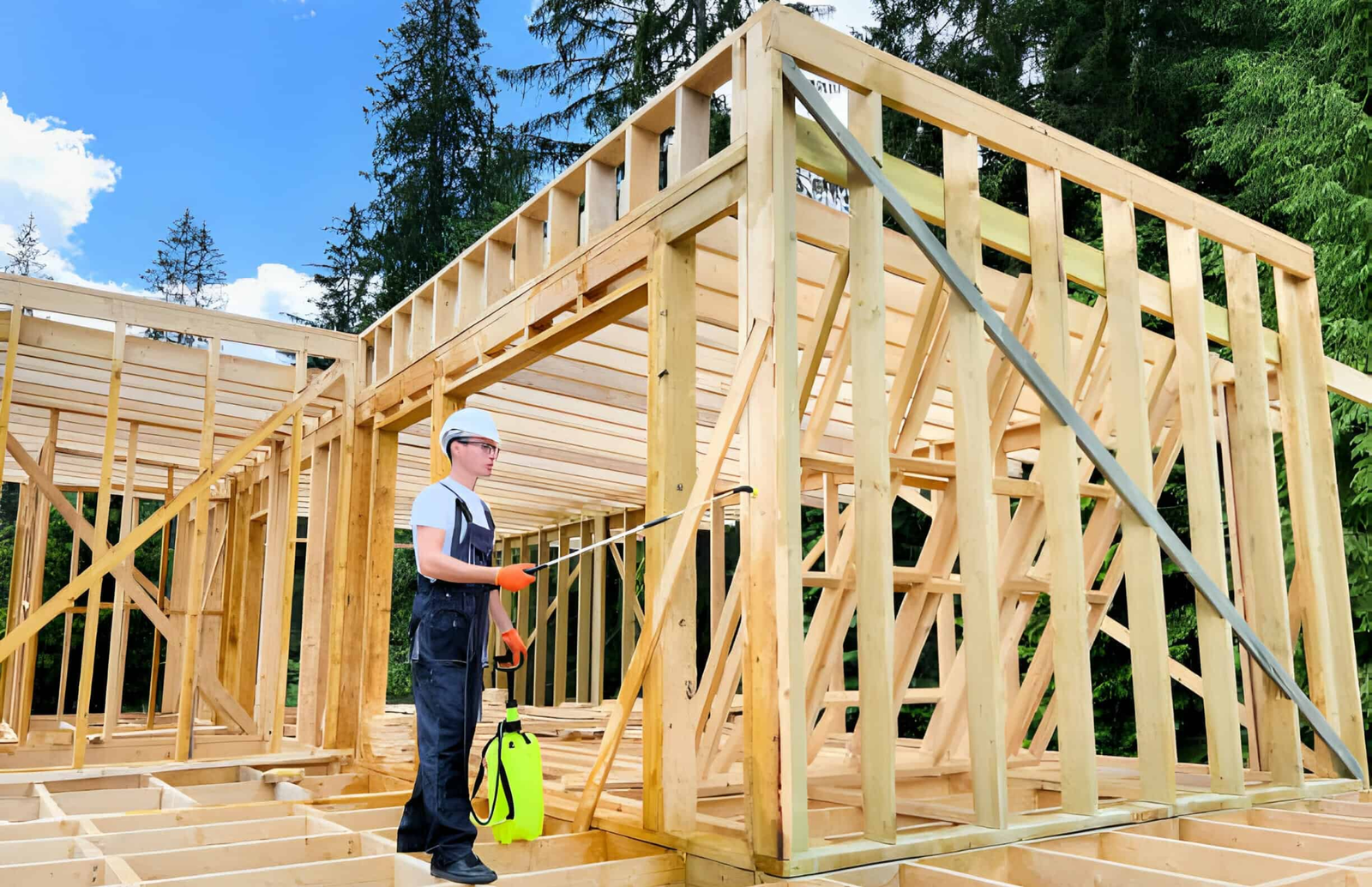
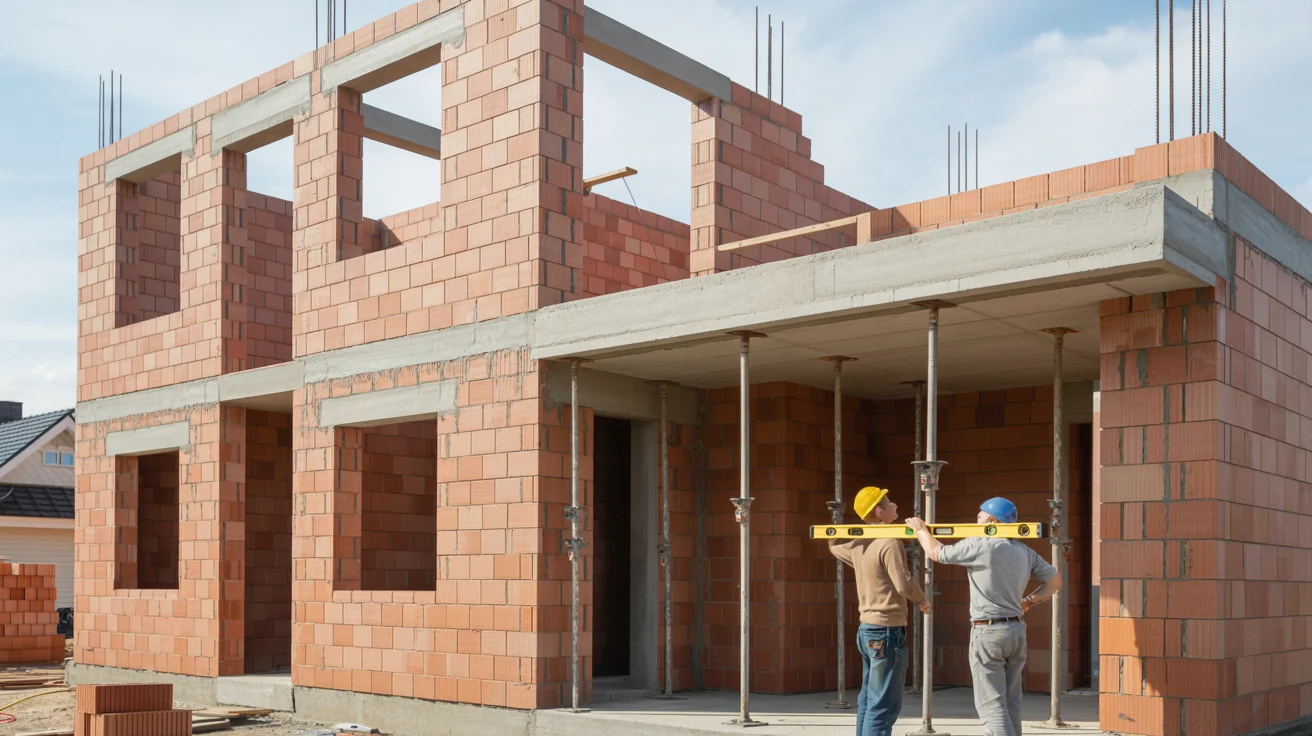
Stick frame construction is the most widely used building method for residential and light commercial structures.
It uses many small wood studs placed close together to form walls and support the roof. These studs are typically spaced 16 to 24 inches apart and are anchored to a full concrete foundation.
This method creates a strong, stable structure that is easy to finish on the inside with insulation, drywall, plumbing, and electrical systems. Because of its versatility, stick frame is the go-to choice for homes and livable spaces.
Basic Construction Method Explained
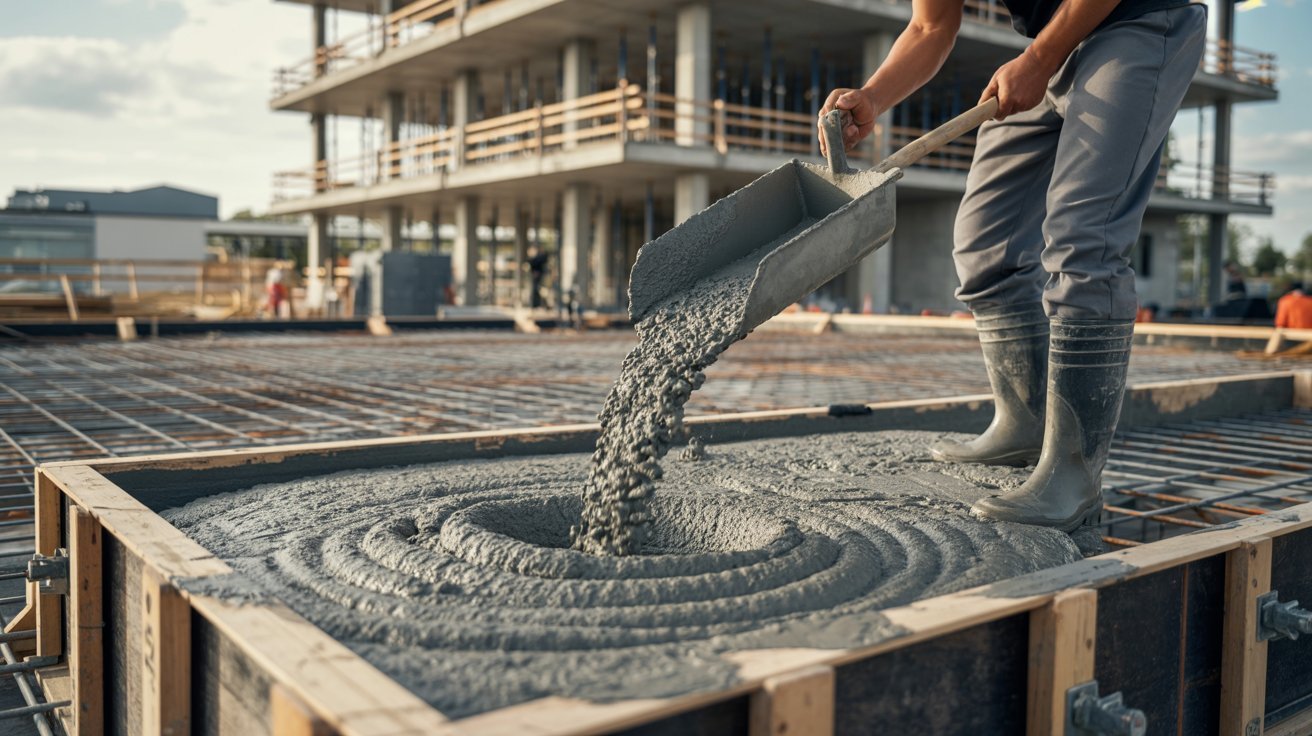
Stick frame construction follows a step-by-step process. First, a concrete foundation is poured and allowed to cure. Once ready, bottom plates are anchored to the foundation. Vertical studs are then installed along the walls, followed by top plates that tie everything together.
Floor joists are added for multi-level structures, and roof trusses are installed across the top. Finally, OSB sheathing is applied to strengthen the frame, and the building is finished with insulation, drywall, and interior systems.
Key Materials Used
Stick frame construction relies on standard, widely available materials. These include wood studs, OSB panels, floor joists, roof trusses, concrete foundations, insulation, and drywall.
Each material plays a specific role in creating a finished, livable structure.
Common Applications
Stick frame is most commonly used for residential homes, garages, home additions, and workshops that require finished interiors.
It is ideal whenever comfort, insulation, and detailed interior design are important.
What Is Post Frame Construction?
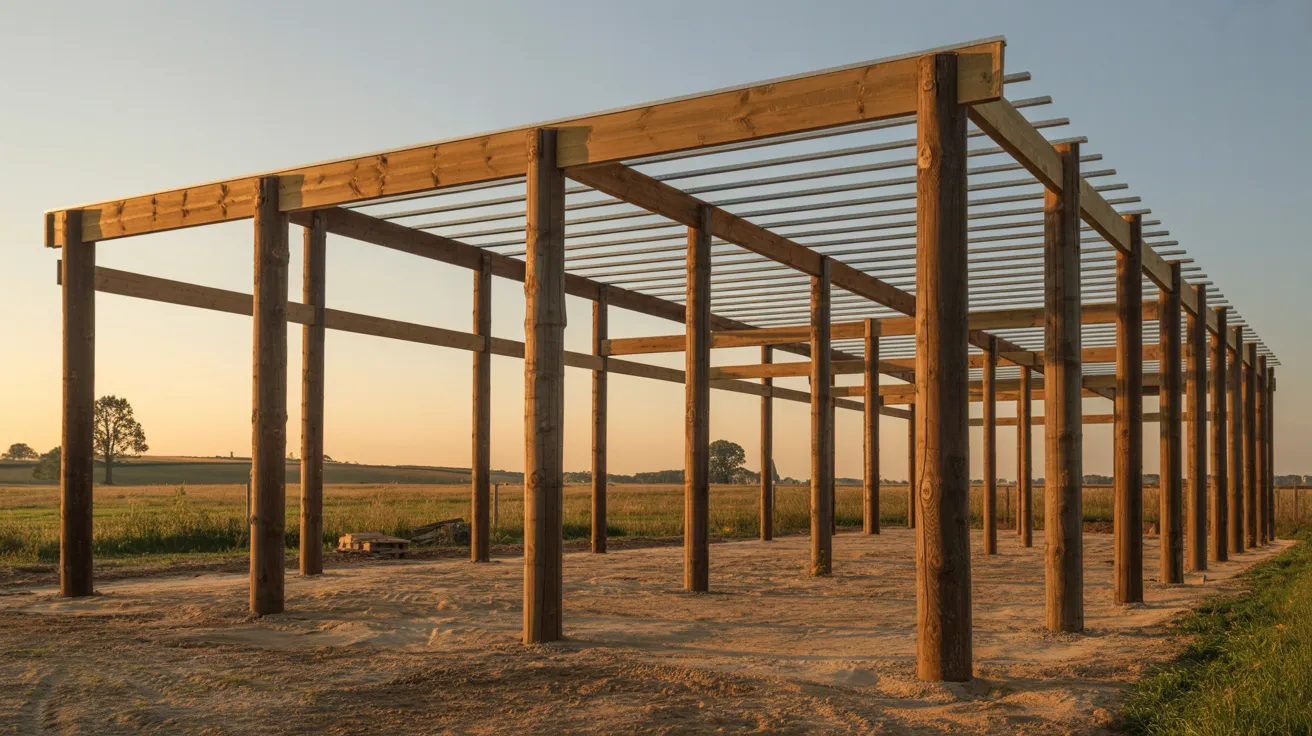
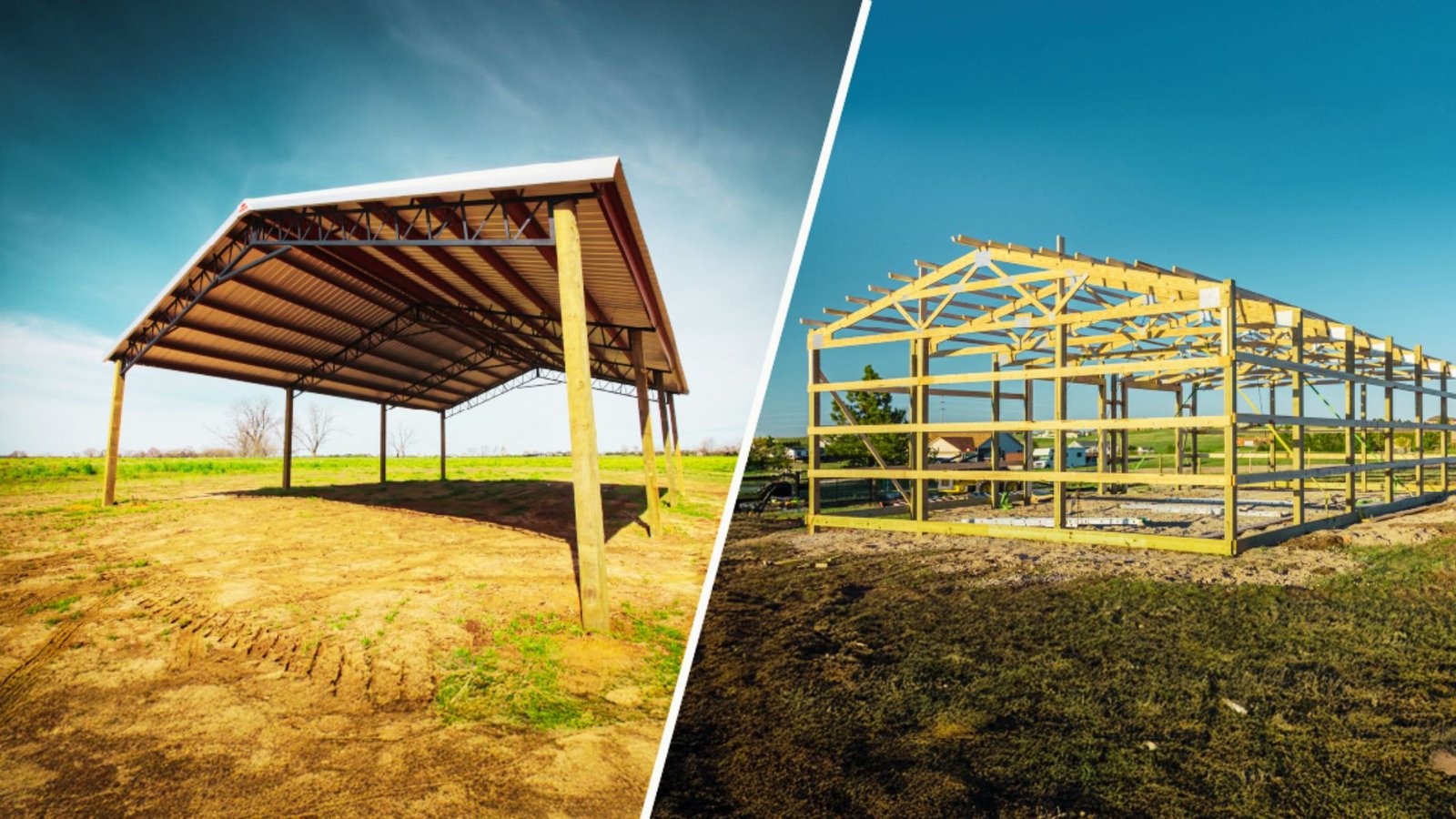
Post frame construction takes a different approach by using large vertical posts spaced far apart, usually 8 to 12 feet. These posts carry the main structural load and are either set directly into the ground or mounted on concrete piers.
Instead of many small studs, the structure relies on these heavy posts connected by horizontal girts and roof purlins. This creates large open interior spaces without the need for load-bearing interior walls.
Most post frame buildings are finished with metal siding and roofing, which keeps maintenance low and durability high.
Basic Construction Method Explained
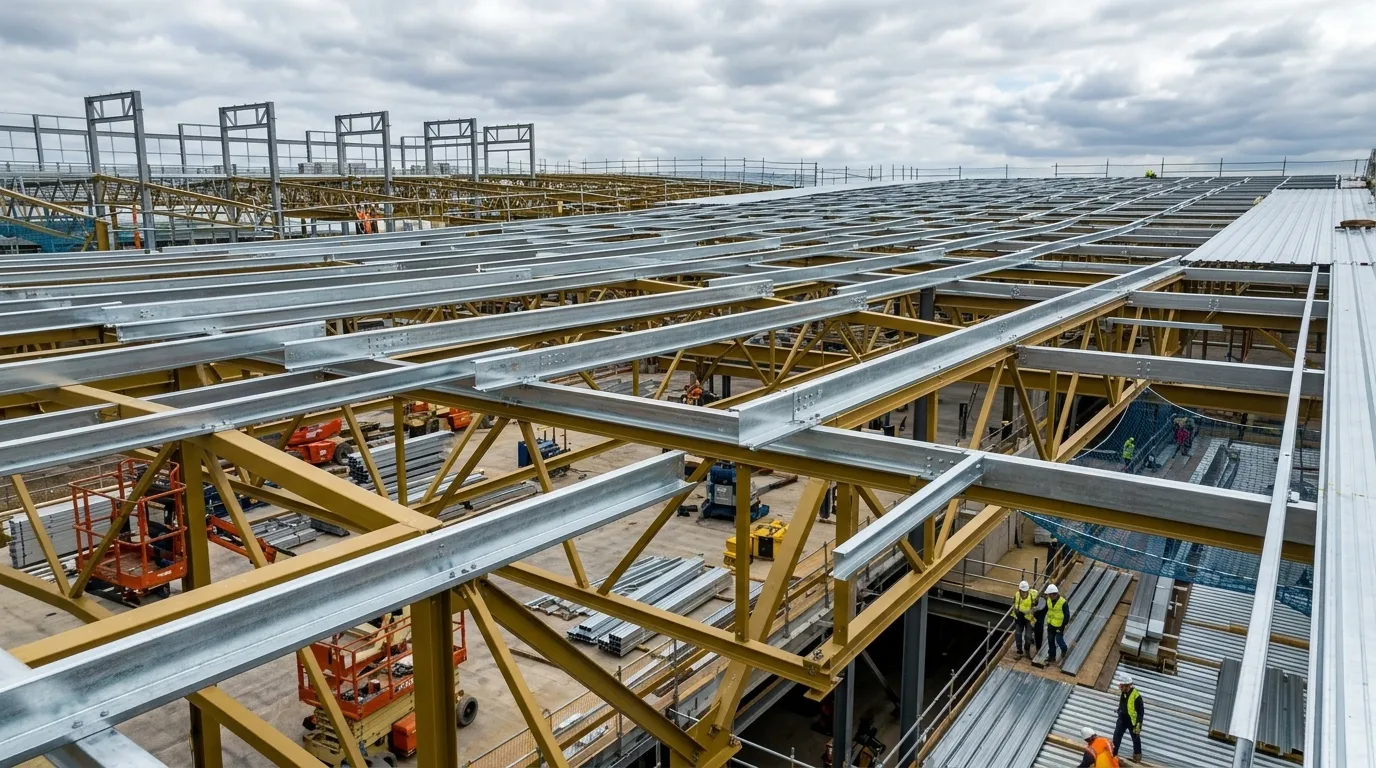
Post frame buildings are built quickly and efficiently. Large posts are installed first, forming the main structure. Horizontal girts are attached to connect the posts and support wall cladding. Roof trusses are then installed across the top, followed by purlins that support the roof panels.
Once the frame is complete, metal roofing and siding are attached directly to the structure. Doors, windows, and trim are added at the end to complete the building.
Key Structural Components
The main components of post frame construction include large vertical posts, horizontal girts, roof purlins, roof trusses, and metal exterior panels.
These elements work together to create a strong and open structure with fewer materials.
Common Applications
Post frame buildings are commonly used for barns, agricultural structures, storage sheds, warehouses, riding arenas, and large workshops.
They are best suited for utility-focused buildings where open space matters more than interior finishes.
Post Frame vs Stick Frame: Key Differences
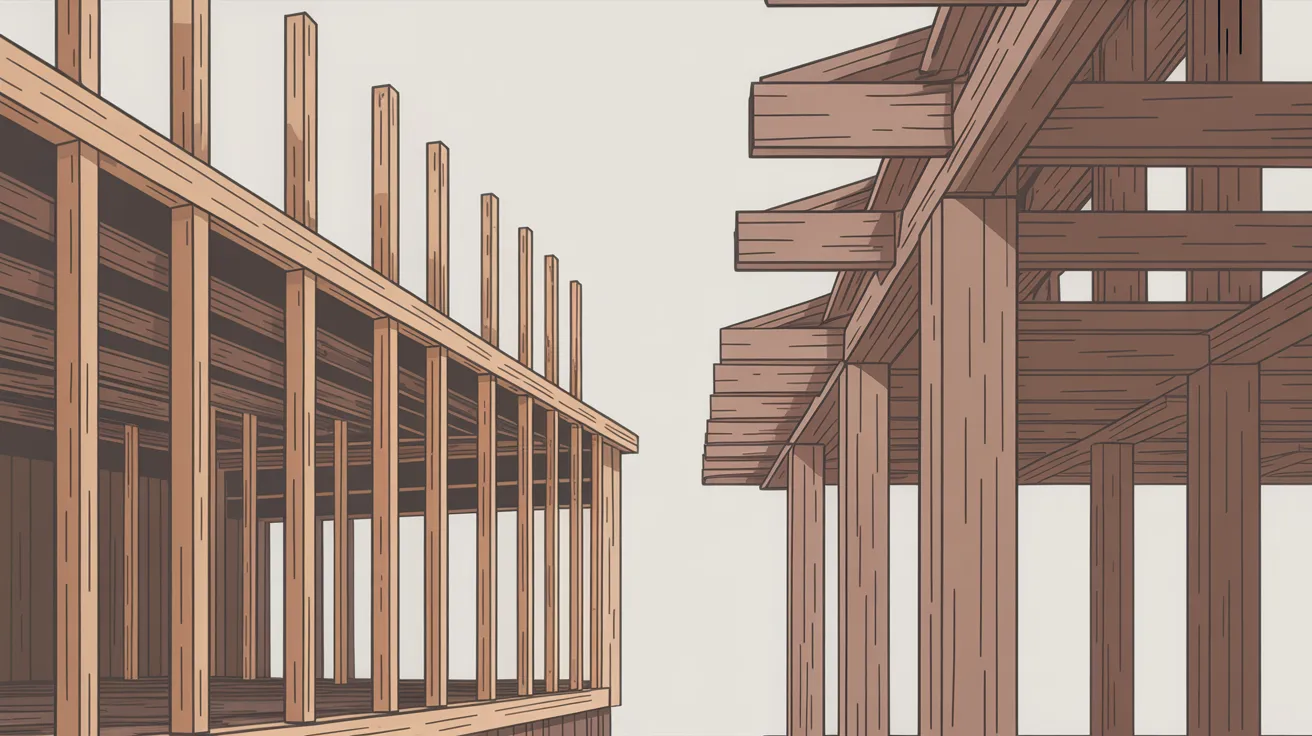
Understanding the main differences between post frame and stick frame construction helps you choose the right option for your budget, building purpose, and construction timeline.
Structural Load Distribution
The biggest difference between these two methods is how they carry structural loads.
Stick frame spreads weight across many small studs, while post frame transfers the load through large vertical posts.
Foundation Requirements
A stick frame building requires a full concrete foundation, which increases both construction time and cost.
Post frame construction often uses ground-set posts or piers instead, making the project faster and more affordable.
Interior Layout and Space
Stick frame construction is designed for finished rooms, hallways, and interior partitions.
Post frame provides large open spaces without interior load-bearing walls, making it ideal for storage, workshops, and utility buildings.
Construction Speed
Post frame buildings are typically quicker to build because they use fewer materials and a simpler structural system.
Stick frame construction takes longer due to detailed framing, insulation, and interior finishing work.
Cost Comparison Overview
Cost comparison shows stick frame is higher in upfront and finishing costs but offers better long-term residential value, while post frame is more budget-friendly with lower construction and maintenance expenses.
| Cost Factor | Stick Frame | Post Frame |
| Foundation Cost | Full concrete foundation required | Minimal or pier-based foundation |
| Material Cost | Higher due to more lumber | Lower due to wider spacing |
| Labor Cost | Higher (longer build time) | Lower (faster construction) |
| Interior Finishing | Expensive (drywall, insulation, etc.) | Usually minimal finishing needed |
| Maintenance Cost | Moderate over time | Lower due to metal exterior |
| Upfront Cost | Higher initial investment | More budget-friendly |
| Long-term Value | Higher resale value for homes | Best for utility-focused savings |
Strength and Durability Comparison
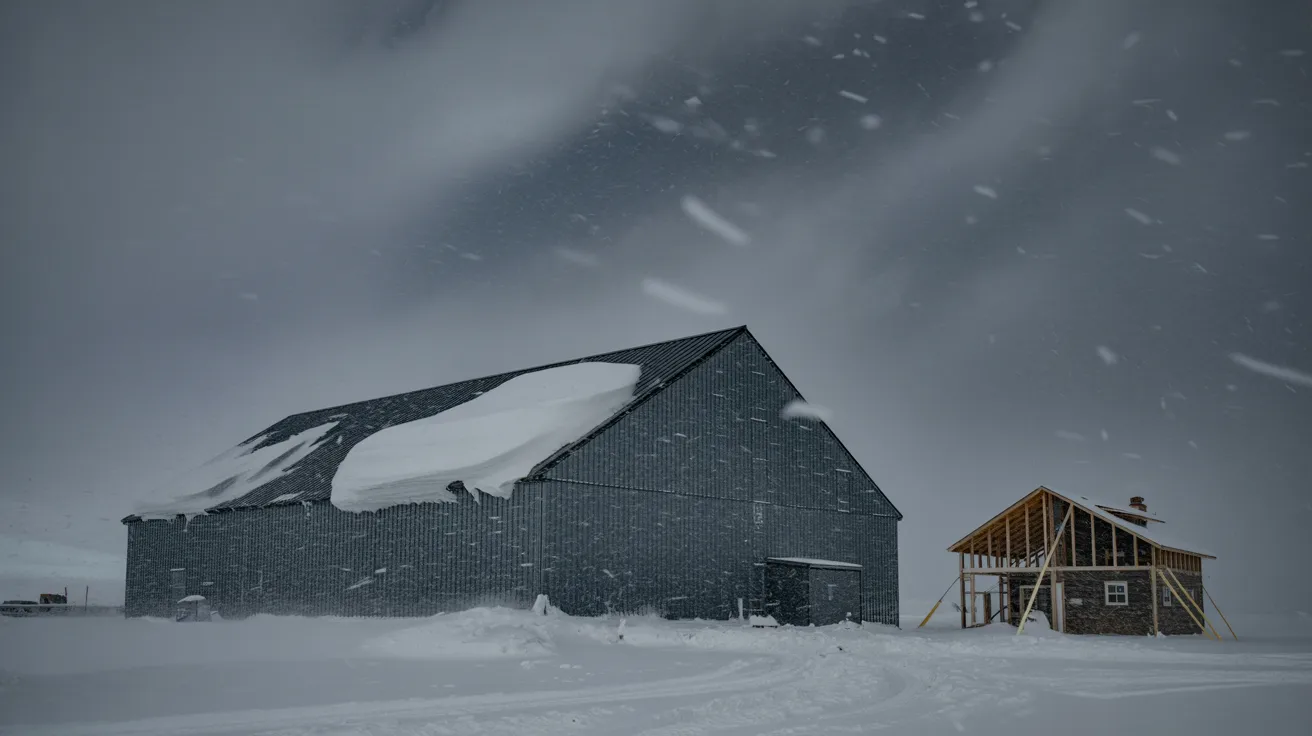
Both methods are strong, but they perform differently depending on conditions. Stick frame performs well in residential environments when properly insulated and braced. It offers good resistance to wind and can be highly durable when maintained properly.
Post frame buildings are especially strong under heavy snow and vertical loads due to their deep-set posts.
They also perform well in harsh weather conditions when properly anchored. Metal exteriors provide added protection against fire, pests, and moisture.
Design Flexibility and Functionality
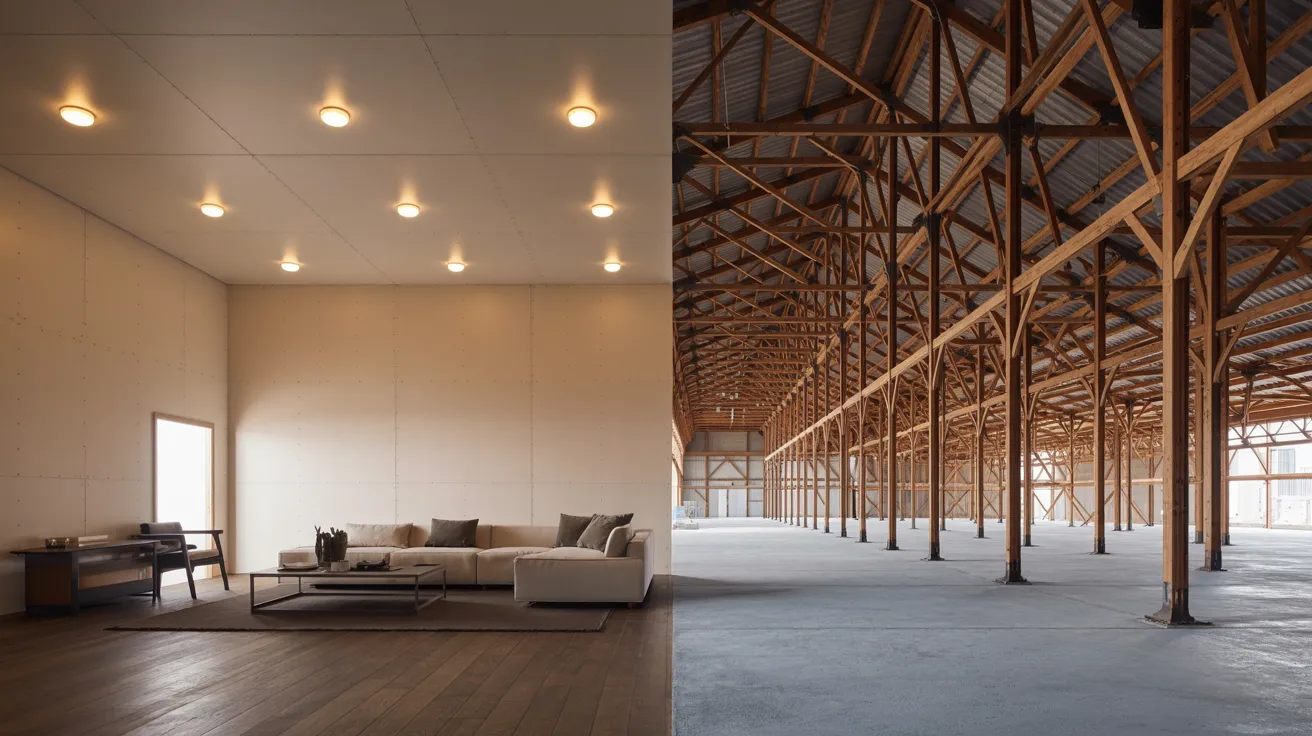
Stick frame construction is better suited for detailed interior spaces. It allows for easy installation of plumbing, wiring, insulation, and drywall, making it ideal for homes and offices.
Post frame construction is designed for open layouts. It is perfect for large spaces where movement and storage are more important than interior walls.
This makes it a popular choice for barns, warehouses, and workshops.
Pros and Cons of Each Construction Method
Understanding the pros and cons of each construction method helps you choose the right framing system for your budget, building type, and long-term needs.
| Construction Method | Pros | Cons |
| Stick Frame Construction | Strong insulation, works well for residential homes, and often provides higher resale value. | More expensive, requires more labor, and usually takes longer to complete. |
| Post Frame Construction | Faster to build, more affordable, and ideal for large open spaces with fewer interior supports. | Less common for residential homes and may need additional planning for interior finishing. |
Which Is the Best Choice for Your Project?
When to Choose Stick Frame
A stick frame is best when building a home or any finished living space. It is also ideal for garages, residential additions, and properties where long-term resale value is important.
When to Choose Post Frame
Post frame is best for barns, storage buildings, agricultural use, and large utility structures. It is also a strong choice when budget and speed are top priorities.
Tips for Making the Right Decision
Choosing the right construction method depends on your budget, building goals, timeline, and long-term maintenance expectations.
- Define the purpose of your building clearly before choosing so you can select the most suitable construction method for your residential, commercial, or storage needs.
- Set a realistic budget and compare long-term costs including maintenance, repairs, labor, and energy efficiency instead of focusing only on upfront expenses.
- Check local building codes and permit requirements early because regulations may affect the type of framing, materials, and structural design you can use.
- Compare contractor experience with both methods carefully to ensure better workmanship, fewer delays, and proper installation throughout the project.
- Think about future use and flexibility needs if you may expand, remodel, or change the purpose of the building later on.
- Consider maintenance requirements over time since some construction methods need more repairs, inspections, and upkeep than others.
- Factor in construction speed and timeline constraints especially if you need the project completed quickly for occupancy or business use.
Conclusion
Choosing between post frame vs stick frame often comes down to how you want your space to function.
In my experience going through many building plans and homeowner decisions, the clearest choice usually appears once you picture daily use of the space rather than just the cost.
If you imagine a clean finished home, a stick frame fits better. If you imagine a wide open utility space, the post frame stands out. Think about your own project and what matters most.
Share your thoughts in the comments or find more guides on framing choices.
Frequently Asked Questions
Is post frame construction cheaper than stick frame construction?
Yes, post frame is generally more affordable because it uses less lumber and skips the full concrete foundation. Labor costs are also lower since post frame buildings go up faster than stick frame structures.
Can a post frame building be used as a permanent home?
It is possible, but post frame homes require extra steps to meet residential building codes in most areas. Stick frame is the more accepted and practical choice for finished permanent living spaces.
How long does a post frame building last compared to stick frame?
Both methods can last several decades when built correctly and maintained over time. Post frame buildings with metal exteriors often need less maintenance, while stick frame homes hold up well with regular care and upkeep.
Which framing method is faster to build from start to finish?
Post frame is significantly faster because it has fewer components and does not need a full concrete foundation. Stick frame takes more time due to detailed framing steps and the finishing work required for interior spaces.
What type of foundation does each construction method require?
A stick frame requires a full concrete slab or basement foundation before any framing can begin. Post frame buildings use large posts set into the ground or placed on concrete piers, which is a much faster and lower cost starting point.