Choosing between joisted masonry and frame construction can feel confusing, especially when money and safety are on the line.
I have worked with both types and understand how much this decision matters.
In this article, you will learn what makes these two construction types different, how they affect your insurance costs, and which one suits your specific needs.
We will cover key differences in materials and strength, fire safety, climate performance, insurance costs, and how to pick the right fit for your project.
No fluff. Just clear, practical information to help you make a confident choice.
What Is Joisted Masonry vs Frame Construction?
Learn how joisted masonry and frame construction differ and why the building type on your property changes how it gets insured.
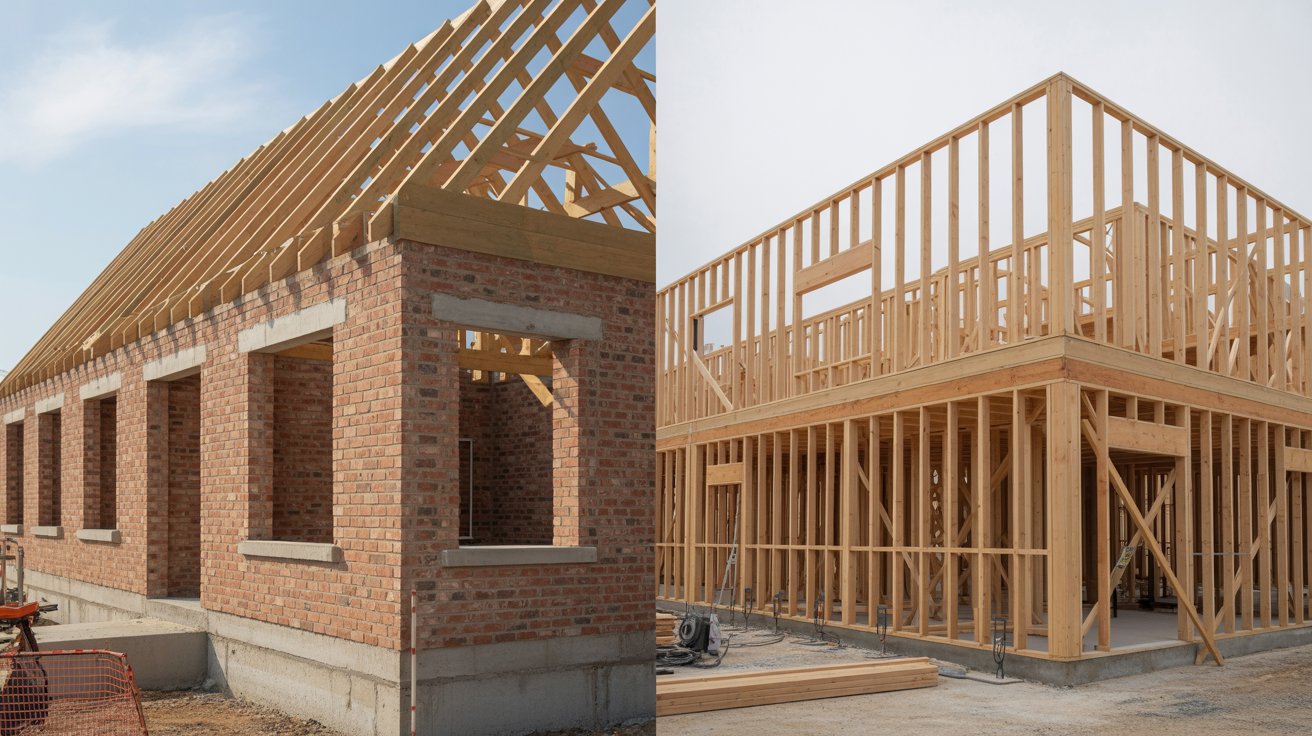
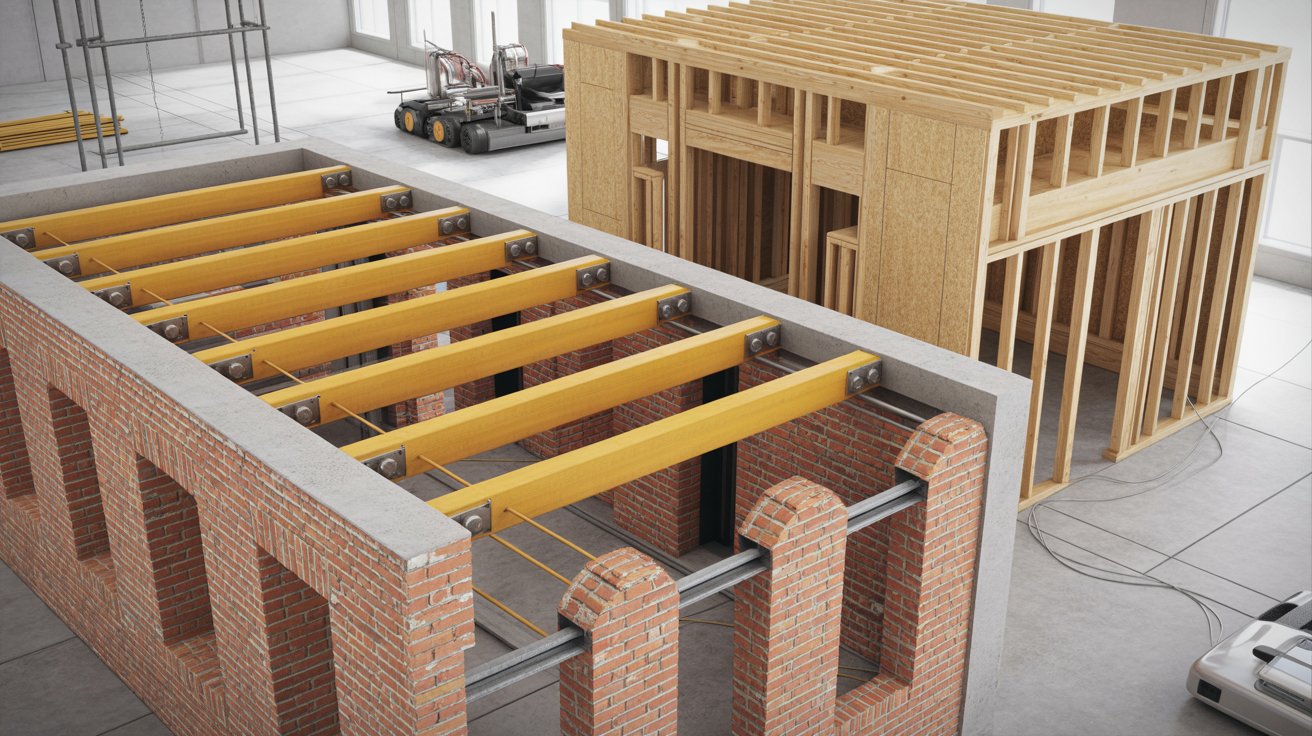
Joisted masonry construction buildings have exterior walls made from brick, stone, or concrete block with wood framing inside for the floors and roof.
Frame construction means the entire structure is built with wood or other combustible materials, which is common in most single-family homes.
Joisted masonry carries a moderate fire risk, while frame construction is considered higher risk since flames can spread faster through wood.
These classifications matter because insurers use them to decide how much risk they are taking on, which directly affects what you pay for coverage.
Joisted Masonry vs Frame: Key Differences Explained
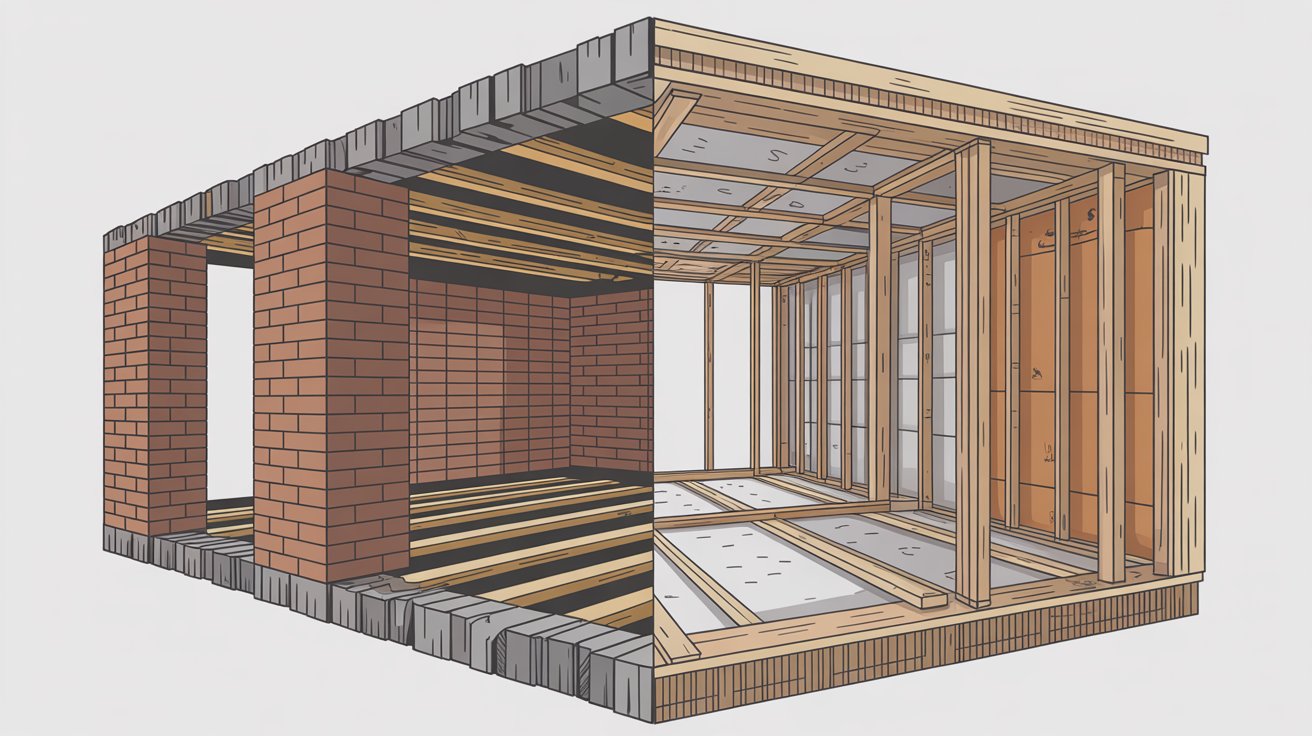
Knowing the differences between joisted masonry and frame construction helps you make a smarter building choice.
| Category | Joisted Masonry | Frame Construction |
| Materials Used | Uses brick, stone, or concrete block for outer walls with wood joists supporting floors and roof | Uses wood or light steel for the entire structure, including walls, with no heavy masonry materials |
| Structural Strength and Stability | Thick and solid walls handle wind, pressure, and lateral forces very well | Lighter and slightly flexible but cannot match the rigidity of masonry walls |
| Fire Resistance and Safety | Brick and concrete do not burn, giving a strong fire resistance advantage on the exterior | Wood used throughout means fire spreads faster; fire-resistant coatings help, but the gap remains |
| Durability and Lifespan | Resists moisture, pests, and wear well; a properly built structure can last over 100 years | Shorter lifespan and more prone to rot and insect damage without regular upkeep |
| Construction Cost and Build Speed | Takes more time and skilled labour, raising upfront costs but holds value better long term | Faster and more affordable to build; materials are lighter, and labour is simpler |
| Maintenance Requirements | Very low maintenance, mortar joints may need repointing after several decades | Needs more frequent care, wood siding, paint, and structural components require ongoing checks |
Joisted Masonry vs Frame Construction Classifications
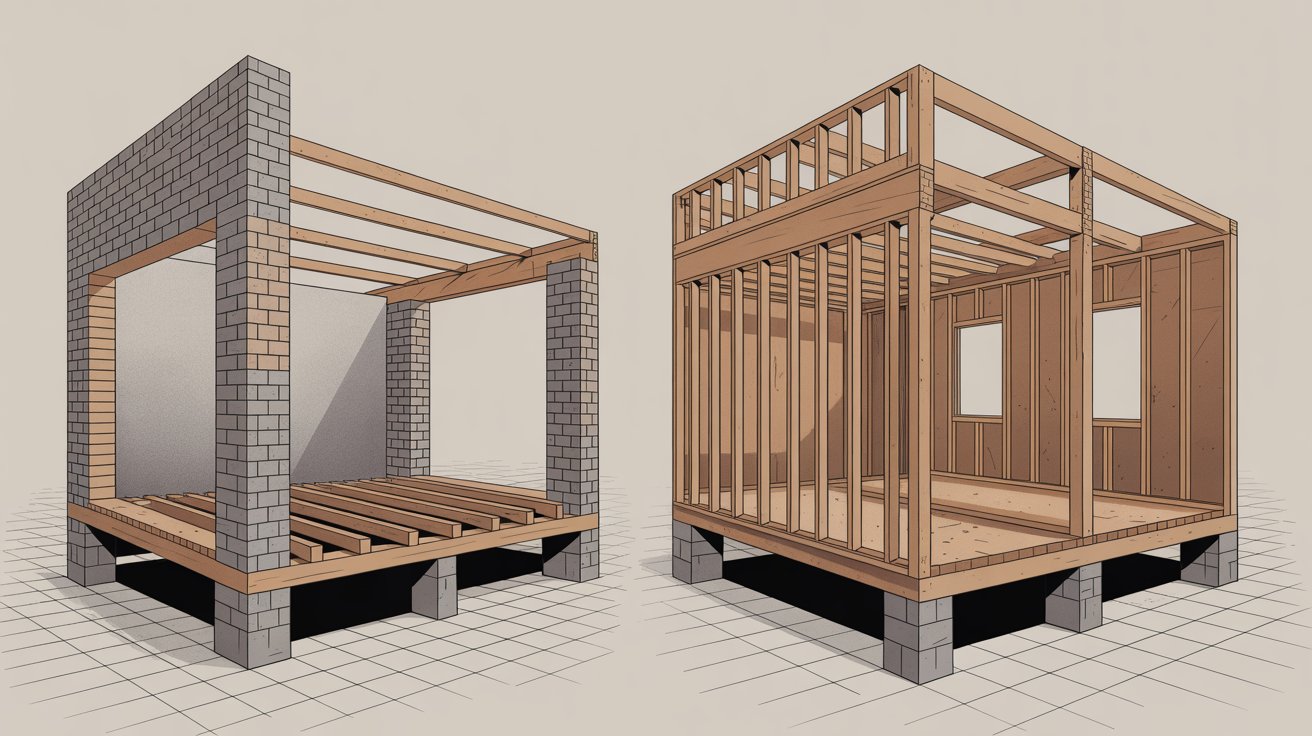
Building construction type directly affects your insurance costs and coverage options.
ISO Classification for Joisted Masonry
The ISO places joisted masonry buildings in Class 2. These buildings have brick, stone, or concrete block exterior walls but use wood for floors, roof, and interior framing.
Insurers treat this as moderate risk. The masonry exterior resists fire, but the wooden interior can still burn and cause heavy damage.
How Frame Construction Is Classified
Frame construction falls under ISO Class 1. Walls, floors, and roof are all made from wood or other combustible materials. Most older homes fall into this group.
Wood burns faster and spreads fire more quickly. This raises the chance of a total loss, which is why frame buildings usually come with higher premiums.
Insurance and Building Code Impact
Joisted masonry buildings often get better insurance rates than frame buildings.
The masonry exterior adds a layer of fire resistance that insurers recognize.
Local building codes set construction standards based on fire risk. If a damaged building does not meet current code, rebuilding costs can go up.
Ordinance or law coverage helps cover that gap. Without it, the property owner pays the difference out of pocket.
Knowing your building class helps you choose the right coverage from the start.
Advantages and Disadvantages of Joisted Masonry Construction
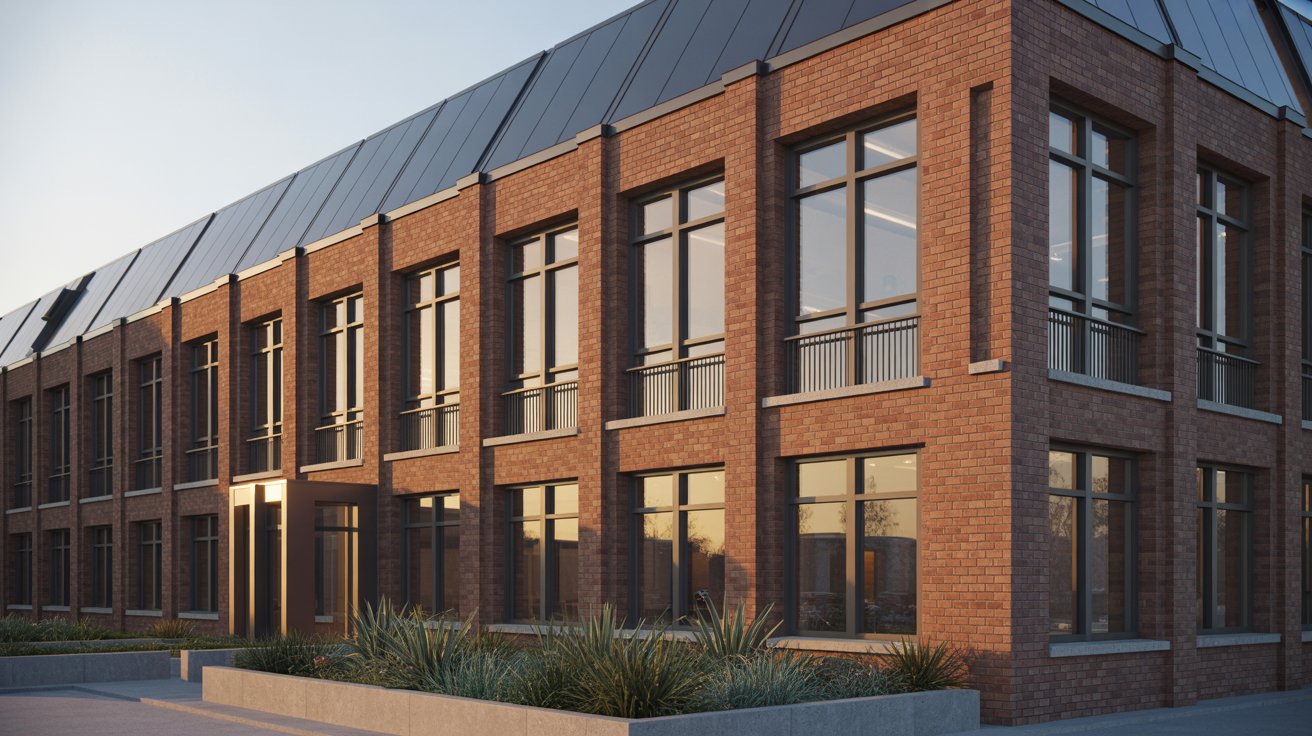
Joisted masonry has clear benefits and real drawbacks that builders and property owners should understand before starting a project.
Main Benefits of Joisted Masonry
The materials are affordable and easy to source, which helps keep construction costs low.
Wood joists also make it simple to run electrical wiring, plumbing, and HVAC systems through the floors without much effort.
Masonry walls carry loads well and absorb heat during the day, releasing it slowly at night to keep indoor temperatures steady.
This method has been in use for over a century and has a long record of reliable performance.
Common Limitations of Joisted Masonry
Wood joists are combustible, which raises fire risk and often leads to higher insurance premiums.
Moisture can also cause the wood to rot over time if the building is not properly maintained.
In earthquake-prone areas, unreinforced masonry walls can crack or fail if not tied well to the floor system.
Wood is also vulnerable to termites and other pests, which can cause hidden damage if regular inspections are skipped.
Advantages and Disadvantages of Frame Construction
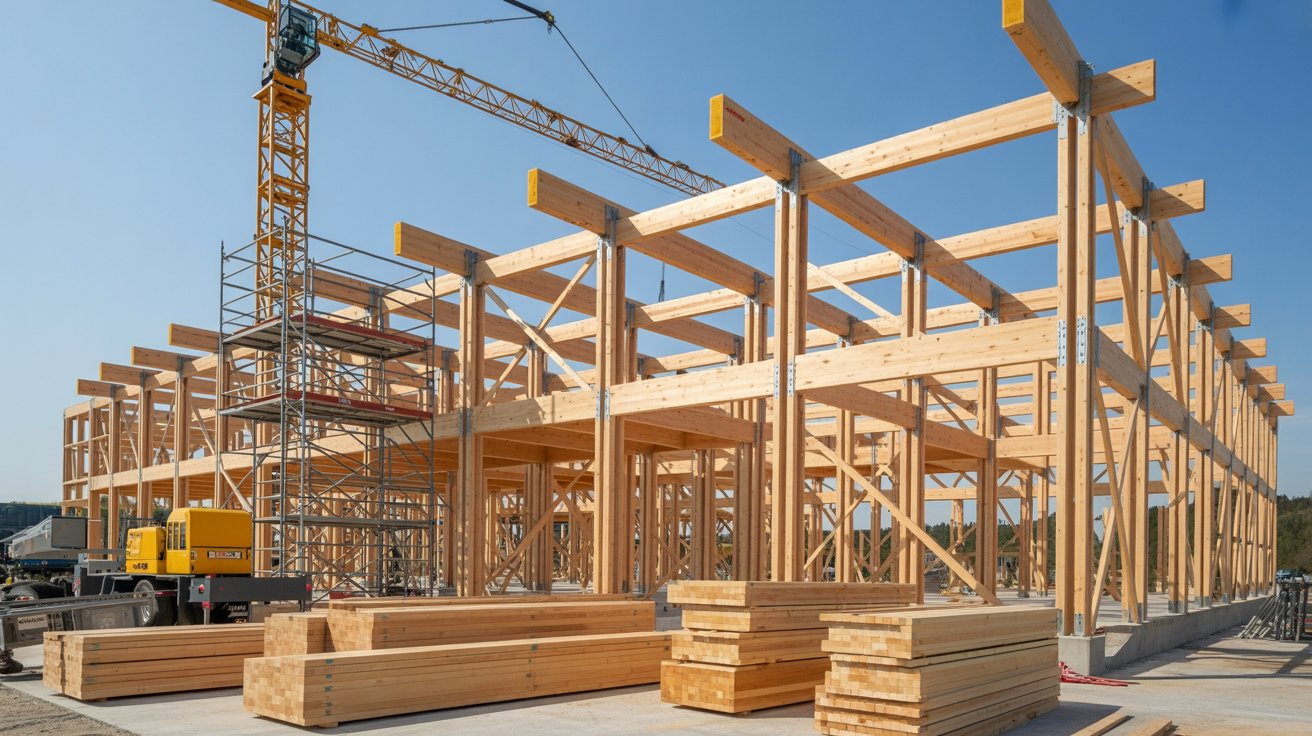
Frame construction comes with clear benefits and some limitations. Here is a simple breakdown of both.
Key Benefits of Frame Construction
Frame construction is affordable and widely used. Materials like wood and steel are easy to source and cost less than other options.
Labor costs stay low since the process is simple and does not need highly specialized skills.
Building with frames is also faster because parts can be made in advance and assembled quickly on site.
The structure is flexible, so walls can be added or removed without affecting the overall building.
Insulation fits easily into the wall spaces, which helps cut down energy costs over time.
Common Drawbacks of Frame Buildings
Frame buildings do come with some downsides. Wood carries a higher fire risk, and without proper treatment, fire can spread fast through the structure.
Moisture is another concern since water damage can cause rot and mould inside the walls over time.
Termites and insects can also weaken wood if not treated regularly.
Sound passes through frame walls more easily than solid masonry walls, which can be a problem in shared or busy spaces.
Lastly, frame buildings may need more upkeep over the years compared to concrete or stone structures.
Tips for Choosing Between Joisted Masonry vs Frame
Picking the right construction type shapes your budget, safety, and long term costs. Here is what to know before you decide.
- Budget and Timeline: Frame construction costs less and builds faster. Masonry costs more upfront but lasts longer.
- Climate and Fire Safety: Masonry resists fire and harsh weather better. A wood frame needs proper treatment to perform in tough conditions.
- Insurance Costs: Masonry buildings often carry lower insurance premiums. Frame buildings may cost more to insure but are cheaper to repair.
- Maintenance: Wood frame repairs are simple and affordable. Masonry repairs take more skill and cost more.
- Right Fit for Your Project: Your budget, location, and local codes should guide your final choice. Consult a licensed contractor before deciding.
Conclusion
Making the right call between joisted masonry and frame construction is not always obvious, and that is completely fine.
I have seen people stress over this decision, but once they focused on their budget, location, and long-term goals, the answer became much clearer.
Trust the process and do not rush it. Talk to a contractor, ask questions, and factor in what matters most to you.
Have you worked on a project involving joisted masonry or frame construction?
Drop your experience in the comments. We would love to hear what worked for you!
Frequently Asked Questions
What is the main difference between joisted masonry and frame construction?
Joisted masonry uses brick or concrete walls with wood floors and roof. Frame construction relies on a full wood or steel structural system throughout the building.
Which construction type is better for fire safety?
Joisted masonry offers stronger fire resistance because brick and concrete do not burn easily. Frame construction is more vulnerable, though modern fire treatments have improved its safety level.
Is frame construction cheaper than joisted masonry?
Yes, frame construction generally costs less to build and takes less time to complete. Joisted masonry requires more materials and skilled labour, which raises the overall project cost.
Does construction type affect my insurance premium?
Yes, masonry buildings often receive lower insurance rates due to their fire and weather resistance. Frame buildings may carry higher premiums depending on your location and local risk factors.
Which construction type is easier to maintain and repair?
Frame construction is easier and cheaper to repair since wood is widely available and simple to work with. Masonry repairs require specialised skills and materials, making them more time-consuming and costly.