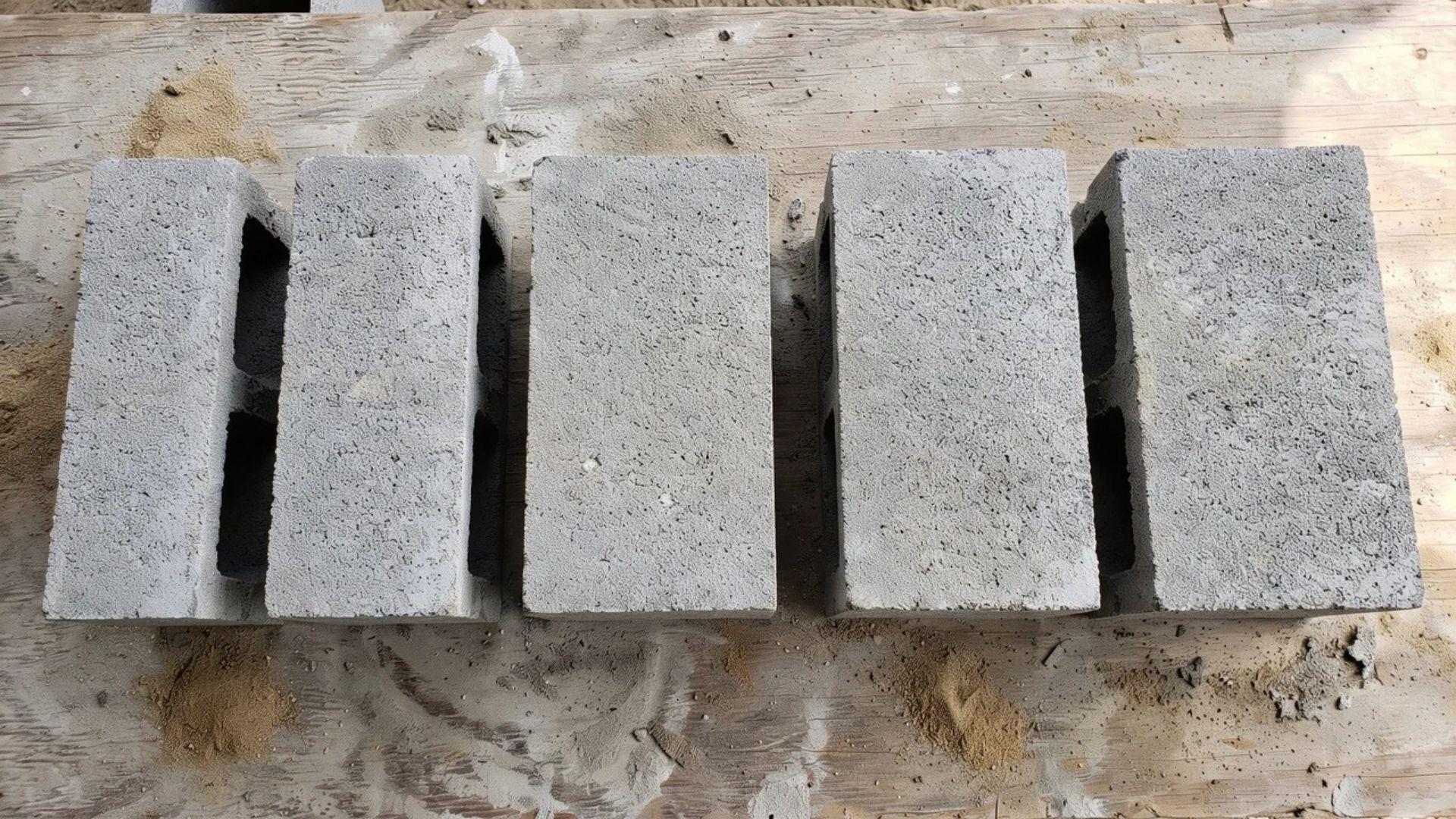
Wall cladding is a layer of material fixed over an existing wall to protect it and change its look, and it carries none of the building’s load.
That one-line answer to what is wall cladding covers a lot of ground, from steel panels on an office facade to washable sheets in a hospital corridor.
A material list tells only half the story, because the detail that matters most sits behind the surface: the barrier and drainage path that decide whether the wall stays dry.
Below, you’ll see the structure first, then real examples inside and out.
Understanding Wall Cladding in Construction
Wall cladding is a non-structural layer of material applied over an existing wall to protect it and change its appearance.
It forms an outer skin, so it does not hold up the roof, floors, or anything else, and replacing it does not alter the structure behind it.
That structure, whether wood or steel framing, masonry or concrete, is called the substrate. In load-bearing wall construction, the wall itself carries the building’s weight, while cladding only covers it.
That split matters for planning, because replacing cladding is a surface job while altering the structure behind it is a separate scope of work.
Outside, cladding faces rain, wind, and sun on houses and commercial buildings. Inside, it shows up as feature walls and as protective surfaces in rooms that take a lot of wear.
Metal panels are a big part of that, and cutting aluminium composite cladding properly is where a clean install starts.
Since cladding is only the visible skin, the quickest way to understand it is to see what that skin looks like on real walls.
What Does Wall Cladding Look Like in Real Installations?
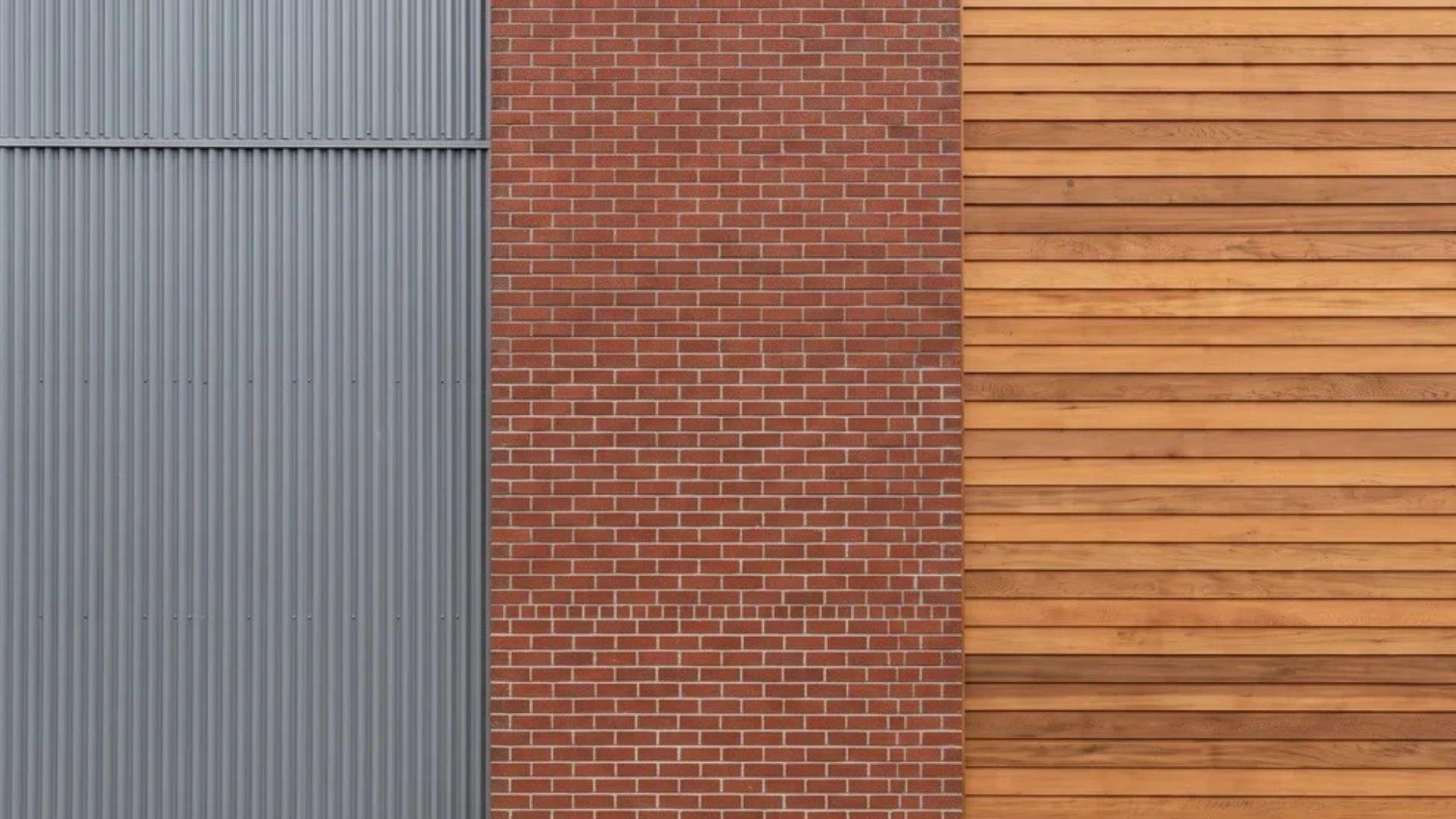
Wall cladding appears as board lines, panel seams, or textured stone and brick faces, depending on the material and where it is installed.
The same material can look different once the pattern or installation direction changes, so each example below describes one look in visual terms.
Think of it as a field guide to what you will actually see on a street, in a kitchen or in a hallway.
Exterior Wall Cladding Examples on Homes and Commercial Buildings
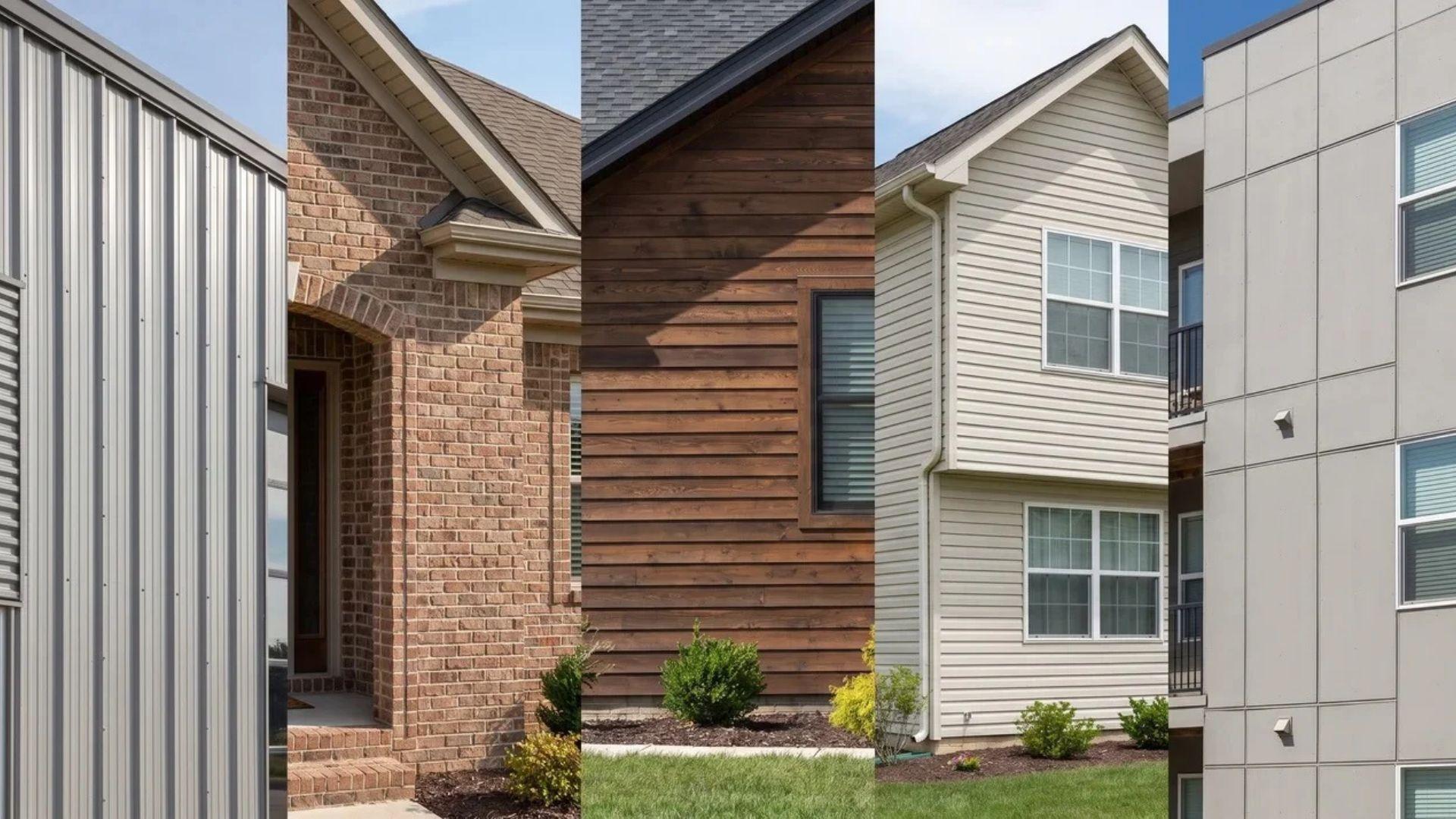
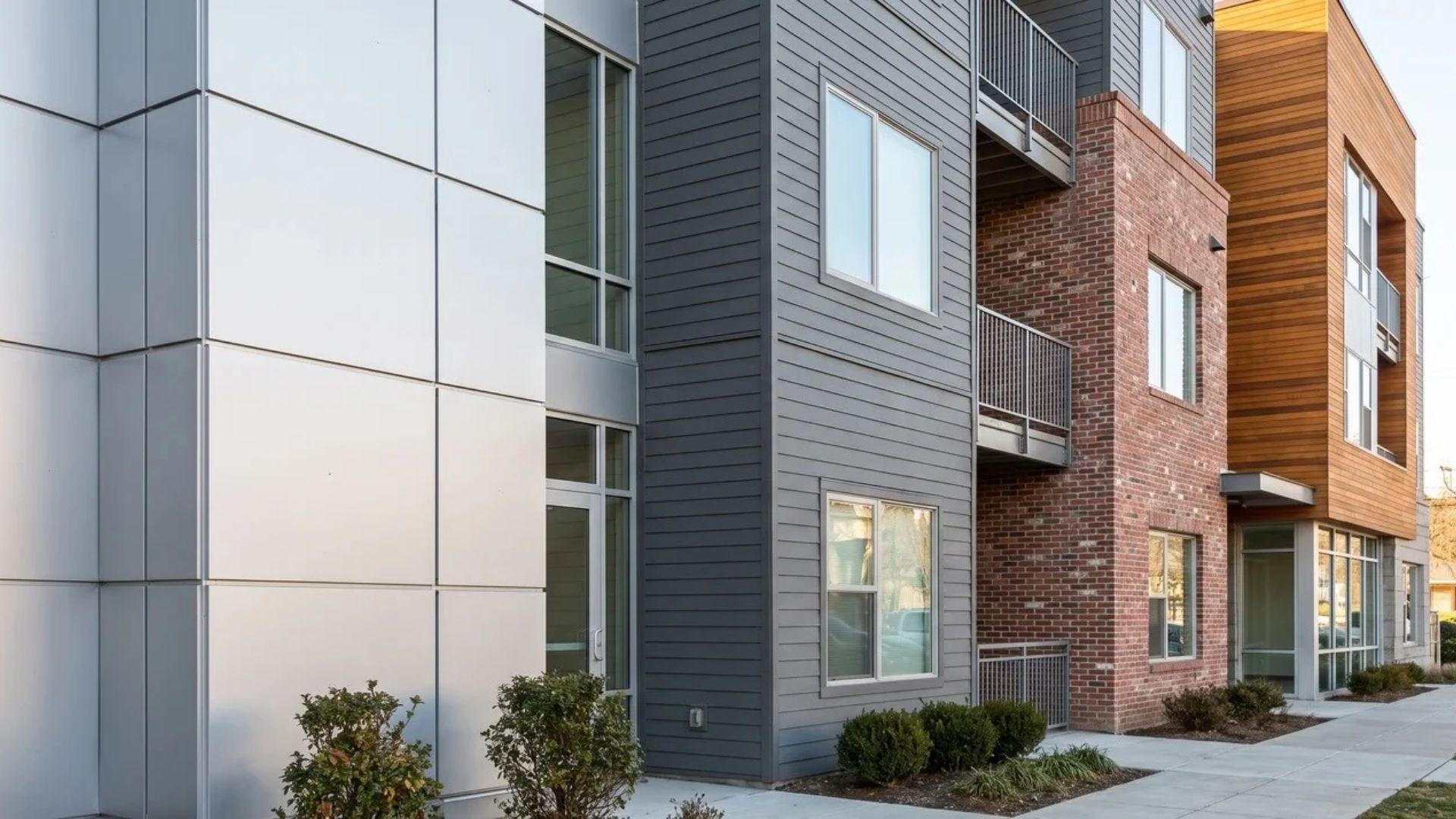
The most common exterior cladding materials are metal, stone or brick veneer, wood, vinyl, and fiber cement, and each leaves a recognizable surface on the wall.
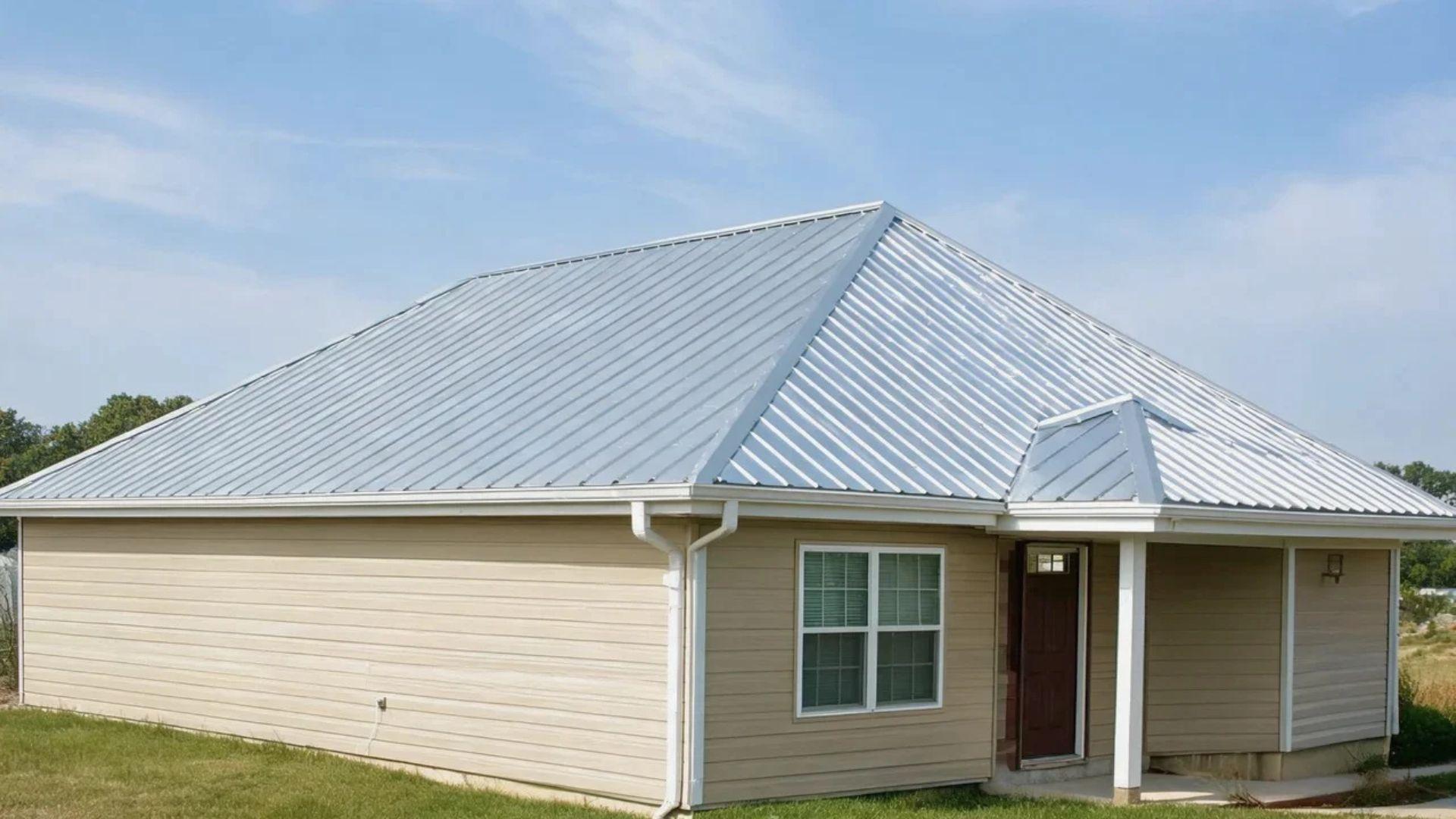
- Metal panels: Made from aluminum, steel, copper, or zinc, they read as flat or corrugated sheets with crisp seams, which is why they suit storefronts and office facades.
- Stone and brick veneer: It looks like a solid masonry wall, with layered texture and visible mortar lines, even though it is a thin face over the structure. Brick wall construction shows how a full brick wall is built by comparison.
- Wood: It appears as horizontal boards or vertical slats on houses and small commercial buildings.
- Vinyl: It gives smooth lap boards in a uniform factory color, a common sight when people picture wall cladding on a house.
- Fiber cement: A blend of cement and fibers, it offers a lap-board or flat-panel look with a painted finish, so from the street it can pass for wood.
Finish and pattern change the look more than the material name suggests.
Wood boards laid horizontally suggest a traditional clapboard house, while the same boards laid vertically look closer to a cabin or barn, and a metal panel feels sleek in a flat profile but industrial when corrugated.
Interior Wall Cladding Examples for Feature Walls
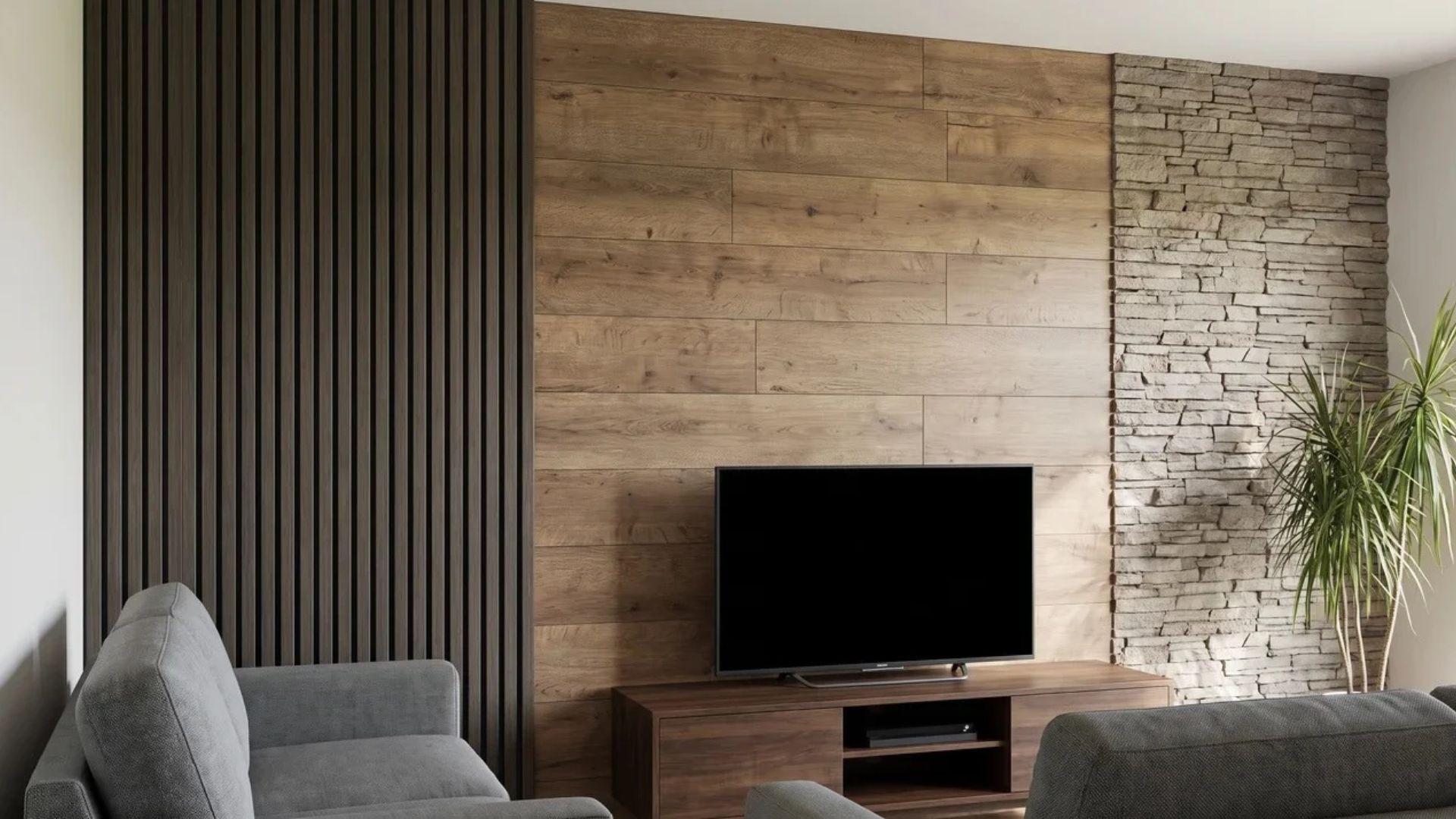
Interior wall cladding is a decorative or protective surface layer fixed over an indoor wall, often used for feature walls.
Indoors, the layer’s job is appearance, wall protection, and sound control rather than weather, so thinner, lighter materials are enough.
- Slatted or grooved PVC panels: They create deep vertical lines that catch light.
- Wood-look boards: They add horizontal or vertical grain to the wall.
- Stone or brick-effect surfaces: They give an accent wall texture without any masonry work.
Because it fixes to the existing wall surface, a room can change character without rebuilding anything behind it.
Placement changes the effect as well: one clad wall behind a bed or television reads as a deliberate focal point, while cladding on all four walls reads as a full room finish.
Panel width and joint spacing matter more here, since the wall is viewed up close rather than from the street.
Hygienic Wall Cladding for Kitchens and Healthcare Spaces
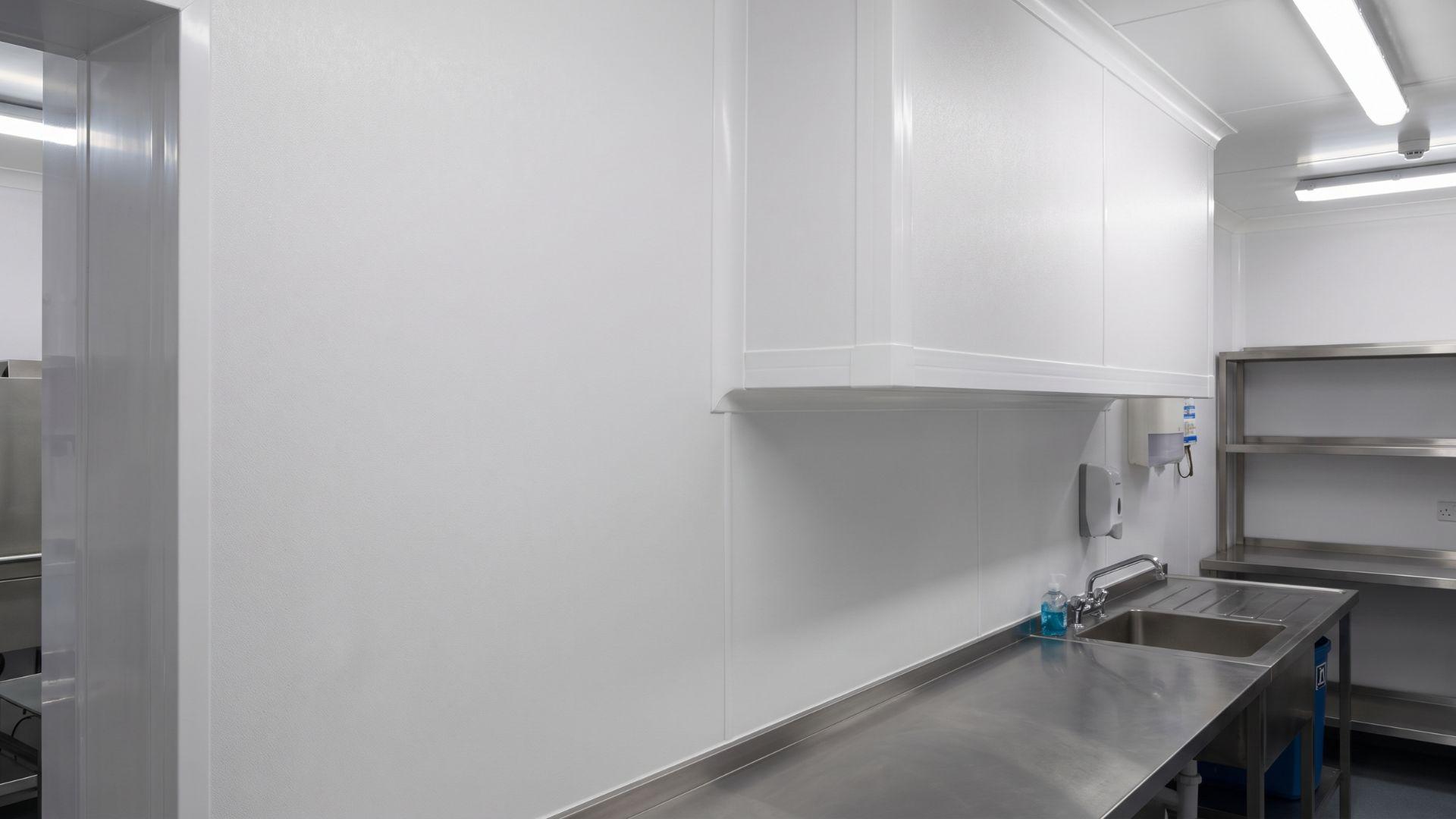
Hygienic wall cladding is a washable, non-porous wall covering with sealed joints, used in spaces that need regular cleaning.
- Surface: It usually appears as large, flat PVC or fiberglass-reinforced plastic (FRP) sheets with few seams.
- Joints: They are welded, sealed with food-safe silicone, or covered by trim profiles.
- Where you will see it: Commercial kitchens, hospital corridors, and labs, where a tiled wall would carry grout lines that hold dirt.
The reason is cleanliness. Washington State’s food service rule, which follows section 6-201.11 of the FDA Food Code, requires walls and wall coverings in food service establishments to be smooth and cleanable, with limited exceptions.
A flat sheet with sealed joints is one way to meet that standard, because it leaves fewer crevices for residue.
Hygienic does not mean germ-free. The smooth surface reduces the work of cleaning, but it does not sanitize itself, and some products add antimicrobial agents that still depend on a regular cleaning routine.
Detailing at corners, sinks, and equipment connections determines how the system performs, so those joints deserve as much attention as the sheet itself.
That is how cladding looks, but looks are the smaller part of its job. The bigger part happens in the layers behind the surface.
How Does Wall Cladding Protect a Building?
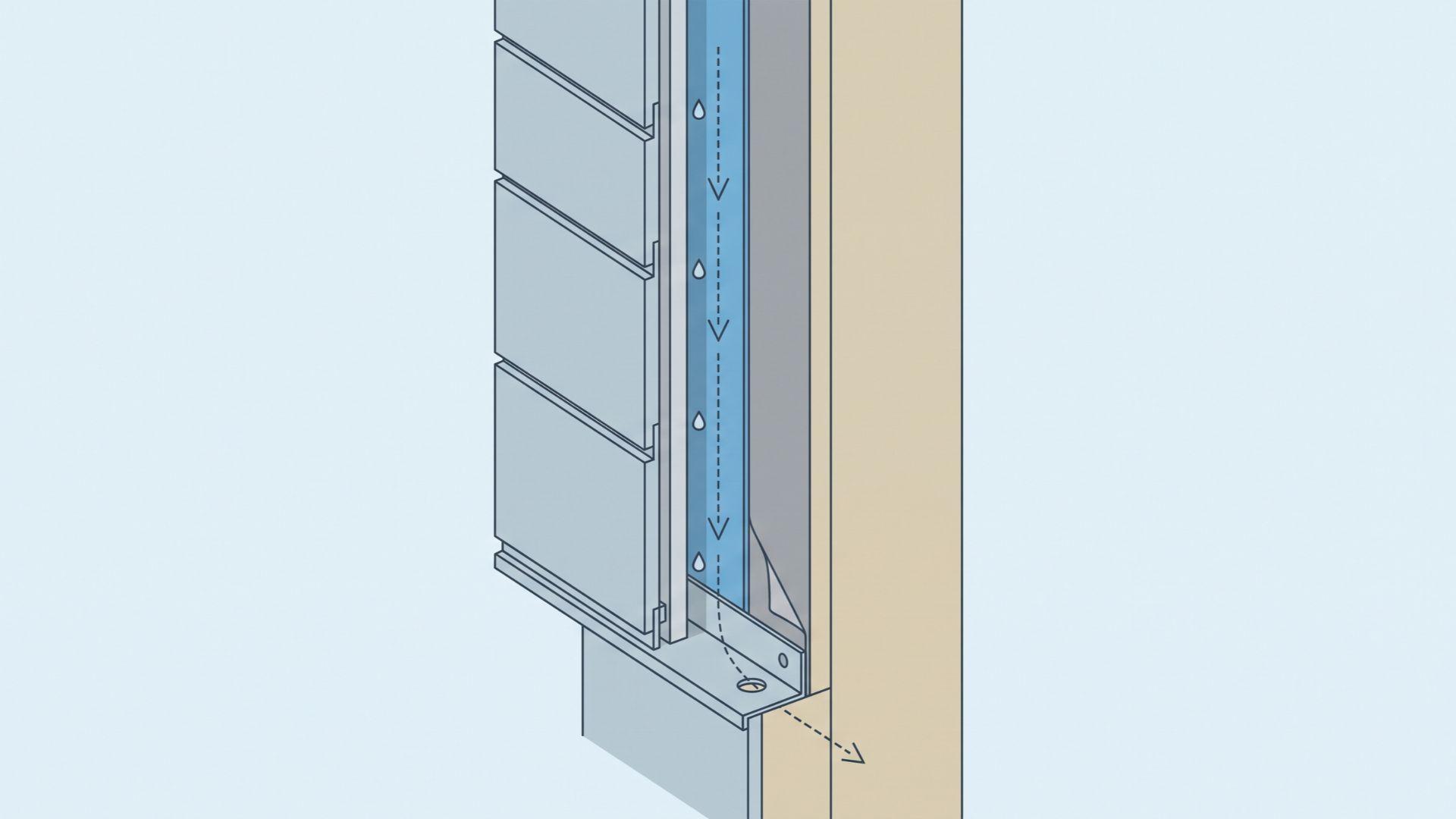
Wall cladding protects a building by shedding rain and blocking wind and sun, while the barrier behind it handles any moisture that gets through.
The surface is the first line of defense, not the only one, so a wall stays dry when the cladding, the water-resistive barrier, and the drainage path all work together.
Homeowners often assume the cladding itself is the watertight layer, but wind-driven rain can get behind it. Three layers deal with that water:
- Water-resistive barrier: Homes built under the International Residential Code have included a code-required water-resistive barrier since the 2006 edition. Penn State’s housing research center calls that barrier the primary layer for shedding bulk water that gets through.
- Air space and weep holes: Reservoir claddings such as brick veneer and stucco soak up and store rainwater, so codes typically require an air space and weep holes behind brick veneer.
- Rainscreen gap: An added gap gives water behind other cladding a clear path to drain.
Cladding does add smaller benefits on top of that. It brings some thermal and acoustic buffering and covers an unattractive wall surface, though the thermal gain depends on the material and the insulation behind it.
The system fails when water gets behind the cladding and cannot drain.
A torn barrier or a blocked gap lets moisture reach the sheathing, where it can lead to rot and mold, which is why the layers behind the surface matter as much as the surface itself.
That outside-in protection is what sets cladding apart from its closest indoor look-alike, wall paneling.
Wall Cladding vs Wall Paneling: What Is the Difference?
Wall cladding is a protective and decorative layer used inside or outside, while wall paneling is typically an interior decorative finish.
The two overlap indoors, and that overlap causes most of the confusion, since a slatted wall panel and a slatted cladding sheet can look identical on a feature wall.
| Factors | Wall Cladding | Wall Paneling |
|---|---|---|
| Where it is used | Inside or outside | Typically inside |
| Main job | Protects the wall from weather, impact, or moisture, and changes its look | Dresses the wall |
| The practical test | If the layer shields the wall, it is cladding | If the layer only dresses the wall, it is paneling |
| Where they overlap | A slatted cladding sheet can look identical to a slatted wall panel on a feature wall | A slatted wall panel can look identical to a slatted cladding sheet on a feature wall |
Real products blur that line, and many suppliers use both words for the same board, so check what the product is rated to do rather than trusting the label.
Whichever label a supplier uses, the questions to ask stay the same: what does the layer protect, and what sits behind it?
Wall Cladding Is the Skin, Not the Structure
Knowing what wall cladding is comes down to one idea: It is a skin that changes how a wall looks and takes the first hit from weather, while the structure, barrier, and drainage gap behind it decide how the wall performs.
Whether you are comparing exterior panels for a house or hygienic sheets for a kitchen, judge the whole assembly, not only the visible surface.
Before you pick a material, ask the installer what sits behind it and how water escapes.
Ask for the answers in writing, since they often tell you more than any sample board.
Frequently Asked Questions
What Are the Downsides of Cladding?
The downsides depend on the material: wood needs regular refinishing, vinyl can fade or warp, and metal can dent. Every type also adds cost and weight, so match the material to your climate.
Is Cladding the Same as Siding?
Mostly. Siding is the common US term for exterior cladding, and cladding is the broader word covering interior finishes too, though some suppliers use it only for ventilated systems.
Is Wall Cladding Fire Resistant?
Fire performance depends on the material, and no cladding alone makes a building fire-safe. Fiber cement can test noncombustible, while wood fuels a fire and vinyl melts, so check each product’s fire rating.
Do You Need a Permit for Cladding?
Replacing exterior cladding usually needs a permit, while small repairs and painting often do not, though rules vary by city and county. Call your local building department before you start.