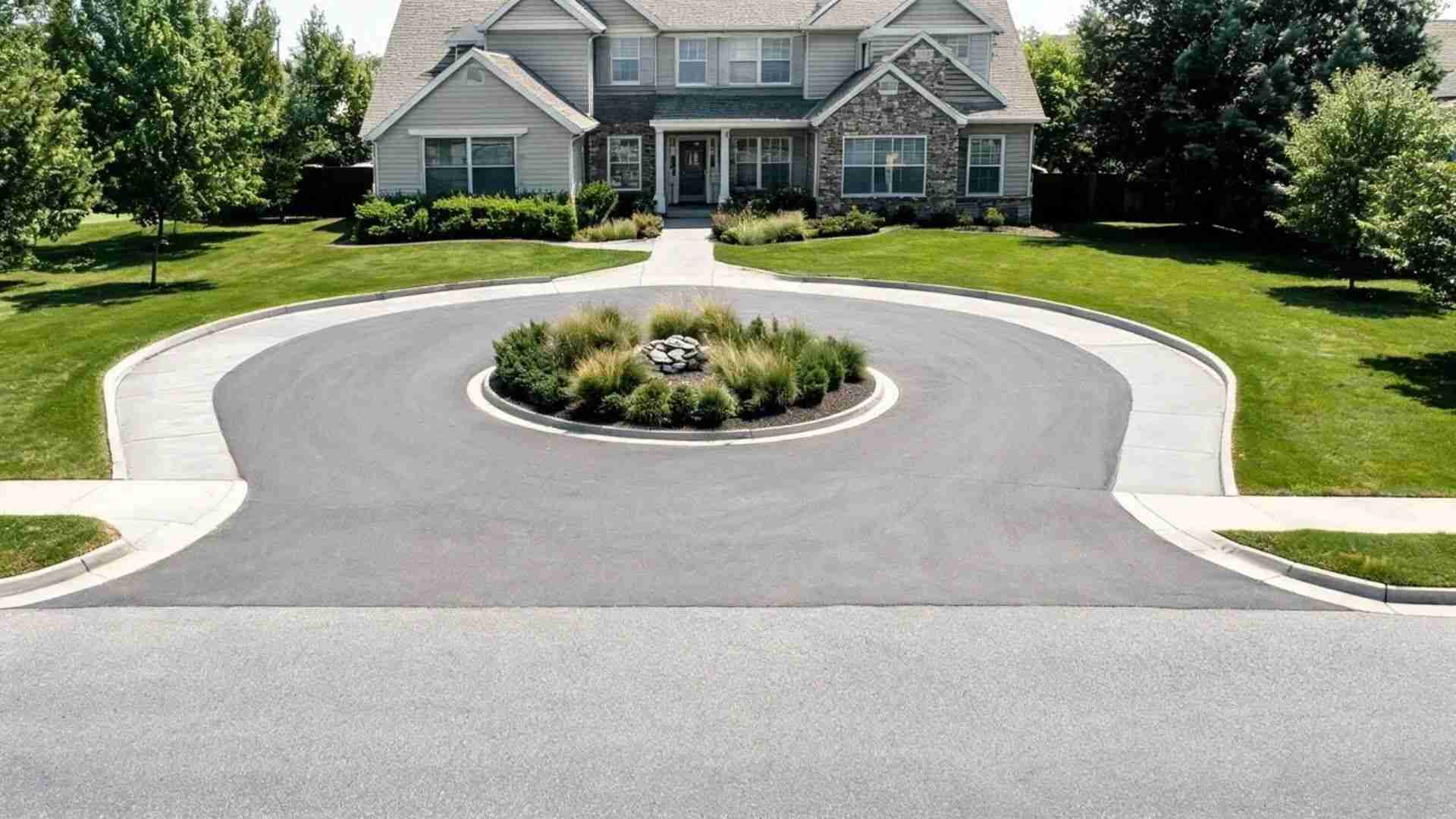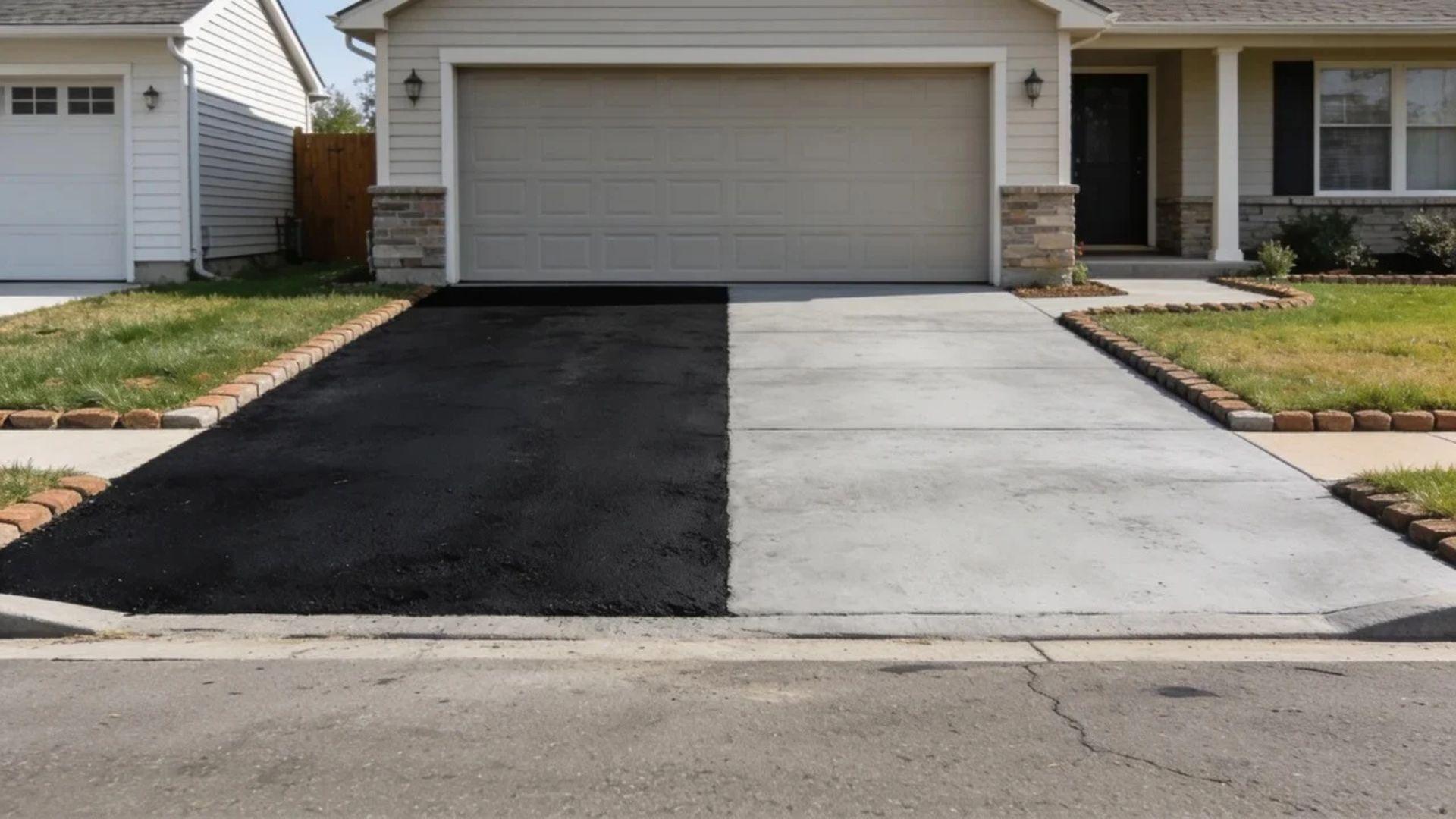
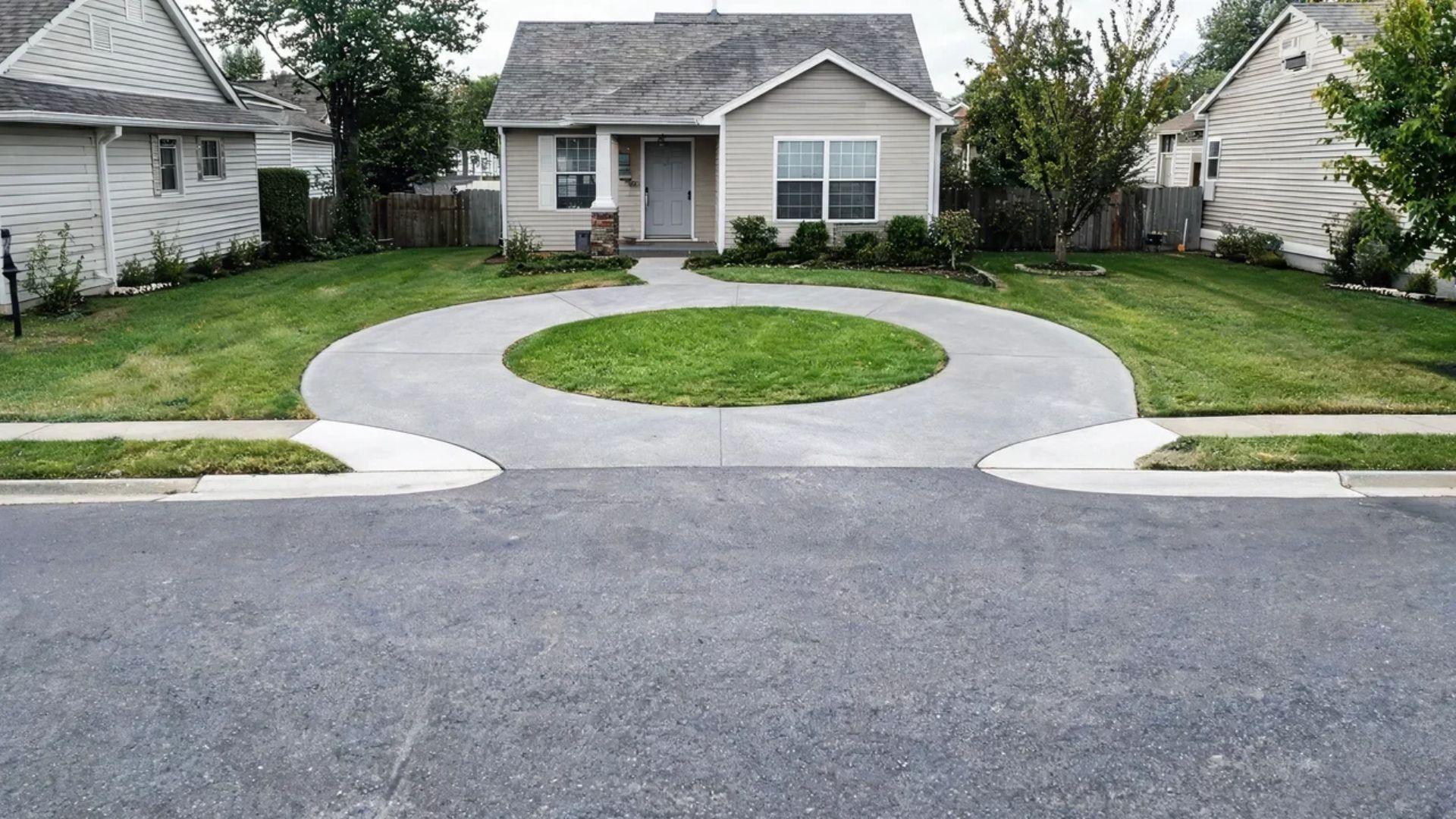
A half circle driveway for a small yard is hard to picture when you’re backing out of a short driveway onto a busy street, with guests’ cars lining the curb.
That daily annoyance is what makes a curved layout tempting.
Then the front yard looks too small, and the idea gets dropped. Yard size is rarely the number that decides it, though.
A half circle driveway for a small yard turns on two other measurements, and checking them early protects a tight lot from a bad build as well as a good idea abandoned.
So the question to settle first is whether yours qualifies.
Can a Half Circle Driveway for a Small Yard Work?
A half circle driveway fits a small yard when the frontage is wide enough for your vehicle’s turning radius, and a shallow arc often works where a full semicircle cannot.
Total yard area matters less than it seems, so measuring your land accurately comes before any sketch.
Two measurements decide the outcome:
- Street frontage: The width along the street that the arc can span.
- Turning radius: The tightest curve your largest vehicle can make, which sets the smallest radius you can build.
A half circle also uses far less space than a full loop, because the drive curves in front of the house instead of wrapping around it.
The detail that changes the math is that a half circle does not have to be a true semicircle. A true semicircle needs a depth equal to its radius and a width equal to twice that radius.
A shallow arc cut from a circle of the same radius uses only a slice of that footprint, so the curve stays gentle enough for a vehicle while the drive takes much less depth.
That is how a wide but shallow lot can hold an arc that a true semicircle with the same gentle curve could not.
The layout breaks down in two cases:
- The lot is too narrow for the arc to leave and rejoin the street at a gentle angle.
- The house sits so close to the street that no arc depth is left.
Either way, the design needs a rethink before anyone prices it. Once the arc fits on paper, the next thing to check is the price tag.
Curves cost more to build than straight runs, so here is where the extra money goes.
How Much Does a Half Circle Driveway Cost?
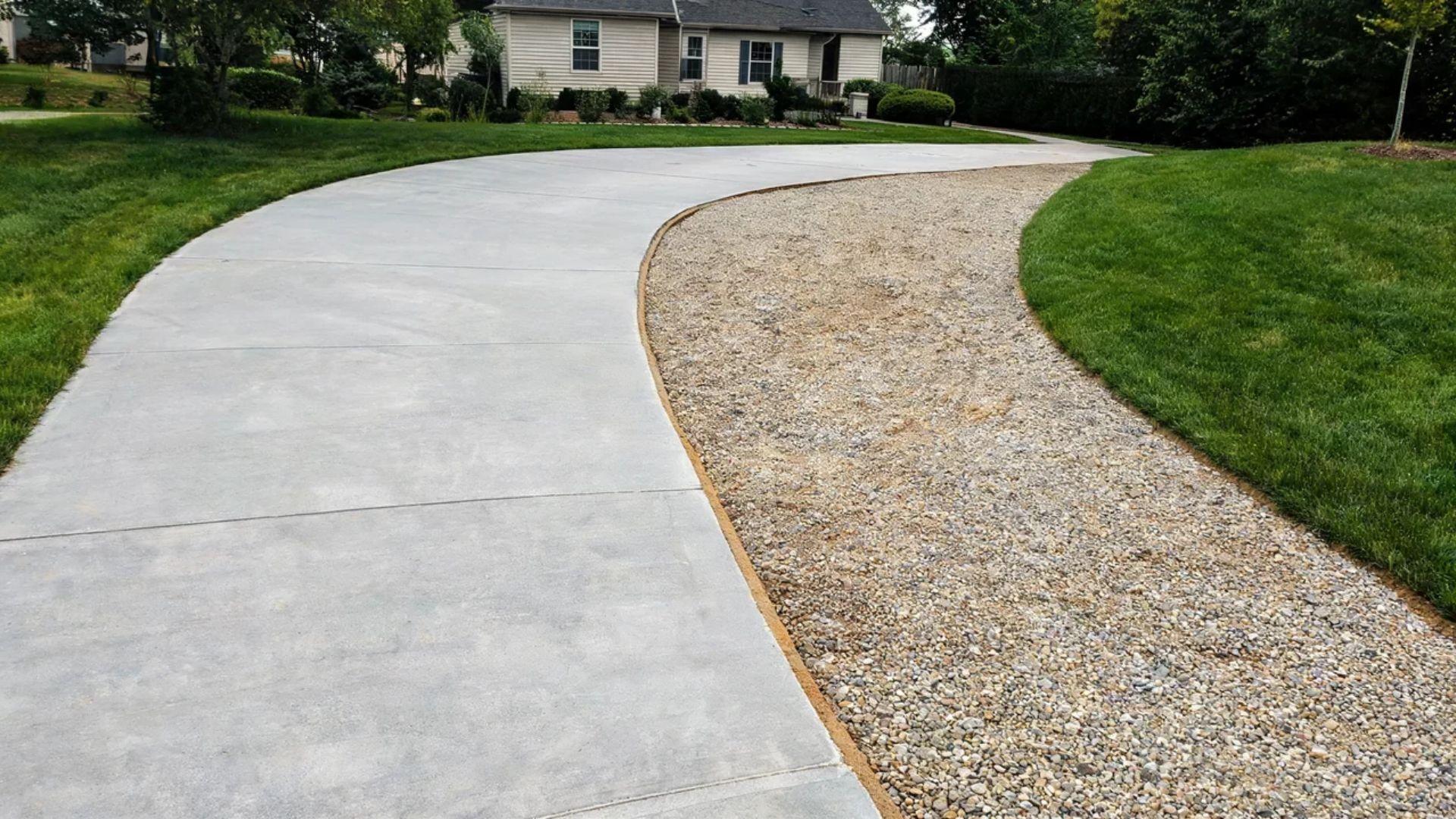
A half circle driveway costs more than a straight one of the same material because of its curve, extra length, and added paved area, with material choice as the biggest price driver.
Curved forms take longer to cut and set, the edge runs longer, and the arc covers more pavement than a straight path to the same garage.
NerdWallet’s driveway cost guide puts the added cost of curves, steep grades, and unusual shapes at 15% to 30%, and Bob Vila’s guide puts circular drives at 10% to 30% more, so budget for a premium in that range.
A second street opening can add its own line item.
To estimate your own project, multiply the arc’s centerline length by the drive’s width to get square feet, then multiply by a per-square-foot rate.
A 60-foot arc that is 10 feet wide covers 600 square feet, which at NerdWallet’s $8 to $18 range for concrete comes to $4,800 to $10,800 before extras and before any curve premium.
| Material | Typical cost per sq ft, labor included |
| Gravel | $1.25 to $4 |
| Asphalt | $7 to $15 |
| Concrete | $8 to $18 |
| Pavers | $10 to $30 |
NerdWallet publishes these ranges for repaving, so treat them as a baseline for a new driveway and compare them with local quotes.
For a half circle driveway on a budget, gravel has the lowest upfront cost, though it typically needs more upkeep than a paved surface.
Site preparation, grading, drainage, and permit fees sit on top of these rates, so ask each contractor for an itemized quote.
Price follows shape as much as material. A half moon and a full loop in front of the house cost and fit differently, so compare them before you commit to either.
Half Moon Driveway or Circular Driveway in Front of House?

A half moon driveway suits a small yard better than a full circle because it needs less depth and less paving, though both layouts typically use two curb openings.
Each opening crosses the sidewalk, so it helps to know the standard sidewalk width before you place the entries.
A circular driveway in front of the house has to loop fully around, so it requires a deeper lot, while the half moon only arcs across the frontage.
| Factors | Half moon | Full loop |
| Depth needed | Less | More |
| Paved area | Smaller | Larger |
| Street openings | Typically two | Typically two |
| Fits best when | Frontage is adequate, and depth is short | The lot is deep enough to circle the house |
Use the table as a quick filter, then apply three rules:
- Pick the half moon when frontage is adequate, but depth is limited.
- Consider a straight drive with a turnaround pad when the frontage is too narrow for either curve.
- Skip either curve when the extra paving crowds the house or pushes the lot past any local limit on paved area.
Whichever shape wins, the city still gets a say. Curb openings and added pavement usually need approval, so check that next.
Do Permits and Curb Cuts Change the Answer?
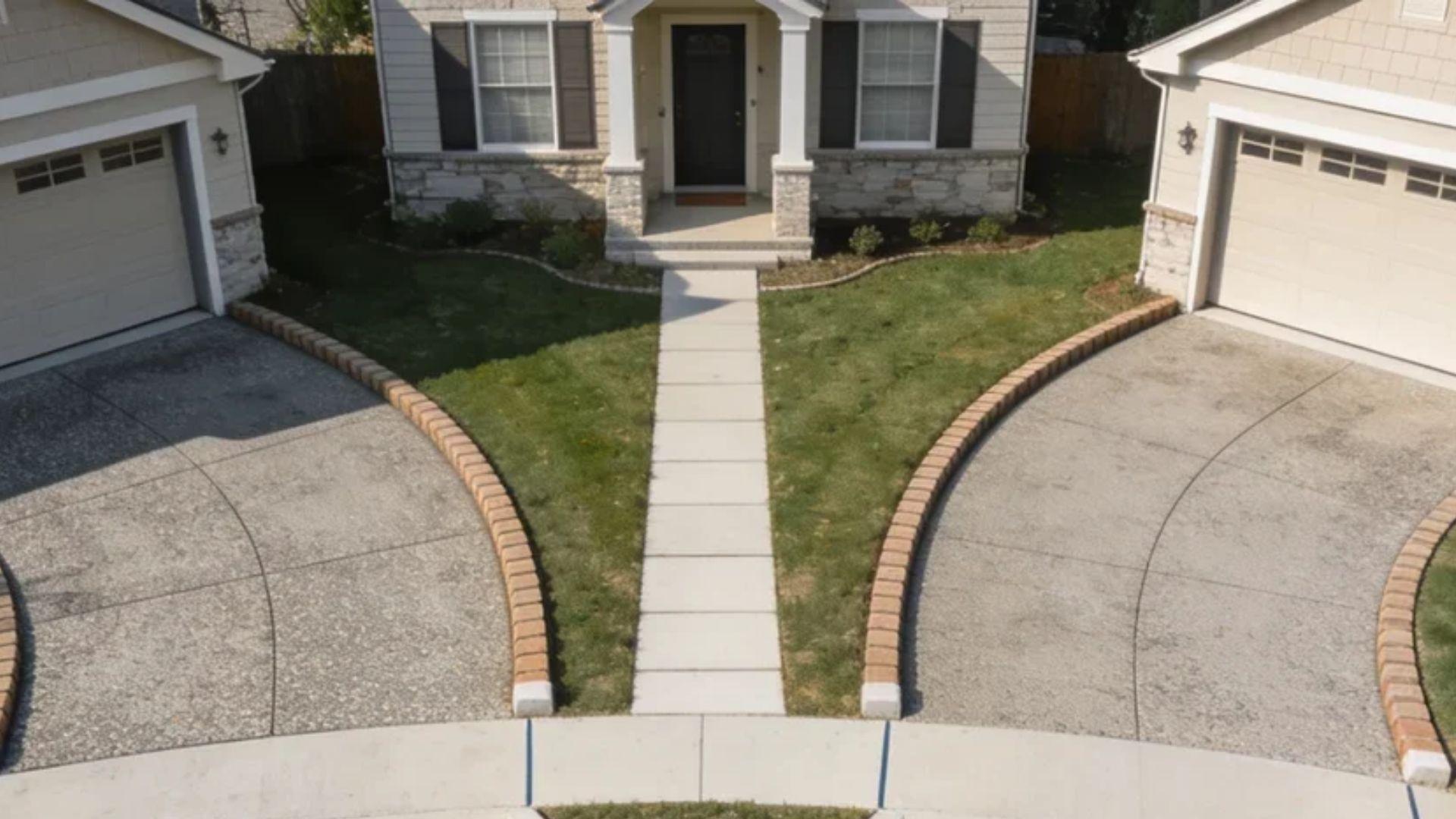
A half circle driveway usually needs municipal approval for its curb cuts, and the rules vary by location.
Cities typically require permission before anyone builds or changes a driveway where it meets public property, and some also limit how much of a lot can be paved.
The second street opening is the likeliest sticking point, so compare your existing opening with the one you want to add before you finalize the layout.
Some cities cap the count outright. Minneapolis’s curb cut rules require city permission before anyone builds or changes a driveway in a public area, and they allow each home only one driveway, which a two-opening layout may not meet.
Call your local building or public works office before you settle on a design.
Approval doesn’t protect a plan from bad measurements. Small yards leave little room to fix slips once the paving is down, so these are worth catching on paper first.
Common Half Circle Driveway Mistakes in Small Yards
These five planning slips cause most of the trouble on small-yard half circle drives, and each has a simple fix.
- Radius drawn for a compact car:An SUV’s tires climb onto the lawn or island edge, so size the radius around your largest vehicle.
- Straight-run width through the curve: Lewisboro, New York, lets its town engineer require extra width on curves, so widen the bend.
- Runoff with no plan: Water collects at the low point of a curve, so slope the paving toward the street or lawn and ask where it exits.
- Tall plantings at the openings: Kent, Washington, limits driveway-entrance landscaping to 30 inches at the curb, so keep both street ends low.
- A crowded island: Heavy hardscaping and large trees squeeze a small footprint, and roots can lift the pavement edge, so keep it simple.
All five slips come from the same place: a plan that was never tested against the real lot and the real vehicle. Fixing them costs nothing while the plan is still a drawing.
Draw the Arc Before You Pour
A half circle driveway for a small yard rewards early decisions, since every number on the plan shifts once it meets the real ground.
A shallow arc, a second curb opening, or a tall island plant can each flip an answer that looks settled on paper, and small yards leave little slack to absorb the change.
Your next step is to sketch both street openings and the arc to scale on your property survey, then call your local public works office with that sketch in hand.
Frequently Asked Questions
What Is a Semicircle Driveway Called?
A semicircle driveway is most often called a horseshoe driveway, and contractors also say half circle or half moon. All four names describe one curved drive that leaves and rejoins the street at separate openings.
What Are the Ideal Dimensions for a Half-Circle Driveway?
Plan for at least 12 feet wide. Piedmont, California’s driveway policy sets that minimum for single-car garages and lists a standard car’s minimum turning radii at 13 feet inside and 22.5 feet outside.
How Do You Lay Out a Half Circle Driveway?
Stake both street openings and the arc’s deepest point, then add stakes along the curve to see how much yard remains. Check whether the staked line clears the house and any mature trees.
Can You Build a Half Circle Driveway Yourself?
Marking and clearing the site are manageable DIY steps, but grading, base compaction, and drainage decide how long the surface lasts, so many owners hire a professional for them.