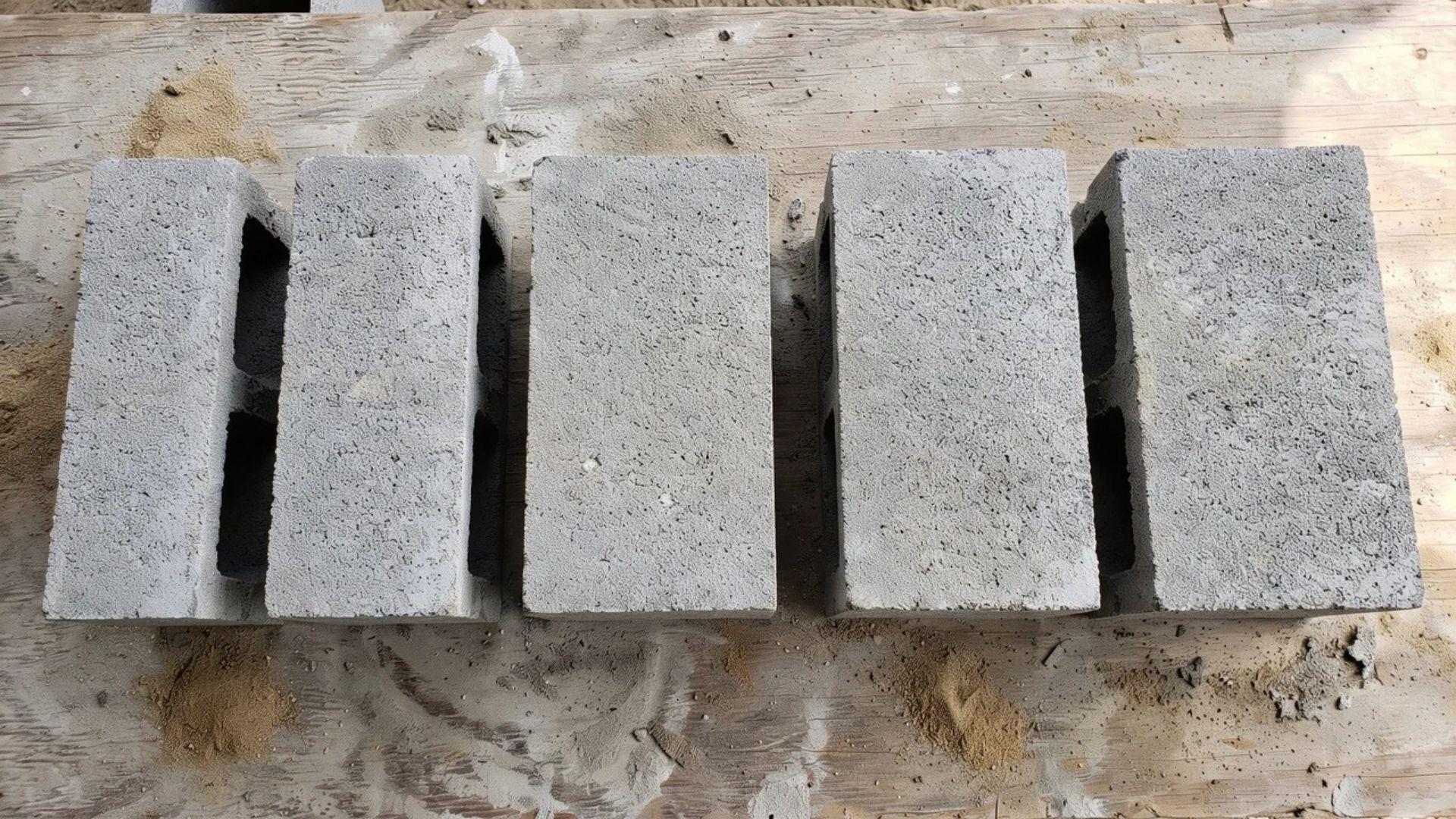
Owning land already puts you ahead, but probably not as far ahead as you think.
Folks assume the hard part is behind them once the land is theirs. The truth is, land ownership removes one cost from the project.
Everything else, site prep, utilities, permits, construction, still needs to be paid for.
The cost to build a house if you already own the land depends less on what you want to build and more on what your land actually needs. That distinction is where budgets go wrong.
Here’s how to get it right.
Cost to Build a House If You Already Own the Land
The cost to build a house if you already own the land typically ranges from $200,000 to $600,000 for a 2,000-square-foot home, land purchase excluded.
The final number is driven by construction tier, finish level, and what your site still needs before a foundation can be poured.
Owning the land is a real advantage. But it doesn’t compress the budget as much as most people expect. Here’s what the numbers actually look like.
Budget, Mid-Range, and High-End Build Costs
Construction cost breaks into three tiers, and which one applies to you depends on more than just how fancy you want the finishes.
According to the NAHB 2024 Construction Cost Survey, the national average sits at $162 per square foot excluding land and contractor fees. Add a general contractor’s overhead and profit, and that rises to approximately $195 per square foot.
- Budget builds: run $125-149 per square foot. That’s simple floor plans, standard materials, and very little customization. At 2,000 square feet, you’re looking at $250,000-298,000 in construction costs. This range is realistic in lower-cost markets, not a national floor.
- Mid-range builds: land at $150-249 per square foot. This covers upgraded countertops, better flooring, and some architectural detail. Most owner-land builds fall here, at $300,000-498,000 for the same footprint.
- High-end builds: start at $250 per square foot and climb from there. Custom design, luxury finishes, smart home systems. Budget $500,000 or more before site costs enter the picture.
What pushes you between tiers isn’t always the finishes you choose. Labor costs in your region, material availability, and timeline all shift the number.
A mid-range build in a rural area can be priced like a budget build in a major metro, or vice versa.
What Owning the Land Actually Removes From Your Budget
This is where most people get the math wrong.
Owning the land removes exactly one line item: the land purchase price. Everything that happens after you own it, clearing it, connecting it to utilities, permitting it, building on it, costs the same whether you bought the land last week or inherited it decades ago.
The land is the starting point, not the savings. What you save depends entirely on what the land already has in place.
A lot with road access, utility hookups, and a level surface is a different financial situation than five forested acres with no infrastructure.
Site Preparation, Utilities, and Permit Costs
These three cost categories remain in your budget regardless of how you came to own the land.
- Site preparation: clearing, grading, excavation runs $10,000 to $50,000 depending on terrain and complexity
- Utility connections: water, electric, sewer or septic add $5,000 to $30,000 for municipal hookups on land near existing mains. Rural land requiring a private well and septic system runs $15,000 to $40,000 for that combination alone
- Permits and fees: building permits, impact fees, engineering sign-offs typically fall between $6,000 and $20,000, though this varies significantly by location. The NAHB 2024 data puts average permit and site work fees at $32,719 across all categories for a typical new build
Together, these can add $25,000 to $75,000 before a single wall goes up.
Why the ranges are that wide comes down to your specific site conditions, and that’s worth understanding before you build a budget around a number from the middle of the range.
Which Site Conditions Drive the Biggest Cost Swings?
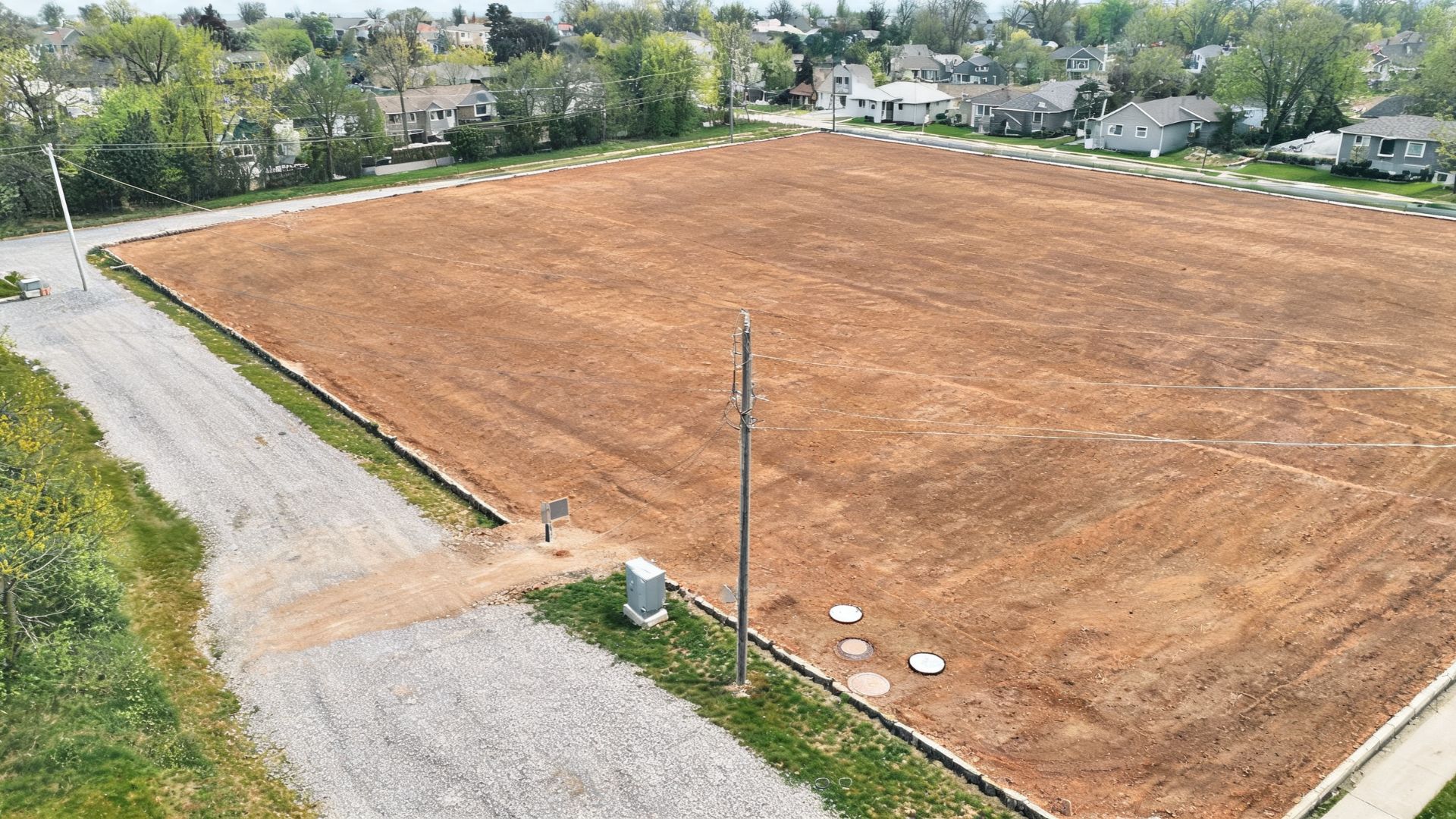
The difference between a $10,000 site preparation job and a $50,000 one comes down to four things your land either has or doesn’t: flat terrain, good soil, utility access, and a clear path in for equipment.
Most cost estimates you’ll find online give you the range without explaining what puts you at one end or the other. These are the conditions that actually move the number.
Slope and Soil
A sloped lot costs more to grade, that part most people know. What’s less obvious is that slope can change your foundation type entirely.
A flat lot in good soil is a slab candidate. That’s the most affordable foundation option.
A lot with significant grade may require a stepped foundation, a walkout basement, or additional retaining work and footing requirements change accordingly. Each of those adds cost in materials, labor, and engineering time.
Soil bearing capacity matters just as much. If the soil can’t support the load, you need deeper footings or a different foundation system.
You won’t know this without a soil test, and skipping the test is one of the more expensive assumptions you can make early in a project.
Utility Distance
The cost to connect utilities isn’t fixed, it scales with distance from the nearest mains.
A lot 50 feet from a municipal water line is a completely different situation from one that’s 500 feet away. Contractors typically charge per linear foot for trenching and pipe installation, which means every additional foot of distance adds directly to your quote.
On rural land where no municipal line exists, you’re looking at a private well and a septic system instead.
That combination runs $15,000 to $40,000 on its own before any other site work begins, with most projects landing between $15,000 and $25,000 according to current installation data.
Electric and gas lines follow the same logic. Every additional foot of trench and line adds to the quote.
Access and Clearing
If equipment can’t get to your land easily, someone has to solve that problem before the build starts, and that solution costs money.
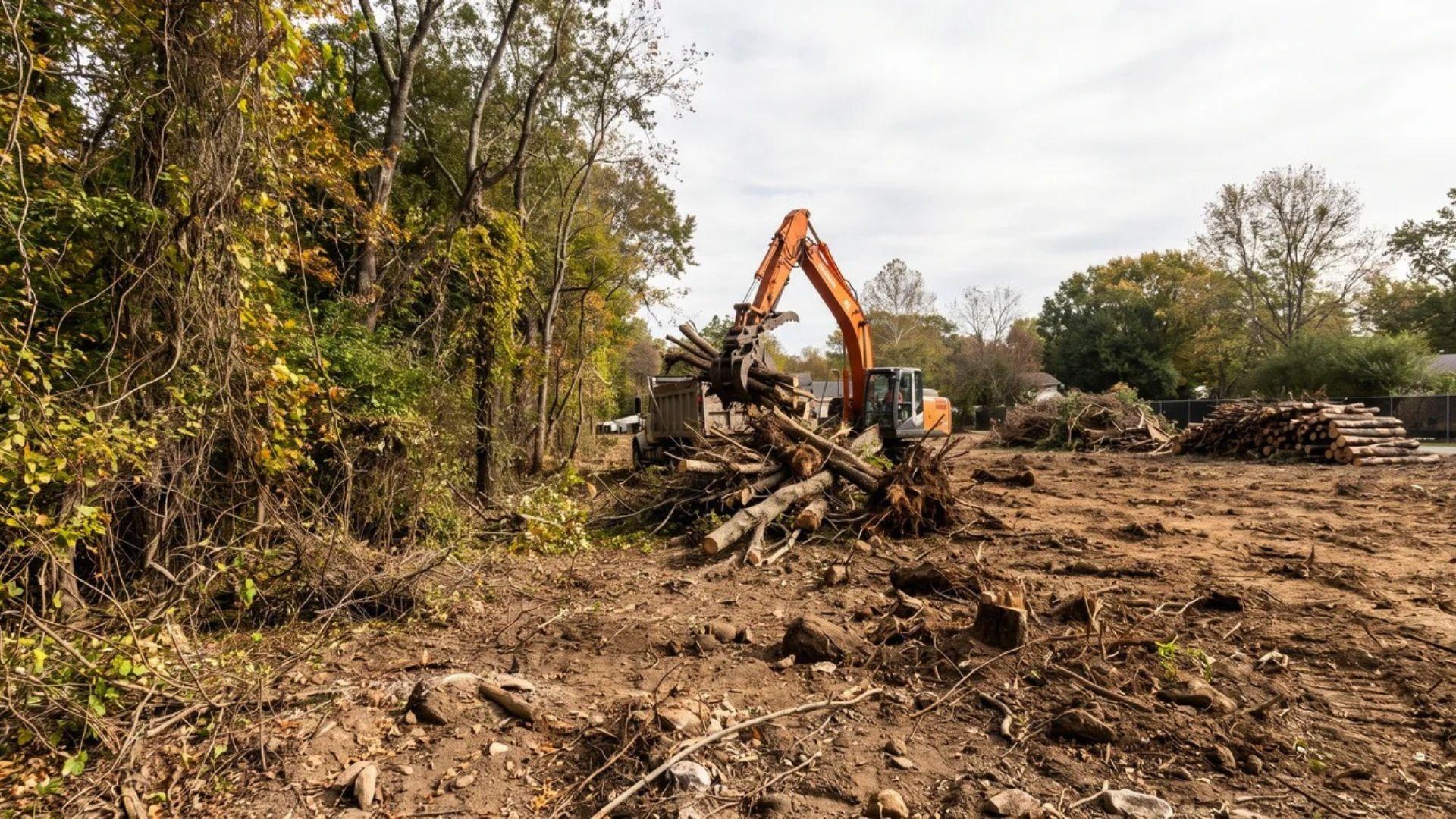
A forested lot with no established road needs clearing and access before a single delivery truck can arrive. Tree removal alone can range from a few thousand dollars to well over $20,000 depending on coverage and species.
Add road grading if there’s no drive, and this line item grows fast. These aren’t reasons to avoid raw land. They’re reasons to assess it honestly before you lock in a budget.
Does Owning Land Make Building Cheaper Than Buying?
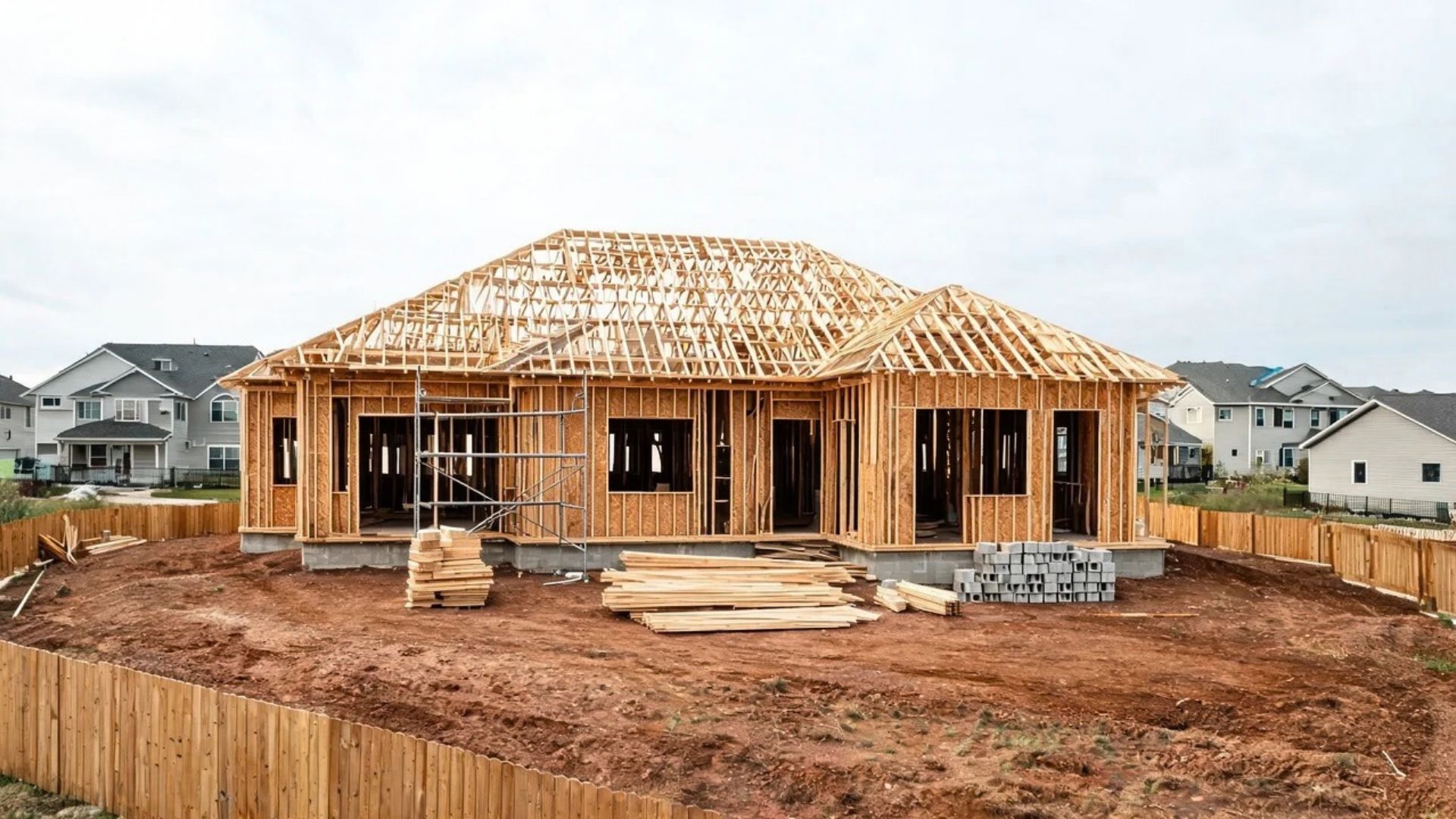
Owning the land gives you a financial head start, but whether that makes building cheaper than buying depends on what your land still needs before construction can begin.
The answer isn’t simply yes or no. It depends on two things: the condition of your land and the market you’re building in.
When Raw Land Closes the Gap
If your land is undeveloped, no utilities, no road access, rough terrain, the site preparation costs can easily run $50,000-75,000 before construction starts.
In some cases, that erases a significant portion of the savings you’d expect from not buying a lot.
A prepped lot in a subdivision already has utilities stubbed in, access established, and the ground ready.
If you were to price that lot, you’d often find the gap between bought land and inherited raw land isn’t as wide as it looks on paper.
When Owning Land Wins Clearly
In markets where existing home prices are high and inventory is tight, the math shifts.
Building on land you already own, even with full site costs factored in, can come out $100,000 or more below the cost of buying a comparable finished home nearby.
The right comparison isn’t your construction budget versus a home’s list price.
It’s your total project cost, construction plus every site cost, versus what a move-in-ready home of similar size and quality would actually sell for in your area.
Run that comparison with real local numbers before drawing a conclusion either way.
How to Build a Realistic Budget Before You Hire Anyone
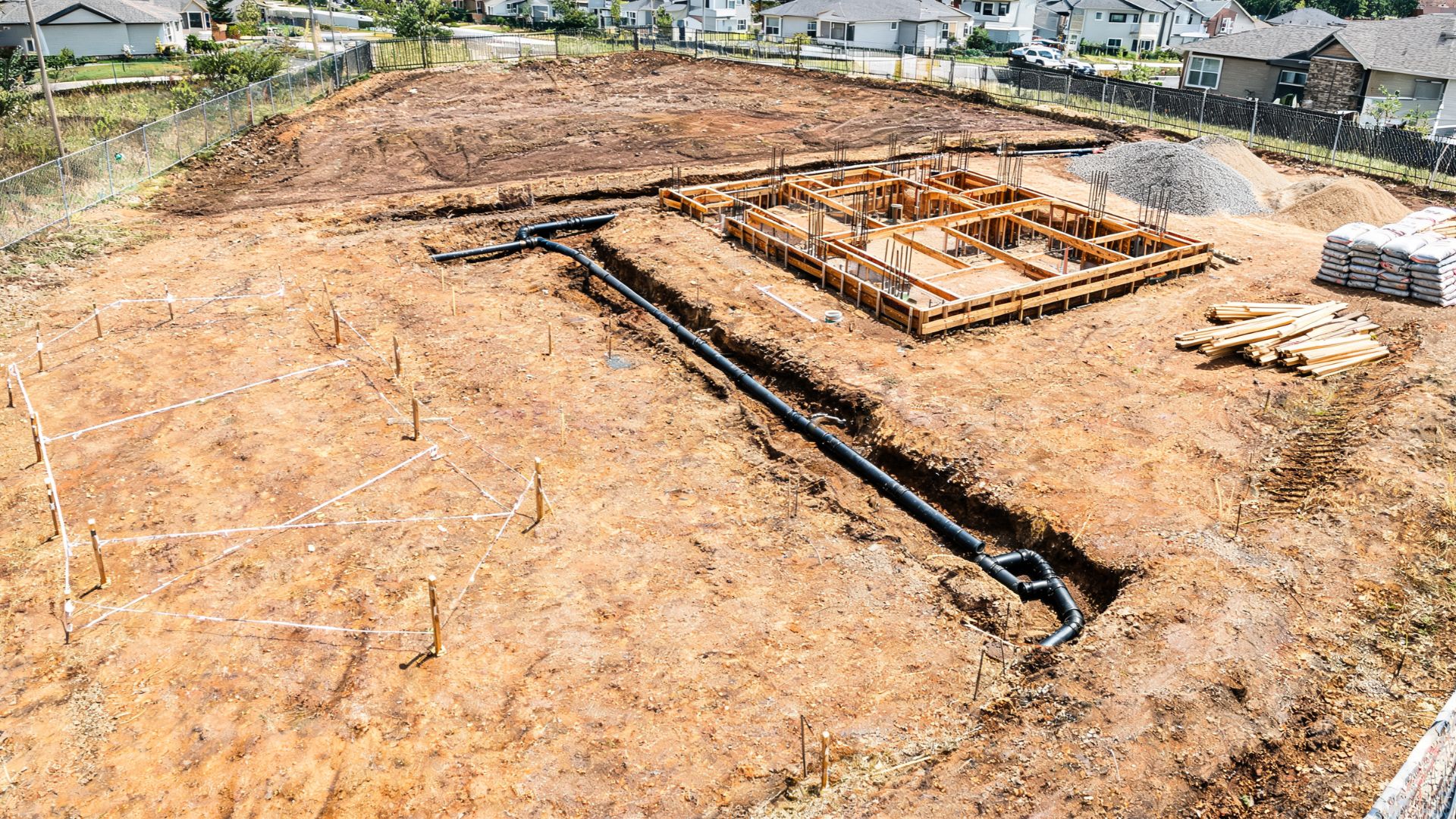
Before you call a builder, you can put together a working budget in four layers: site costs, utility costs, permits, and construction.
Each one is based on conditions you can assess yourself or confirm with a single site visit from a civil engineer.
Most people build their budget the wrong way around. They start with a per-square-foot construction cost, multiply it by their target size, and treat everything else as detail.
The problem is that site costs aren’t detailed. On raw land, they can represent 20–30% of the total project.
Here’s the order that actually works.
Start with your site
Walk the land and answer these questions before anything else:
- Is there road access for delivery trucks and equipment?
- Is the terrain flat, sloped, or heavily treed?
- Are utility lines nearby, or will you need a well and septic?
- Has anyone done a soil test, or is the ground condition unknown?
A civil engineer or site evaluator can formalize this assessment for a few hundred to a few thousand dollars. That cost is worth it. It turns guesswork into a number you can actually build from.
Layer the costs in order
Once you have a site picture, build the budget from the ground up:
- Site prep estimate: grading, clearing, excavation
- Utility connection costs: based on distance, type, and whether municipal lines are accessible
- Permits and fees: check your local municipality for current rates
- Construction cost: target square footage multiplied by a realistic per-square-foot rate for your tier and region
This sequence matters because each layer is a real cost, not an assumption. A headline figure like “$390,000 average construction cost” means nothing if your site needs $60,000 in prep work first.
Add a contingency buffer
Build 10–15% into the total as a buffer before you finalize anything.
On a mid-range 2,000-square-foot project, that buffer can reach 35,000–40,000.
It feels like padding until something unexpected comes up, and on raw land, something almost always does. Treat it as a line item, not an emergency fund you hope not to touch.
Final Verdict
The cost to build a house if you already own the land is never just one number. It’s a combination of what your site needs, what you want to build, and how honestly you’ve accounted for both.
Most budgets go wrong before a builder is ever called. The people who avoid that are the ones who assessed their land first and built their numbers from the ground up.
You now have the framework to do exactly that. Start with your site, layer your costs, and go in with a number you actually trust.
Frequently Asked Questions
Can you use owned land as a down payment for a construction loan?
Most lenders treat land equity as a contribution toward the down payment, reducing or eliminating the cash needed at closing. The amount credited depends on the lender’s loan-to-value requirements.
How long does it take to build a house on land you already own?
Most new builds take 12 to 18 months from permits to move-in. Raw land with no utilities or road access can add several months before construction starts.
Do you need a survey before building on land you already own?
Most lenders and permit offices require a current boundary survey before approving anything. Budget 500–2,000 depending on land size and terrain.
Can you build any size home on land you already own?
Not automatically. Local zoning sets setbacks, lot coverage limits, and sometimes size restrictions. Check your county’s zoning rules before finalizing any floor plan.