
Two contractors can walk the same job site and call the same cabinet two different things. One says casework. The other says cabinetry. Both are right, and that is exactly where the confusion starts.
Casework vs cabinets is not just a terminology debate. It affects how a project gets specified, what standards it gets held to, and what you actually pay at the end.
Casework in construction refers to factory-built, modular wood storage units built to fixed dimensions; think institutional, not decorative.
Knowing which term applies to your project changes the conversation with your contractor, your architect, and your budget. The difference is more specific than most sources let on.
What Sets Casework Apart From Cabinetry
The difference is not just visual. It starts at the factory, long before anything reaches a job site.
How Production Method Changes Everything
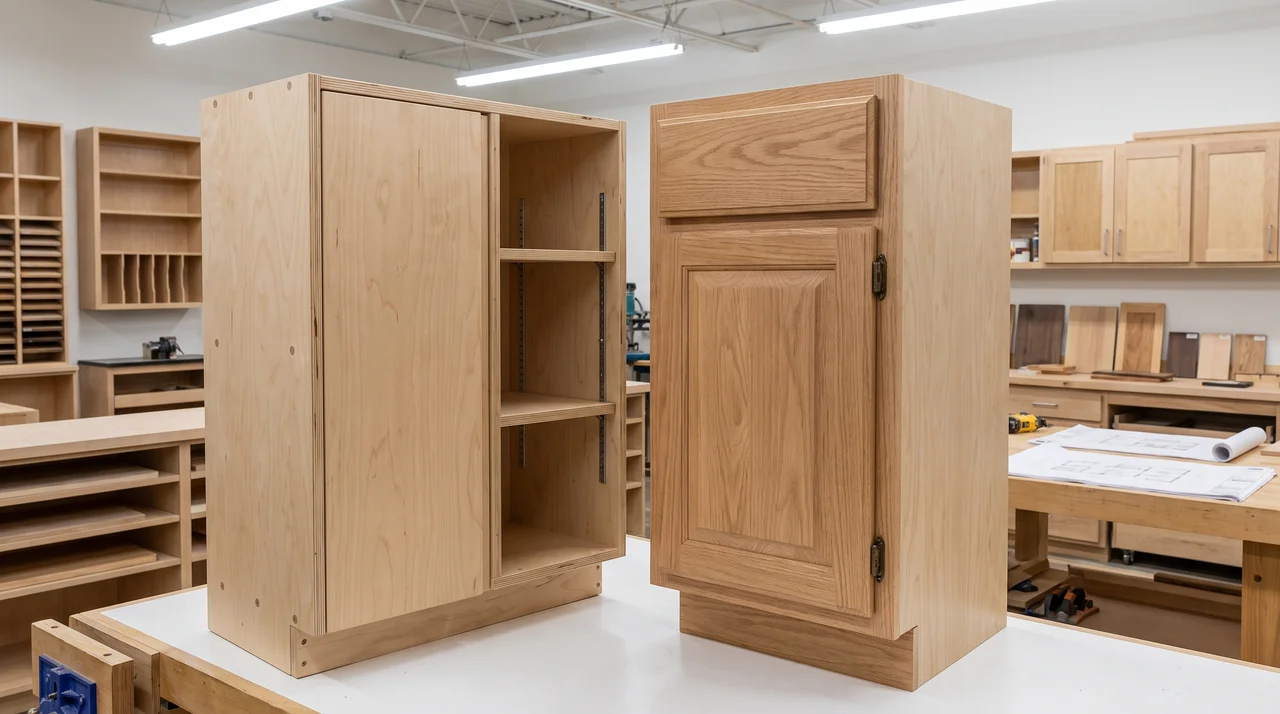
Casework is built in a factory using fixed, standard dimensions. Every unit comes off the line the same way, whether it is going into a school lab or a hospital corridor.
Most commercial casework uses frameless construction, meaning doors and hardware attach directly to the box body. That keeps production fast and costs predictable.
Cabinetry, by contrast, often uses face-frame construction, where a solid wood frame overlays the cabinet front.
That one difference in build method is what gives cabinetry its finished, fitted look and adds time and cost to every unit.
The Standards That Govern Casework
Casework is not just built differently. It is held in a different rulebook. The Architectural Woodwork Institute sets performance duty levels for casework, rating each unit on how much load and daily use it can handle.
Those ratings are specified in construction documents under CSI MasterFormat Division 6.
A project can call for Economy, Custom, or Premium grade, and each tier sets exact requirements for materials, joinery, and finish.
Most commercial casework ships with a high-pressure laminate surface because it meets those durability thresholds. Cabinetry has no equivalent institutional grading requirement.
What Cabinetry Is and Where It Fits
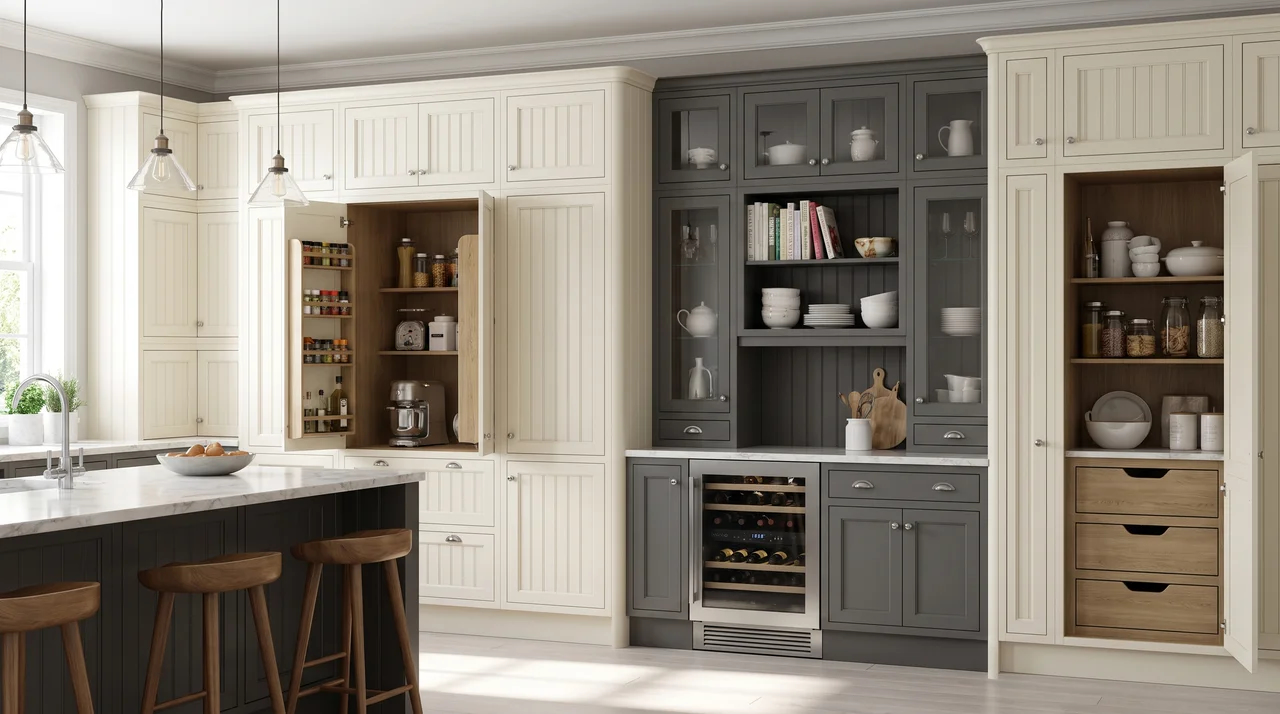
Cabinetry sits at a different point on the spectrum. The material choices, build methods, and finish options are wider than most buyers realise.
Custom vs Semi-Custom: The Real Spectrum
Cabinetry is not one thing. Semi-custom cabinets come in standard box sizes but let you choose doors, finishes, and hardware.
They are built to KCMA standards in a production environment, not to your exact measurements.
Full custom cabinetry is built to your dimensions and governed by AWI Custom or Premium grades. That is where face-frame construction, solid wood details, and site-specific sizing come in.
The gap between semi-custom and full custom is wider than most people expect, both in price and lead time.
Residential and High-End Commercial Use
Cabinetry is the default choice for residential kitchens, bathrooms, and built-in storage where appearance carries real weight.
A kitchen island with inset doors and a painted finish is cabinetry. So is a law firm's reception millwork wall.
High-end commercial spaces choose cabinetry over casework when the room needs to feel designed, not specified.
Hospitality lobbies, executive offices, and boutique retail fit that category. These are spaces where standard laminate finishes and fixed dimensions would look out of place.
The Practical Differences Side by Side
Numbers and specifications tell the real story here. This is where the two categories stop being abstract and start affecting your budget and timeline.
| Factor | Casework | Cabinetry |
| Production | Factory-built in fixed standard dimensions | Built to order, semi-custom or fully custom |
| Lead Time | Weeks for modular units | Months for full custom work |
| Cost | Lower – no custom tooling or design approvals | Higher – specialty finishes and sizing add up |
| Specification Division | CSI MasterFormat Division 6 | CSI MasterFormat Division 12 |
| Governing Standard | AWI performance duty levels | KCMA standards for production; AWI for custom |
| Grade Options | Economy, Custom, Premium (AWI) | Semi-custom to full custom (AWI or KCMA) |
| Typical Finish | High-pressure laminate (HPL) | Painted, stained, veneered, or lacquered |
| Best Fit | Schools, labs, healthcare, offices | Residential kitchens, luxury commercial interiors |
Where Millwork Fits Into All of This

Millwork is the category that contains both casework and cabinetry, and that is exactly why it confuses. Any woodwork produced in a mill falls under the millwork umbrella.
That includes crown moulding, wall panelling, staircases, doors, and yes, cabinets. Casework is millwork. Custom cabinetry is millwork. But not all millwork is casework or cabinetry.
The distinction matters because when a contractor says millwork, they could mean anything from a simple storage box built to AWI Economy grade under Division 6, to a fully site-fitted reception desk with veneered panels and integrated lighting.
The word alone tells you nothing about the build method, the standard it was held to, or the cost. When you see millwork on a specification sheet or a quote, always ask which category it falls under. That question alone saves a lot of back-and-forth later.
Which One Is Right for Your Project

The answer comes down to three things: where the space is, who uses it, and how long it needs to last.
If you are fitting out a school, a lab, or a healthcare facility, casework is the practical call. It ships faster, costs less, and meets AWI performance duty levels built for heavy daily use.
If the space needs to look designed rather than specified, cabinetry is the better fit. A residential kitchen, a boutique hotel lobby, or an executive suite all fall into that category.
For laboratory environments specifically, check whether SEFA 8 certification is required alongside AWI standards; some projects need both.
When budget is tight, but appearance still matters, semi-custom cabinetry held to KCMA standards sits in the middle ground.
Conclusion
Casework vs cabinets is not a debate about which one is better. It is about matching the right product to the right project.
Casework wins on speed, cost, and durability in commercial and institutional spaces. Cabinetry wins when appearance and customisation carry more weight than budget or timeline.
And millwork sits above both, covering more ground than either term alone. Get the category right before you specify, and everything downstream gets easier.
If you are currently planning a fit-out or renovation, drop your project type in the comments and we can point you in the right direction.
Frequently Asked Questions
Is Millwork and Cabinetry the Same Thing?
Millwork is the broader category. Cabinetry falls under it. Not all millwork is cabinetry — it also includes moulding, doors, panelling, and staircases.
What Are the Three Types of Cabinets?
Stock, semi-custom, and custom. Stock ships immediately in fixed sizes. Semi-custom offers finish choices. Custom is built to your exact dimensions and specifications.
What Are the Different Types of Casework?
Main types include modular casework, architectural wood casework, and laboratory casework. Each serves a different environment and is held to different performance standards.
Can Casework Be Used in a Residential Kitchen?
Yes, but it will look institutional. Fixed dimensions and laminate finishes limit design options that most homeowners expect in a residential kitchen setting.
Does Cabinetry Come With AWI Certification?
Only if specified. Custom cabinetry can be built to AWI Custom or Premium grade, but most residential cabinetry follows KCMA standards instead.