
Have you ever seen a row of cabinets on a construction plan and wondered what is casework in construction? You are not alone.
The term may sound like a trade term, but the idea is simple once you know what to look for.
Casework is cabinet-like construction used for storage, organization, and work areas.
In this guide, I’ll explain where casework is used, how it is built and installed, and which materials are common. You’ll also learn how contractors measure casework, how stock, modular, and custom units differ, and where casework fits compared with millwork.
I’ll keep the explanation practical and easy to follow, so you can understand the term and use that knowledge when reading plans, reviewing specifications, or planning a construction project.
What Is Casework in Construction?
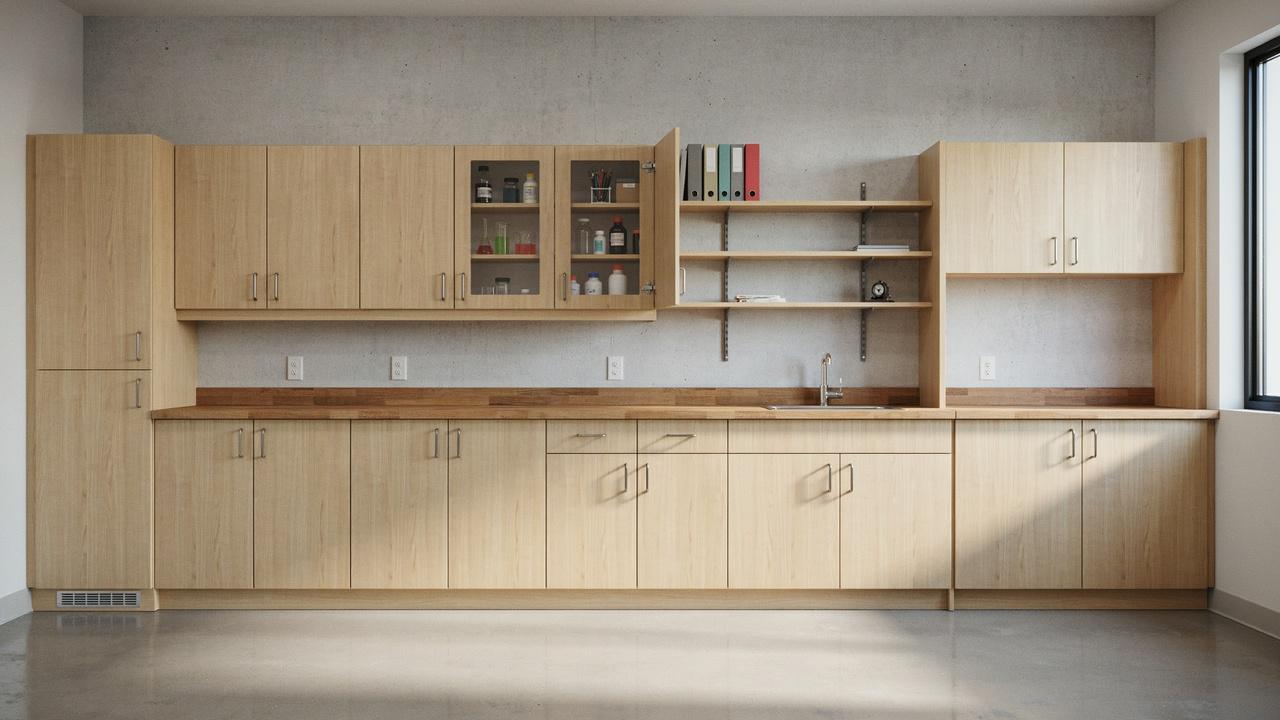
Casework is mainly used to provide built-in or modular storage and work areas in homes, offices, schools, laboratories, and other buildings.
Casework in construction is a group of cabinet-like, box-shaped units made for storage, organization, and workspace. These units can include base cabinets, wall cabinets, tall cabinets, shelving, counters, and similar components. In architectural woodwork, this is often called architectural wood casework.
Casework is commonly made in a factory and brought to the project for installation. Some systems arrive as complete units, while others require assembly before or during installation. Modular casework uses standardized components that can be assembled and, in some applications, moved or reconfigured.
The main difference is how much freedom you have in size and production. Stock units use standard sizes. Modular systems combine standard components. Custom casework is made to the dimensions and requirements of a specific project.
Casework can be fixed to walls, floors, or other building elements, depending on its design and intended use. Movable modular units may instead be designed for easier relocation. The project drawings and specifications should define the required installation method.
Where Is Casework Used in Construction?
Casework appears in many building types because it provides practical storage and work surfaces without requiring every unit to be made from scratch.
| Building type | Common casework |
| Residential | Kitchen cabinets, bathroom vanities, storage |
| Offices | Storage cabinets, reception desks, shelving |
| Healthcare | Nurses' stations, medical storage |
| Laboratories | Lab cabinets and work surfaces |
| Schools | Classroom and laboratory storage |
| Retail | Display and storage units |
The material, hardware, surface finish, and construction method can change based on moisture, chemicals, cleaning needs, traffic, load requirements, and the type of work performed in the space.
That is why healthcare cabinetry may need different performance requirements from casework in a home kitchen, while laboratory casework may require materials and construction suited to chemicals, cleaning, and heavy use.
What Are the Main Types of Casework?
The main types are stock or modular casework and custom casework, with the right choice depending on project size, layout, budget, and required fit.
Stock or Modular Casework
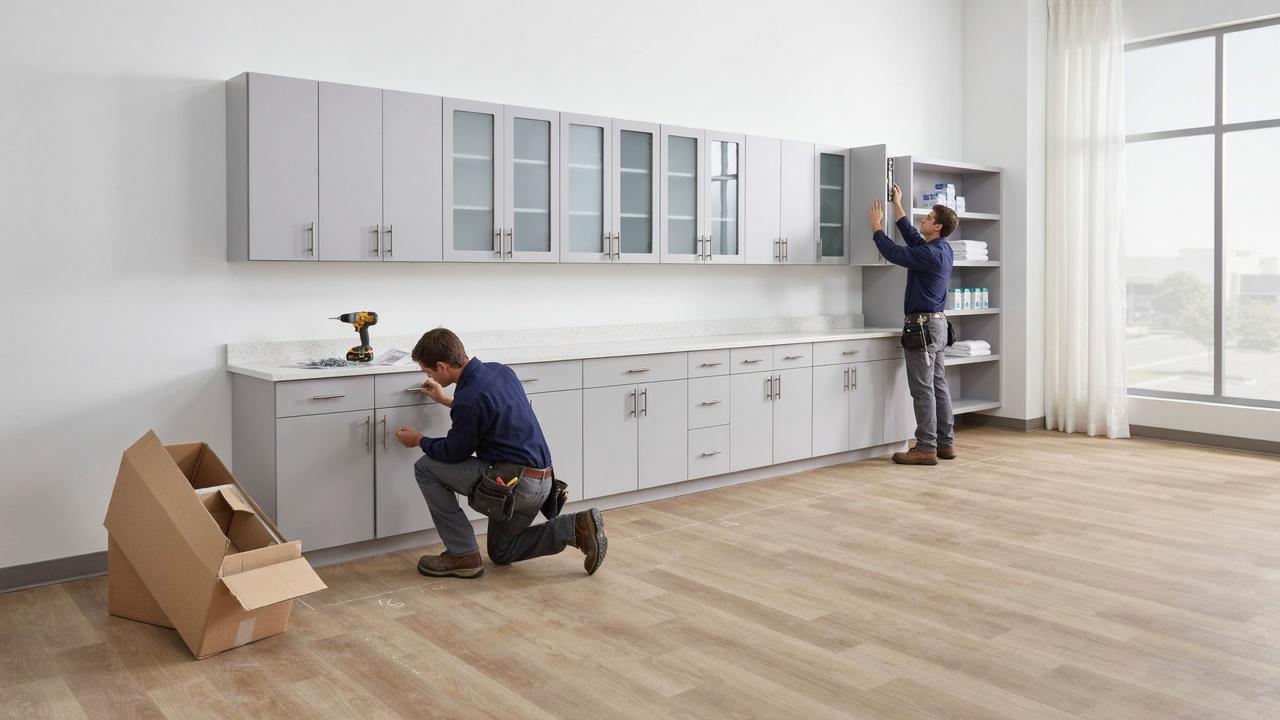
Stock and modular casework is factory-produced using standard sizes and components. Because manufacturers repeat the same cabinet sizes and construction methods, installation can be faster and costs can be easier to control. This option works well for offices, schools, healthcare spaces, and other projects with repeated layouts. You can also combine different units to create the required storage arrangement. It is a practical choice when the project does not require every cabinet to be made for a specific opening.
Custom Casework

Custom casework is made to project-specific dimensions and requirements. It gives the project team more control over cabinet sizes, materials, finishes, hardware, and internal layouts. This approach can work well where walls, openings, equipment, or work surfaces do not match standard dimensions. It usually needs more planning and fabrication time than stock or modular casework. The added work can also increase the project cost, so custom construction should solve a real space or performance need.
What Materials Are Used for Casework?
Casework materials should match the conditions of the space, expected use, required service life, appearance, and project budget.
- Plywood: Strong sheet material made from bonded wood layers. It works well where strength and dimensional stability matter.
- MDF: A smooth engineered wood panel that provides a consistent surface. It is often used for painted components and interior cabinet parts.
- Particleboard: Made from compressed wood particles and resin. It is commonly used in cost-conscious cabinet construction when the specified performance requirements allow it.
- Solid wood: Natural wood used for selected cabinet parts, doors, trim, or other components. It can provide a traditional wood appearance and may be finished in several ways.
- Wood veneer: A thin layer of real wood applied over a panel substrate. It provides the look of a selected wood species while using a stable panel underneath.
- Plastic laminate/HPDL: Laminate surfaces can provide resistance to regular wear and are available in many colors and patterns. They are common in commercial and institutional casework.
- Metal for specialized applications: Stainless steel and other metals may be used where cleaning, moisture, chemicals, or heavy use creates special demands. Laboratories and healthcare spaces may require these materials for selected components.
Material selection should consider durability, moisture, chemicals, appearance, budget, and intended use rather than choosing a material based only on price.
Casework vs Millwork: What Is the Difference?
Casework focuses mainly on cabinet-like storage and work units, while millwork covers a broader range of fabricated wood elements used in a building.
Casework primarily consists of cabinet-like storage and work units, while millwork is a broader category of architectural woodwork that can include trim, doors, paneling, molding, and other fabricated wood elements.
| Feature | Casework | Millwork |
| Primary purpose | Storage and workspace | Architectural, decorative, and functional elements |
| Typical form | Cabinets and box-shaped units | Trim, doors, paneling, molding, stairs, etc. |
| Production | Often modular or standardized, but can be custom | Often project-specific |
| Customization | Low to high | Usually high |
| Common materials | Plywood, MDF, laminate, veneer, wood | Solid wood, veneer, plywood, engineered wood |
| Typical applications | Kitchens, offices, labs, schools | Doors, trim, paneling, stairs, interiors |
| Main focus | Practicality and storage | Architectural detail and customization |
The terms can overlap in some projects, so the project specifications and scope of work should control the classification rather than assuming that every custom cabinet is millwork.
Are Cabinets Casework or Millwork?

Cabinets are commonly treated as casework, but their classification can change based on how they are designed, produced, installed, and defined in the project documents.
Most standard cabinet systems are classified as casework. They use repeatable components and focus on storage or work functions. Custom cabinetry can overlap with millwork when it is produced for a specific space and includes project-specific woodwork or detailing.
However, custom does not automatically mean millwork. A custom casework unit can still be casework if the project specifications define it that way. The drawings, specifications, scope, and contract requirements should be checked before making the classification.
This matters because the classification can affect material requirements, fabrication, installation, pricing, and the standards referenced in the project.
How Is Casework Measured in Construction?

Casework is commonly measured by linear feet, individual units, or square feet, depending on the item and the requirements in the construction documents.
Linear feet are often used for continuous base and upper cabinet runs, while individual units are counted separately. Keeping base and upper runs separate can help avoid mixing items with different sizes and pricing.
Each unit is useful for items such as tall cabinets, sink bases, corner units, and specialty cabinets. These pieces may have different sizes and construction requirements.
Square feet can apply to certain countertop, panel, or surface materials when that measurement better reflects the quantity required. A countertop may also extend beyond the cabinet run, so countertop returns and overhangs should be checked separately.
Construction drawings should also be checked for casework plans, interior elevations, casework schedules, and details. These documents show cabinet locations, sizes, materials, hardware, and other requirements.
Do not overlook fillers, end panels, scribes, hardware, countertop returns, and sink cutouts. These smaller items can affect both material quantities and installation work.
What Are the Benefits of Casework?
Casework works well when a project needs practical storage, repeatable units, and controlled installation costs.
- Efficient storage: Cabinets and shelves keep supplies, equipment, and everyday items organized.
- Cost control: Standard production can reduce fabrication time and material waste.
- Faster installation: Factory-produced units can reduce work needed at the project site.
- Consistent appearance: Repeated cabinet sizes and finishes help maintain a consistent look.
- Easy replication: The same cabinet arrangement can be repeated across rooms or buildings.
- Material flexibility: Projects can use plywood, MDF, laminate, veneer, metal, or other suitable materials.
- Commercial use: Casework works well in offices, schools, healthcare buildings, laboratories, and retail spaces.
- Custom options: Custom casework can be specified when standard units cannot meet the project's size or performance needs.
How Do You Choose Between Casework and Millwork?
The better option depends on how much customization, control, installation time, and budget your project allows.
Choose Casework When You Need
Casework is a good fit when practical storage and repeatable construction matter more than highly specific fabrication.
- Standardized storage
- Practical functionality
- Faster installation
- Repetitive layouts
- Better cost control
Choose Millwork When You Need
Millwork can make more sense when the project requires project-specific woodwork, detailed fabrication, or special dimensions.
- Bespoke dimensions
- Architectural detailing
- Highly customized designs
- Specific finishes or wood species
- Specialized craftsmanship
Also consider budget, project timeline, design requirements, durability, and how visible the finished work will be. I would start with the project specifications, then compare the required performance and fit before choosing the construction method.
Casework Standards and Specifications

Project specifications help define the required materials, construction, performance, finishes, and installation requirements for casework.
The Architectural Woodwork Institute (AWI) publishes standards that cover different forms of casework and related woodwork. Current AWI information includes manufactured wood casework under ANSI/AWI 1232-2022 and specialty casework under ANSI/AWI 1235-2024.
AWI materials also identify Performance Duty Levels for different applications. These levels range from light commercial and regular commercial use to institutional and laboratory applications. The required level should match the project's intended use and specifications.
Specifications may also address surface grades and material requirements. AWI describes Premium, Custom, and Economy grades in its woodwork standards, with the applicable requirements depending on the product and project documents.
The key point is simple: do not select a casework standard from a general rule alone. Check the project's specifications, drawings, intended use, and required performance before ordering or approving the product.
Conclusion
If you were unsure about what is casework in construction, the simple answer is cabinet-like construction used for storage and work areas.
I find the casework versus millwork distinction much easier once you focus on purpose, production, and project requirements.
Casework usually favors practical storage and repeatable construction, while millwork allows more project-specific woodwork. Before you choose, check the drawings, specifications, materials, and required performance.
That small step can prevent costly confusion later. If this guide helped, share it with someone working on a construction project or check out our other construction guides.
Frequently Asked Questions
Is casework considered furniture or part of the building?
Casework can be treated as built-in architectural woodwork or movable equipment depending on its design, attachment, and project specifications.
What is the difference between casework and cabinetry?
Casework is a broader construction term for cabinet-like storage and work units, while cabinetry often refers specifically to cabinets used in residential or commercial interiors.
How long does casework installation take?
Installation time varies by project size, unit type, site conditions, and preparation, but factory-produced casework is generally quicker to install than fully site-built cabinetry.
Who installs casework in a construction project?
Casework is typically installed by a qualified casework, cabinetry, millwork, or finish-carpentry contractor according to the drawings and specifications.