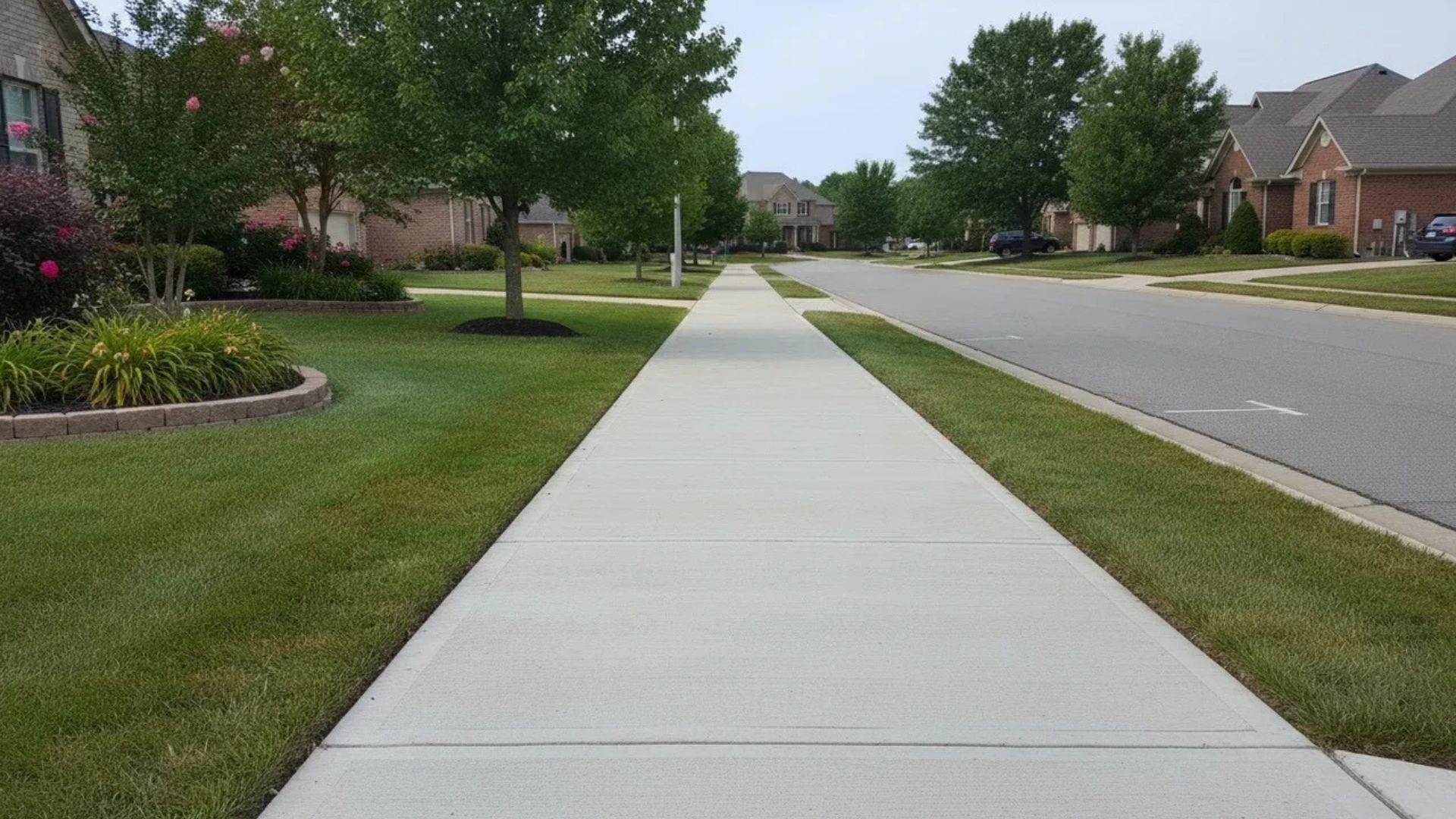
Knowing how wide is a standard sidewalk is sounds like a simple question. But the answer depends on where the sidewalk is, who it serves, and which set of rules applies to it.
Get the number wrong and you're either building something too narrow to pass code or too narrow to actually use.
I’ll walk you through the width ranges that matter, what the ADA actually requires, and what your local jurisdiction likely expects.
How Wide Is a Standard Sidewalk?
A standard sidewalk in a residential area is 4 to 5 feet wide. Five feet is the preferred width; it gives two adults enough room to walk side by side without one stepping off the path.
That number isn't universal. Width depends on where the sidewalk sits and how much traffic it needs to handle. Residential, commercial, and arterial streets each have their own accepted range.
It's also worth knowing that "standard" and "minimum" aren't the same thing. A sidewalk can clear the minimum code requirement and still be too narrow to use comfortably.
The minimum sets the legal floor. The standard reflects what actually works.
How Does Location Type Affect Sidewalk Width?

Sidewalk width isn't one number it's three different ranges depending on where you are. Residential streets, commercial corridors, and arterial roads each have their own logic, and the numbers reflect that.
Residential Sidewalks
In residential areas, sidewalks typically run 4 to 5 feet wide.
That range exists because the main design requirement is simple: two people should be able to pass each other without stepping onto the grass or the street.
Four feet meets that requirement in most low-traffic settings. Five feet does it more comfortably, which is why it's the preferred standard in most residential design guides.
Commercial and Downtown Sidewalks
Commercial sidewalks run significantly wider, typically 8 to 12 feet, and sometimes more. The reason isn't just foot traffic volume. It's that the usable path keeps shrinking.
Outdoor dining tables, retail display racks, A-frame signs, and street furniture all eat into the walking surface. A structurally wide sidewalk compensates for that.
Without the extra width, the actual clearance available to pedestrians drops below a functional level even if the sidewalk looks wide on paper.
Arterial and High-Traffic Streets
Arterial sidewalks fall in the middle, at 6 to 8 feet wide. These paths handle heavier pedestrian flow than residential streets, but they don't carry the same obstruction load as commercial zones.
The wider width accommodates the volume. The lower ceiling reflects that the path stays clear.
What Do ADA Requirements Say About Sidewalk Width?
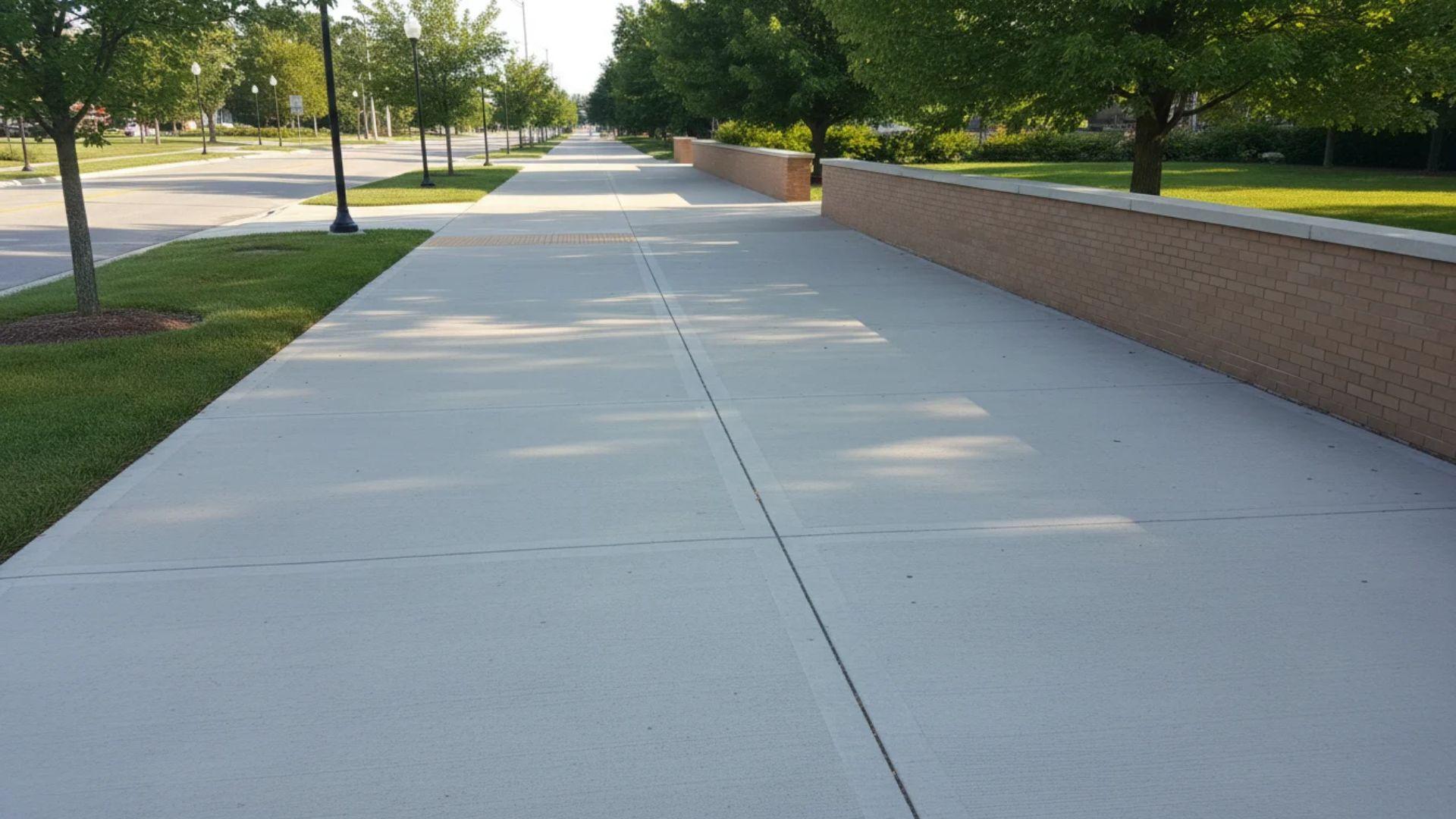
The Americans with Disabilities Act sets a minimum clear width of 36 inches that's 3 feet for any accessible pedestrian route. This is a federal floor, not a design target.
That distinction matters more than most people realise. The ADA minimum is narrower than what most local jurisdictions actually require for new sidewalk construction.
Meeting ADA compliance doesn't mean you've met your local code. These are two separate thresholds, and you need to satisfy both independently.
There's also a passing space rule. If a sidewalk is narrower than 60 inches, ADA standards require a passing space at least 60 by 60 inches every 200 feet. This gives wheelchair users room to pass each other or step aside.
One more thing worth knowing:clear width is measured at the narrowest point. A utility pole, fire hydrant, or overgrown hedge that cuts into the path reduces the usable width even if the concrete itself is wide enough.
If that narrowing drops below the 36-inch minimum, the sidewalk is non-compliant regardless of its overall dimensions.
What Width Does Your Jurisdiction Actually Require?
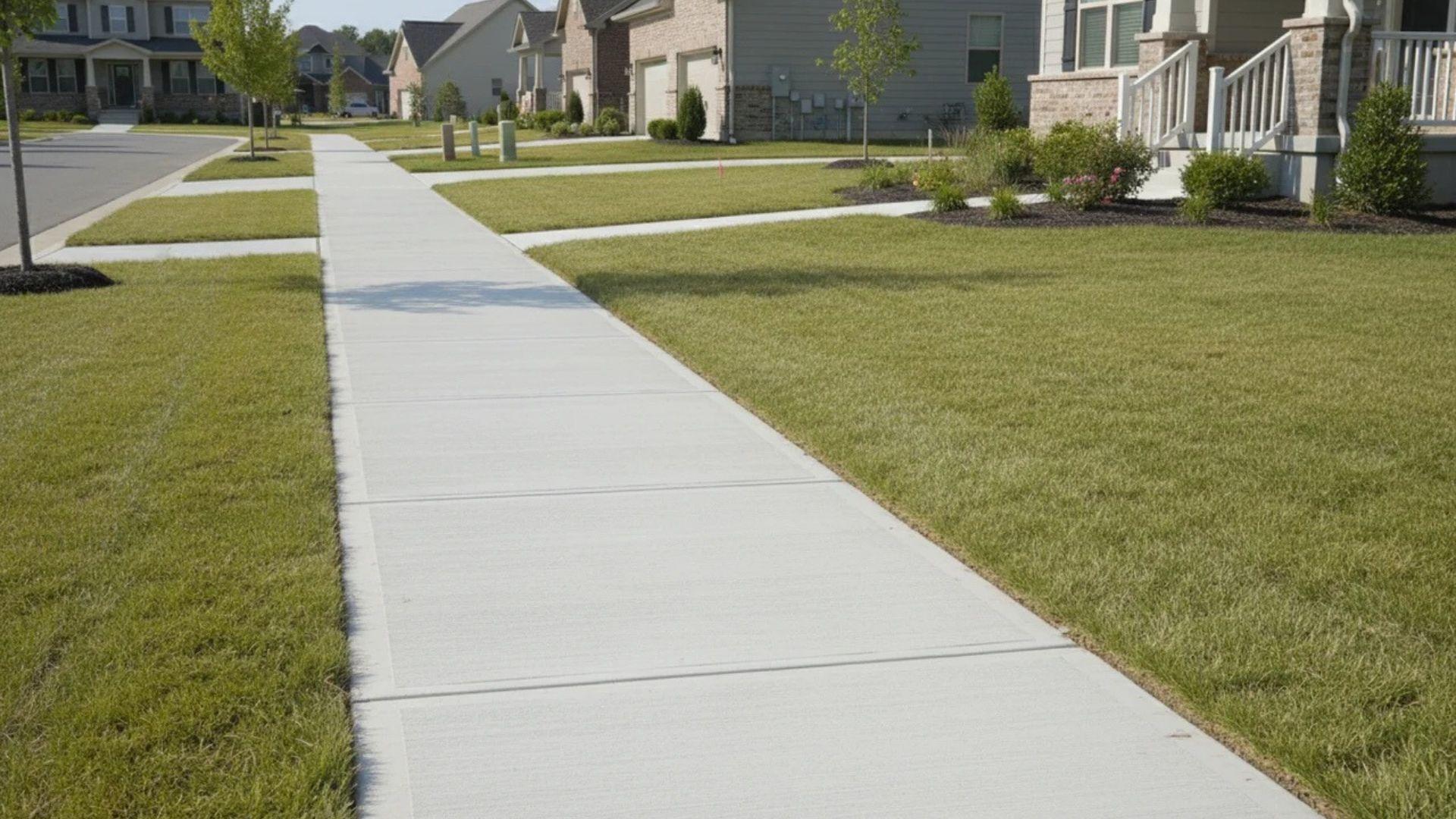
Most jurisdictions set their own minimums above the ADA floor. The most commonly adopted threshold for new residential sidewalk construction is 48 inches, that's 4 feet. Along streets and in commercial areas, 60 inches is the more typical requirement.
Both of those exceed the federal ADA minimum of 36 inches. Local codes can only raise that floor, never lower it.
The practical takeaway: if you're planning a new sidewalk, the ADA minimum is not the number to design around. Your municipal code is.
Those two figures often differ, and assuming federal compliance is enough is one of the more common planning mistakes, one that can mean tearing out and repaving once a local inspector weighs in.
Check your local ordinances before you finalise any width. It's also a good idea to measure your available space before committing to a width; the gap between the road edge and your property line isn't always as generous as it looks.
The right number depends on your street type, your municipality, and sometimes your specific zoning designation.
Final Verdict
How wide is a standard sidewalk is a question with more than one right answer and that's exactly the point. Width isn't arbitrary.
It reflects who uses the path, what gets placed on it, and what the law requires of it. The number you build should come from your local code, not the lowest figure you find online.
Before any concrete gets poured, verify your municipal requirements. One conversation with your local planning office is far cheaper than a retrofit.
Frequently Asked Questions
Can a sidewalk be 2 feet wide?
No, 2 feet falls well below the ADA minimum of 36 inches and most local codes for new construction. A narrow sidewalk that can't fit a wheelchair or let two people pass each other. Any public-facing path built at that width will fail inspection.
What is the difference between a sidewalk and a walkway?
A sidewalk runs along a public street and is governed by municipal codes and ADA rules. A walkway is any pedestrian path on private property, a yard path, a garden trail, or the route from your driveway to your front door. Private walkways don't carry the same legal width requirements as public sidewalks.
How wide should a residential driveway-to-door walkway be?
Three to four feet is the standard for a private driveway-to-door walkway. That's enough for one person to walk comfortably and move items like furniture or boxes without issue. ADA rules don't apply unless the property has specific accessibility obligations.
Does sidewalk width affect property value?
A sidewalk that's too narrow or noncompliant can flag during a home inspection and complicate a sale. Buyers and appraisers notice curb appeal, and a properly sized sidewalk signals well-maintained infrastructure.