You already own the land. Now you want to build a house on it, but you are not sure what it will cost. That is a smart question to ask before breaking ground.
The cost to build a house if you already own the land depends on several factors, including home size, location, and finishes.
This guide covers everything from base construction costs to hidden fees most people forget. You will learn how to budget properly, avoid common mistakes, and make confident decisions.
We have helped many people work through this process step by step, and this guide reflects that real-world experience.
Whether you are planning a small starter home or a larger custom build, the right information makes all the difference.
How Much Does It Cost to Build on Land You Own?
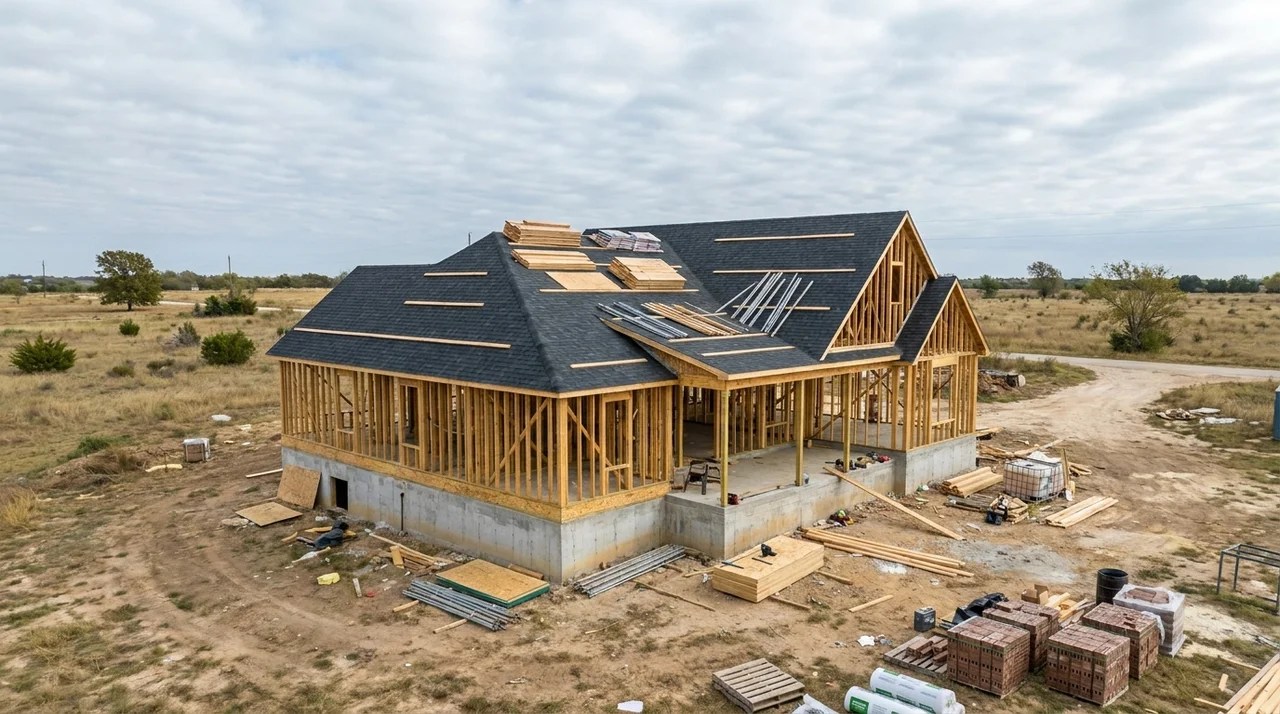
According to the National Association of Home Builders (NAHB), the average cost to build a new single-family home in the US runs around $392,000, not counting land.
Most homeowners spending around $280,000 to $320,000 are working with a standard single-family home at mid-range finishes.
Owning land already puts you ahead of most people starting a new build. From there, the numbers shift based on what you build and how big you go.
Cost per square foot typically ranges from $100 to $150 for a basic build, $150 to $250 for mid-range, and $250 to $500 or more for a fully custom home.
High-end builds can push well past $500,000. These figures cover construction only and do not include utility hookups or permits.
These are broad national planning ranges, not guaranteed prices. Actual costs vary by location, home design, labor rates, materials, site conditions, and contractor pricing. Get local estimates before setting your final budget.
The NAHB reports that land typically makes up 18% to 25% of a new home's total cost, so owning it outright means you skip that cost entirely, reduce your overall loan burden, and put those savings directly toward building the home you actually want.
What Does Building a House Actually Cost?
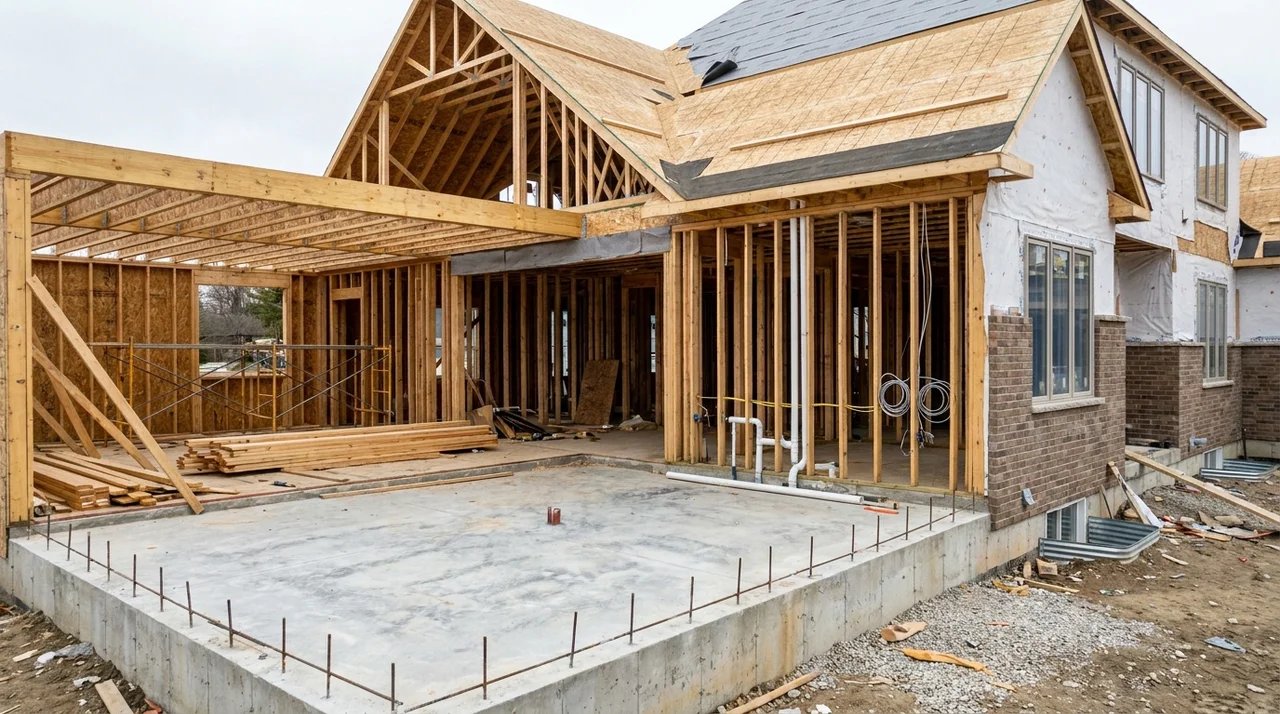
Knowing where your money goes at each stage helps you budget accurately and avoid surprises.
Site Preparation and Foundation
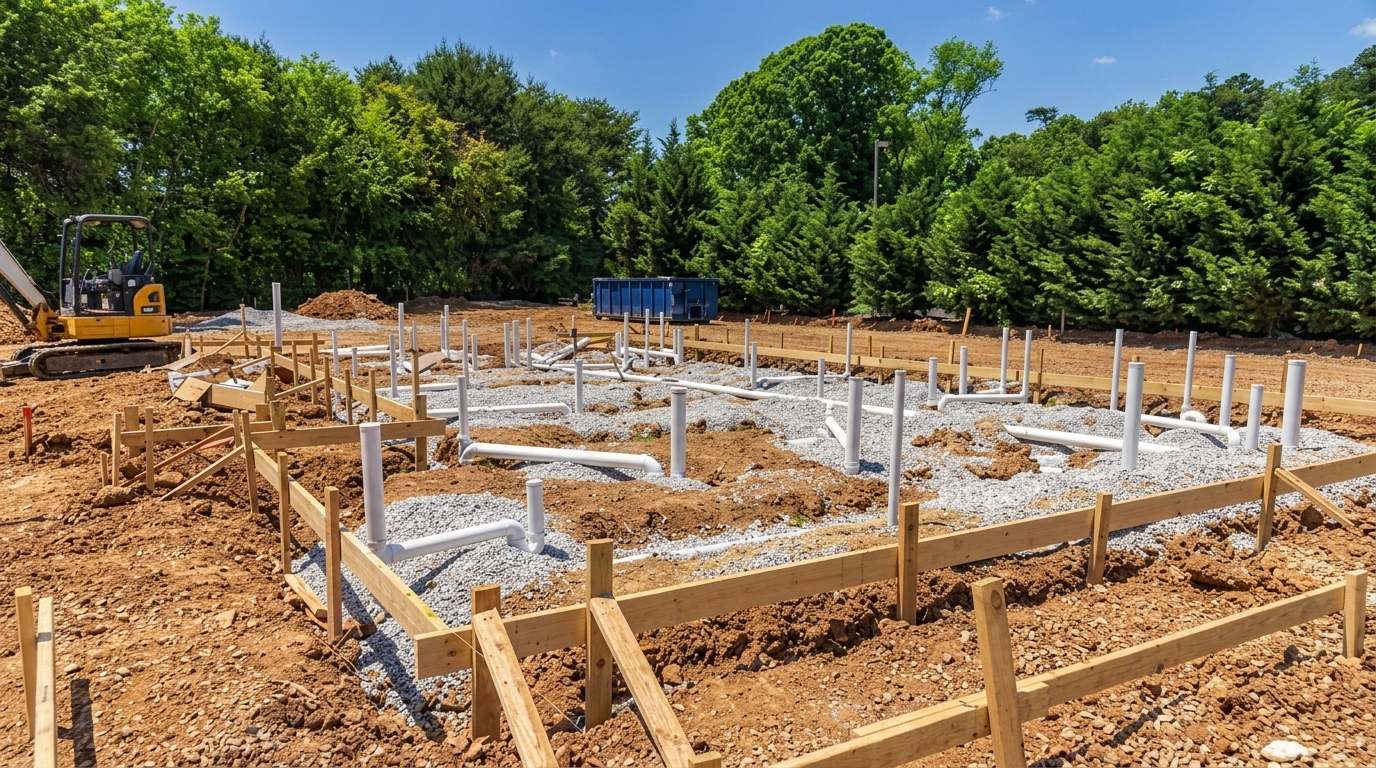
Before any walls go up, your land needs to be prepared. This phase includes clearing, grading, excavation, and laying the foundation.
If you are building on rural land, a soil or perc test ($500 to $2,500) may be required before work begins to confirm the ground can support a septic system.
Land clearing: $1,500 – $5,000
Grading and leveling: $1,000 – $5,000
Foundation (slab, crawl space, or basement): $10,000 – $50,000+
A slab foundation is the most affordable. A full basement adds significant cost but also adds usable space. Rocky terrain or unstable soil can push these numbers much higher.
Sites with slopes or poor soil may also require a geotechnical report ($2,000 to $8,000) to confirm the foundation type before construction starts.
Framing, Roofing, and Exterior
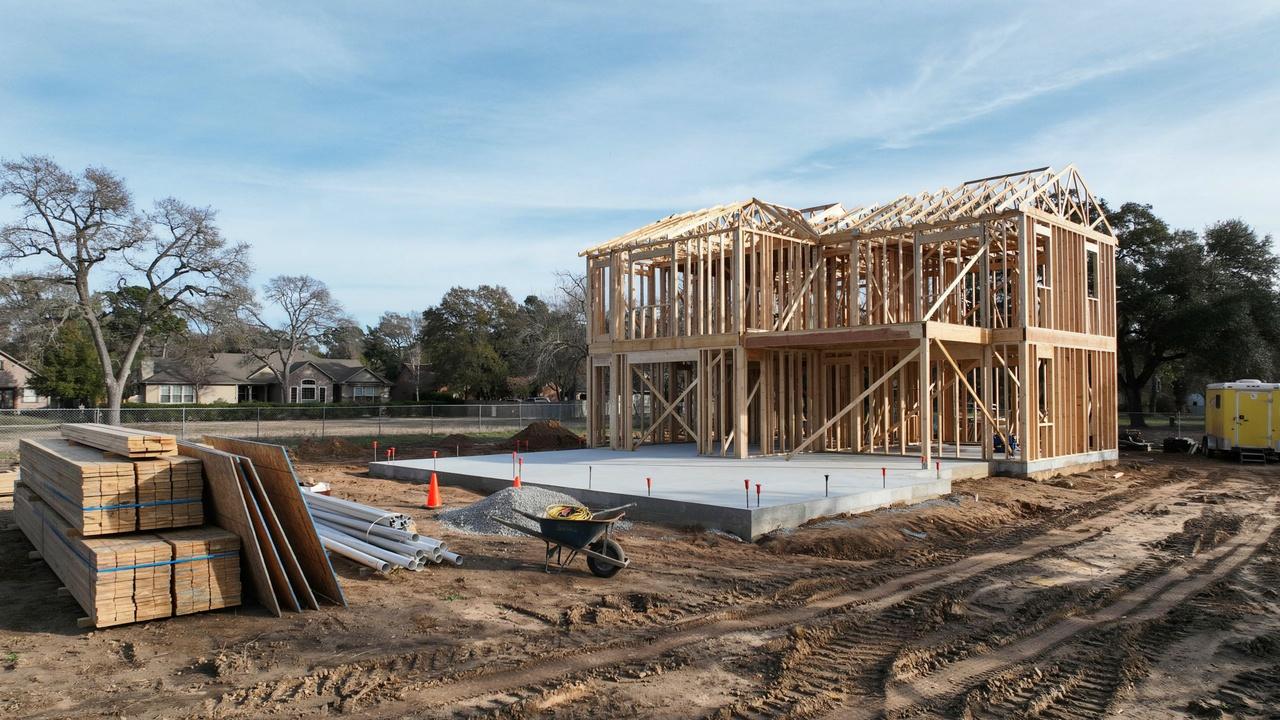
Framing forms the skeleton of your home. It is one of the largest line items in any construction budget.
Framing: $20,000 – $50,000
Roofing:$8,000 – $25,000
Exterior siding and windows: $15,000 – $40,000
The complexity of your roofline and the type of siding material you choose will directly affect cost. Simple gable roofs cost less than hip or custom designs.
Most single-family homes use stick-built construction, which is built on-site from the ground up and remains the most common method for owner-lot builds.
Plumbing, Electrical, and HVAC
These systems make your home functional. They are not visible in the finished product, but skimping here causes problems later.
Plumbing: $10,000 – $20,000
Electrical:$10,000 – $15,000
HVAC (heating and cooling): $10,000 – $20,000
In rural areas, you may need a septic system ($8,000 – $35,000 depending on soil conditions) and a well ($5,000 – $15,000) instead of public utilities.
Conventional gravity septic systems are the most affordable, but clay-heavy or poorly draining soil can require a more expensive engineered aerobic system.
That adds real cost many first-time builders do not anticipate.
Interior Finishes and Appliances
Once the structure is complete, interior work begins. This is where most cost overruns happen because choices here are personal and can escalate quickly.
Flooring:$5,000 – $20,000
Kitchen and cabinets: $15,000 – $50,000+
Bathrooms:$5,000 – $15,000 each
Appliances:$5,000 – $20,000 Paint and
trim:$3,000 – $10,000
Choosing mid-range finishes here keeps costs reasonable while still producing a comfortable, attractive home.
Permits, Labor, and Professional Fees
These costs are easy to forget but impossible to skip.
Building permits:$1,500 – $5,000 (varies by location)
General contractor fee:10% – 20% of total build cost
Architect or designer: $5,000 – $20,000+ Surveying and
inspection fees:$1,000 – $3,000
A property survey is often required by lenders or local authorities to verify property boundaries, building setbacks, and the proposed location of the home. Requirements vary by lender and jurisdiction, so confirm what your project requires before construction begins.
Hiring a general contractor adds cost but saves you from managing every subcontractor yourself. For most people, it is worth the fee.
What Can Make Your Building Costs Higher?

Some factors push construction budgets beyond initial estimates. Knowing these in advance helps you plan better and avoid surprises mid-build.
House Size and Architectural Complexity
Larger homes cost more simply because they require more materials and labor hours. But complexity matters just as much as size.
A home with multiple stories, intricate rooflines, vaulted ceilings, or custom angles costs significantly more per square foot than a simple rectangular layout.
Keeping your floor plan straightforward is one of the easiest ways to control costs.
Land Conditions and Site Accessibility
Even land you already own can create extra costs depending on its condition. Rocky ground requires blasting or special equipment. Slopes need retaining walls or additional grading.
Wet or unstable soil may require engineered foundations. Building codes also vary significantly by region, with requirements for insulation depth, fire resistance, seismic bracing, or wind ratings that can raise your total in high-regulation markets.
If your lot is hard to access with heavy equipment, expect higher delivery and labor charges as well.
Local Labor and Material Prices
Construction costs vary greatly by region. Building in a metro area or high-cost state like California or New York will cost far more than building in the Midwest or rural South.
Local labor supply, material availability, and demand all influence your final number. Always get estimates from local contractors rather than relying on national averages alone.
Utility Connections and Site Development
Connecting to city water, sewer, electricity, and gas is not always simple or cheap. In rural areas or undeveloped lots, these connections may require trenching over long distances.
Electrical hookup:$5,000 – $30,000
Water and sewer connection: $5,000 – $20,000
Driveway and grading:$3,000 – $15,000
Electric lines that run more than 500 feet from your property can cost $5 to $25 per linear foot on top of utility company fees.
These costs can add $30,000 to $50,000 or more to your total project if your land is not already developed.
Custom Features and Finish Levels
Custom cabinetry, high-end countertops, smart home systems, heated floors, or luxury bathrooms all add up fast. Each upgrade seems reasonable on its own, but they compound quickly.
Set a clear finish level before design begins and stick to it. Changing your mind mid-build is expensive.
How to Calculate Your Total Building Budget

A well-planned budget prevents cost overruns and helps you make decisions with confidence. Here is a step-by-step approach.
Start With the Base Construction Estimate
Get at least two or three quotes from licensed general contractors in your area. Ask them to provide a per-square-foot estimate based on your floor plan and finish level. This becomes your foundation number.
Do not rely on online calculators alone. A local quote reflects actual regional pricing, which is almost always more accurate.
Add Site Development and Soft Costs
On top of your base construction estimate, add costs for:
- Site clearing and grading Driveway installation Landscaping (basic) Utility connections
- Site development costs can add significantly to your construction budget, especially on undeveloped or rural land. The actual amount depends on clearing, grading, drainage, driveway work, utility access, and local site conditions.
Include Permits and Professional Services
Budget for permits, an architect or designer, a structural engineer if needed, and inspection fees. These are not optional, and they cannot be skipped or delayed without causing problems later.
A good rule of thumb is to set aside 5% to 8% of your total build cost for these professional fees.
Set Aside a Contingency Fund
Every construction project hits unexpected costs. Soil issues, weather delays, price increases, and design changes all cost money. Set aside 10% to 15% of your total project cost as a contingency buffer.
If you do not use it, great. If you need it, you will be very glad it is there.
Account for Financing and Move-In Costs
Most people still need financing even when they own the land. A construction-to-permanent loan is one of the most common options.
It funds your build in stages and then rolls into a regular mortgage once the home is done. This saves you from paying two separate sets of closing costs.
Budget 1% to 3% for loan origination fees on top of your build cost.
If you own your land free and clear, lenders may accept it as collateral or count it toward your down payment, which can reduce the cash you need upfront.
Also budget for:
Moving costs Temporary housing during construction Initial furniture and appliances not included in the build contract Utility deposits and setup fees
These final costs often range from $5,000 to $20,000 and catch many builders off guard.
Building vs. Buying When You Already Own Land
Owning land changes the financial equation, but building is not always the cheaper choice. Compare the total costs, timeline, and risks before making your decision.
| Factor | Building on Land You Own | Buying an Existing Home |
| Land Cost | No land purchase required | Included in the home price |
| Construction | You pay for the complete build | Already included in the purchase price |
| Site Development | May include grading, clearing, drainage, and utilities | Usually already completed |
| Customization | High flexibility for layout, materials, and features | Limited to the existing home |
| Upfront Costs | Construction, permits, design, and soft costs | Down payment, closing costs, and inspections |
| Financing | May require construction financing | Usually uses a standard mortgage |
| Timeline | Construction can take several months | Purchase and move-in can happen faster |
| Cost Overruns | Possible due to changes and unexpected site issues | Generally lower risk of construction overruns |
| When It May Win | Land is ready and local building costs are reasonable | Existing homes are priced below replacement cost |
| Main Advantage | Custom home without buying the land | Greater cost and timeline certainty |
The U.S. Census Bureau reports the median sales price of a new home at around $430,000, which includes land.
If you build a comparable home on land you already own for $300,000, building can come out well ahead financially.
But if site prep is complex and utility access is expensive, buying an existing home may be more practical.
Common Budget Mistakes to Avoid
Most construction budget problems are predictable. Here are the most common ones and how to avoid them.
Underestimating Site Development Costs
Many people focus on the house and forget the land. Clearing, grading, drainage, retaining walls, and driveway installation all cost real money.
Get a site development estimate separately before finalizing your overall budget.
Forgetting Permits and Utility Connections
Permits are not optional, and utility connections are not always cheap. Both are frequently left out of early budgets.
Ask your contractor to include these in their estimate, or price them out independently before you commit.
Choosing Expensive Finishes Too Early
It is easy to fall in love with high-end fixtures, custom tile, or premium countertops during the design phase.
But locking in expensive finishes before you have a firm budget can blow your numbers quickly. Choose a finish tier first, then select specific products within that budget.
Making Changes During Construction
Every change order during construction costs more than making the same decision before the build starts.
Labor has to stop, plans have to be redrawn, and materials may need to be returned. Finalize your design completely before any work begins.
Starting Without a Contingency Budget
Building without a financial buffer is one of the riskiest things a homeowner can do. Unexpected costs are normal, not rare.
If your budget is already at your limit, you have no room to handle surprises. Always hold back 10% to 15% for the unexpected.
Tips for Lowering Your Construction Costs
There are real, practical ways to bring your build cost down without sacrificing quality. These strategies work for most budgets.
- A square or rectangular floor plan uses materials more efficiently, reduces framing costs, and keeps your build straightforward and affordable.
- Get at least three detailed bids from licensed contractors and compare what each one includes, not just the total price.
- Spend on high-value items like roofing, insulation, and HVAC first, and save upgrades like paint and fixtures for later.
- Get quotes from multiple material suppliers for lumber, roofing, and windows since prices vary more than most people expect.
- Finalize every detail of your plans before construction starts because changes made mid-build cost significantly more than decisions made during design.
- If you have the time and project management experience, acting as your own general contractor can save 10% to 20% of the total build cost by coordinating subcontractors directly.
- Consider a modular home as an alternative to stick-built construction. Modular homes are built off-site in sections and assembled on your lot, often costing $100 to $200 per square foot with a faster timeline and less material waste.
Conclusion
Building on land you already own can be a smart financial move when you plan the project carefully.
The cost to build a house if you already own the land depends on several factors, including home size, location, finishes, labor rates, and site conditions.
Owning the land eliminates the need to purchase a separate lot, but you still need to budget for construction, permits, utilities, professional services, and unexpected expenses.
Start with detailed quotes from local contractors and include a contingency fund for surprises.
Careful planning, realistic budgeting, and limiting changes during construction can help keep your project on track and prevent costly overruns.
Frequently Asked Questions
Can I use my land as a down payment for a construction loan?
Yes, many lenders accept land equity as part or all of your down payment on a construction loan, depending on appraised value.
How long does it typically take to build a house from start to finish?
Most single-family homes take six to twelve months to build, depending on size, complexity, weather, and contractor availability.
Do I need an architect if I use a pre-designed house plan?
Not always. Pre-designed plans often only need a local engineer to review and approve them for your specific site and building codes.
What type of loan do I need to build a house on land I already own?
A construction-to-permanent loan or a standalone construction loan are the most common options for financing a new build on owned land.
Will building a house increase my property taxes?
Yes, a completed home adds assessed value to your land, which typically raises your annual property tax bill based on local rates.