A commercial roof leak rarely shows its full cost on the first visit, because the price depends on what sits under the membrane, the waterproof top layer of the roof. A contractor can see the damaged spot, but not always the wet insulation below it.
The short answer is that commercial roof repair cost varies with the size and type of the repair, and the biggest swings come from hidden water damage rather than the hole you can see.
Two leaks that look alike from inside the building can therefore lead to different quotes.
In this post, you will learn what drives commercial roof repair cost, how each membrane changes the repair, and which questions to ask before you approve any work.
Local quotes set the real price, so treat this as a guide to reading them.
How Much Does Commercial Roof Repair Cost?
Commercial roof repair has no single standard price, because the total depends on the repaired area, the membrane type, how hard the roof is to reach, and whether water has reached the insulation.
Only a written quote from an on-roof inspection, ideally backed by a moisture survey, gives the real number.
This guide does not quote a price range, because no government agency or trade standard we could find publishes one for commercial repairs. Contractor pages list numbers, but they vary widely from one page to the next.
A quote that lists only a price per square foot can also mislead once a minimum charge or wet insulation enters the job. For background on how these roofs are built, see flat roof construction basics.
Commercial Roof Repair Cost by Roofing Material
The roofing membrane decides the repair method, and the method decides how much labor and material a patch needs.
TPO and PVC repairs rely on heat welding, EPDM repairs rely on adhesive or seam tape, and modified bitumen, built-up roofing, and metal each call for their own methods.
TPO (thermoplastic polyolefin) and PVC (polyvinyl chloride) are thermoplastics, so a repair means cleaning the area and fusing a new patch over it with a hot-air welder.
EPDM (ethylene propylene diene monomer) is a thermoset rubber that cannot be heat-welded, so crews clean and prime the damage and apply a patch with seam tape or adhesive.
Modified bitumen and built-up roofing (BUR) are layered asphalt systems, so repairs often rebuild the damaged layers, called plies. Metal roofs call for different work, such as replacing fasteners, resealing seams, or swapping panels.
Roof type also affects how wet insulation gets found, which feeds into the price.
According to Facilities Net, infrared scans work poorly on ballasted roofs (weighted down with stone) because the stone holds heat, and capacitance scanners can struggle on wet or ponded areas and may need modified instruments on EPDM.
Because each membrane needs a different method, two quotes only compare fairly when both name the membrane, the repair size, and the repair method.
Several factors decide where a job lands, and the first is the fixed cost every crew charges before any repair work starts.
What Actually Sets the Price of a Commercial Roof Repair?
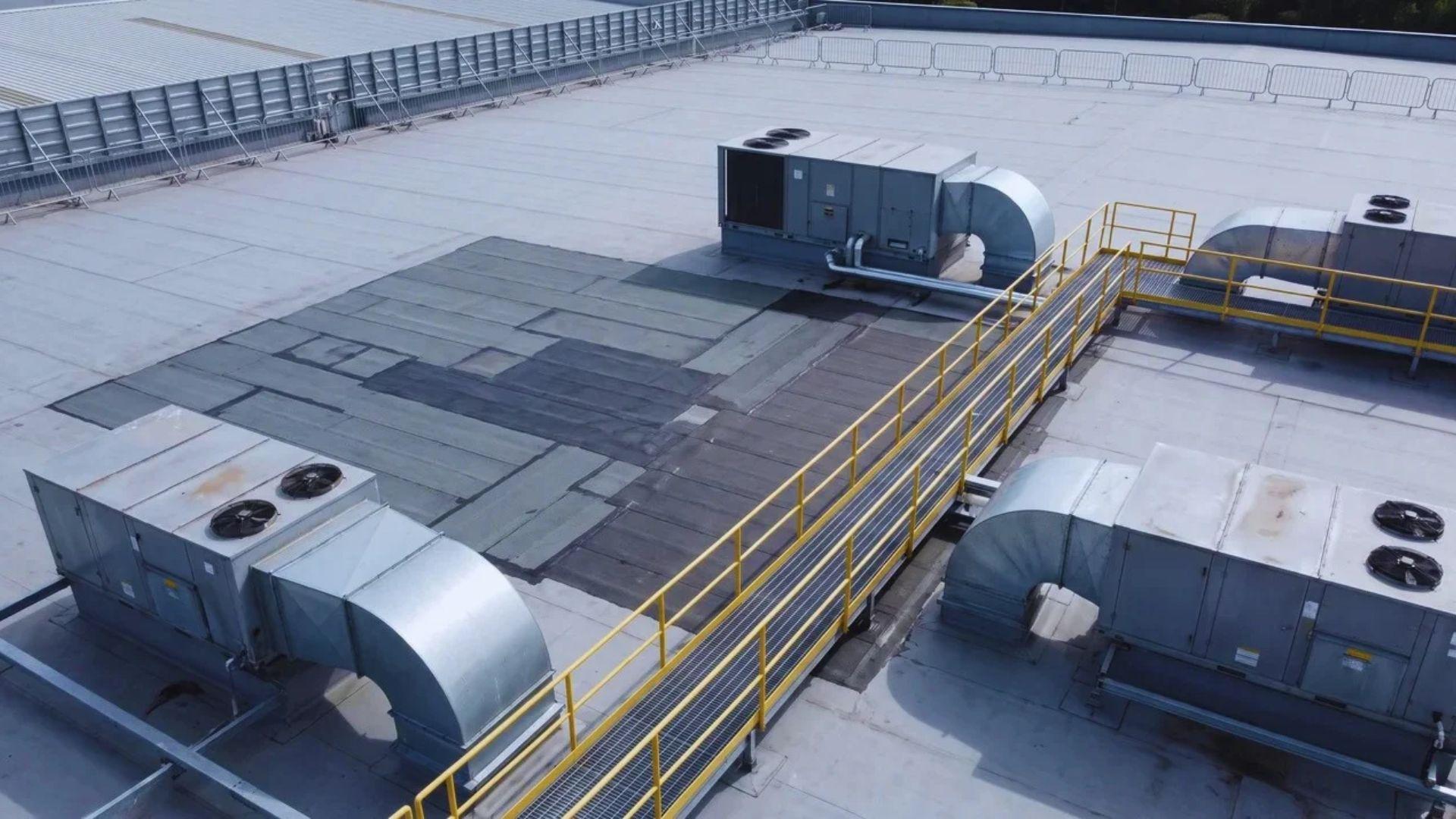
A commercial roof repair price starts with a fixed charge to get a crew working, then adds an area-based cost adjusted for access, equipment, and labor.
Hidden water damage can change the scope more than any of these, because wet insulation has to be removed and replaced before the membrane is patched.
The Fixed Cost Floor Versus Area-Based Cost
Before a crew touches the damage, it has to reach your site, set up safety gear, and find the problem. Contractors cover that with a minimum charge, and every repair price starts from that floor.
Take a patch of a few square feet and a section of several hundred. The floor is the same, but on the small patch it is spread over far less roof.
That is why the small job costs more per square foot, even though it costs less in total. Once the repair grows, the area-based cost takes over, and a rate per square foot starts to mean something.
Access, Height and Rooftop Equipment
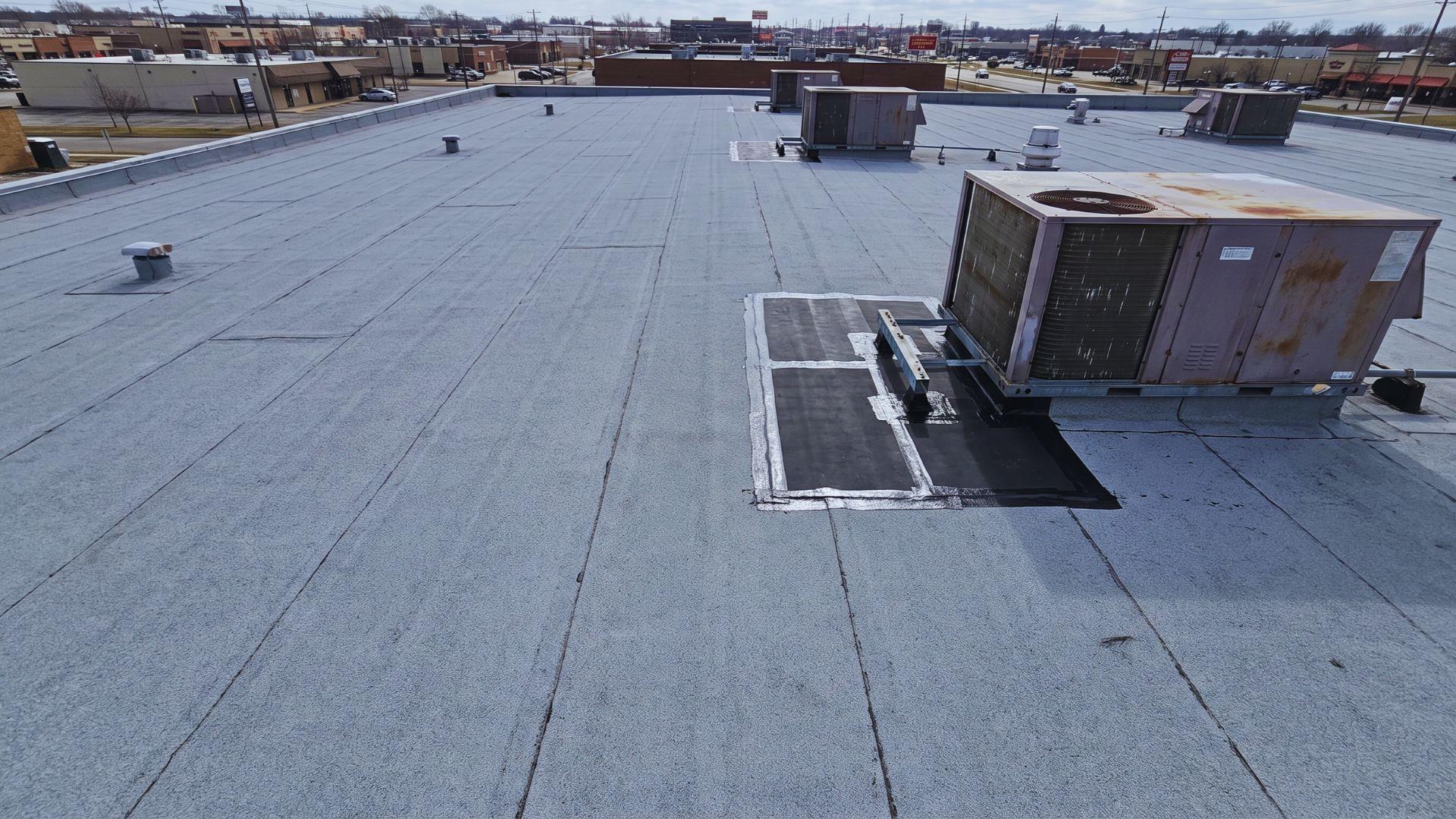
Access changes how long the same repair takes. On a commercial flat roof, open space and easy access speed the work, while a high, cramped, or equipment-crowded roof slows it.
On the crowded roof, crews work around equipment and may need a lift. Every unit also adds curbs, pipes, and openings that need flashing.
Flashings, the pieces that seal a roof’s edges and openings, are a common trouble spot. Roofing Contractor magazine reports that flashing problems account for the majority of leaks on low-slope (nearly flat) built-up roofs.
Labor Versus Materials
A 2018 national labor study by the consulting firm Trinity|ERD, commissioned by a roofing manufacturer, found that labor made up about 36 percent of installed cost for bituminous systems and about 49 percent for single-ply systems.
The study measured new installations on 45 roofs, not repairs, so treat the shares as a guide to how heavily labor weighs on roofing work.
Fixed charges, access, and labor explain the price of a repair you can see. The bigger swings come from damage you cannot see, which sits in the insulation under the membrane.
Why Can a Small Leak Turn Into an Expensive Repair?
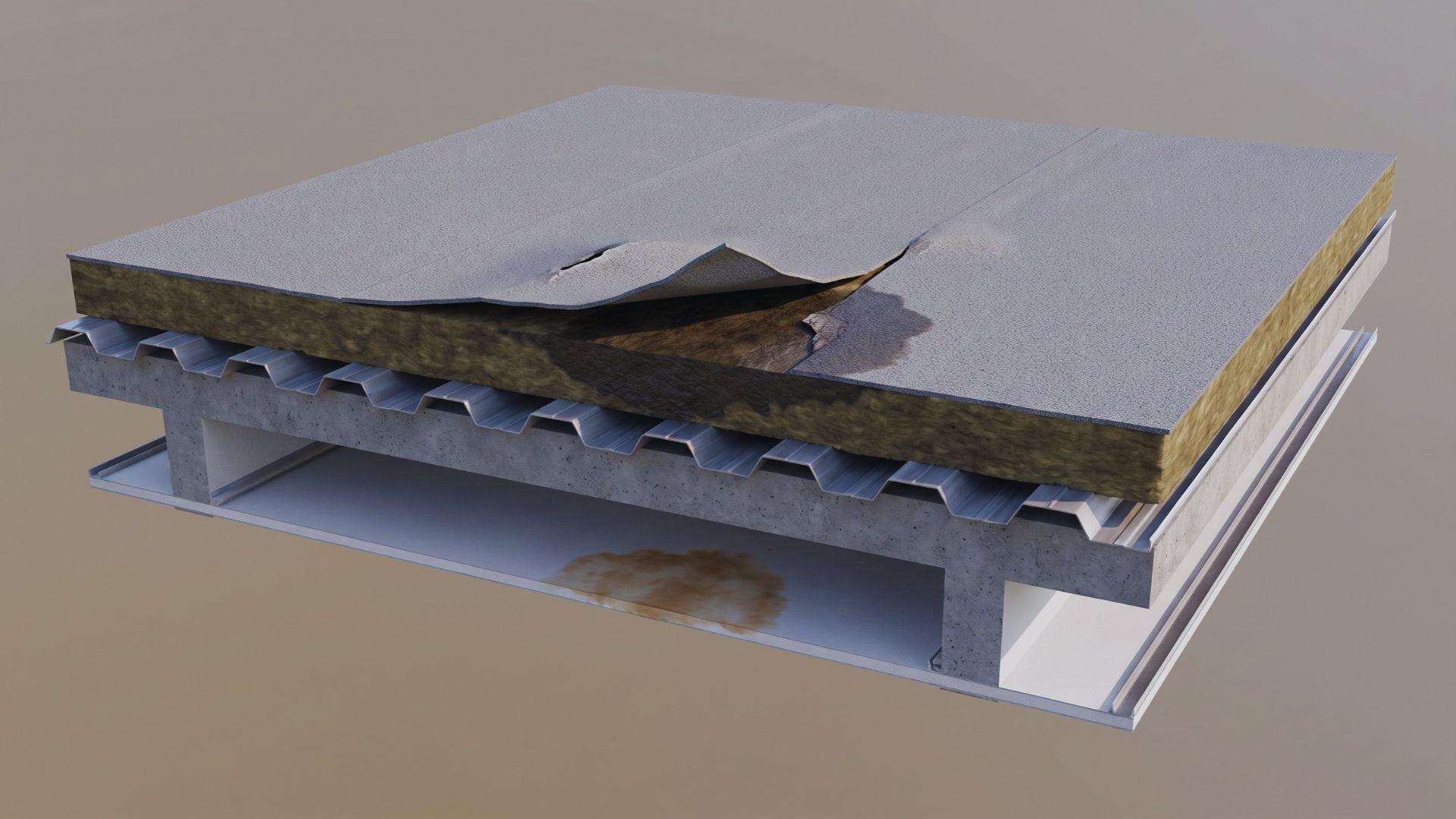
Commercial roof leak repair cost depends on how far water has spread under the membrane, not on how big the hole looks. A ceiling stain shows where water landed, not necessarily where the roof failed.
Wet insulation loses strength and insulating value, and Oak Ridge National Laboratory research found it did not return to its original performance after drying. Sealing it under a patch traps the moisture, so it is typically removed and replaced first.
A 2013 Facilities Net column notes that once 25 to 30 percent of a roof is wet, full replacement makes more economic sense than re-covering.
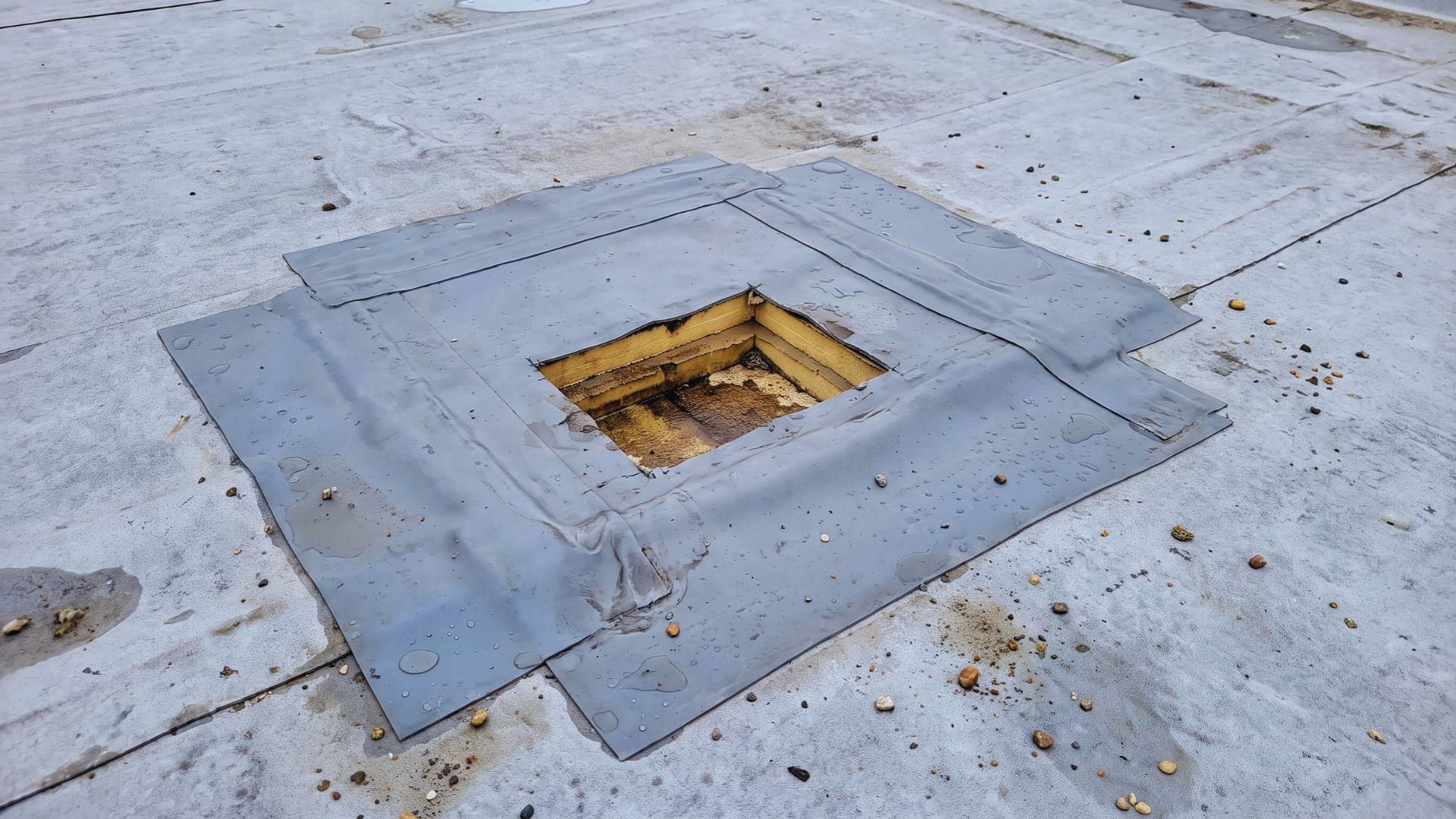
A moisture survey maps the wet areas before work starts, and its core samples can change the quote, as the roof moisture survey standards explain.
If a ceiling sags or water drips near electrical fixtures, keep people away and call a licensed professional promptly. If part of the roof or ceiling may collapse, get everyone out and call 911.
How Do You Know If a Repair Quote Is Reasonable?
A fair repair quote itemizes its fixed charge, repair scope, and moisture assumptions instead of giving you one lump figure.
Check four items across at least two commercial roof repair quotes before you look at the total, because a low number with missing details can grow once the roof is opened.
- Repair size: The quote should say how much roof it covers, because a price with no size cannot be compared.
- Fixed charge: Look for it shown apart from the work, since a charge buried in one number hides whether a small job is priced fairly.
- Wet insulation: This line matters most, because a low quote that skips moisture testing can grow once the crew cuts open the roof. Ask whether wet insulation is included or priced separately, and what happens if the crew finds more than expected.
- Repair or replace: Roofing consultants writing in trade publications typically recommend full replacement once more than 25 percent of a roof has wet insulation. The International Building Code (IBC) does not allow a roof recovery over a water-soaked roof (Section 1512.2.1.1 in the 2021 edition), and some jurisdictions add stricter rules, so confirm with your local building department.
The same IBC section also bars a recovery over a roof that already carries two or more layers of roof covering. Repeated repairs on an aging roof point toward replacement as well, because every new patch sits on older material.
Final Verdict
Commercial roof repair cost comes down to what a contractor assumes about your roof, not just what they see. A low number with no stated repair size or moisture check is a guess, and guesses tend to grow.
You now know why an estimate can change, which puts you in a stronger position with any contractor. Before you approve any work, ask for the repair size, the fixed charge, and the moisture assumptions in writing.
Then compare at least two quotes side by side, and ask any contractor who skips these details to explain why.
This guide is informational and does not replace advice from a licensed roofing contractor, a roofing consultant, or your local building department.
Frequently Asked Questions
How long does a commercial roof repair take?
Duration depends on repair size, access, membrane type, and weather. A contractor should give a written schedule after inspecting the roof, and rain, wind, or cold can push any roof job back.
Does insurance cover commercial roof repair?
It can, when sudden damage from a covered event such as hail or wind causes the leak. Wear, age, and neglected maintenance are commonly excluded, so read your policy and ask your insurance agent.
Can you coat a commercial roof instead of repairing it?
A coating can extend the life of an aging roof that is still sound and dry. It should not go over wet insulation or serious damage, which need repair or replacement first.
Who pays for commercial roof repairs, the landlord or the tenant?
The lease decides. Under a triple net lease, tenants usually pay routine upkeep, while roof repair or replacement is often negotiated or left to the landlord, so check the repair clause and ask an attorney.