You get two quotes for the same roof leak, and one is double the other. Neither contractor is necessarily wrong.
Commercial building repairs cost different amounts depending on what each quote includes, and that detail is easy to miss.
Two fair quotes can still sit thousands of dollars apart. I’ve seen owners overpay by comparing the wrong numbers.
In this post, you will learn how to read a quote, so you can budget with confidence.
Let’s start with what commercial repairs typically cost.
How Much Do Commercial Building Repairs Cost?
Commercial repairs run from a few hundred dollars for small fixes to tens of thousands for major damage. What you pay depends on the building system involved and how far the damage has spread.
Prices also vary by location, materials, and how easy it is to access the damaged area. Treat every figure below as a starting range, and check it against current local quotes.
A low rate per square foot can still become a large invoice once the damaged area grows.
What Do Commercial Repairs Typically Cost by Building System?
Roofs and concrete are two common repair categories, and each is priced differently. The table puts the ranges side by side.
| Repair | Typical range |
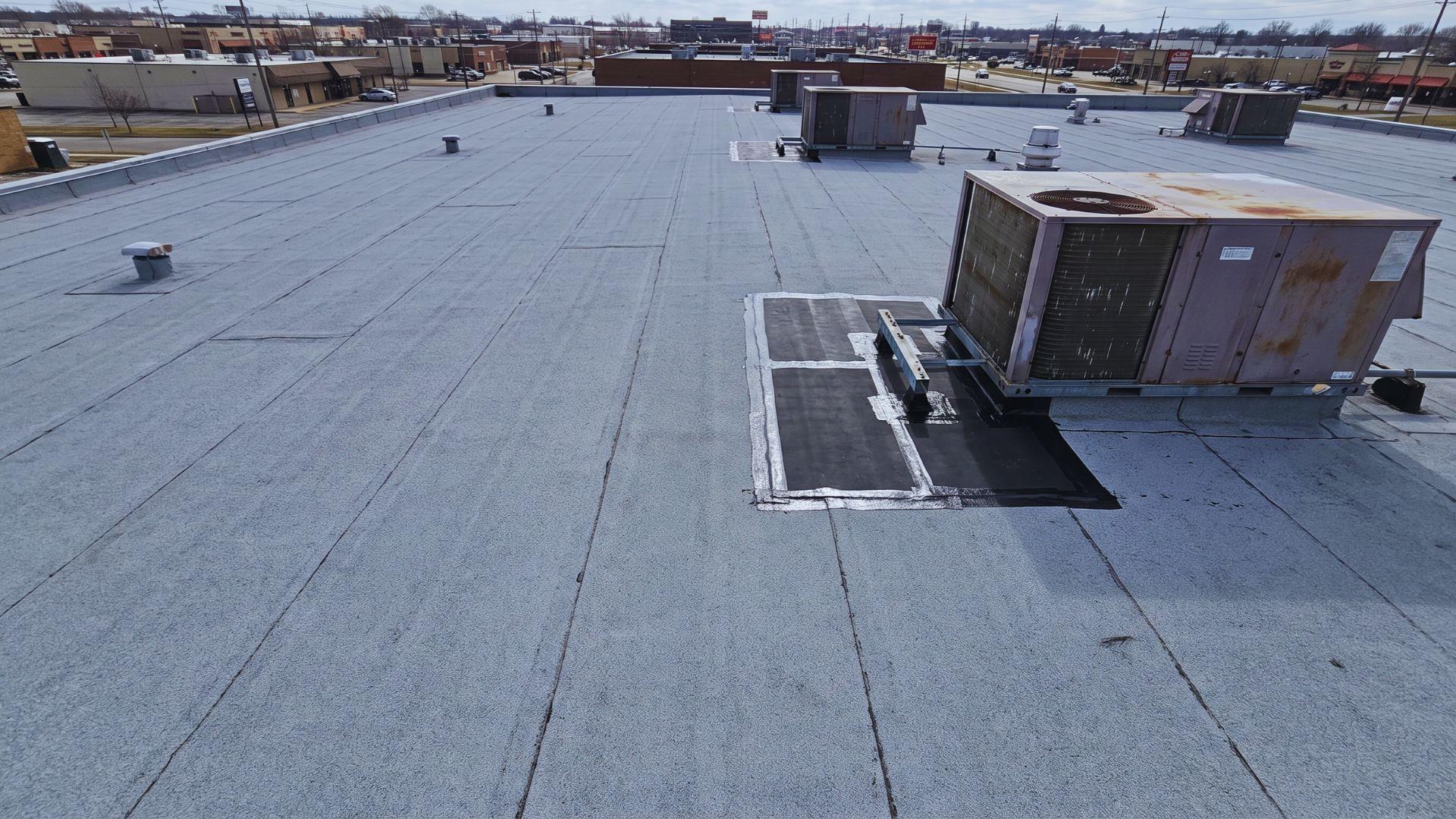
| Minor roof repair, such as a single membrane puncture | $300 to $1,200 |
| Moderate roof repair | $1,200 to $5,000 |
| Major roof repair | $5,000 and up |
| Roof repair priced by area | $1.50 to $15 per square foot, from patching to major repair |
| Concrete repair, minor to structural | $4 to $25+ per square foot of repair area |
The roof tiers climb from hundreds to thousands of dollars inside a single building system.
For a membrane-by-membrane look at commercial roof repair costs, including TPO, EPDM, PVC, and metal, see our roofing guide.
Concrete is priced by the repaired area, so the total depends on how much of the surface is damaged.
Concrete rates in particular swing with region, so your local rates may differ.
Why Can’t Per-Square-Foot Figures Be Compared Directly?
A per-square-foot figure only means something when you know which square feet it counts. Published pricing uses three different counts, and they are easy to mix up.
Maintenance rates spread a year of upkeep across the whole building. At $1 to $3, a 50,000-square-foot building spends $50,000 to $150,000 a year.
Repair rates count only the damaged patch. A $4 to $25 rate on 400 square feet of concrete comes to $1,600 to $10,000.
The repair area is only an estimate until the damage is opened up, so the final total can shift.
Renovation rates count the whole project area, so they land in a different range again. Putting a $3 roof rate next to a $100 renovation rate tells you nothing.
Before comparing quotes, ask which area the rate covers and whether it prices a year, a repair, or a project.
Those ranges show what repairs cost, but not why a warehouse roof patch outprices a house roof patch. Code work, access equipment, and after-hours labor account for most of that gap.
Why Do Commercial Repairs Cost More Than Residential Ones?
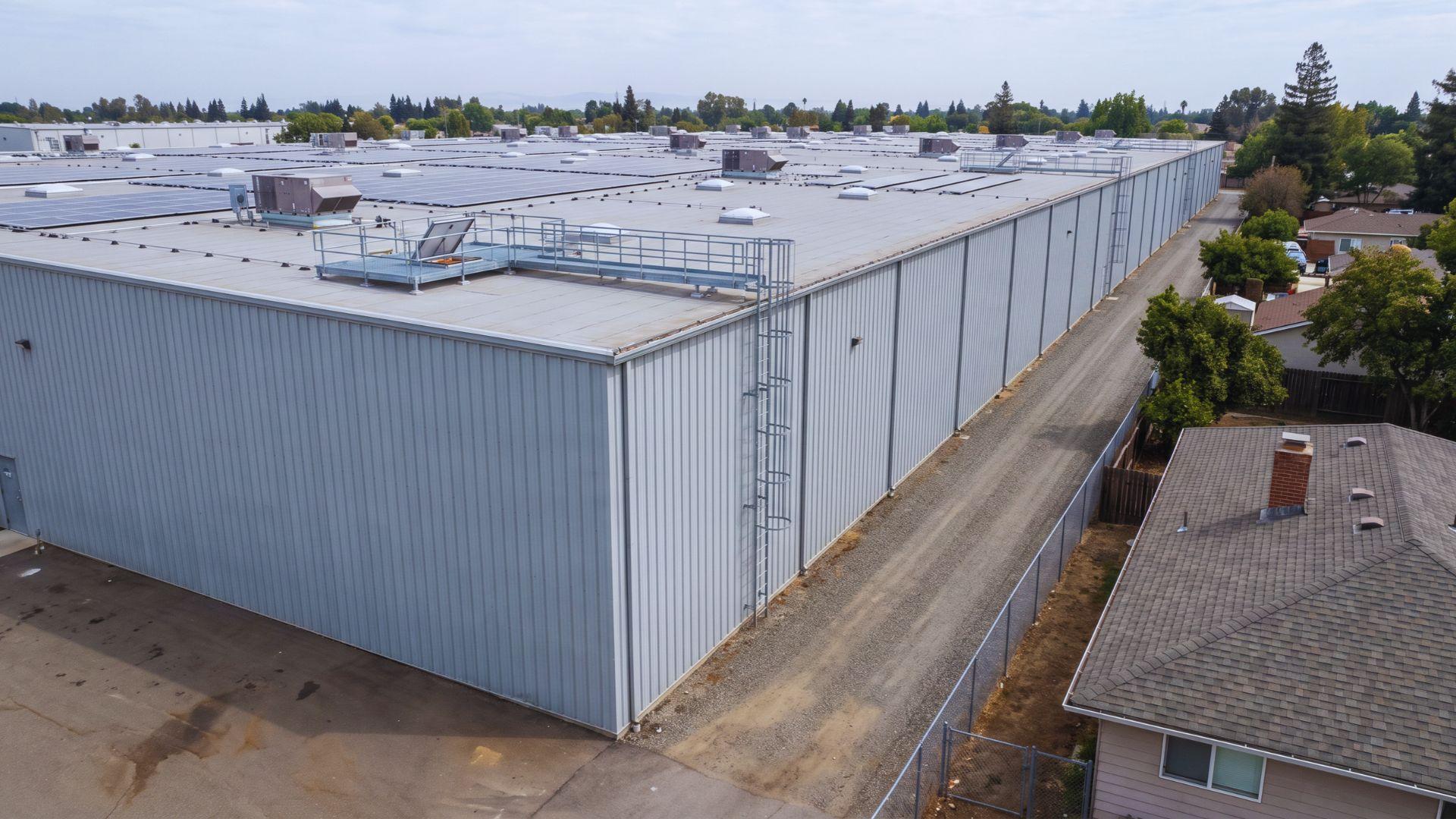
Commercial repairs cost more because the systems are bigger, the rules are stricter, and the building often stays open.
Commercial construction standards differ from residential ones, which explains much of the gap.
A house roof and a warehouse roof are not the same job at different sizes.
Commercial roofs often use membrane systems that need trained installers, and some repairs need a permit and an inspection.
Fire, accessibility, and building codes can also add work that a homeowner would rarely face.
Access adds cost too. Reaching a high wall or rooftop unit may need a lift or scaffolding.
In an occupied building, crews often work nights or weekends, which raises labor costs.
The way these factors combine matters more than any one of them. Here is an example with round numbers, not a real quote.
Say scale, compliance, and access each add 30% to a job’s price. Adding them gives 90%, but because each builds on the last, the real increase is nearer 120%.
Conditions change the result. A vacant building with ground-level access skips most of the access cost, while an occupied tower pays all of it.
Then there is a cost the invoice never shows. A blocked loading dock or a leak that forces tenants out can cost more than the repair.
Contractors rarely price in tenant disruption, so the true cost is usually higher than the quote. Raise it early, ideally in your OAC meetings, so it gets priced in.
When you compare options, I’d add a line for lost business and treat it as part of the price.
Those same cost drivers also shape what you spend each year just keeping a building running.
That upkeep budget is built from building area and a yearly rate, and it stays separate from the repair costs above.
How Much Should You Budget for Commercial Building Maintenance?
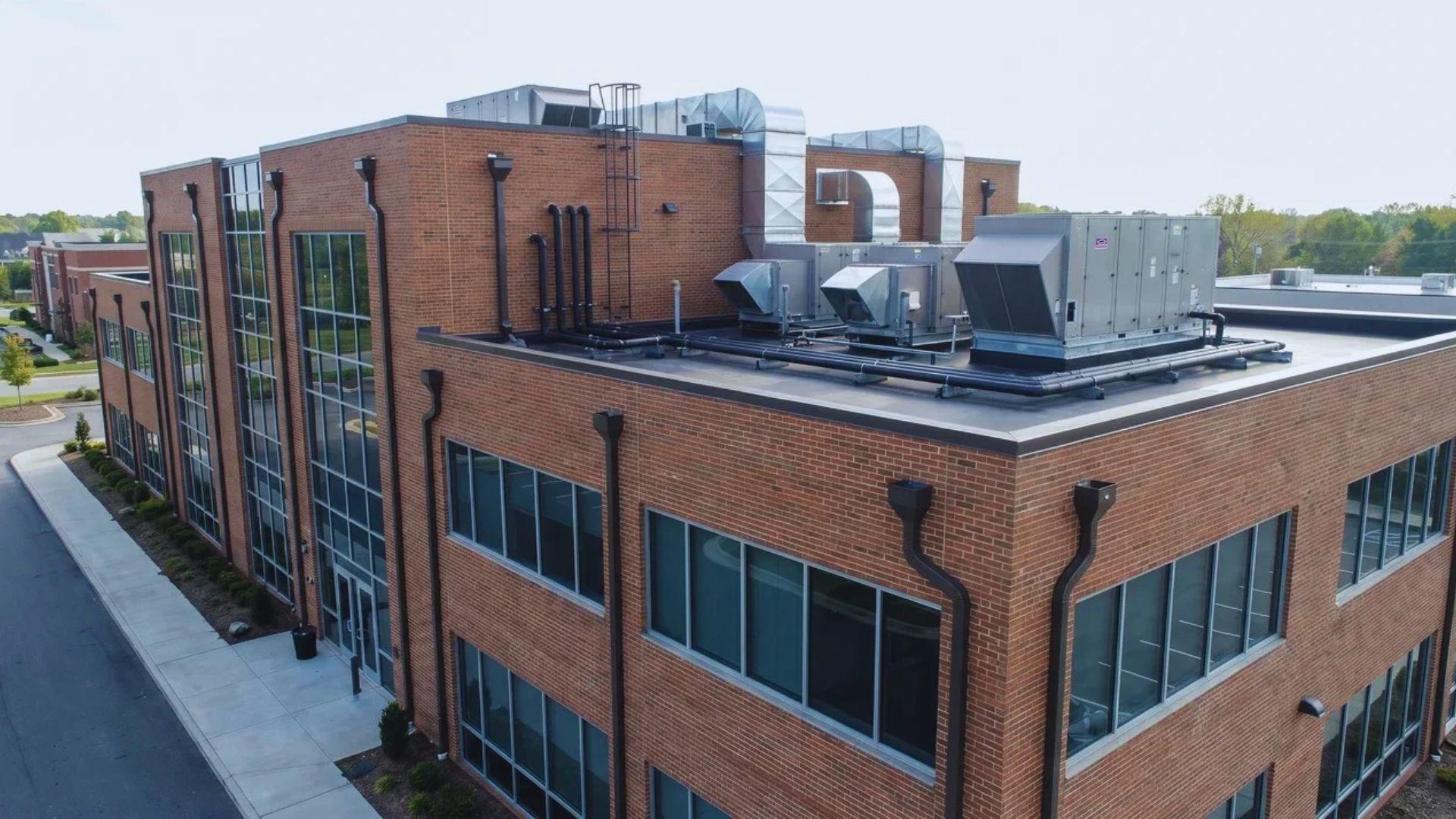
The usual starting point is simple: building area multiplied by a yearly rate per square foot. For offices and similar buildings, routine maintenance usually falls between $1 and $3 per square foot a year.
Published figures differ by building type, and industrial buildings with heavy equipment, electrical systems, and roofing often run higher, at $2 to $4 or more.
For a 40,000 square foot office building, that works out to $40,000 to $120,000 a year. That $80,000 gap is why you need to place your own building on the scale.
Four things decide where your building lands on that scale. The list below shows how each one moves your rate.
- Age: Older buildings cost more to keep running, since parts wear out and need attention more often.
- Installed systems: The more complex the equipment, the more servicing it needs.
- Building class: Higher-end properties carry a higher standard of upkeep.
- Climate: Heat, cold, and heavy rain wear down roofs, exteriors, and equipment faster.
An older building with aging systems belongs near $3, while a newer one with simple systems can sit near $1.
Many published averages bundle routine upkeep and small everyday repairs into one line, so check what a figure includes before you copy it. Major repairs, like the ones priced earlier, need a separate reserve.
The two budgets also behave differently. Maintenance is steady and predictable, while repair costs arrive in uneven jumps.
When upkeep is skipped, small problems tend to grow into the larger repairs priced above. I’d keep them as separate budget lines, so a costly repair year doesn’t hide what upkeep costs.
A maintenance budget keeps small problems small, but some components still reach the point where another repair costs more than starting over.
Comparing cost per year of service life is how you spot that point.
Should You Repair or Replace a Commercial Building Component?
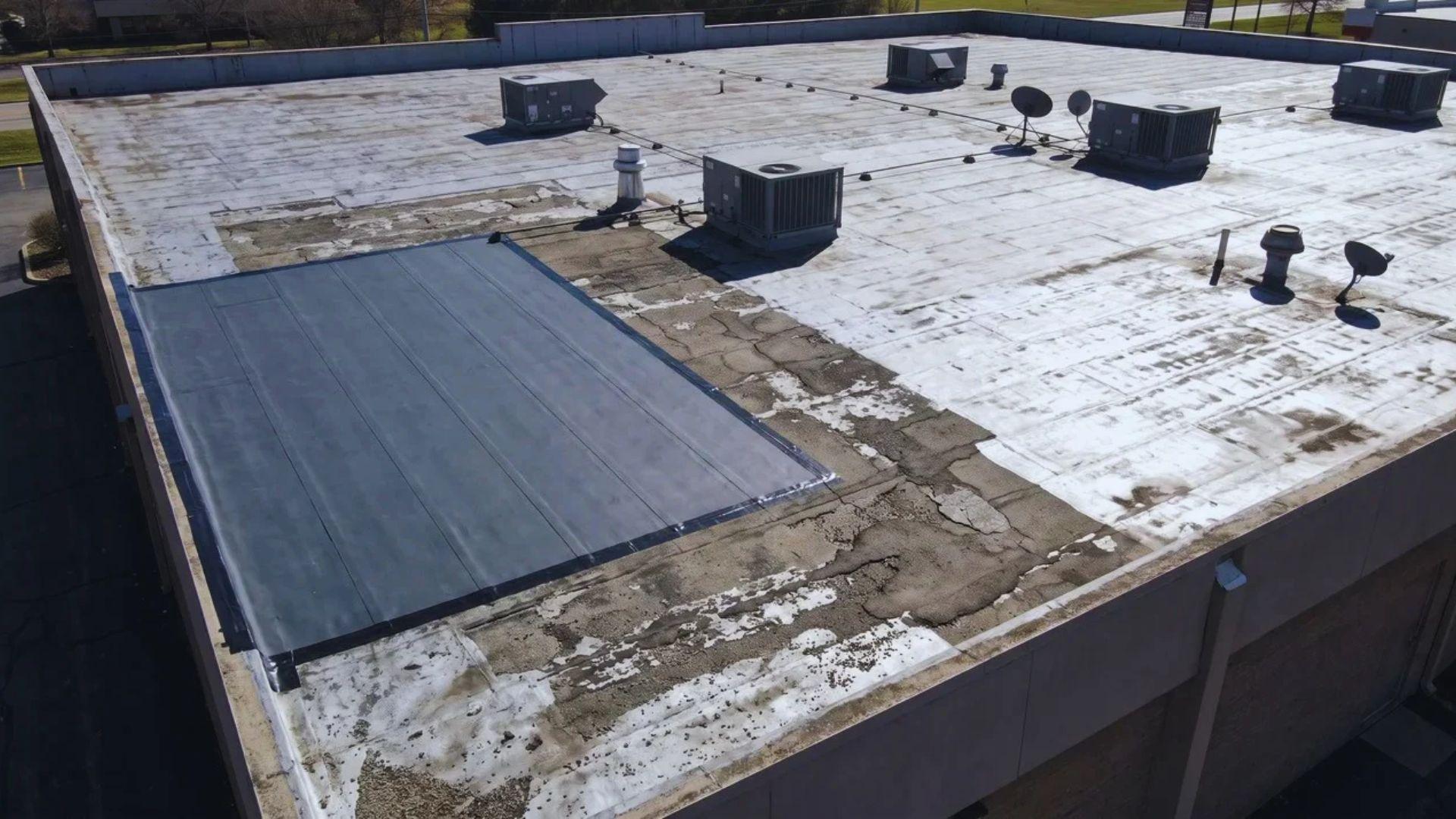
The real question is how much service life each dollar buys. Repair costs less today, but it leaves the component’s remaining life where it was.
Replacement costs more and starts that clock over. The two sections below apply that test, starting with roofs.
How Do Roof Repair and Replacement Costs Compare?
Commercial roof repair costs roughly $1.50 to $15 per square foot, depending on whether it is a patch or a major repair.
Replacing a membrane roof runs about $5 to $15 per square foot, so small patches usually cost well below it, while large repairs can approach it.
The upfront price is only half the picture, though. Divide each quote by the years of life it should buy to see what you pay per year.
Here is an example with round numbers, not real quotes.
- Repair: A $20,000 repair that adds 3 years costs about $6,700 a year.
- Replacement: A $90,000 replacement that lasts 20 years costs $4,500 a year.
The bigger bill turns out to be the cheaper one per year. This simple comparison ignores any life the old roof still has left, so adjust for that before you decide.
The math flips when damage is small and the roof still has years left. A minor patch in the $300 to $1,200 range is hard to beat.
Repeated leaks change things again, since each repair adds to a running total that can approach replacement cost.
I’d keep a log of every repair on each roof so you can see that total before the next call.
How Does the Same Test Apply to Other Components?
The same test works for any building component, as long as you ask two questions. Is the damage in one spot, and is the material underneath still sound?
Two common examples show how the answer changes from one component to the next.
- Concrete: Repair is priced on the damaged patch alone, at roughly $4 to $25 per square foot or more for structural work. Once the damage spreads, the patch and the bill both grow, so price a replacement too.
- Piping: A single leaking joint calls for a repair, while corrosion along the whole line points toward replacement. Skipped repairs can turn a small fix into a full replacement.
In both cases, how far the damage has spread decides whether repair still makes sense.
Repair and replacement both return a component to working order. Once the job upgrades systems or triggers code updates, it stops being a repair and gets priced as a renovation.
When Does a Repair Become a Renovation, and What Does It Cost?
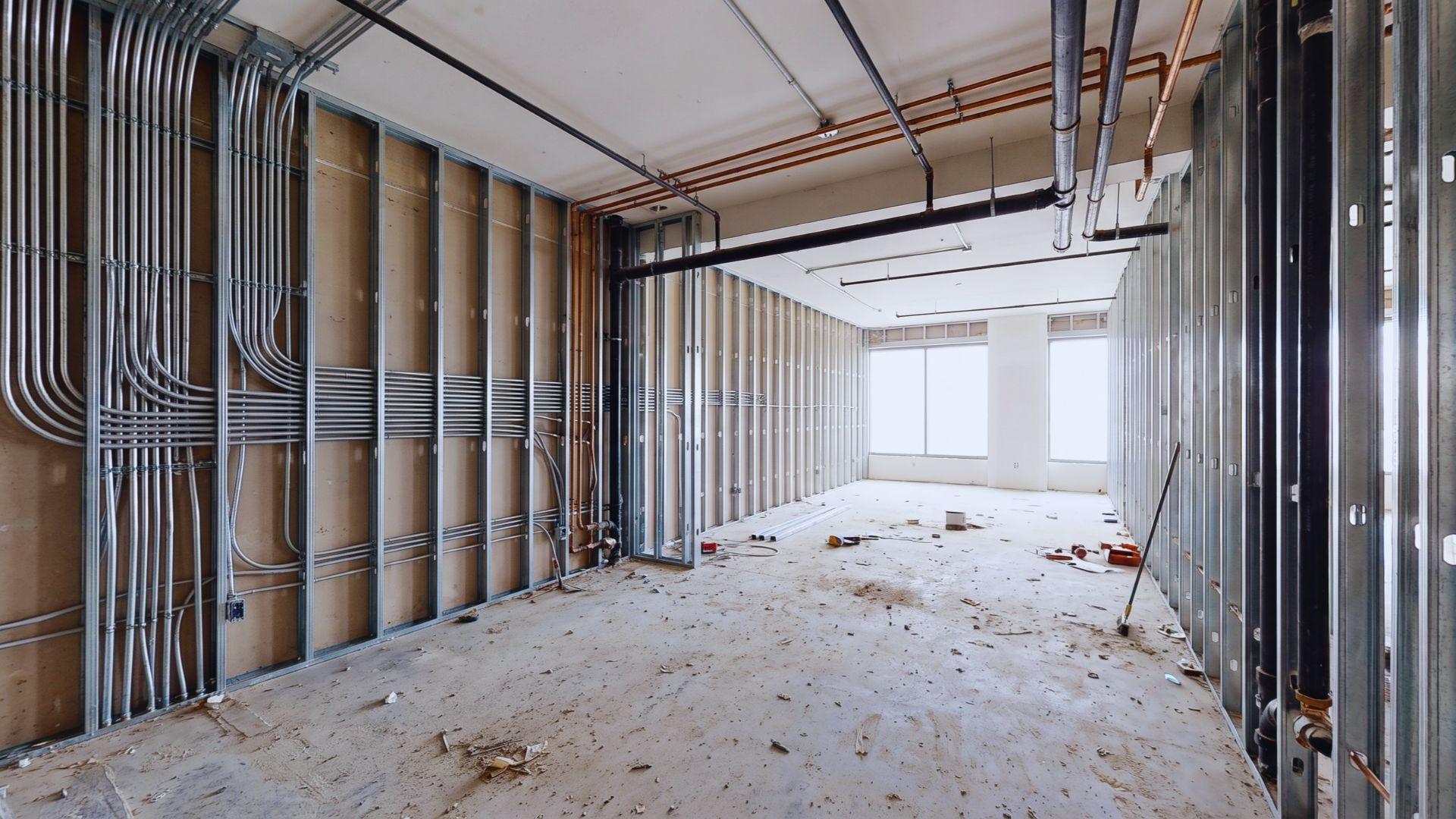
A repair restores something to the condition it was in before it failed. A renovation changes the space or upgrades the systems inside it.
That difference changes the pricing, since repairs are priced on the damaged area and renovations on the whole project.
Published renovation ranges are wide. Most fall between $50 and $300 per square foot, and the outer edges stretch from about $30 to $450 or more. Four things drive that spread.
- Location: Labor and material costs differ from one market to the next.
- Building class: Higher-end properties carry higher finish and system standards.
- Materials: Basic finishes and premium ones can sit far apart in price.
- Project complexity: Work on structure and systems costs more than work on surfaces.
Light tenant improvements tend to sit at the low end, since they change finishes and layouts, not systems.
A repair can grow into a renovation without anyone planning it. This usually happens in one of two ways.
- Code upgrades: Fixing a failed system may trigger updates to meet current requirements.
- Modernizing while crews are on site: It is tempting to upgrade a system you are already paying to open up.
Either path moves you from repair pricing to renovation pricing, and often changes the permit path.
I’d ask your contractor early whether the job will trigger code upgrades, before you lock in a budget.
Final Verdict
The commercial building repairs cost you plan for gets easier to predict once you know what each number counts.
A rate per square foot, a yearly budget, and a project price answer three different questions.
The biggest takeaway is that the cheapest quote is rarely the cheapest outcome. Cost per year of life gained, plus the tenant disruption no invoice shows, tells you far more.
Pull out your last repair quote today. Check which area it counts, then ask your contractor for an itemized breakdown before you approve the next one.
Frequently Asked Questions
How do commercial inspectors typically charge for their services?
Commercial inspectors usually price by an hourly rate, by square footage, or by a flat fee based on building type. Specialist testing or extra reports often cost more, so ask for a written scope first.
How do you calculate the replacement cost of a commercial building?
Multiply the building’s square footage by the local construction cost per square foot for its type and quality. Then add demolition, permits, and design fees, which quick estimates often leave out.
Who pays for repairs in a commercial lease?
It depends on the lease type and its exact wording. In a triple net lease, the tenant usually pays routine maintenance and repairs, while the landlord often keeps major structural items like the roof; an absolute net lease pushes even those onto the tenant. In a gross lease, the landlord generally pays.
Are commercial building repairs tax deductible?
Routine repairs that keep a property working are generally deductible as business expenses in the year paid. Work that is a betterment, restoration, or adaptation of the property usually has to be capitalized, so confirm with a tax professional.