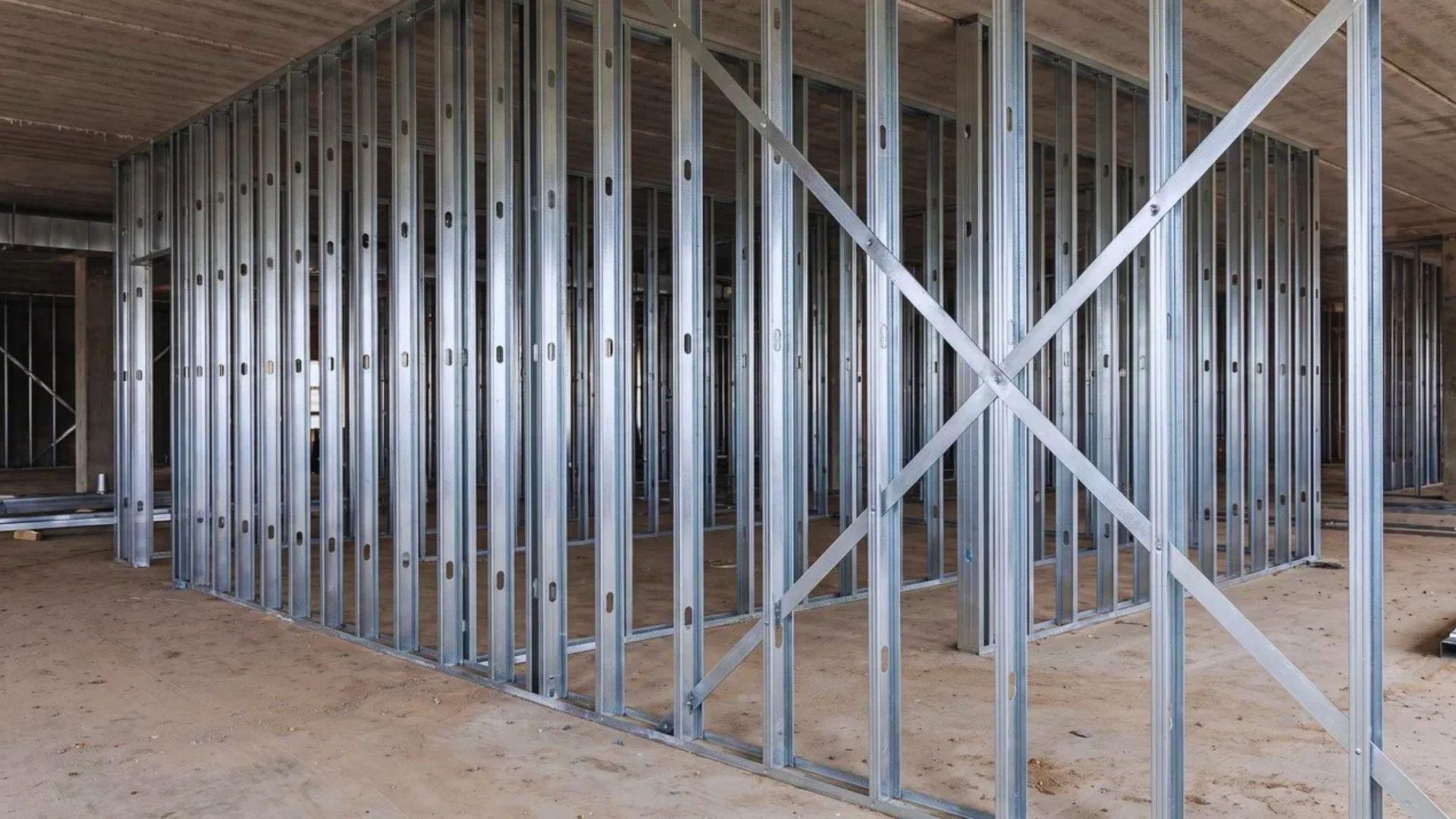
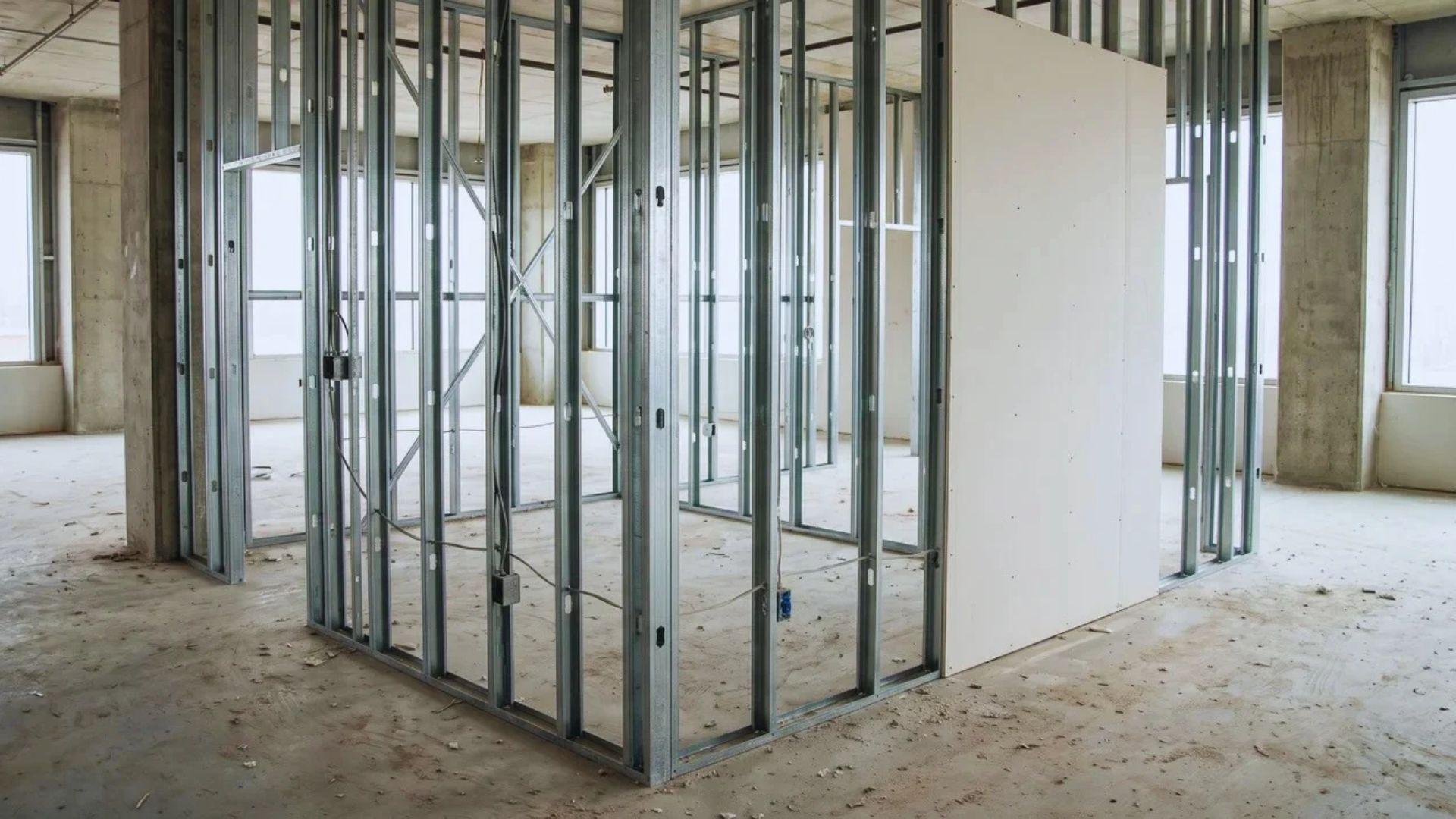
Step into any office, hospital, or shopping mall, and the walls around you are probably framed in steel, not wood.
So why are metal studs used in commercial buildings? Folks guess strength, but the real answer is closer to rules, risk, and what the wall is actually holding up.
Get that straight and building plans start making a lot more sense, whether you’re a contractor, a student, or just curious.
The biggest driver is fire, and it’s less about the steel than you’d think.
Why Are Metal Studs Used in Commercial Buildings?
Commercial buildings use steel studs mainly because they’re non-combustible, they stay dimensionally stable, and they’re light.
Just as important, commercial construction types often require non-combustible materials in the first place. Steel isn’t mandatory everywhere, though.
Some small commercial buildings can use wood where local code allows it.
Most of this steel ends up in non-load-bearing partitions, and you can see how commercial metal stud walls go together, from tracks to bracing.
Fire Resistance and Building Code Requirements
Building codes sort buildings into construction types based on size, height, and how many people use them.
Many commercial types, especially larger and taller ones, require non-combustible materials in the walls. Steel studs meet that requirement without extra work.
- They don’t burn.
- They don’t feed a fire.
- They don’t add fuel to a space that may hold hundreds of people.
Here’s the part people get wrong, though. Steel isn’t fireproof. It loses strength as it heats up, and a bare steel stud in a fire will sag and fail.
The fire rating on a wall comes from the assembly: usually layers of gypsum board screwed to both sides of the studs.
That board takes the heat and protects the steel behind it for a set amount of time. So the studs matter because they’re non-combustible, and the board is what buys the time.
Straight Walls, Moisture, and Pest Resistance
Steel studs are manufactured to a consistent shape, so they stay true over long walls and several floors. That keeps drywall flat and finishes clean.
Here’s what that means in practice:
- No warping or shrinking: Steel doesn’t twist, shrink, or crack the way lumber can.
- No moisture problems: Wood that soaks up water during construction can swell and shift once the walls are closed up, which shows up later as cracks and bumps. Steel ignores moisture and mold.
- No pests: Termites and rodents can’t eat or rot steel.
In a commercial building, walls need to last for decades, and nobody wants to open them up for repairs.
Lightweight, Speed, and Design Flexibility
Steel studs are light for their strength, so crews carry and lift them easily and can frame tall walls quickly. They also add less weight to the building than heavier framing would.
Steel bends and cuts into curves, so designers can add rounded walls and unusual shapes that rigid lumber can’t easily handle.
Commercial walls also use a deflection track at the top. It’s a slotted track that lets floor slabs and beams move slightly as loads shift, without the wall taking the hit.
- With deflection track: The slab moves, and the wall stays put.
- Without it: The movement can crack the drywall or push on the studs.
Those are the reasons steel took over offices, hospitals, and stores.
The catch is that these studs rarely do the same job as the wood studs in a house, which changes how the comparison works.
Are Metal Studs and Wood Studs Doing the Same Job?
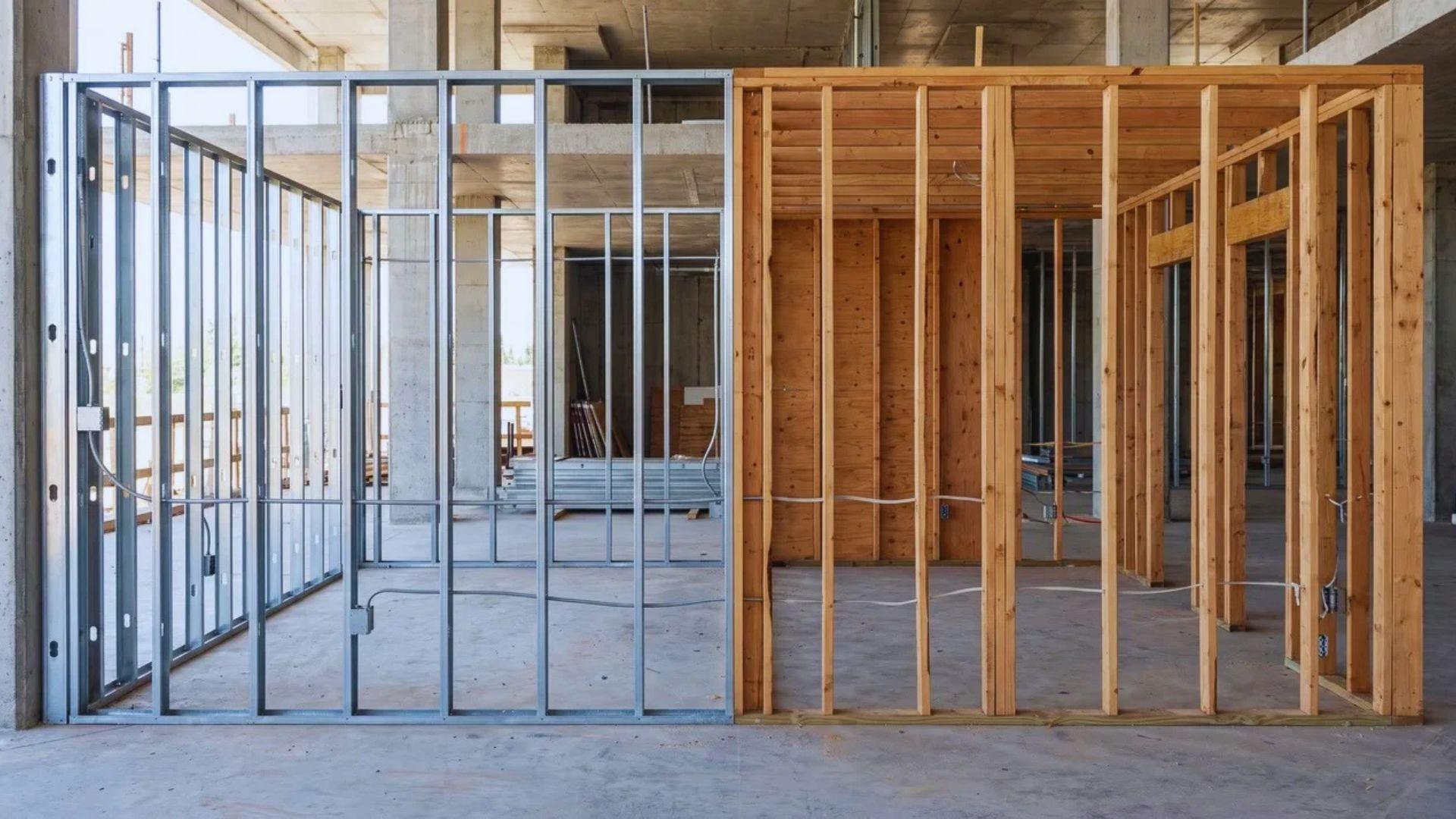
In most commercial buildings, steel studs frame non-load-bearing walls hung from a separate structure, whereas in houses, wood studs usually are the structure.
For a closer look at the walls that do carry weight, see load-bearing wall construction.
And yes, the metal in those studs is steel, not aluminum, even though people often call it aluminum.
| Factors | Steel studs in commercial buildings | Wood studs in houses |
| What carries the building’s weight | A separate steel or concrete frame | The stud walls themselves |
| What the studs do | Form partitions, interior walls, and infill | Carry floors and roof down to the foundation |
| Role in the building | Hang off the structure | Are the structure |
| Common exceptions | Light-gauge steel can be load-bearing in some low- and mid-rise buildings | Wood studs also frame interior partitions in commercial spaces |
That’s why “which is stronger?” is the wrong question. A steel stud and a wood stud are rarely asked to do the same task, so a strength contest between them doesn’t tell you much.
As a general rule, commercial steel studs are infill and residential wood studs are structural.
Since the jobs differ, the two materials don’t compete directly. Still, steel has real advantages, so there has to be a reason houses stayed with wood.
Why Do Homes Still Use Wood Studs?

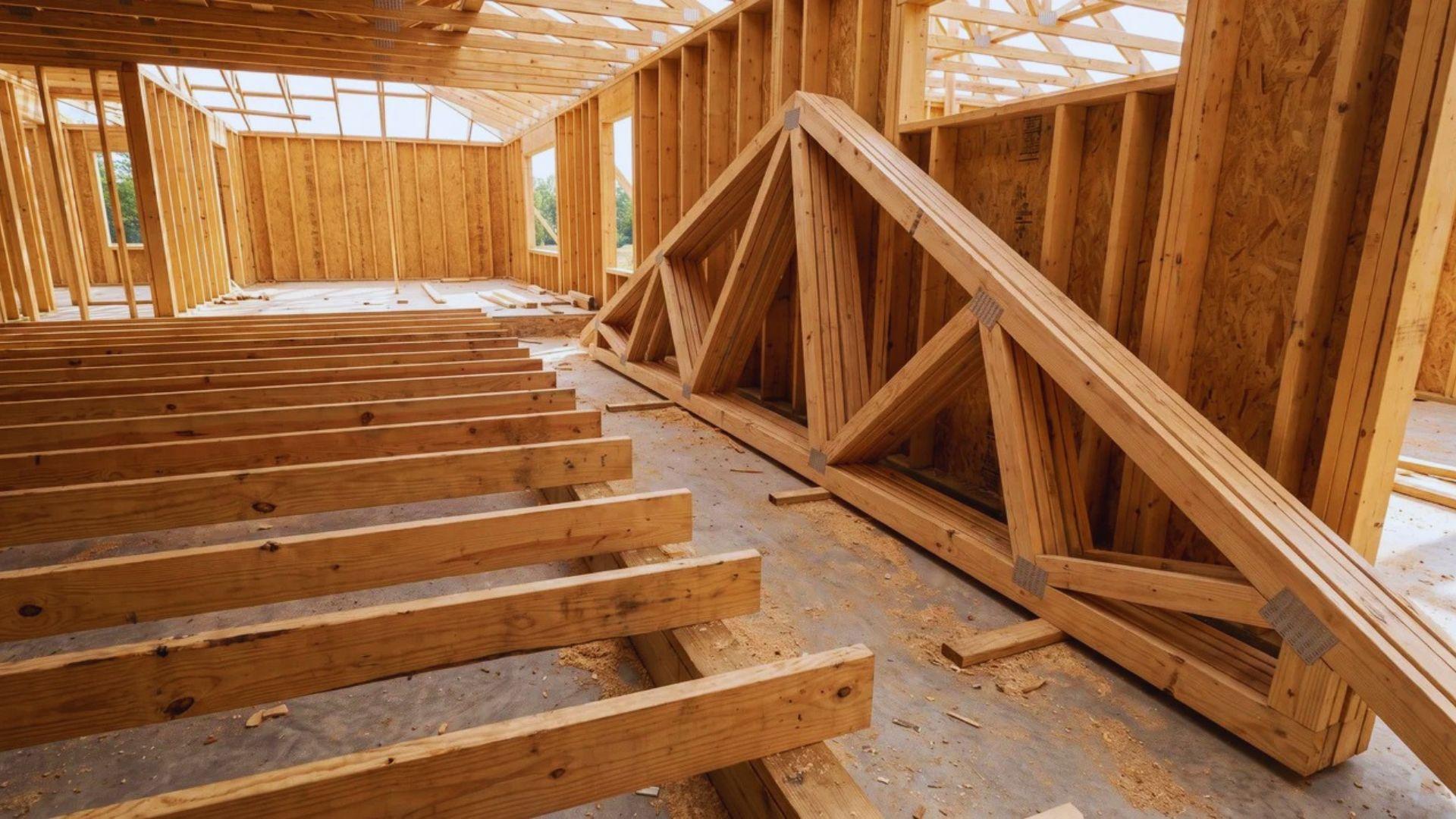
Homes mostly use wood studs because code permits wood for low-rise housing, and wood is usually cheaper, familiar to builders, and easy to work with at that scale.
Low-rise housing is generally allowed to use combustible framing, so code doesn’t push builders toward steel. At that point, it’s mostly practical:
- Easy to get: Wood is widely available.
- Familiar to builders: Most home builders already know how to frame it.
- Simple to work with: It cuts and fastens with basic tools, and insulating a wood wall is straightforward too.
Steel has a drawback here that doesn’t matter in a commercial partition:It conducts heat. In an exterior wall, steel studs create paths for heat to move through, which is called thermal bridging.
Builders have to plan extra insulation to make up for it, and that adds cost and complexity to a job where wood already works fine.
Wood’s weaknesses are real, but houses can live with them. Warping, moisture, and pests are more manageable in short walls, small occupancies, and spaces owners can inspect and repair.
Those same problems get expensive in tall, long, multi-story buildings, which is why the trade-off flips in commercial work.
It can flip in houses too. Steel starts to make more sense for homeowners in:
- Termite-heavy regions
- Humid climates
- Wildfire-prone areas
Put together, wood wins on cost and convenience at house scale, and steel wins once fire rules and building size take over.
The last piece is turning that into a simple rule for picking between them.
When Does Each Material Make Sense?
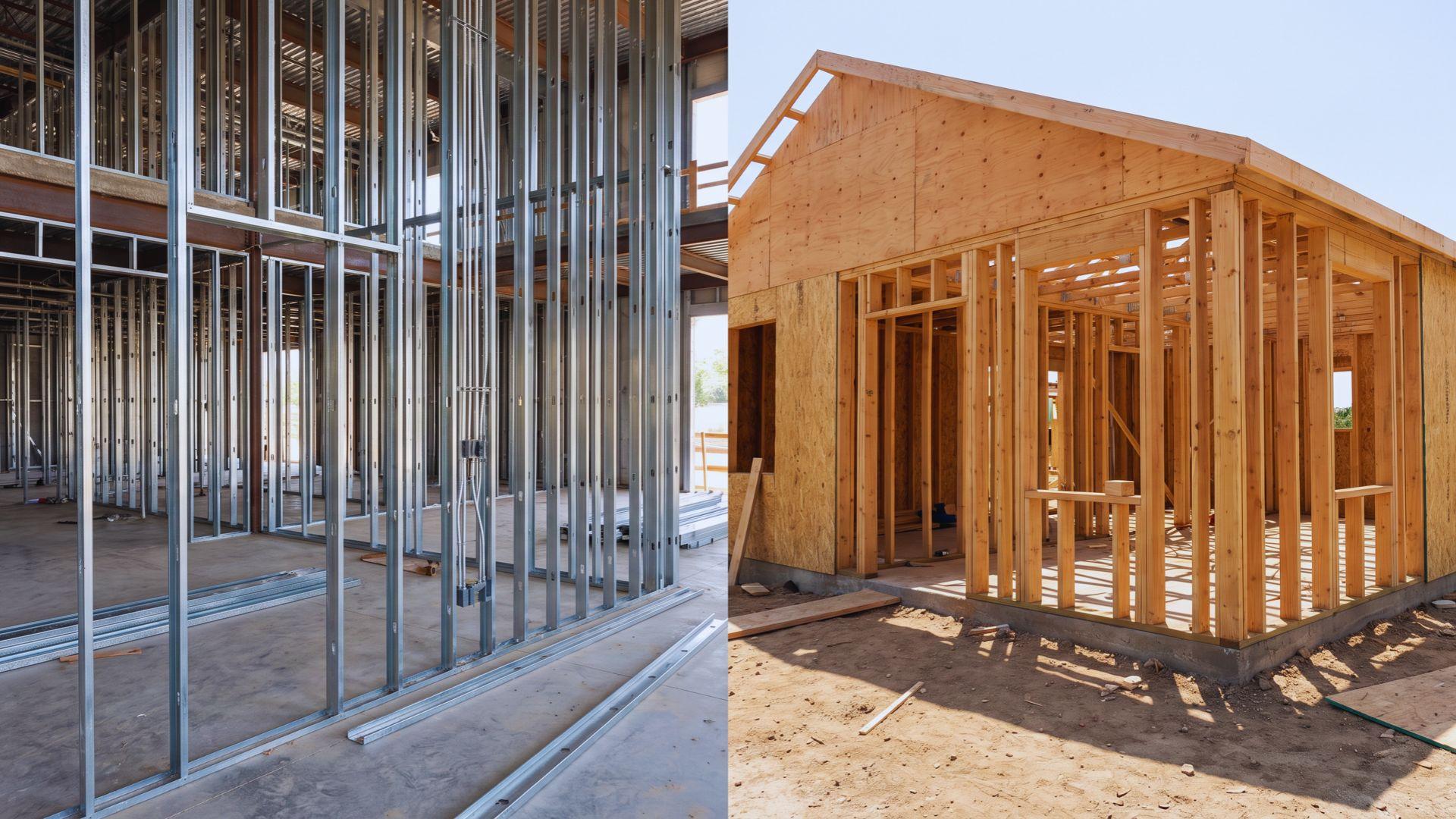
Steel studs suit projects governed by non-combustible code requirements or large multi-story builds, while wood suits small, code-permitted, cost-sensitive projects.
| Aspect | Pick steel studs when… | Pick wood studs when… |
| Code | Code calls for non-combustible construction | Code allows combustible framing |
| Building size | Walls are tall or long, or the building has multiple stories | The project is small |
| Wall needs | Straight, stable partitions are important | Cost matters more than long-run wall stability |
| Crew | Framers are set up for steel | Crews know wood |
| Typical projects | Offices, hospitals, schools, and retail centers | Single-family homes and a lot of small buildings |
Four things shift the answer:
- How tall the building is
- How many people use it
- What the local code says
- The climate
The line isn’t hard, either. Small commercial buildings sometimes use wood, and some housing uses steel, especially in places with termites or wildfire risk.
When in doubt, check the construction type your local code assigns to the building first, because that often settles the question before cost does.
Final Verdict
Once you see why are metal studs used in commercial buildings, the choice stops looking like a strength contest. It’s about code, scale, and what the wall is supposed to do.
Steel wins where fire rules and building size demand it, and wood wins where a house just needs a simple, affordable frame.
The takeaway:Always start with the building’s construction type, not the material’s reputation. Planning a project?
Check your local code and talk to a framing contractor before you pick, and share this guide with anyone weighing the same choice.
Frequently Asked Questions
How do you hang heavy items like TVs or shelves on a metal stud wall?
Wood-style fasteners won’t grip thin steel the same way, so use toggle bolts or self-drilling screws into the stud itself. For heavy loads like TVs or cabinets, plan for blocking or backing plates added during framing.
Are commercial metal studs steel or aluminum?
Commercial metal studs are almost always light-gauge galvanized steel, with a zinc coating that protects against corrosion. Aluminum shows up in storefront and curtain wall systems, which is why the two often get mixed up.
How do you run electrical wiring through metal studs?
Cables run through pre-punched holes in the studs, and electricians fit grommets so sharp edges don’t cut the insulation. Local electrical code decides whether the framing itself needs grounding.
Do metal stud walls block sound better than wood?
Often, yes, when the cavity is filled with insulation, since thin steel flexes more and passes less vibration. The full wall assembly matters more than the stud material alone.