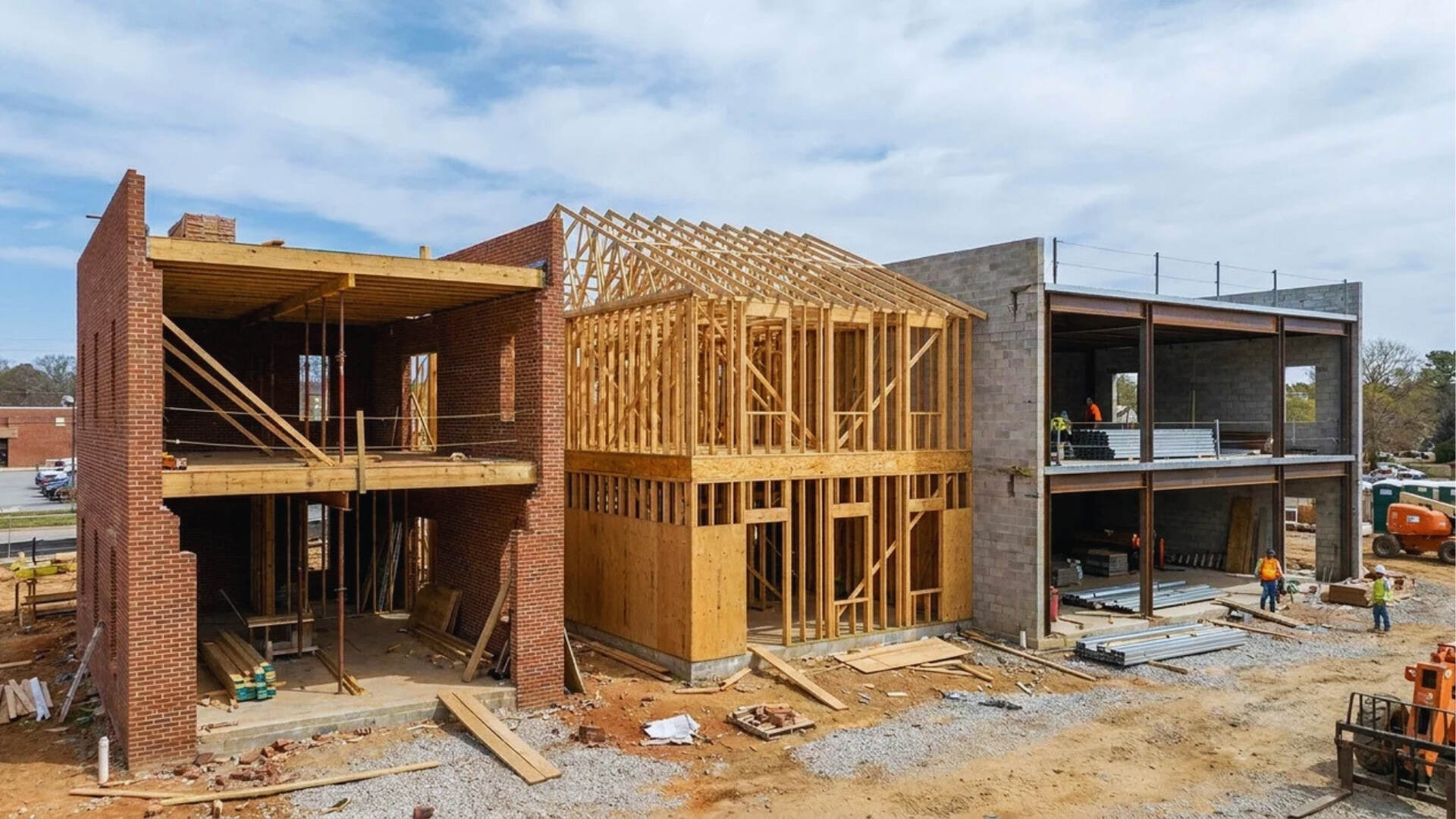
If you have come across terms like Joisted Masonry, Wood Frame, or Masonry Non-Combustible construction, you have probably wondered what actually separates them.
These terms are part of a building classification system used by insurers and inspectors to judge how a structure holds up in a fire and how it should be rated.
Joisted masonry construction is one such class, where the outer walls are built from masonry like brick or block, while the floors and roof rest on wood or light steel joists.
That mix of materials puts it in its own category, different from an all-wood building and different from one built entirely from non-combustible materials.
Today, I will break down exactly how Joisted Masonry compares to these other construction types.
Understanding the Key Differences Between Construction Types
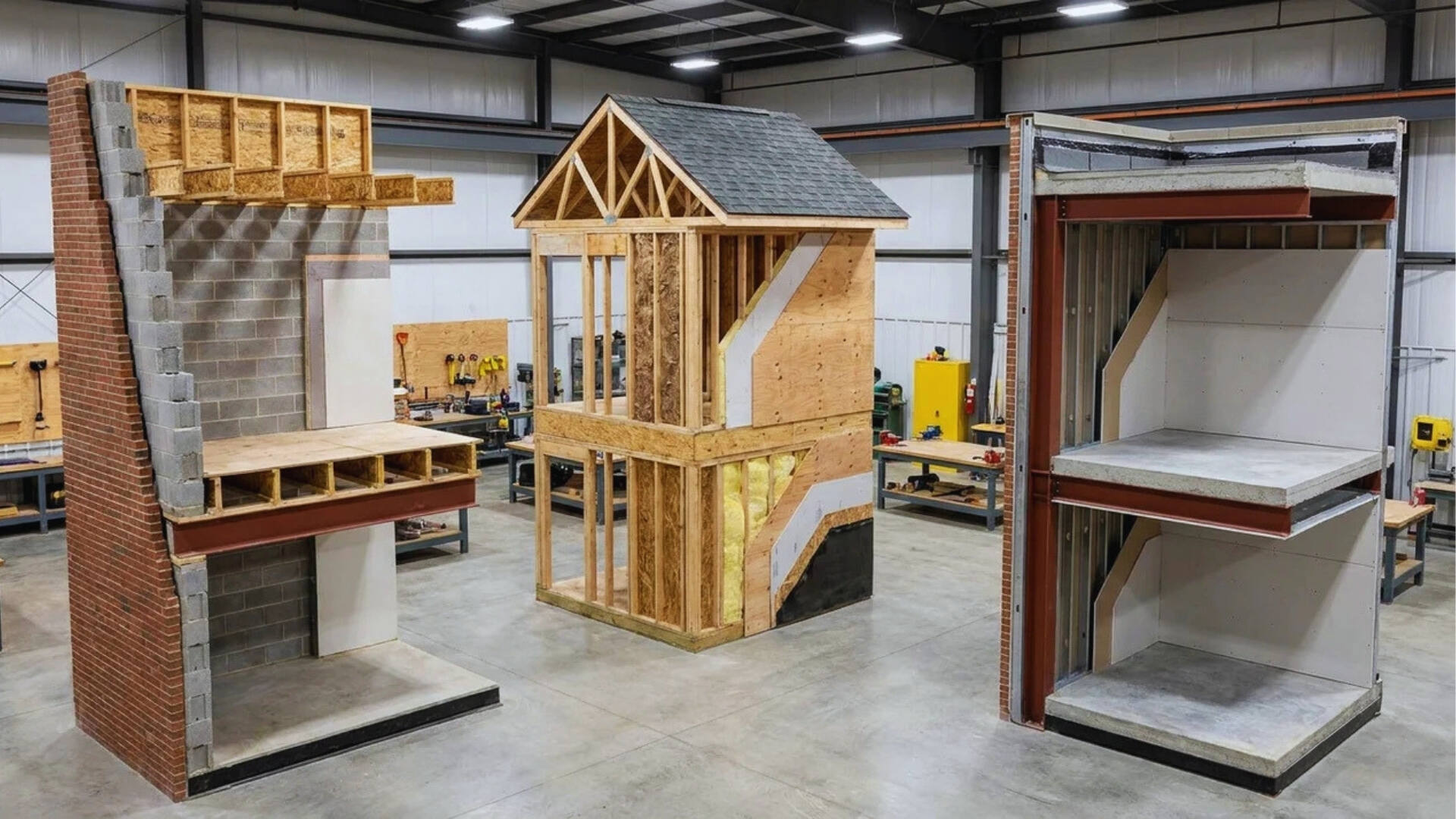
Every building falls into a construction class based on the materials used in its walls, floors, and roof, and this classification plays a big role in how a structure is rated for fire safety and insurance.
Joisted Masonry sits between two other common classes, Wood Frame and Non-Combustible construction, and each of these comes with its own strengths and risks.
Knowing what separates them can help you understand why one building may cost more to insure than another that looks similar from the outside, or why one holds up better in a fire than the other.
To get a clear picture, we will start by looking at how Joisted Masonry compares to Wood Frame construction, and then move on to see how it stacks up against Non-Combustible construction.
Joisted Masonry vs. Wood Frame Construction
Before diving into where these two construction types split, it helps to see the full picture in one place. The table below covers the factors that actually move the needle: fire behavior, structural makeup, ISO class, and what insurers do with that information.
| Factor | Joisted Masonry | Wood Frame |
| Exterior Walls | Brick, stone, or concrete masonry | Wood panels or wood-based siding |
| Interior Framing | Combustible wood joists | Combustible wood joists |
| Fire Behavior | Exterior slows spread; interior burns | Entire structure burns, walls and all |
| Collapse Risk in Fire | Moderate | High |
| ISO Construction Class | Class 2 | Class 1 |
| Insurance Premium | Lower | Higher |
| Common Use Cases | Older commercial, brick apartments | Homes, light commercial |
The sharpest takeaway here isn't the exterior wall difference. It's the interior. Both types use combustible wood framing inside. That shared trait is exactly why joisted masonry sits only one ISO class above wood frame.
The masonry shell buys time on the perimeter. It does not change what happens once fire reaches the floor joists.
What the Wood Frame vs. Joisted Masonry Difference Costs You
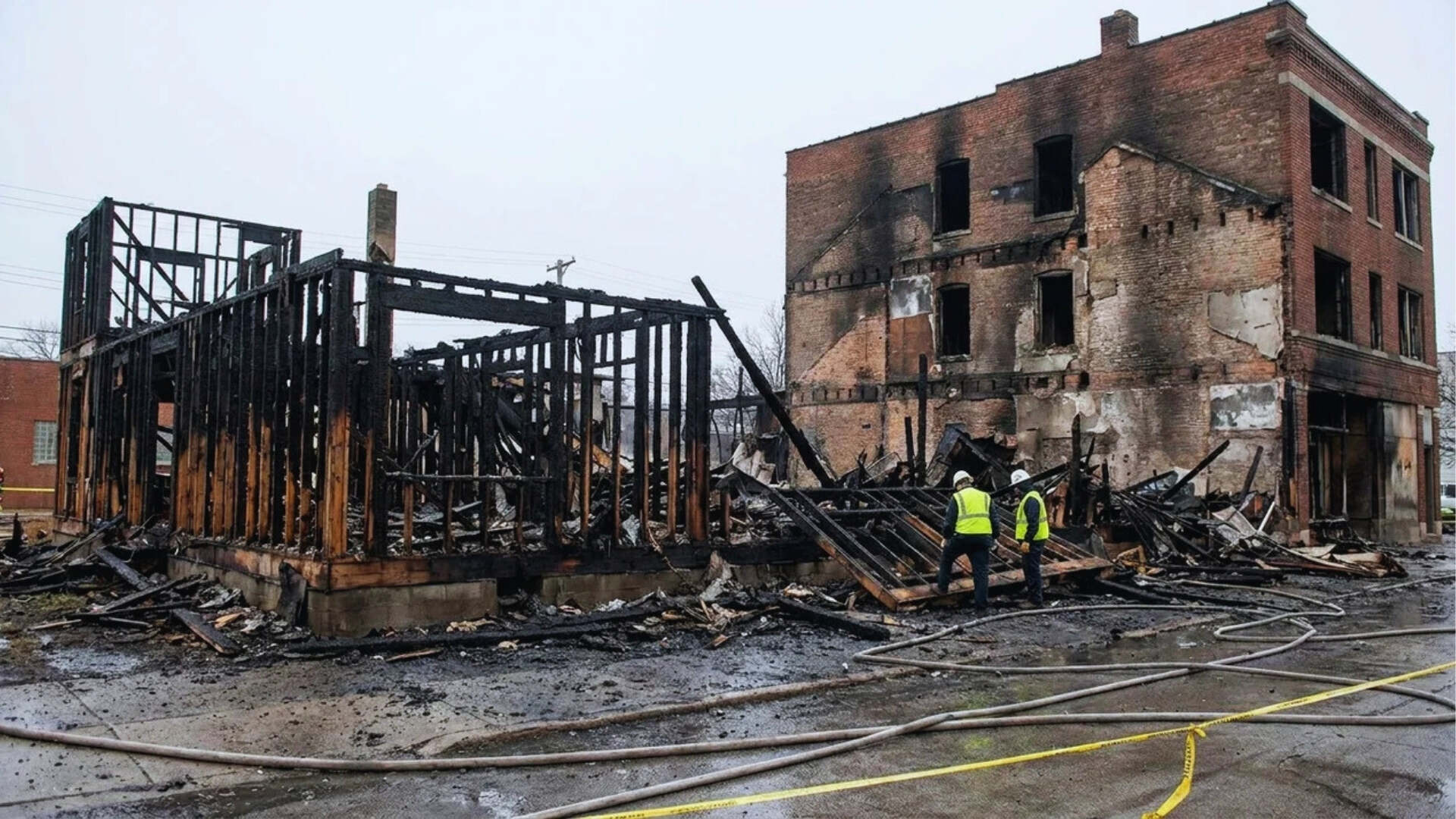
The one ISO class gap between wood frame and joisted masonry typically moves your commercial property premium by 5 to 15 percent. Smaller than most owners expect.
Both types use combustible wood framing inside. Insurers price the masonry exterior as a perimeter advantage, not a full fire solution. That keeps the premium gap narrower than the class difference suggests.
The bigger split shows up after a fire. Wood frame buildings reach total loss faster. You rebuild everything from the ground up, meaning higher replacement cost coverage and more claim exposure.
Joisted masonry walls frequently survive the same fire that guts the interior. That turns a full rebuild into a partial one, and repair costs drop significantly.
Lenders factor this in too. Joisted masonry typically holds a stronger appraised value than comparable wood frame. Better loan terms and a higher resale floor follow from that.
Commercial construction costs for a single-story office building average between $240 and $440 per square foot in the United States, with mid-rise structures running $330 to $870 per square foot. When a wood frame building reaches total loss, that full replacement cost lands squarely on your claim, making the cost difference between construction types far more consequential than the premium gap alone suggests.
Joisted Masonry vs. Masonry Non-Combustible Construction
The gap between these two types is easy to underestimate. From the street they can look identical both have masonry exteriors. What separates them is entirely inside the building.
| Factor | Joisted Masonry | Masonry Non-Combustible |
| Exterior Walls | Brick, stone, or concrete masonry | Brick, stone, or concrete masonry |
| Interior Framing | Combustible wood joists | Steel beams or concrete slabs |
| Fire Behavior | Exterior holds; interior burns | Exterior and interior both resist fire |
| Collapse Risk in Fire | Moderate to high | Low |
| ISO Construction Class | Class 2 | Class 4 |
| Insurance Premium | Moderate | Lower than joisted masonry |
| Common Use Cases | Older commercial, brick apartments | Hospitals, schools, modern office buildings |
Two ISO classes separate these types, not one. That wider gap reflects a fundamentally different interior. The masonry shell is identical. Everything behind it is not.
What the Non-Combustible Upgrade Actually Costs You
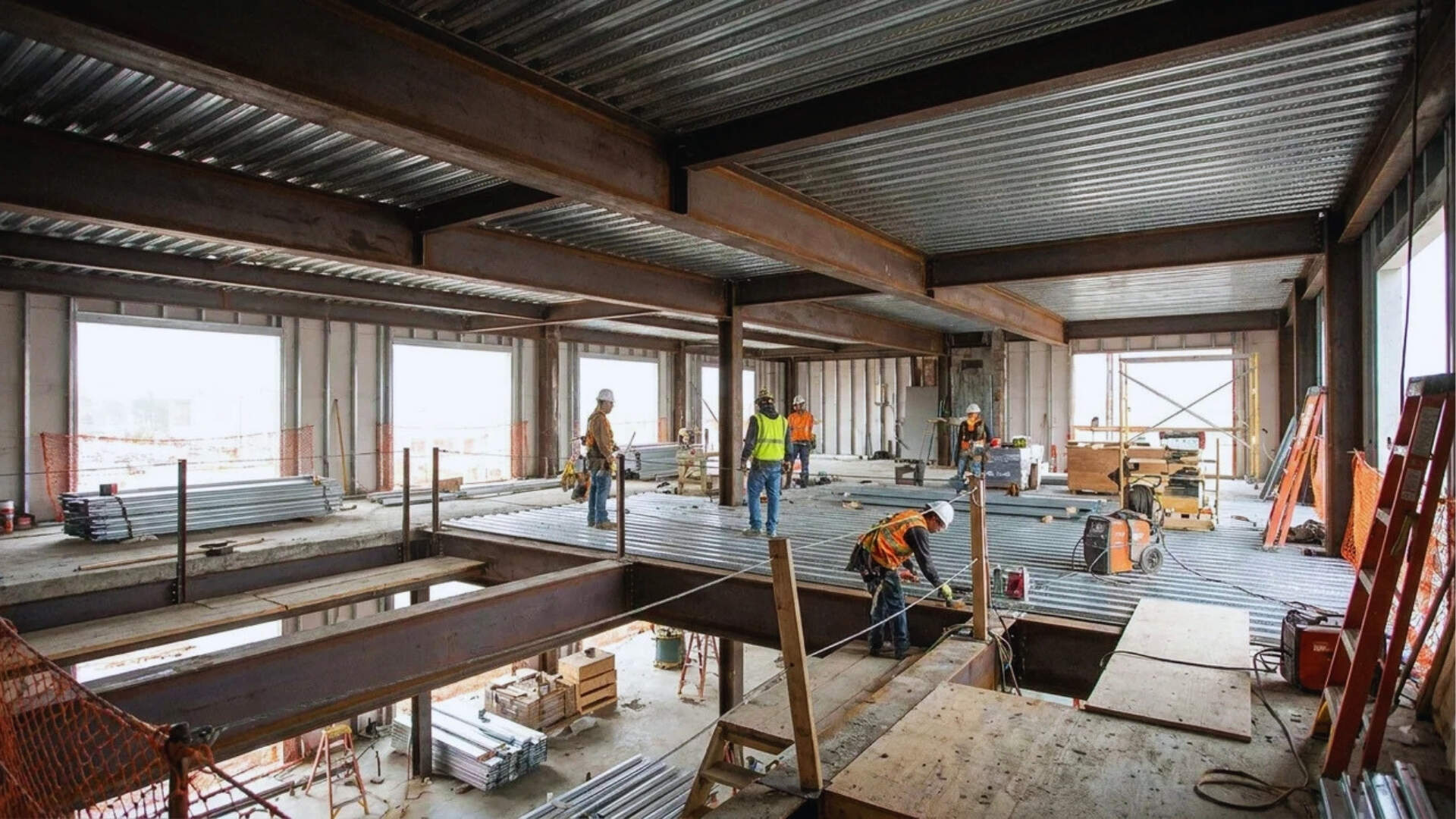
The jump from ISO Class 2 to Class 3 or 4 typically reduces commercial property premiums by 10 to 25 percent annually. On a large building, that saves compounds fast.
Building non-combustible costs 20 to 35 percent more upfront than wood interior framing. That gap is real but spread across decades of lower premiums and maintenance bills.
Maintenance pulls non-combustible further ahead over time. Wood joists need regular checks for rot, moisture, and pests. Steel and concrete do not. Most owners see maintenance costs run 30 to 40 percent lower over 20 years.
Retrofitting an existing joisted masonry building runs 40 to 70 percent of current building value. Full redevelopment usually makes more financial sense.
Partial upgrades, like replacing wood joists on one floor only, do not move your ISO class. Insurers assess the full structural system. You pay for the upgrade without seeing a premium benefit until the entire building qualifies.
For context, structural steel framing typically costs between $150 and $250 per square foot for commercial buildings, compared to wood framing which sits at the lower end of that range.
On a 10,000 square foot building, that upfront difference can run well into six figures before factoring in the long-term premium and maintenance savings.
How to Identify Which Construction Type Your Building Is
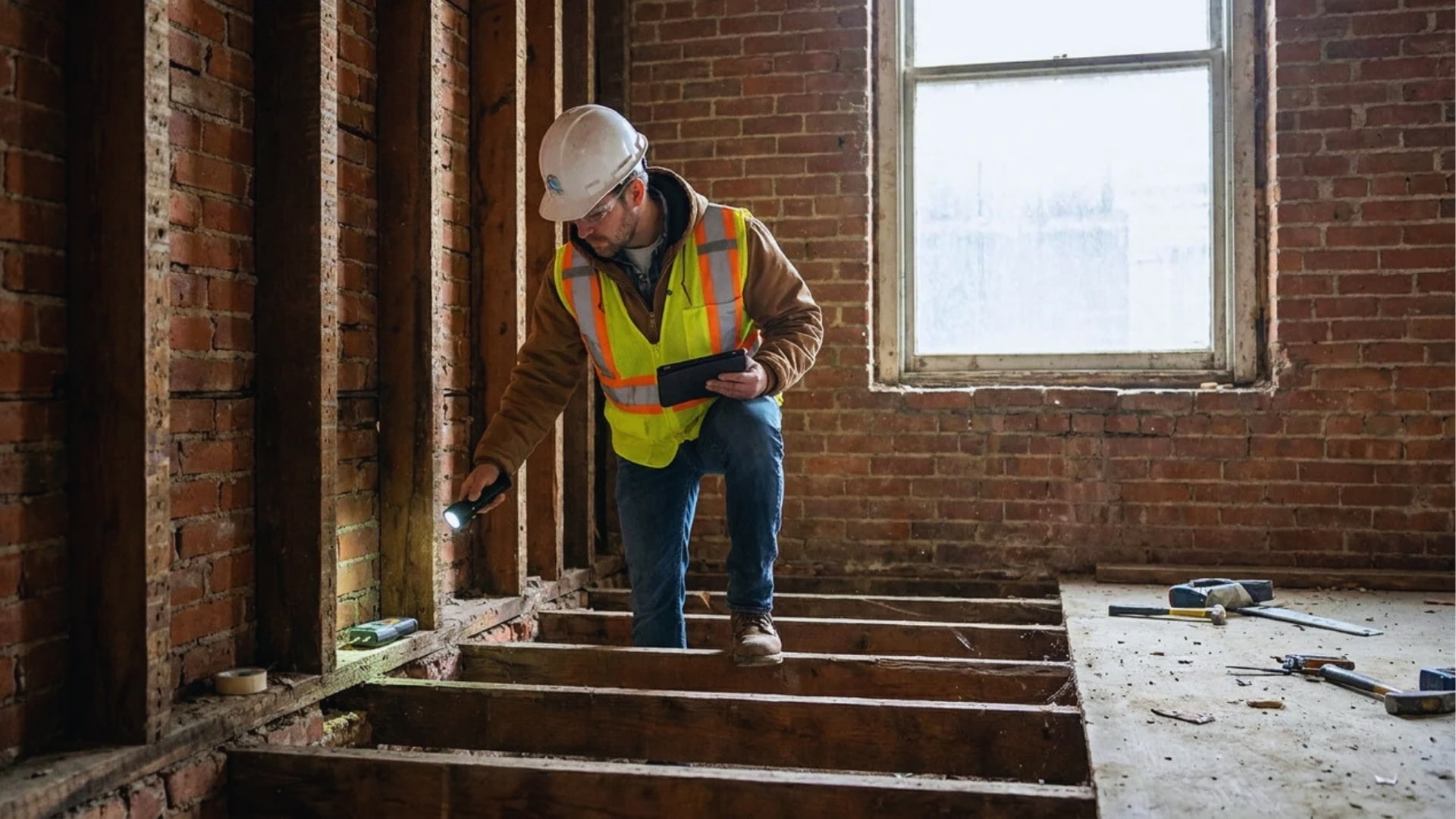
Most property owners do not know their building's construction type until an insurer or lender asks for it. By that point, getting it wrong has real consequences.
These three checkpoints give you a reliable starting point before you involve anyone else.
What to Look for on the Exterior
Start with the outer walls. Run your hand along the surface if you can get close enough. Brick, stone, and concrete blocks have a distinctly hard, cold, and textured feel. Wood siding or vinyl panels flex slightly under pressure and feel lighter.
Look at the wall thickness at window and door openings. Masonry walls are noticeably deep, often 8 to 12 inches thick. A wood frame wall typically measures 4 to 6 inches at the same point.
Check the corners of the building. Brick and stone buildings show mortar joints running continuously around the corner. Wood frame buildings show a seam or trim board instead.
What to Check on the Interior
Go to the basement or the lowest floor level if you have access. Look at what is carrying the floor above you.
Wood beams and joists mean you are in either a wood frame or joisted masonry building. Steel beams or concrete slabs point toward non-combustible or masonry non-combustible construction.
Check an unfinished ceiling or attic space. Exposed wood framing confirms combustible interior construction regardless of what the exterior walls are made of. Steel decking or concrete overhead confirms the opposite.
Look at the age of the building too. Most joisted masonry buildings were constructed before 1960. If the exterior is brick and the build date is pre-1960, joisted masonry is the most likely classification.
When to Call a Professional
If the exterior and interior checks give you conflicting signals, stop there. Mixed materials, renovated sections, and buildings that have changed use over the decades can complicate the classification significantly.
Call a licensed building inspector or a commercial property appraiser. They can confirm the construction type against original permits and structural drawings.
Your insurer's loss control team can also conduct a site visit. This is worth requesting before you renew a policy on any building you are not certain about. A misclassified building can leave you underinsured at exactly the wrong moment.
Final Verdict
Folks treat construction classification as a paperwork problem. It is not. It is a financial and safety decision that follows your building for as long as you own it.
Joisted masonry, wood frame, and non-combustible construction each sit at a different point on that risk curve. Knowing where your building lands changes what you pay, what you recover, and what you are left with after something goes wrong.
Get your building professionally classified if you have not already. Then talk to your insurer about what that classification actually means for your coverage. Do not wait for a claim to find out.
Frequently Asked Questions
Is joisted masonry better than wood frame?
For fire resistance and insurance premiums, joisted masonry has the edge. For renovation flexibility and seismic performance, wood frames hold up better.
Can a building be reclassified?
Yes, but only through a verified structural change, not cosmetic upgrades. Any reclassification must be confirmed by your insurer through a formal inspection.
What class is a brick building with steel joists?
That is masonry non-combustible, ISO Class 4. The steel interior framing is what separates it from joisted masonry's Class 2.
Does non-combustible always mean fireproof?
No. Non-combustible means structural materials will not ignite and feed a fire. Steel still weakens under sustained heat and contents inside can still burn.