Knowing how to cut aluminium composite panels cladding: a utility knife for thin sheets, a carbide-tipped saw for long straight runs, and a CNC router for shapes and grooves.
The trickier jobs are folding a clean corner and getting panel widths right.
Corners depend on what’s inside the panel, since it’s two thin metal skins around a plastic or mineral core, not a solid sheet.
Widths depend on the joints between panels, not the opening alone.
First, which tool fits which cut.
How to Cut Aluminium Composite Panels Cladding
ACM cladding is cut by scoring and snapping thin panels, sawing straight cuts with a carbide triple-chip blade, and routing shapes or grooves.
The type of cut decides the tool, so the first job is sorting your cuts into short lines, long runs, and shapes.
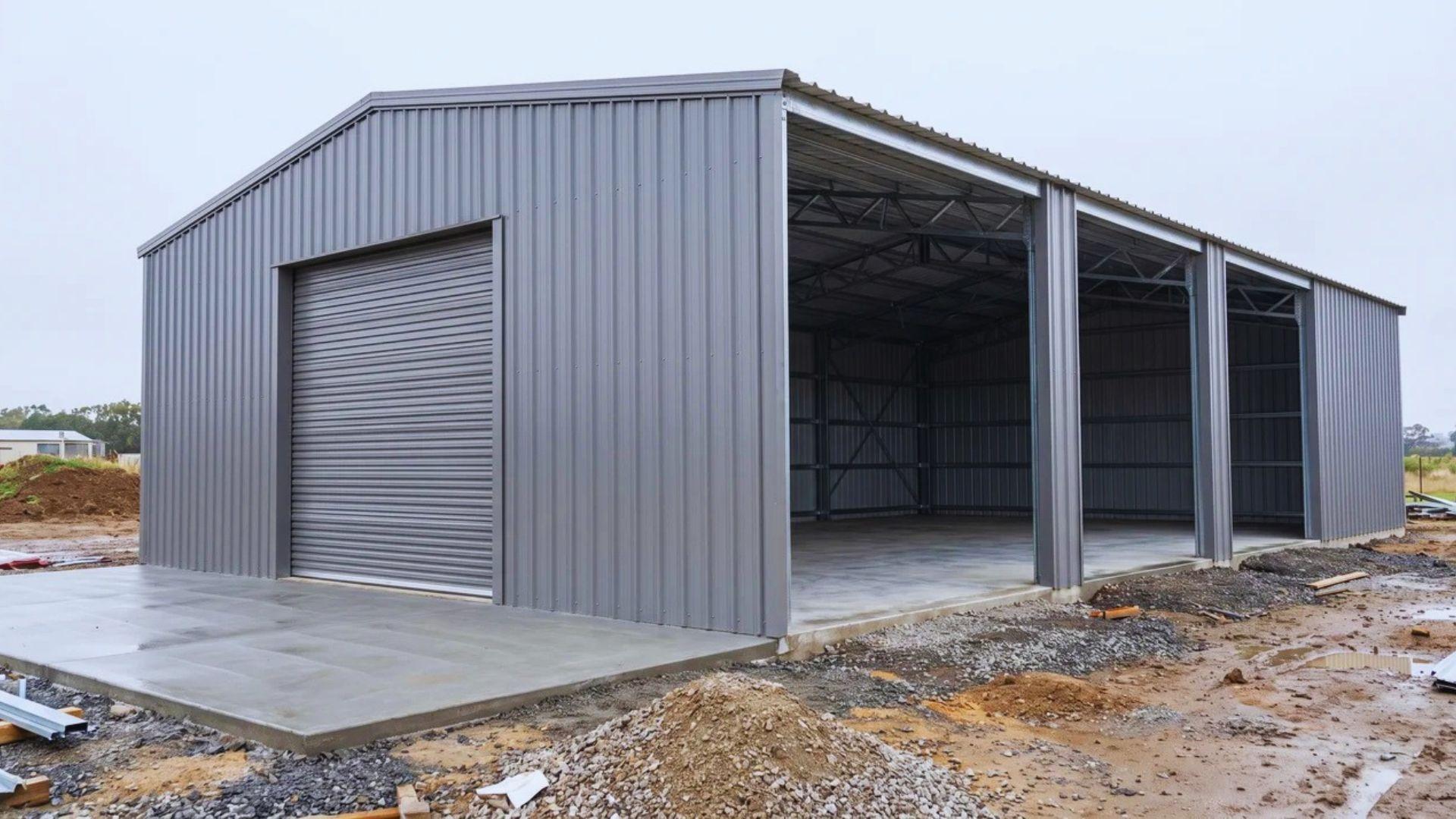
Since these panels end up as the outer wall layer, it also helps to see how exterior cladding works before you start cutting.
Score and snap works for short cuts in thin panels:
- Clamp a metal straightedge along the marked line.
- Run a utility knife along it over repeated passes until the blade cuts through the aluminum skin and reaches the core.
- Line the score up with a table edge and press down to snap the panel.
- If it resists, flip the panel and score the back skin.
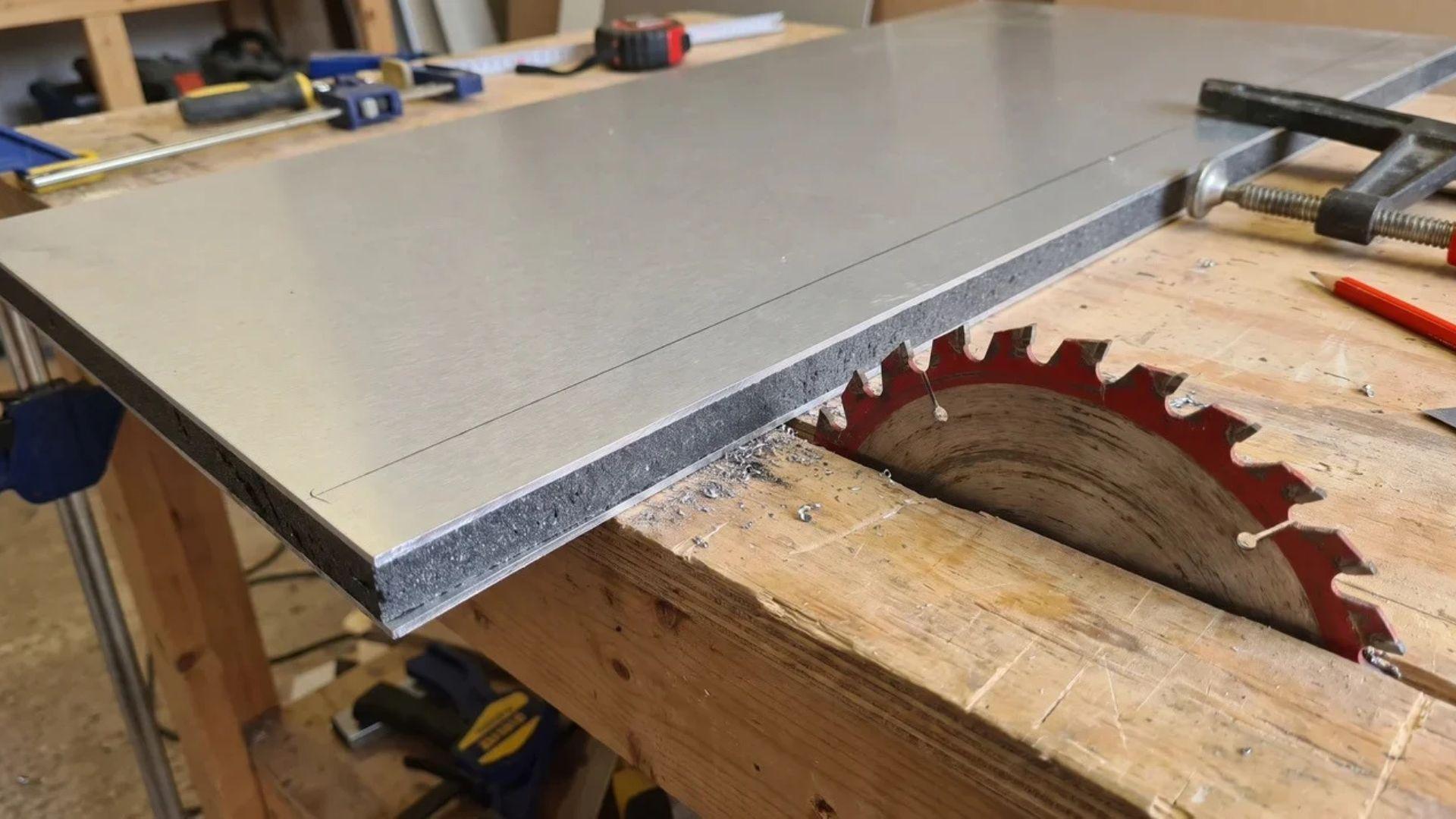
Long straight cuts on cladding sheets call for a track saw or a circular saw with a carbide-tipped blade that has trapezoid and flat teeth, the pattern sold as triple-chip grind.
Tape the cut line to protect the finish, set the blade depth to clear the panel thickness by a small margin, and guide the saw along a straightedge or track without forcing it.
Panel makers also cap blade speed and feed for their products, so check Alucobond’s sawing specifications or your own manufacturer’s equivalent before the first cut.
Score and snap gets unreliable on thicker panels and long runs, which is why cladding jobs usually move to a saw or router.
Openings, fold grooves, and width trimming each want a different tool, and the rest of this guide takes them one at a time.
That blade choice makes more sense once you know what’s inside the panel, so the build comes next.
What Is ACM Material and Why Does Its Core Change the Cut?

ACM, short for aluminum composite material and also sold as ACP, is a panel made of two thin coated aluminum skins bonded to a polyethylene or mineral-filled core.
That sandwich is why it is light and flat enough for cladding, and it explains how it cuts.
A blade or bit passes through thin metal, then plastic or mineral fill, then metal again, so cutting an ACP sheet means managing both layers at once.
Some of these sheets go indoors too, and wall cladding in construction covers feature walls as well as facades.
Tooth shape is where cuts go wrong first. Cutting guides warn that an aggressive positive hook grabs the thin skin and can lift it off the core.
Alucobond’s blade specification points the other way:Carbide teeth with a trapezoid and flat profile, a modest 10° positive rake, and chamfered flat teeth for burr-free edges.
The warning is about aggressive hook angles, not positive rake in general.
Heat is the second problem. A dull blade or a rushed cut builds friction that can soften a polyethylene core, and the softened plastic can gum the blade and smear along the edge.
The core type changes the picture again. Mineral-filled cores can wear tool edges faster and throw more dust than polyethylene, so plan for blade wear and dust control.
Manufacturers list core and skin details in a product cut sheet, so read it before you buy blades. Heat and tooth shape matter on a router too, so the CNC router is up next.
How to Cut ACM Cladding With a CNC Router

A CNC router cuts ACM with a sharp carbide bit, a controlled feed rate, and a sheet held firmly to the bed, which leaves a clean edge with little finishing.
Fabrication shops use it for shapes, openings, and groove lines. Shops often rough-cut 4×8 sheets down first so each part fits the router bed.
Heat is the main risk once the bit starts: a slow feed or dull bit can melt a polyethylene core and weld it to the cutter.
Setting Up Bits, Feed Rate, and Hold-Down
Start with a sharp carbide bit and swap it as soon as edges turn fuzzy or core material starts smearing.
Set the feed so chips leave the cut instead of melting inside it, since too slow rubs and too fast tears the skin.
Exact speeds and depths vary with panel thickness and core, so take those numbers from the panel maker’s fabrication guide rather than a general rule.
Hold the sheet flat with a vacuum table or clamps on the waste side, and leave the protective film on until the cut is done.
Cutting Shapes, Openings, and Nested Panels
Nest parts tightly on the sheet to cut down on waste, then cut in this order:
- Cut inside openings first, so the sheet stays rigid for as long as possible.
- Cut the outside profiles next, using small tabs or vacuum hold-down, so finished parts don’t shift mid-cut, which is when bits chip edges.
- Run a file or fine sandpaper along each edge to knock off burrs before handling the panel.
Routers cut grooves as well as outlines, and one of those grooves turns a flat sheet into a folded corner.
How to Miter ACM Panels With V-Groove Cuts

A V-groove removes the back skin and most of the core along a fold line, so the panel bends to a sharp corner by hand.
You can cut it with a V-bit on a CNC router or with a vertical cutter fitted with a V-groove tool, such as the Keencut SteelTrak.
Mitering ACM follows Alucobond’s routing and folding method: The groove is routed into the reverse side, leaving the front skin and a thin layer of core intact, so the panel folds by hand without a brake press.
A CNC router suits custom shapes, and Alucobond also lists vertical panel saws with grooving accessories, portable sheet milling machines, and hand routers.
For straight grooves in volume, the SteelTrak cuts and V-grooves ACM without producing dust, using tools sold in sizes matched to panel thickness.
It is marketed to sign and print shops, so check the model’s thickness limits against your cladding panels first.
Fold quality depends on the material left behind more than on the groove itself, because the groove’s shape and depth set the outer radius of the fold.
Cut into the front skin and the fold line is compromised, and leave too much core, and the panel resists the bend.
Test on an offcut from the same panel and fold it by hand before cutting production parts.
Grooves and outlines only work if each panel starts at the right size, and on a facade that number does not come straight from the tape measure.
How to Cut ACM Panels to Exact Width

Cutting ACM to exact width means setting a guide rail to the calculated panel width and cutting with a carbide triple-chip blade.
On cladding, the joint gaps between panels decide that width, not the opening alone.
Trimming Width With a Track Saw or Circular Saw
A track saw on its guide rail gives the steadiest straight cut, though a circular saw works when you clamp a straightedge along the line.
Either way, the steps run in the same order:
- Set the rail or straightedge at the calculated width. With a circular saw, offset the straightedge by the distance from the blade to the edge of the saw’s base plate.
- Tape the cut line and set the blade to clear the panel by a small margin.
- Attach a vacuum to the saw’s dust port to pull chips off the finish and out of the cut.
- Let the saw’s speed do the work instead of pushing, then peel the tape and deburr the edge with a fine file.
Sizing Cuts Around Joints and Panel Direction
On a facade, the panel width comes from the joint layout rather than the opening, so work backward:
- Measure the opening.
- Subtract the joint gaps the panel system calls for, including room for thermal movement.
- Divide what remains into panels that match the system’s module.
- Cut to those numbers.
Manufacturers publish expansion data and minimum joint widths, so take both from your panel system rather than from a rule of thumb.
The tape measure gives you the opening, and the joint layout gives you the width.
Direction matters too. Painted panels are coil coated, and metallic and mica finishes show it most, because their flakes settle in a preferred direction, and a panel turned the wrong way can look like a different shade.
Arconic’s color consistency bulletin gives the general rule: Install panels with the directional arrows pointing the same way. When you nest or trim sheets, keep each panel’s arrow direction consistent.
Whatever the cut, the pattern repeats: Match the tool to the panel, then test before you commit.
The circular saw offset in step 1 is basic saw geometry rather than something from a manufacturer’s guide. Test it on an offcut before cutting production panels.
Match the Tool, Test the Cut
Knowing how to cut aluminium composite panels cladding mostly means knowing how the panel reacts to each tool.
Skins lift under the wrong teeth, cores soften under heat, and a groove folds cleanly only when the right amount of material stays behind.
That makes every new batch of panels worth a short test, one offcut at a time.
Before you cut your next full sheet, run an offcut through the same saw, bit, or groove, fold or trim it, and inspect the edge.
Adjust until that offcut looks right, then start on the real panels.
Frequently Asked Questions
Can I Buy Aluminium Composite Panels Cut to Size?
Yes. ACM suppliers and cladding fabricators commonly cut panels to size and can also route, fold, and drill them to shop drawings. Confirm lead times and edge condition with the supplier before ordering.
What Thickness of Aluminum Composite Panel Is Used for Cladding?
Alucobond PLUS comes in 3 mm, 4 mm, and 6 mm, and Alucobond says 4 mm is the most commonly used for facades. Your project specification sets the final choice.
Can You Cut Aluminum Composite Panels With a Dremel?
A rotary tool can notch a corner or clean up a small edge, but it wanders on long cuts. Use a straightedge-guided tool for anything longer.
What Safety Gear Do You Need to Cut Aluminum Composite Panels?
Wear safety glasses, cut-resistant gloves for the sharp edges, and hearing protection around saws and routers. Add a dust mask or respirator, and check the core’s safety data sheet.