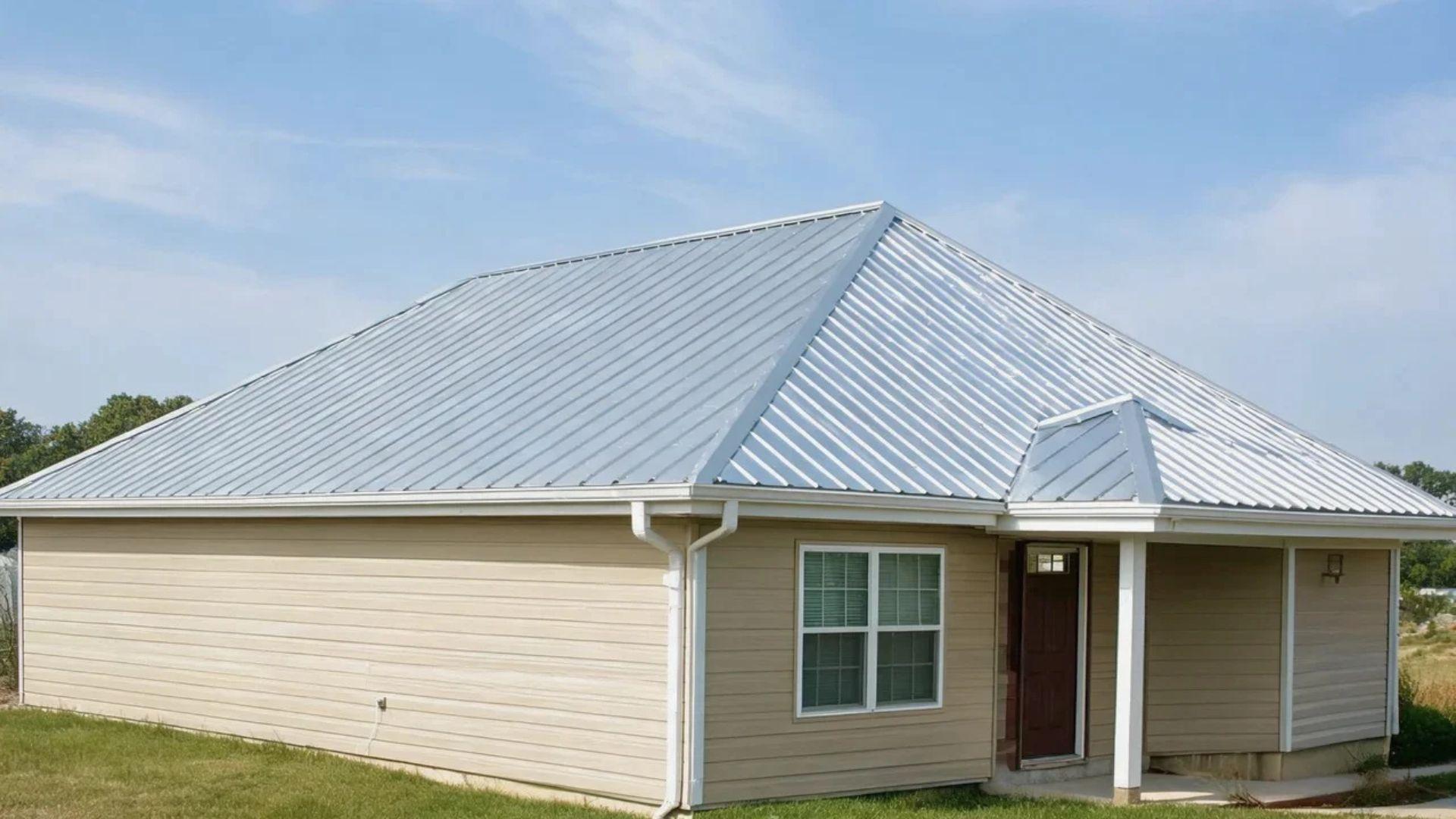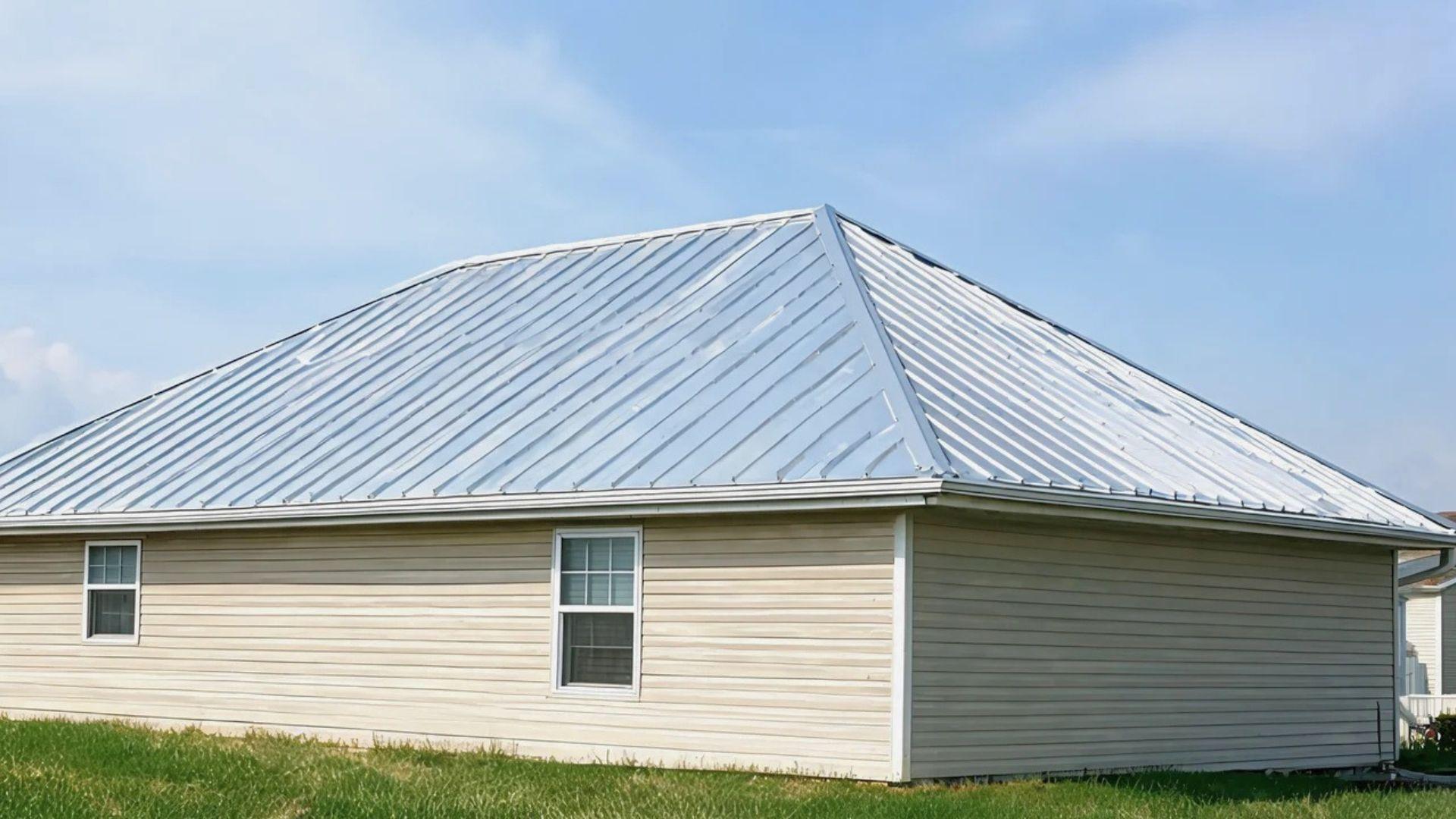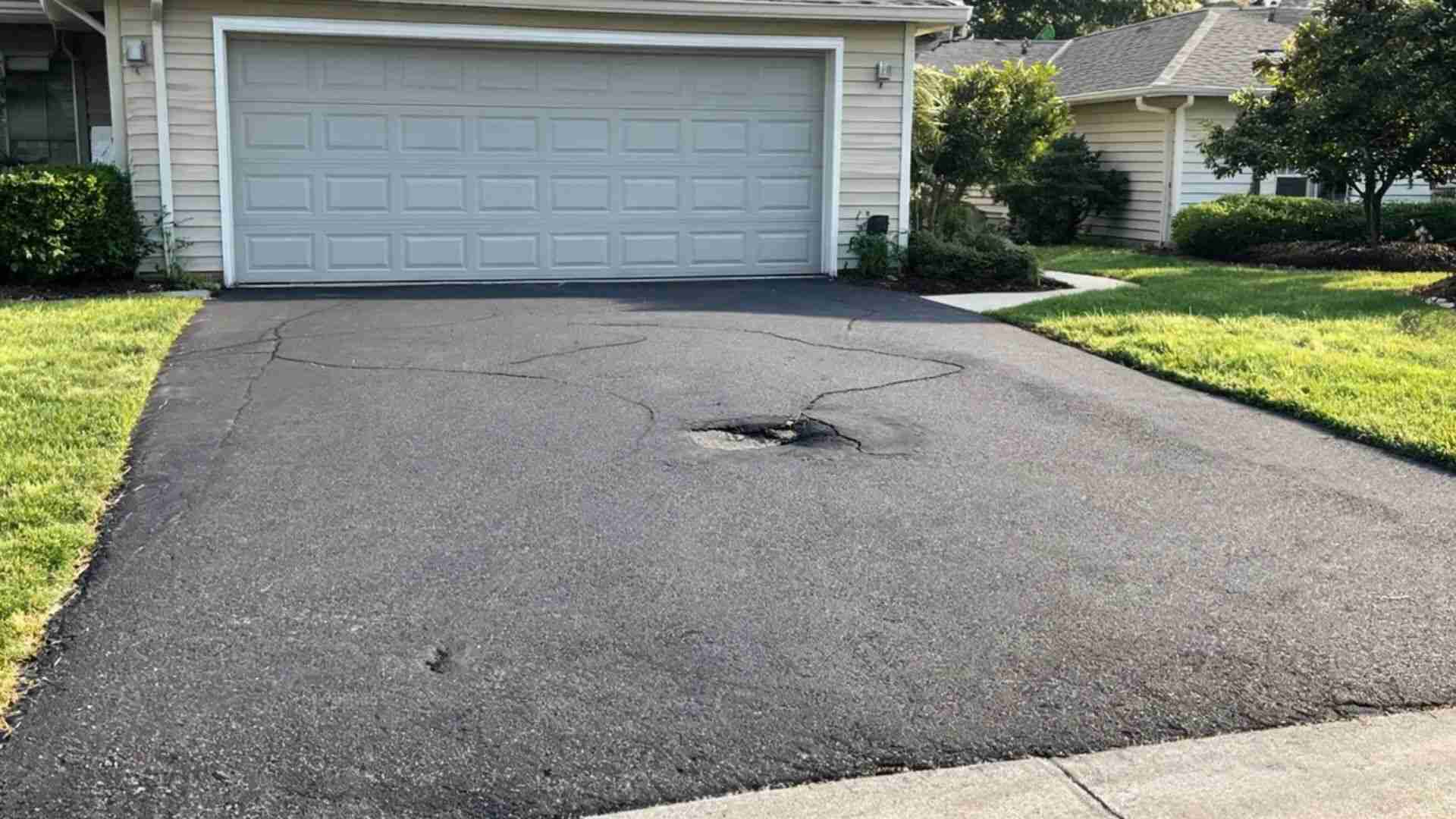
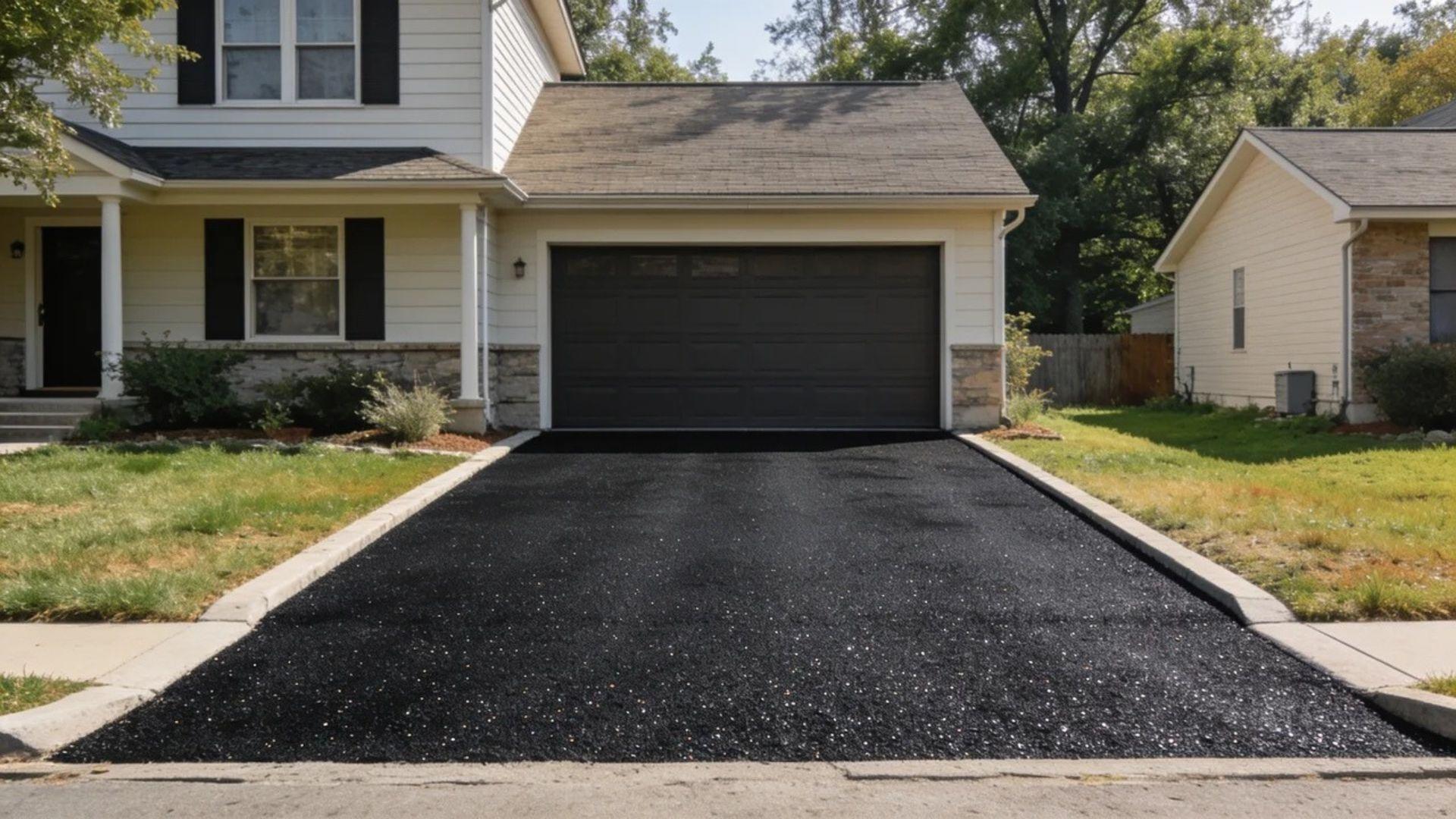
Two driveways get paved the same summer, and by year twelve one is full of potholes while the other still looks fresh.
So how long does an asphalt driveway last? Anywhere from 15 to 30 years, and the gap between those numbers comes down to a few things most estimates never mention, one of them out of sight.
Below, you’ll find the lifespan range first, then what pushes a driveway toward either end, and how to tell a repair from a replacement.
How Long Does an Asphalt Driveway Last?
An asphalt driveway typically lasts 15 to 30 years, depending on installation quality, climate, traffic, and maintenance.
Contractor sources commonly cite 15 to 20 years for standard residential use, while driveways with solid installation and steady upkeep reach 20 to 30 years.
The spread reflects local conditions more than any real disagreement between sources.
Ajax Paving Industries of Florida lists 12 to 20 years for residential driveways, while J&W Asphalt in Minnesota puts a properly installed driveway at 20 to 30 years.
Sun and heat speed up the aging of the binder that holds the pavement together, which may help explain why warmer-climate figures run lower.
Parking lots on commercial construction projects last about 10 to 15 years because of constant heavy traffic, so a residential driveway shouldn’t be judged by those numbers.
If you’re still choosing a material before paving, this comparison of asphalt versus concrete driveways covers cost, climate, and upkeep side by side.
Those years are averages, and what moves one driveway up or down the scale is mostly buried under the surface, starting with the base.
What Factors Affect How Long an Asphalt Driveway Lasts?
Four things decide how long an asphalt driveway lasts: Installation and base quality, climate, traffic, and maintenance.
Base quality sets the ceiling, because a surface laid over a weak or poorly drained base fails early no matter how well it is cared for.
An Asphalt Institute technical brief puts design, materials, and construction first, noting that a well-designed driveway can give trouble-free service for up to 20 years.
The asphalt itself is only the wear surface, which is why two driveways that look identical on day one can sit years apart by year fifteen.
Installation Quality and Base Preparation
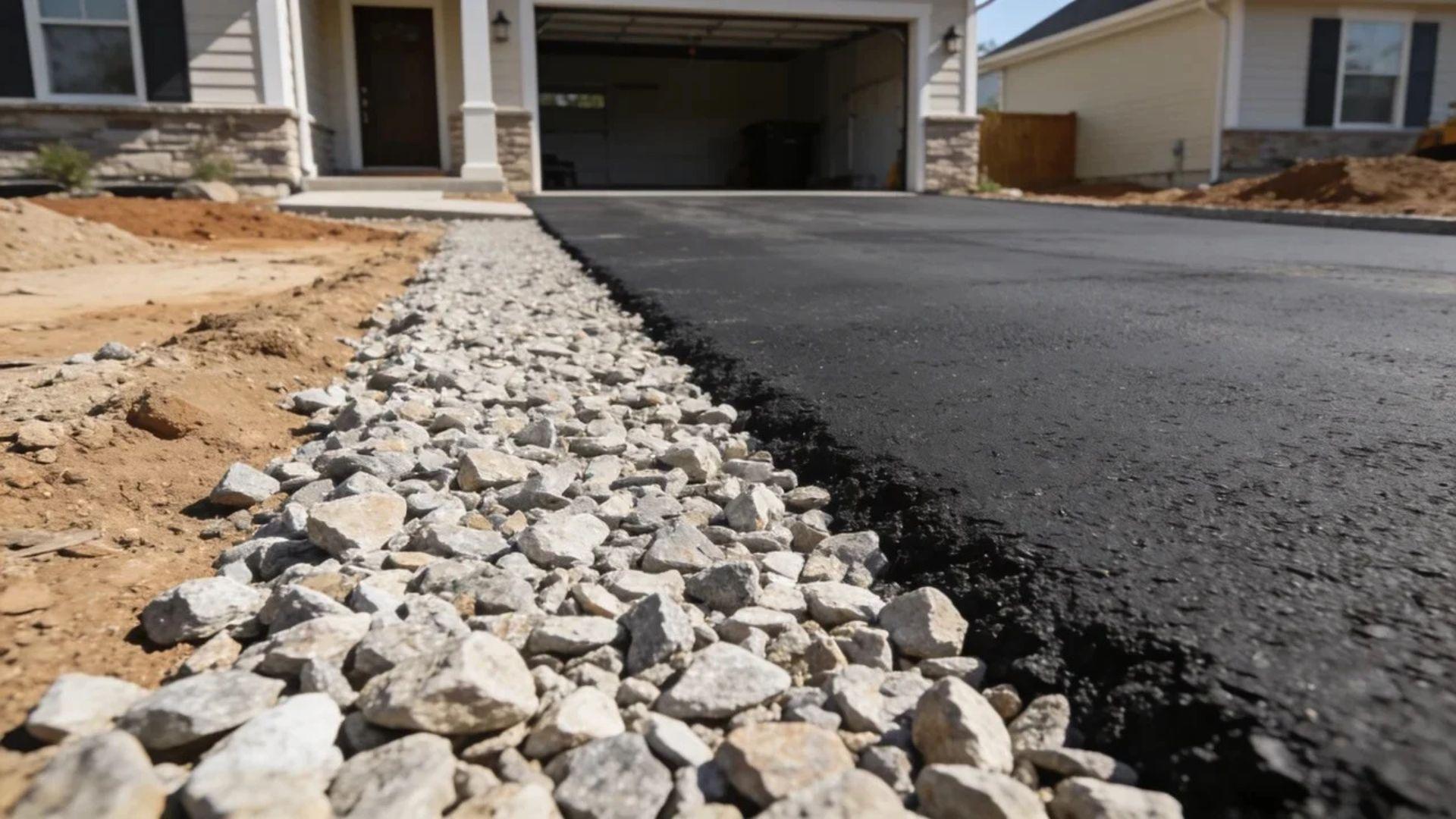
Under the asphalt sits a compacted aggregate base, and its depth, compaction, and grading do much of the structural work.
The same brief calls for 6 to 8 inches of crushed aggregate, usually adequate for a residential driveway, topped by about 3.5 inches of asphalt laid in two courses.
A thin or poorly compacted base settles under vehicle weight, and cracking tends to follow. Drainage matters just as much, since low spots let water collect and soften the layer beneath.
Fill around new homes can also settle, so installers sometimes wait a few months before paving.
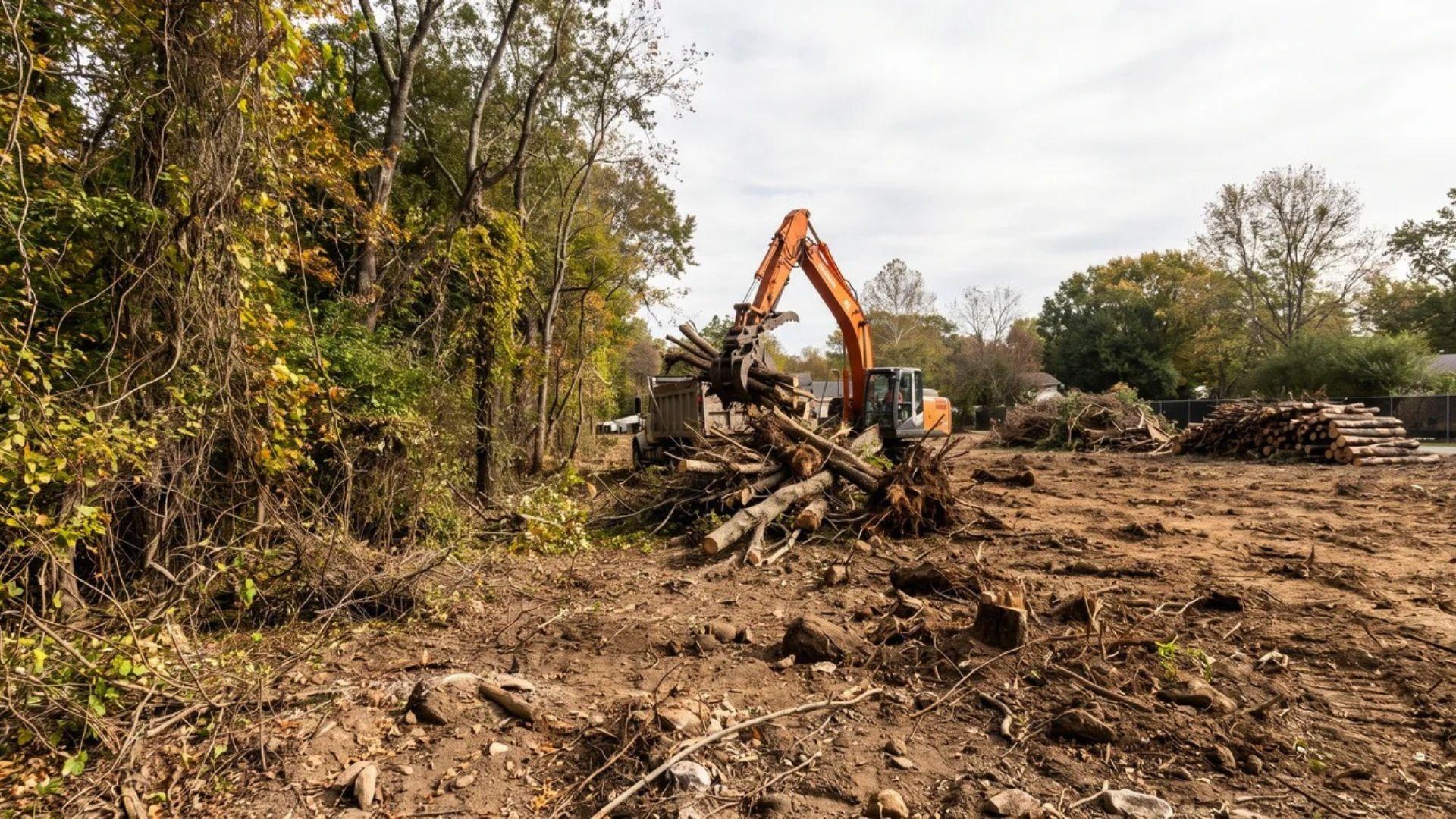
The same logic drives site preparation in construction generally: The groundwork done before anything is paved or poured sets how long the finished surface holds up.
Climate and Water Exposure
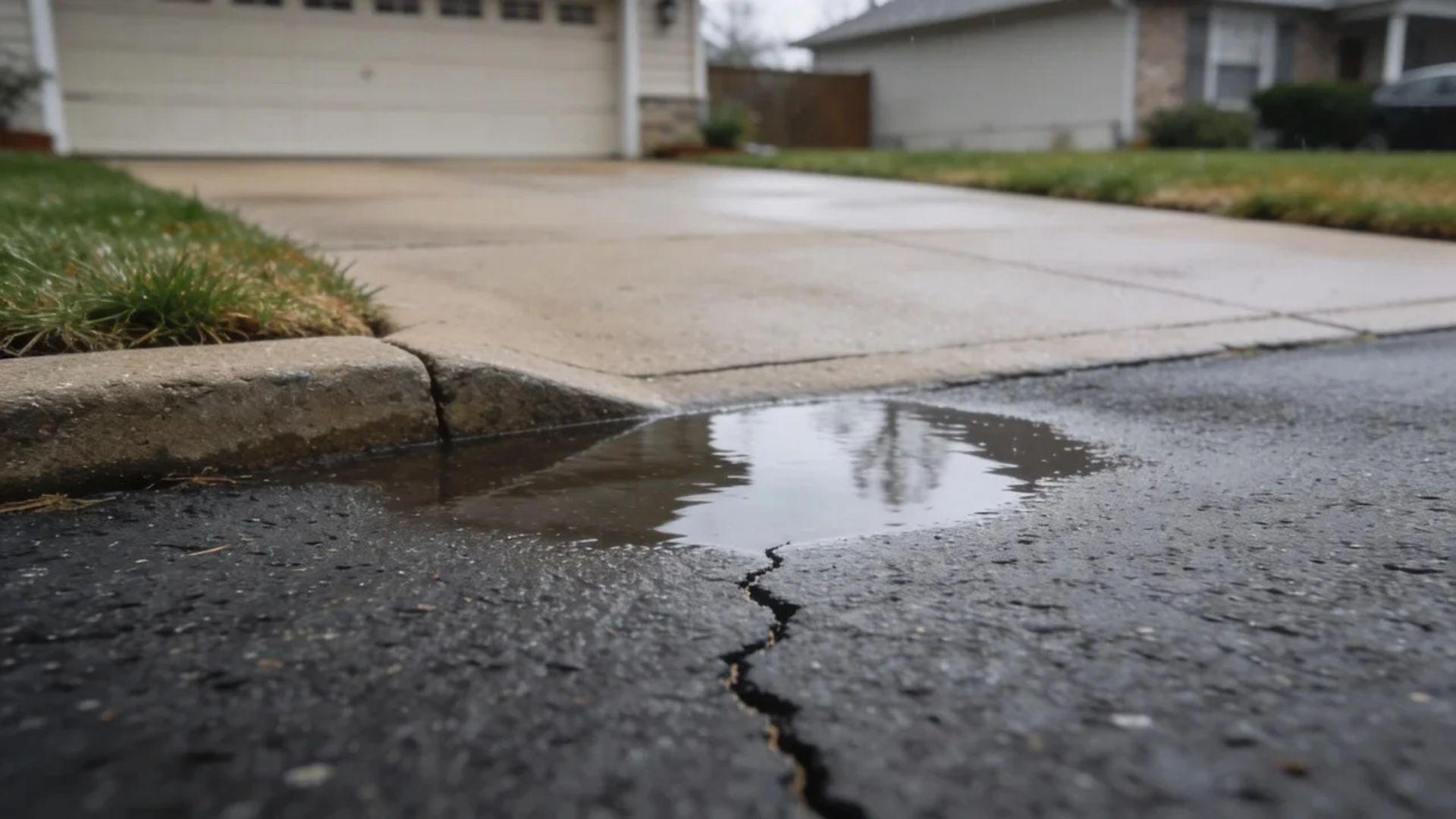
Heat, cold, and water each wear on the surface in a different way:
- UV and heat: These oxidize and harden the binder over the years, and hotter regions such as Texas and Florida generally speed that aging.
- Cold: Pavement shrinks as temperatures fall and can crack, and water entering those cracks can weaken the layers below.
- Heat softening: Asphalt cement softens as temperatures rise, so heavy loads and kickstands can leave dents, especially early in the pavement’s life.
Drainage matters in every climate, because a dry base and sealed cracks hold up better than wet ones.
Vehicle Traffic and Load
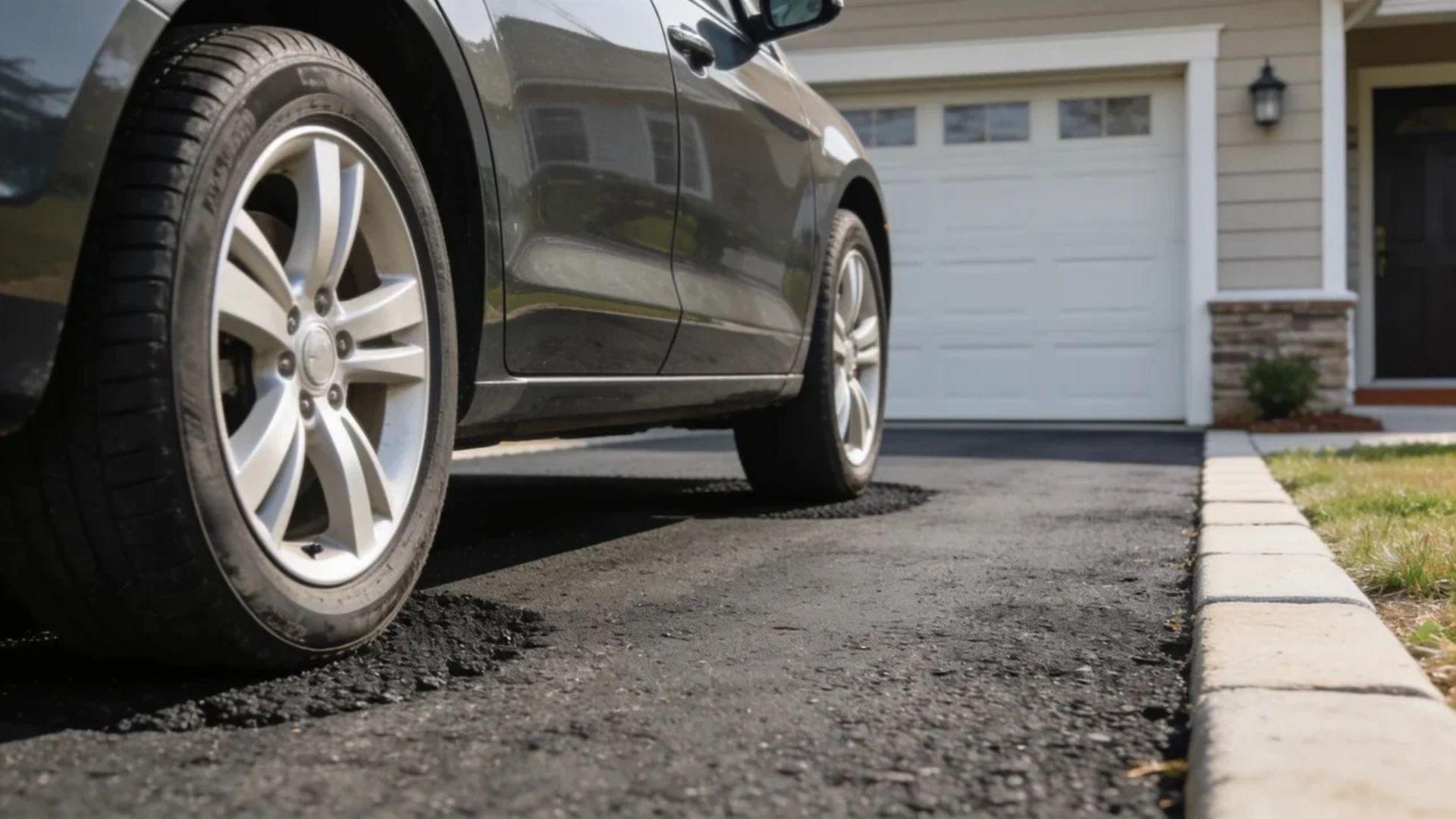
A residential driveway is designed around the loads it expects, usually passenger vehicles, so ordinary family traffic rarely shortens its life.
The trouble starts with repeated heavy loads such as delivery trucks and RVs, and a fresh surface is especially vulnerable, which is why the Asphalt Institute briefly advises keeping a heavy moving truck off a new mat.
Turning vehicles can scuff the surface, and edges without shoulder support are prone to cracking.
A driveway serving a family sedan and one serving a work truck every day will not age at the same rate.
Base, climate, and traffic are mostly settled once the driveway is built, but maintenance is the one factor you control every year, and the way asphalt ages shows what upkeep can and can’t do.
How Does Maintenance Change an Asphalt Driveway’s Lifespan?
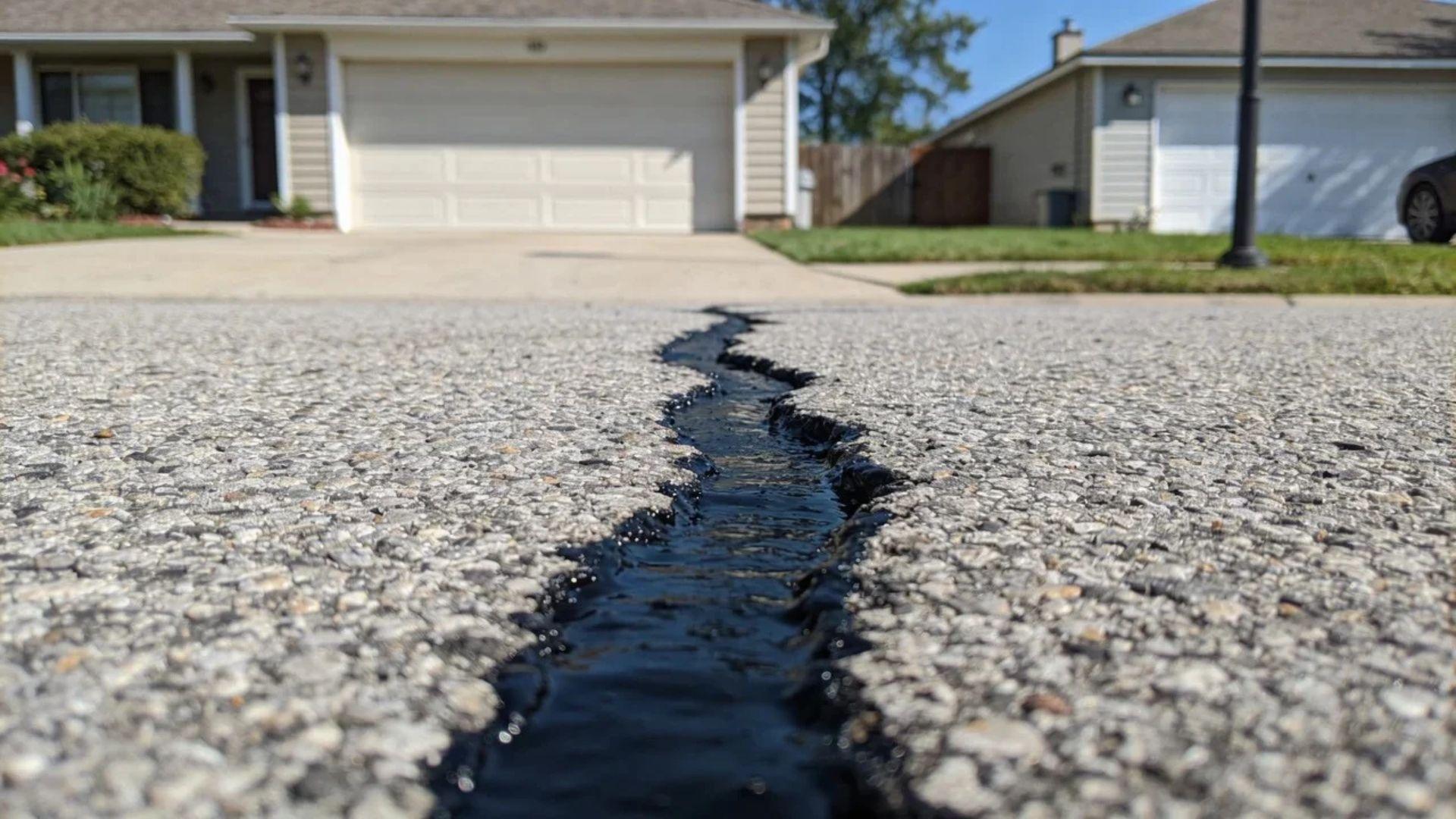
Filling cracks has the clearest case for extending an asphalt driveway’s life, because it keeps water out of the base.
Sealcoating is more debated: The Asphalt Institute brief says sealer applied every two to five years can extend service life, while other industry sources say a well-built driveway gains little from it.
Asphalt pavement is stone held together by a binder that slowly oxidizes from sun and air, stiffening until it turns brittle.
The National Center for Asphalt Technology at Auburn University notes that this aging continues throughout a pavement’s service life, that surface layers age faster than lower ones, and that sealing cracks can keep water from reaching the layers below.
The damage follows a chain:
- A brittle surface starts to crack.
- Cracks let water in.
- Water weakens the base.
- A weaker base cracks the surface further.
Crack filling interrupts the second step by keeping water out.
Sealcoating is meant to slow the first, but NCAT notes it is still unproven whether surface treatments delay binder aging, and the Minnesota Asphalt Pavement Association points out that cracks themselves are not a serious problem until deterioration sets in.
Timing matters as much as the task.
The Asphalt Institute brief says to hold off on sealer until the driveway is at least several months old, and contractor guidance runs from about 90 days to a year, because sealing too early can trap the oils that keep new asphalt flexible.
After that, ask your installer which interval fits your climate and traffic. Neither treatment can rescue a driveway whose base has failed.
Maintenance can slow the damage but can’t repair a failed base, so the next question is which problem you actually have.
When Does an Asphalt Driveway Need Replacing Instead of Repair?
Replace an asphalt driveway when damage spreads across the surface or points to base failure, rather than when it reaches a certain age.
Widespread alligator cracking, deep potholes, and sunken or water-pooling areas suggest the structure underneath has failed, and surface repairs will not hold.
The surface usually shows which problem you have:
| What You See | What It Usually Means | Usual Response |
|---|---|---|
| Isolated hairline cracks | Normal aging | Fill or seal |
| Fading and light raveling | Surface weathering as binder wears away | Seal or overlay |
| Worn surface over a sound base | Wear course at the end of its life | Overlay of 1.5 to 2 inches after patching weak spots |
| Alligator cracking (a web of connected cracks) | Fatigue under repeated traffic loading | Replace |
| Potholes | Water entering through cracks | Patch if isolated, replace if widespread |
| Sunken or water-pooling areas | Settled base or drainage failure | Replace |
The Federal Highway Administration defines alligator cracking as fatigue from repeated traffic loading, and the Asphalt Institute briefly notes that an overlay can extend a driveway once weak spots and large cracks are patched.
Age alone is a poor trigger, since a 20-year-old driveway in good shape can outlast a 12-year-old one built over a failed base.
A simple field test helps: If cracks stay narrow and rain runs off, repair is usually enough, but if cracks keep returning or puddles form in the same spots, the base is the problem.
Once you can read the cracks and the puddles, the lifespan question gets much easier to answer for your own driveway.
Plan Around the Base, Not the Calendar
How long an asphalt driveway lasts depends less on the paving year than on what sits underneath and how well water stays out of it, so treat the 15 to 30-year range as a starting point.
A solid base, good drainage, and sealed cracks push a driveway toward the top of that range, while a thin base can end the same surface years early.
Your own cracks and puddles tell you more than the calendar does.
After the next rain, walk your driveway and mark any spot where water sits, then get that spot looked at first.
Frequently Asked Questions
How long does asphalt take to dry?
New asphalt can be driven on soon after paving, but the Asphalt Institute says waiting a few days before opening it is best. Keep heavy vehicles, such as moving trucks, off a fresh surface.
How long does asphalt last compared to concrete?
Concrete generally outlasts asphalt under equal conditions, and a Portland Cement Association engineer cites 25 to 40 years with reasonable maintenance. Asphalt costs less upfront and is easier to resurface.
Which is better, blacktop or asphalt?
Blacktop is the casual name for asphalt pavement, so in most residential quotes the two terms mean the same material. It is aggregate bound with asphalt cement, which gives the dark color.