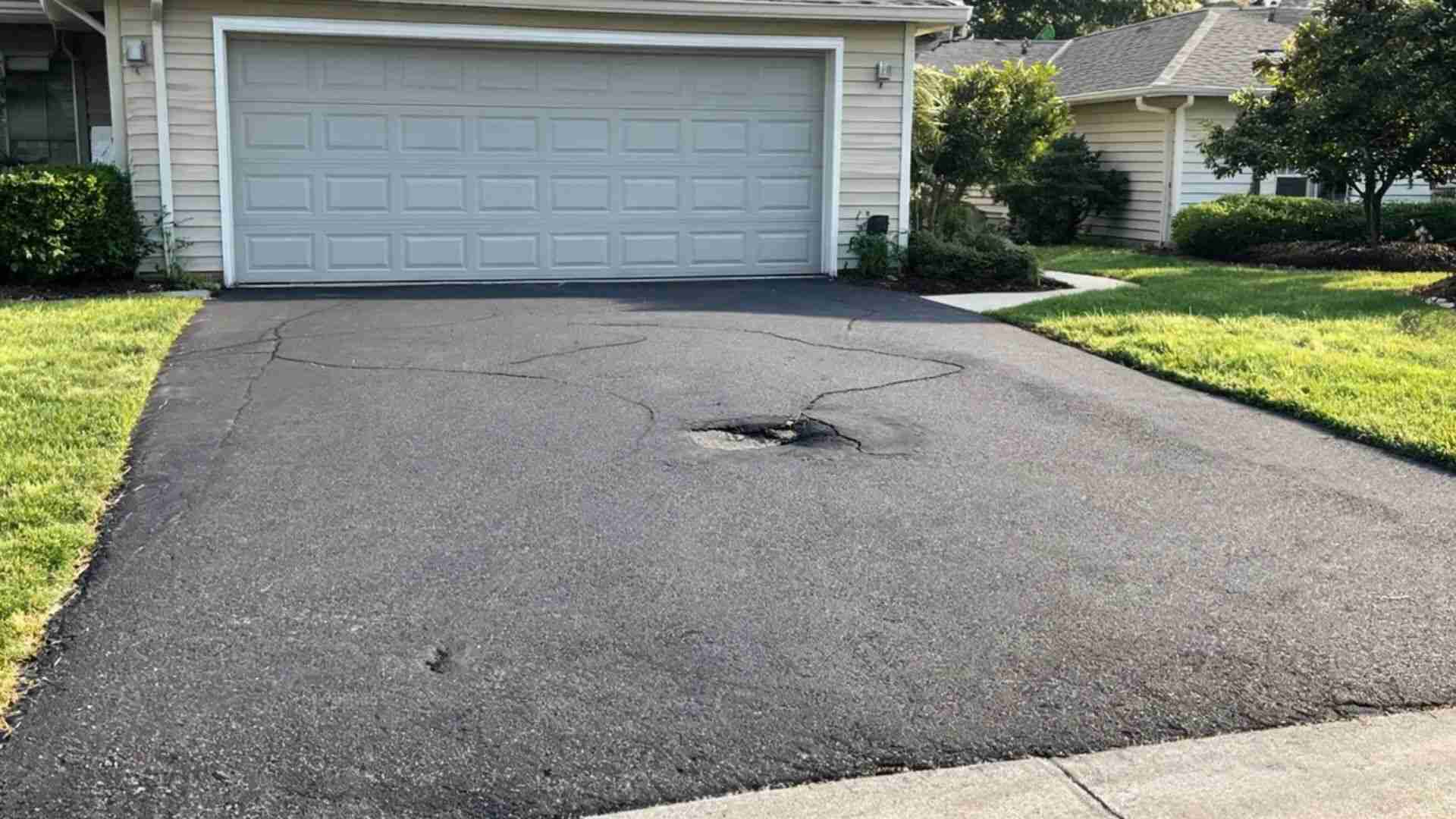
You back out of the garage and notice the slab sits lower than it used to, with a fresh crack across it.
Homeowners often wait when they find their driveway cracked and sinking, assuming it is age and weather.
The surprising part is that the crack is usually a symptom, not the start of the damage.
The real cause typically sits out of sight, sometimes for years before anything shows on the surface, and the pattern you see above ground gives away what is happening below.
Before calling a contractor, it helps to understand why these two symptoms often appear together.
Why Is My Driveway Cracked and Sinking?
A driveway cracks and sinks mainly because the soil under the slab has eroded, settled, or shifted, which leaves part of the concrete with nothing solid beneath it.
Concrete handles weight well on firm ground, but it can bridge an empty gap for only so long, so the slab drops where support is gone and cracks where it bends.
A concrete driveway is a slab resting on compacted soil and a gravel base,the same setup covered in our guide to how slab-on-grade construction works, so the ground below does most of the work.
When water or loose fill removes soil from under it, a void forms, and the slab spans that void for a while because concrete is stiff.
Vehicles keep adding load until the spanning section snaps.
That sequence is why cracks and sinking appear together:The crack marks where support ended, and the drop marks where the slab settled into the gap.
The order can run either way.
Sinking may come first, with cracks following as the slab bends, or a crack may open first and let rain and meltwater run straight down to the soil, which speeds up the washout.
Because the two reinforce each other, a cracked and sinking slab is more serious than a surface hairline crack, which usually comes from concrete shrinking as it cures and dries.
A wetter mix shrinks more, which is why crews check slump in concrete before a pour.
That lost support has to come from somewhere, and four causes keep coming up.
What Causes Driveway Sinking in the First Place?
Each one removes or loosens the soil under the slab, but on different timelines, since water works over years, compaction failures show up early, and roots and frost act with the seasons.
Causes also stack, such as loose backfill that a broken downspout later washes out.
Water Washout and Poor Drainage
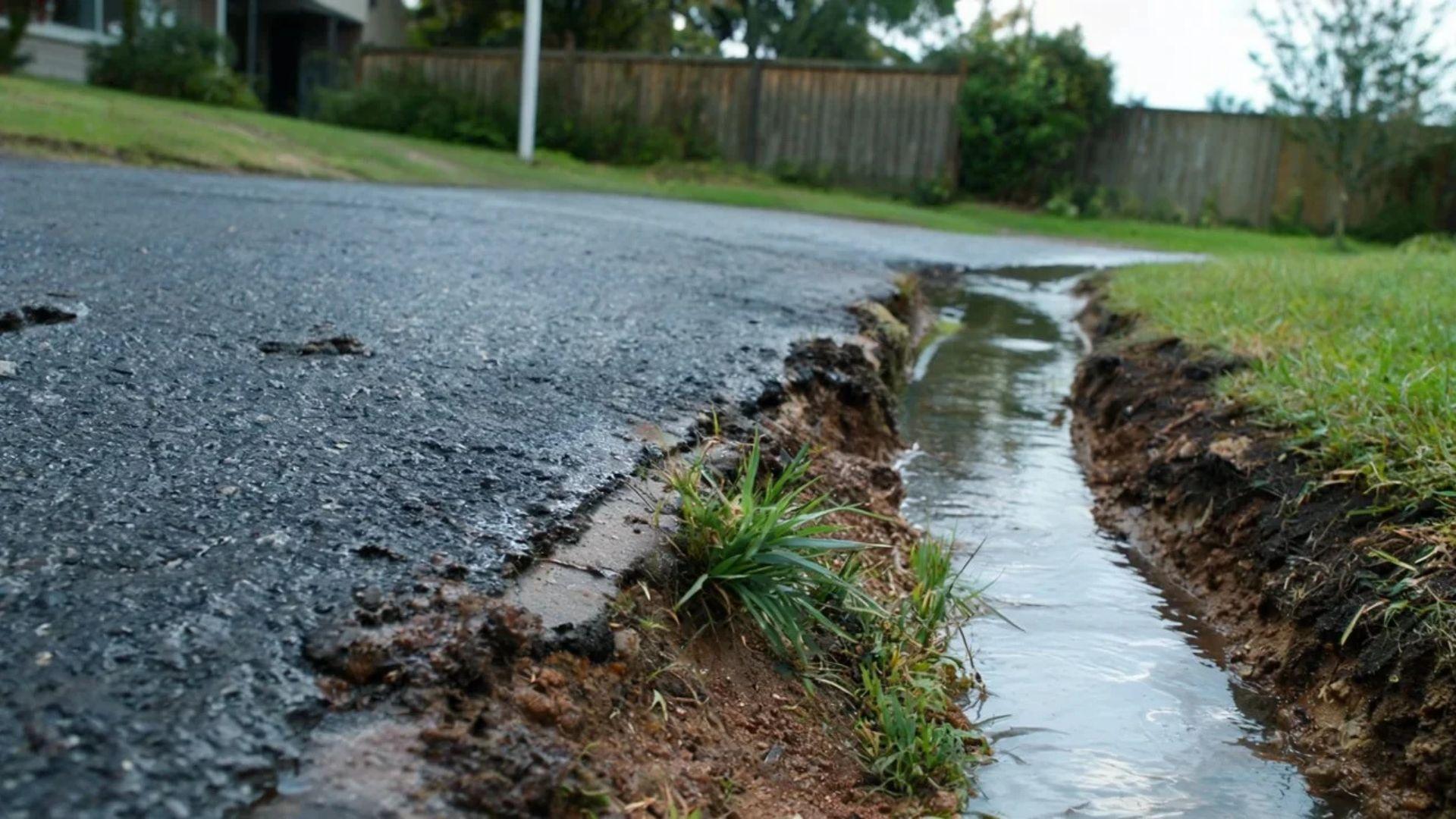
Water is one of the most common causes.
Downspouts that empty beside the slab, clogged gutters that overflow, irrigation heads that soak the edge, snowmelt that pools against the concrete, and leaking buried pipes all push water through the base layer, where it carries fine soil away.
The loss is gradual and out of sight, so the surface can look fine while a pocket grows underneath.
Water also softens the soil that stays behind, which then compresses more under vehicle weight.
Standing water or small hollows in the soil along the slab edge suggest a pocket has already opened beneath it, and the void keeps growing until the water source is fixed.
Poor Compaction and Backfill Settlement
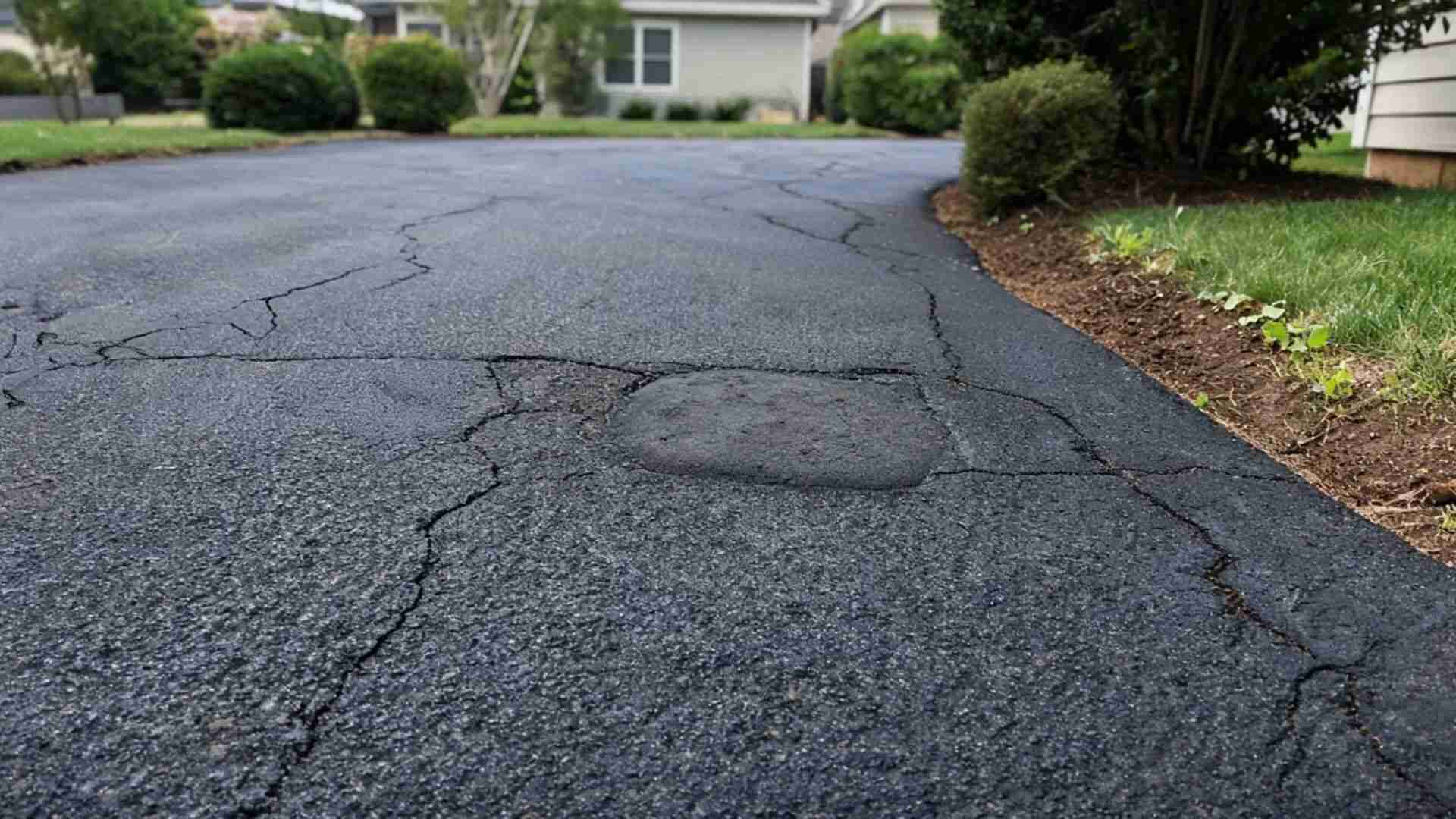
Loose fill or a thin, poorly packed base settles under vehicle weight, so a slab can start to drop soon after it is poured, with no water problem at all.
A common example is a driveway sinking in front of the garage, where the soil beside the foundation was dug out for construction and then refilled.
If that backfill was not packed in layers, it may keep compressing long after the concrete cured.
Good results start before the pour, and our guide to what site preparation involves shows why.
Tree Roots, Freeze-Thaw, and Seasonal Soil Movement
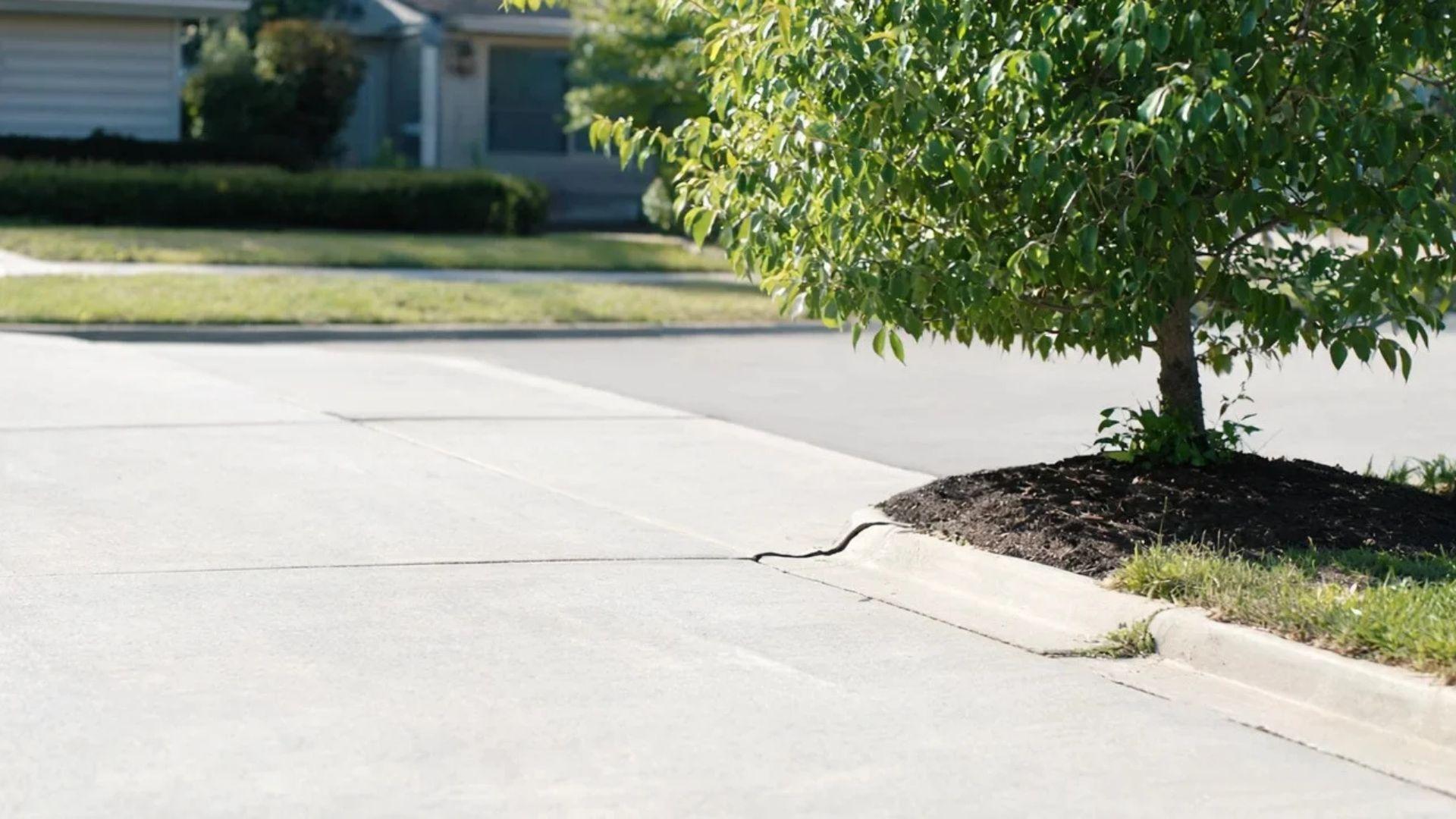
Tree roots thicken as they grow and push against a slab from below and from the side, which lifts or cracks the concrete. Freeze-thaw cycles work through moisture in the soil.
In cold climates, water in the ground freezes into ice that pushes the slab upward, a process called frost heave, and the thaw leaves the soil saturated and weaker, so the slab can settle unevenly under traffic.
Clay soil adds a seasonal pattern of its own, because it shrinks in dry spells and swells after rain, so a slab on clay can drop during a dry summer and rise again once the soil is wet.
Those are the usual suspects, but your slab probably has only one or two of them. Where the damage sits is the best clue to which ones.
How Can You Tell Which Cause Is Behind It?
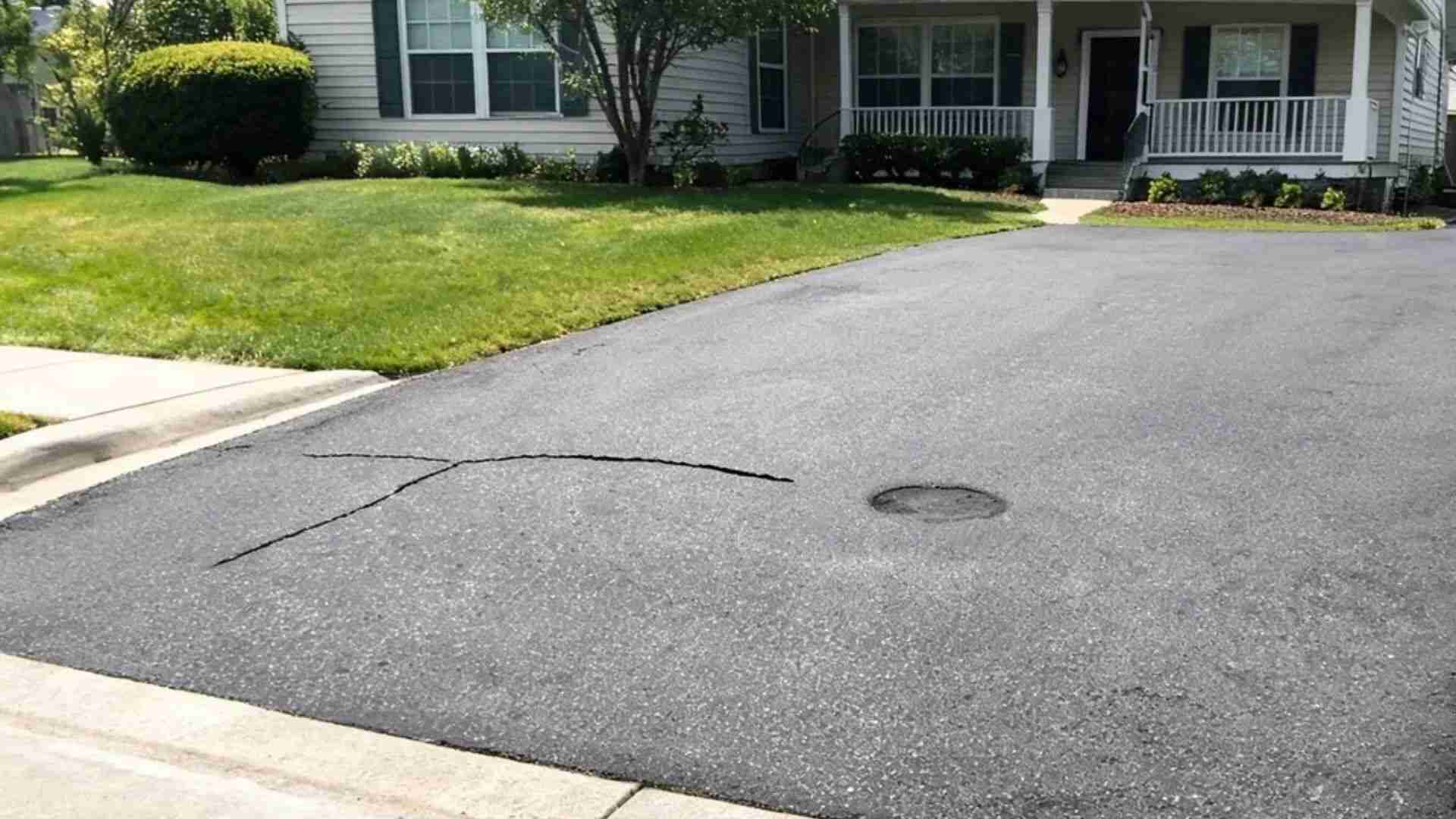
Where the damage sits, relative to water, trees, and the garage, points to the cause, and the first thing to check is where your roof and irrigation water goes after it leaves the house.
Walk the driveway after a heavy rain and note which sections stay wet. The table below pairs common patterns with the cause they usually point to.
| What You See | Likely Cause |
|---|---|
| Cracks and sinking near a downspout outlet, low spot, or pipeline | Water washout |
| A dip where the driveway meets the garage | Backfill settlement |
| Cracks and lifting near trees | Tree roots |
| Sinking in dry weather, rising after rain | Seasonal clay movement |
| Lifting in winter, uneven settling after thaw | Freeze-thaw |
Then check whether the slab is still moving.
Record each crack’s width and the height difference at each joint, then measure again after heavy rain.
A gap that grows or a step that gets taller means support is still being lost, so a repair that ignores the cause will not last.
Water is the quickest cause to confirm.
Check where gutters discharge, whether downspout extensions have come loose, and whether an irrigation or water supply line runs beneath the damaged section.
To test for a hidden leak, the EPA’s WaterSense program suggests reading your water meter, waiting two hours with no water in use, and reading it again. A changed reading means a leak is likely.
Most of this damage comes down to soil and water, but the same soil and water sit against your house too. That raises the question of whether the foundation is involved.
Does a Cracked Driveway Mean Foundation Problems?
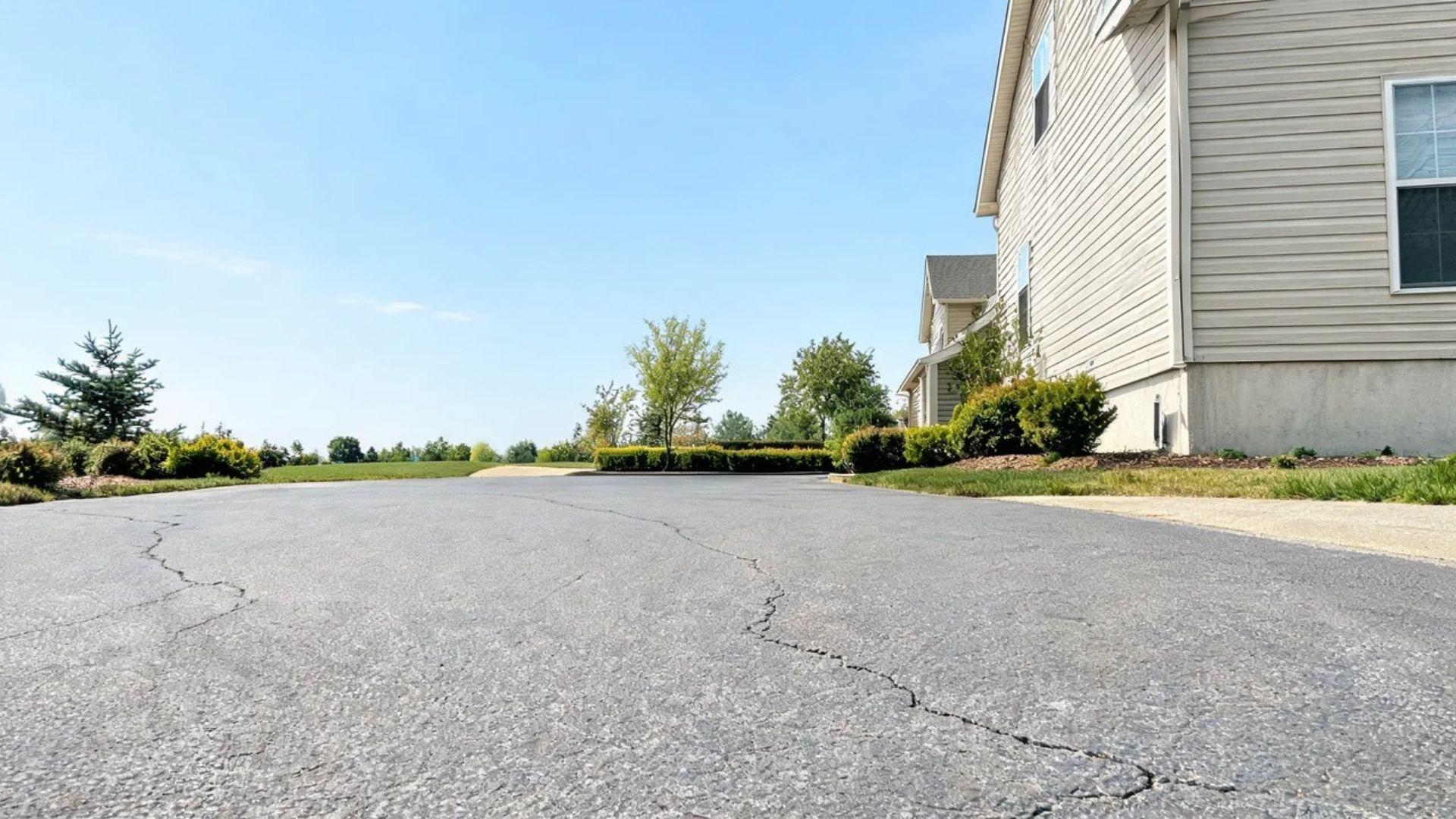
A cracked driveway on its own rarely means the foundation is failing, but a few specific warning signs change that answer.
Slabs crack from shrinkage, heavy loads, and soil movement that never reaches the house, so one crack tells you little.
The picture shifts when several signs appear together: Diagonal cracks running from the corners of windows and doors, interior doors that begin to stick, gaps opening around door and window frames, and a driveway that drops along the foundation wall.
These point to soil moving near the house as well.
The same water and soil conditions often affect both, so the driveway can act as an early warning.
The Geo-Institute shrink-swell soils guide says the chance that a foundation has moved rises with the number of signs and how often they appear, which is why a cluster matters more than a single crack.
If you see more than one, have a structural engineer assess the house before you spend money on the driveway, since a driveway repair will not fix a problem that sits under the house.
Whether the house checks out or needs its own assessment, the driveway still needs attention. The fix depends on what caused the damage.
Which Repair Method Matches Your Driveway’s Cause?
The right repair depends on whether the slab is still intact, and the four options are crack sealing, foam lifting, mudjacking, and replacement. Fix the water source first , because no repair is permanent while washout continues underneath it.
Here is how each option fits:
- Crack sealing: Suits minor cracks in a slab that has not dropped.
- Polyurethane foam lifting: Suits a slab that has sunk but is still in one piece. The foam is lighter than cement slurry, cures faster, and resists water.
- Mudjacking: Suits the same sunken slab, but it pumps a heavier cement slurry under the concrete, which adds weight to weak soil and can wash out if drainage problems return.
- Driveway replacement: Suits concrete that is shattered, broken into jagged pieces, or has failed repeatedly.
The Florida DOT maintenance manual describes both lifting methods for settled bridge approach slabs, where drainage problems can create voids beneath the slab.
Ask any contractor which method they plan to use and why, since the cause you identified earlier should match the fix they propose.
Read the Damage Before You Pay for a Fix
A driveway cracked and sinking is a message about the ground beneath it, and the most useful response is to read that message before paying for a fix.
Where the damage sits and whether it keeps moving will usually narrow the cause faster than a repair bid.
Records you keep now also become a baseline, because a gap that is still the same width after a full year of seasons suggests the movement has stopped.
Start with photos of every crack and a note of where water collects, then bring both to your contractor before approving any repair.
Frequently Asked Questions
How Much Does It Cost to Repair a Sinking Driveway?
Cost depends on slab size, how far it has dropped, and the method used. Foam lifting often costs more than mudjacking, and replacement usually costs the most, so compare written quotes.
How Much Does It Cost to Repair Cracks in a Driveway?
Sealing is usually the cheapest repair, and cost rises with crack length, width, and count. Small cracks take flexible concrete filler, while many cracks call for a contractor’s quote.
Why Is My Asphalt Driveway Sinking?
Asphalt is flexible, so dips usually trace to the stone base or soil under it. Poor compaction, moisture in the base, frost, and repeated vehicle loads are common causes.
How to Fix a Sinking Asphalt Driveway?
Shallow dips can be filled with a thin asphalt patch, but a deeper depression usually means a weak base or subgrade. That area is typically dug out, rebuilt with compacted material, and patched.