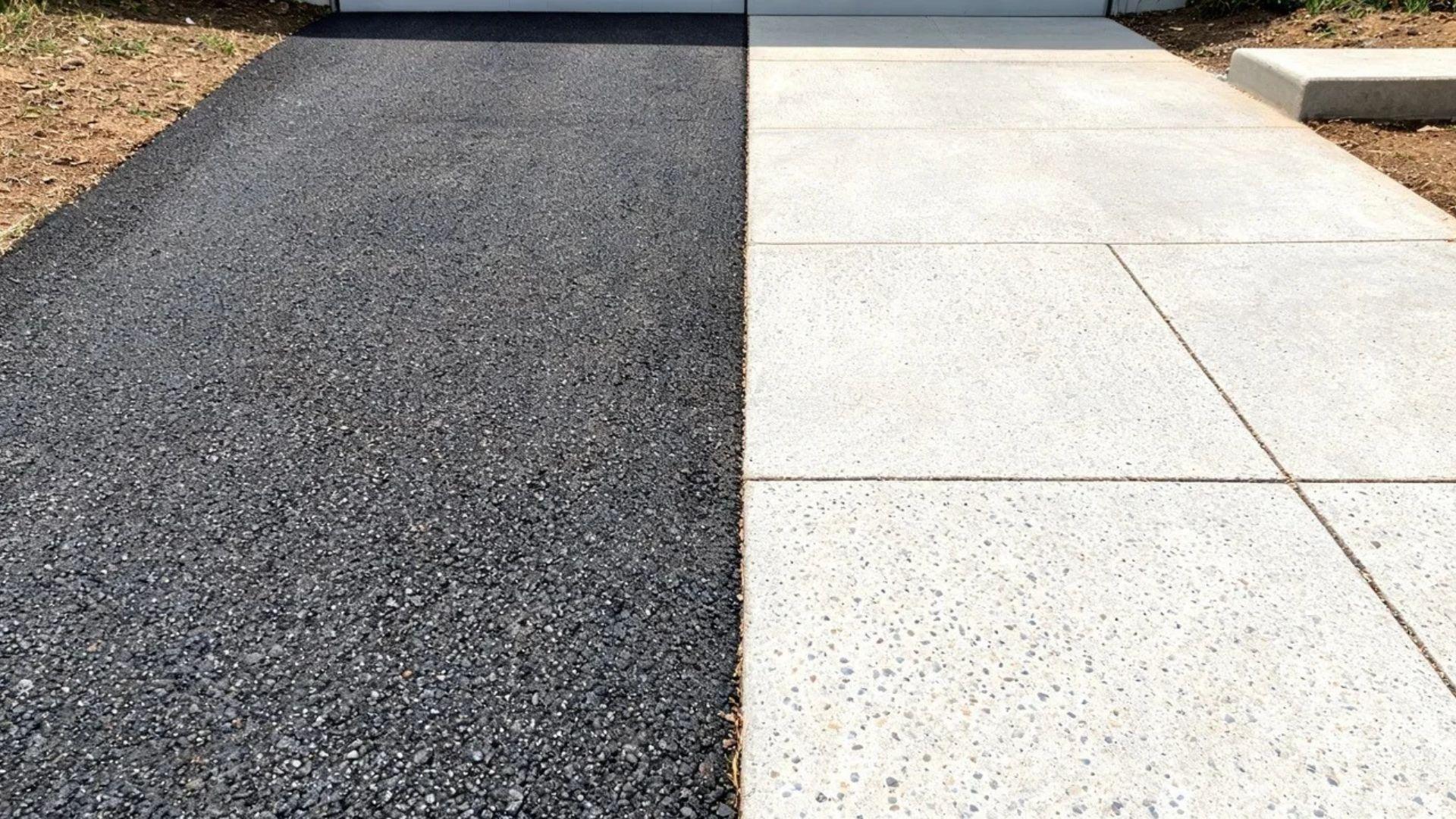
Pavement vs concrete is a mismatched pair because pavement is the finished surface, and concrete is one material used to build it.
Folks choose between concrete and asphalt, and concrete usually lasts longer, while asphalt costs less to install.
Quotes rarely show that the ground beneath either surface decides how long it survives so a well-built asphalt driveway can outperform a poorly prepared concrete one.
Knowing that before you request bids helps you compare contractors on the right details.
The confusion starts with the name itself, so that is the place to begin.
Pavement vs Concrete: What Is the Difference?
Pavement is the finished surface, and concrete is one of the materials used to build it, so the practical comparison is rigid concrete versus flexible asphalt.
| Term | What It Is | Role in This Comparison |
| Pavement | Any hard surface built for walking, driving, or parking | The category that both materials belong to |
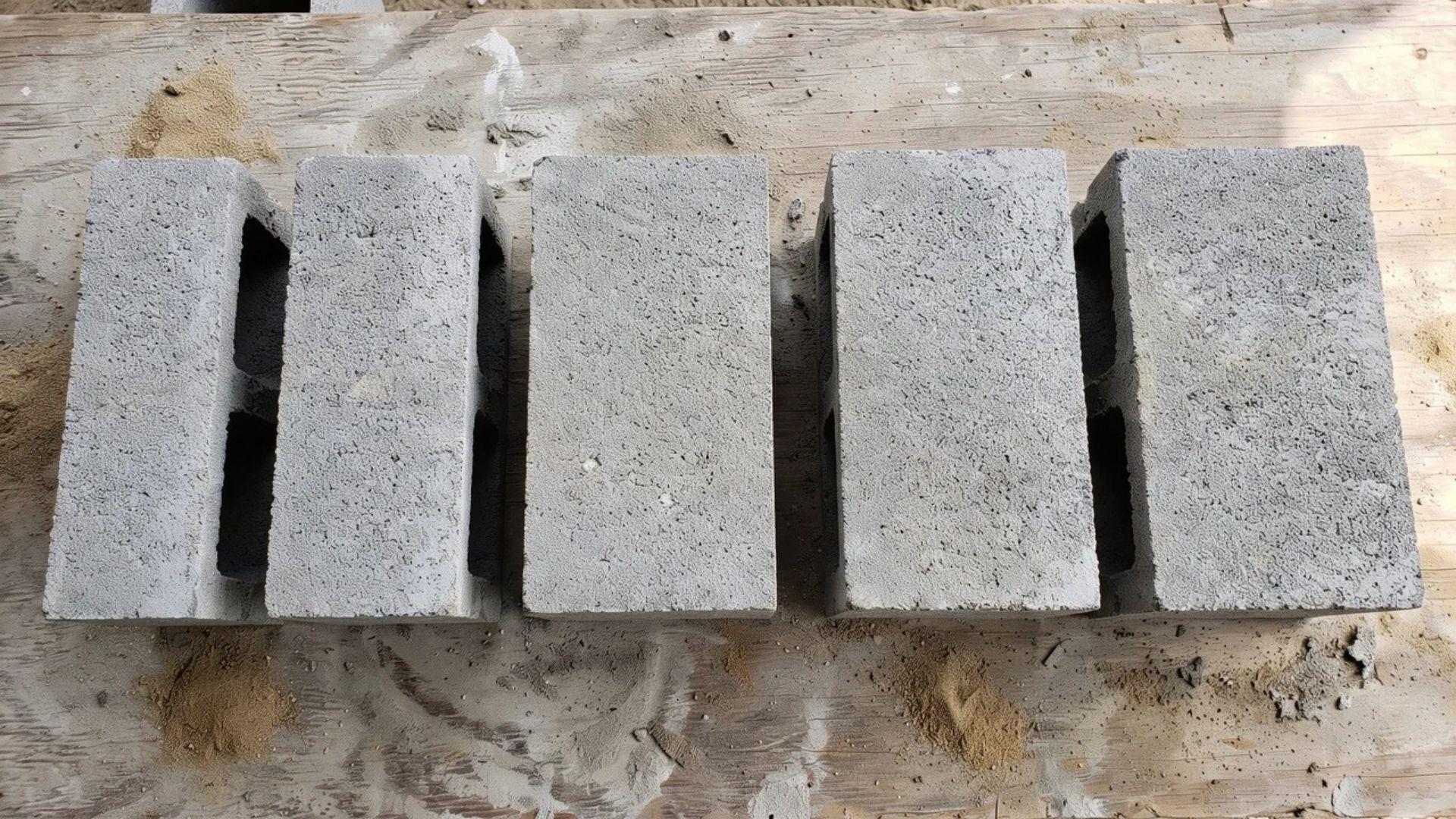
| Concrete | A hardened mix of cement, water, sand, and gravel; most driveways and parking pads follow the same approach used for building floors | Rigid pavement material |
| Asphalt | Aggregate bound with petroleum bitumen | Flexible pavement material, the other major option |
| Pavers, brick, and gravel | Usable surfaces for driveways and walkways | Outside this comparison, since people weigh asphalt and concrete against each other for driveways, parking areas, and roads |
For a home entrance specifically, this breakdown of a concrete vs asphalt driveway goes deeper on cost, climate, and upkeep.
How Do Concrete and Asphalt Pavement Differ Structurally?
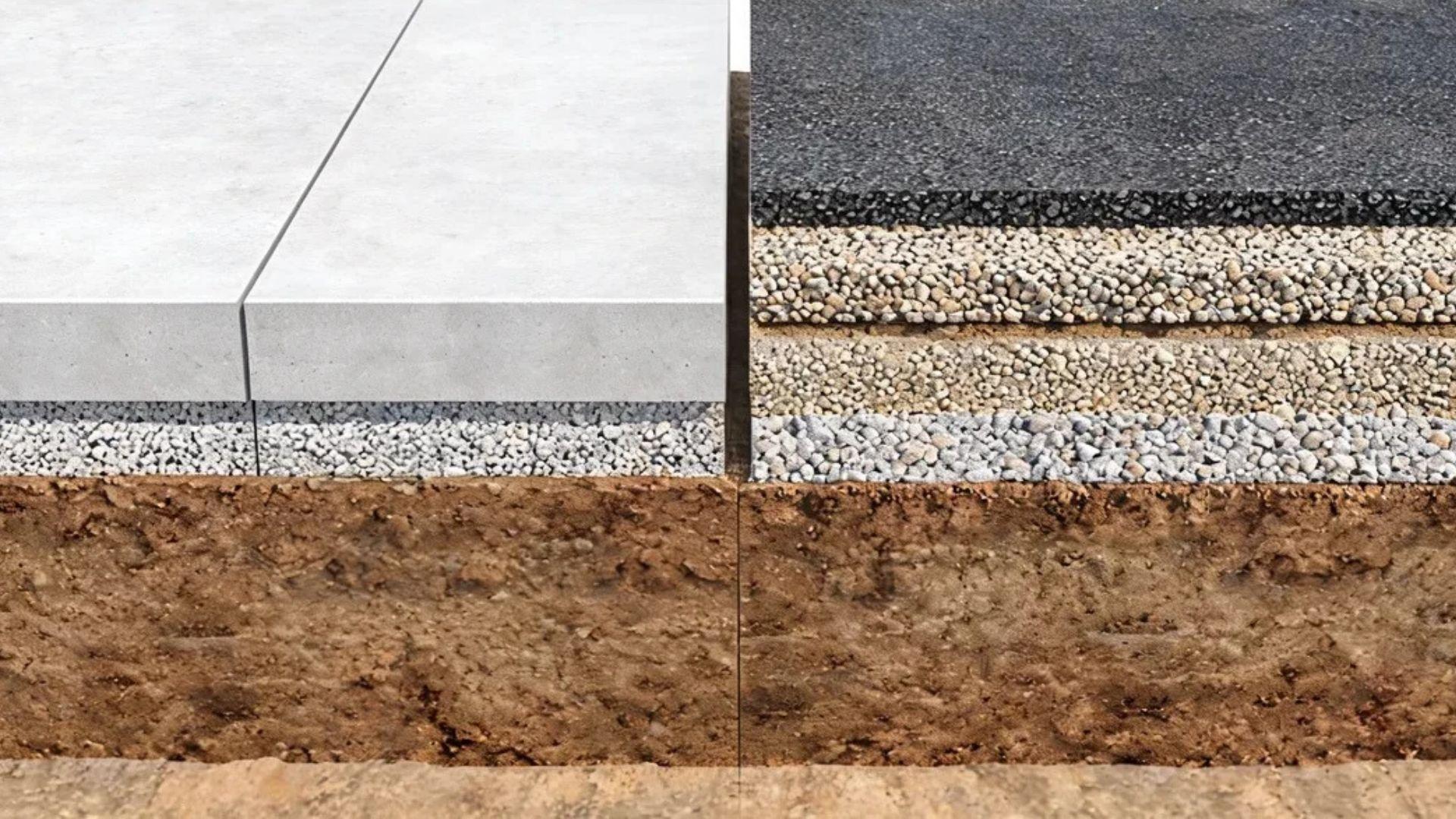
Concrete pavement is rigid. The slab is stiff enough to carry most of the load itself and spread wheel loads across a wide area of the ground beneath it.
Asphalt pavement is flexible.
It bends slightly under a tire and passes the load down through its layers, a contrast laid out in a Fort Worth pavement management presentation that compares load transfer through all layers with load carried by the slab.
That difference decides how each one fails. A concrete slab cracks when its joints, base, or thickness fall short, because a stiff slab cannot bend to follow a soft spot in the ground.
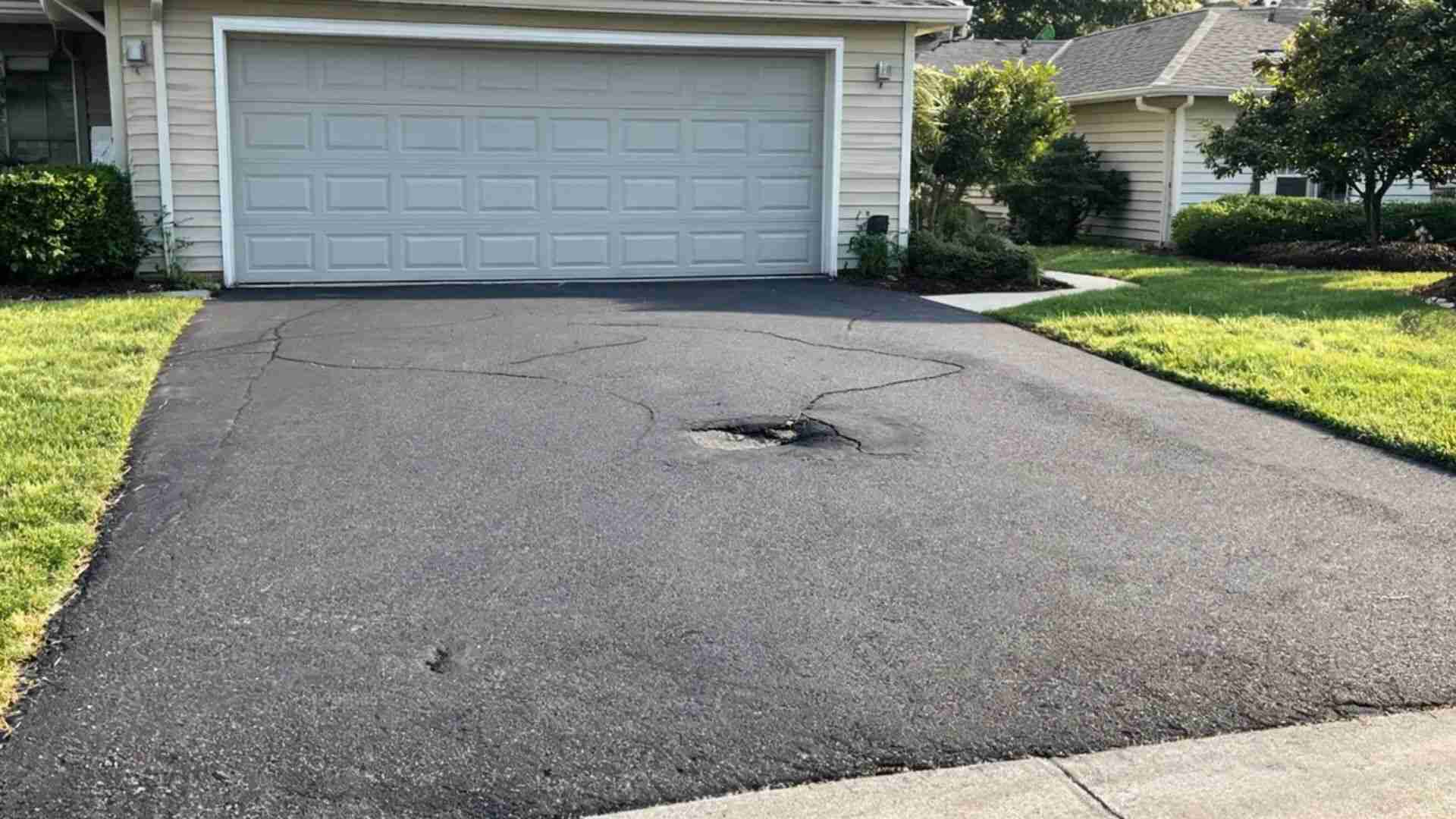
Asphalt bends with ground movement and heavy loads, but it ruts, softens, and wears at the surface instead.
Lifespan, repair style, and weather behavior in the sections ahead all follow from rigid versus flexible behavior, so they are consequences of the structure and not separate facts.
The material label also matters less than what lies beneath it.
Subgrade preparation, drainage, jointing, and layer thickness shape performance as much as concrete or asphalt does, and a surface built over soft, wet soil struggles in either material.
Which Lasts Longer: Concrete or Asphalt Pavement?
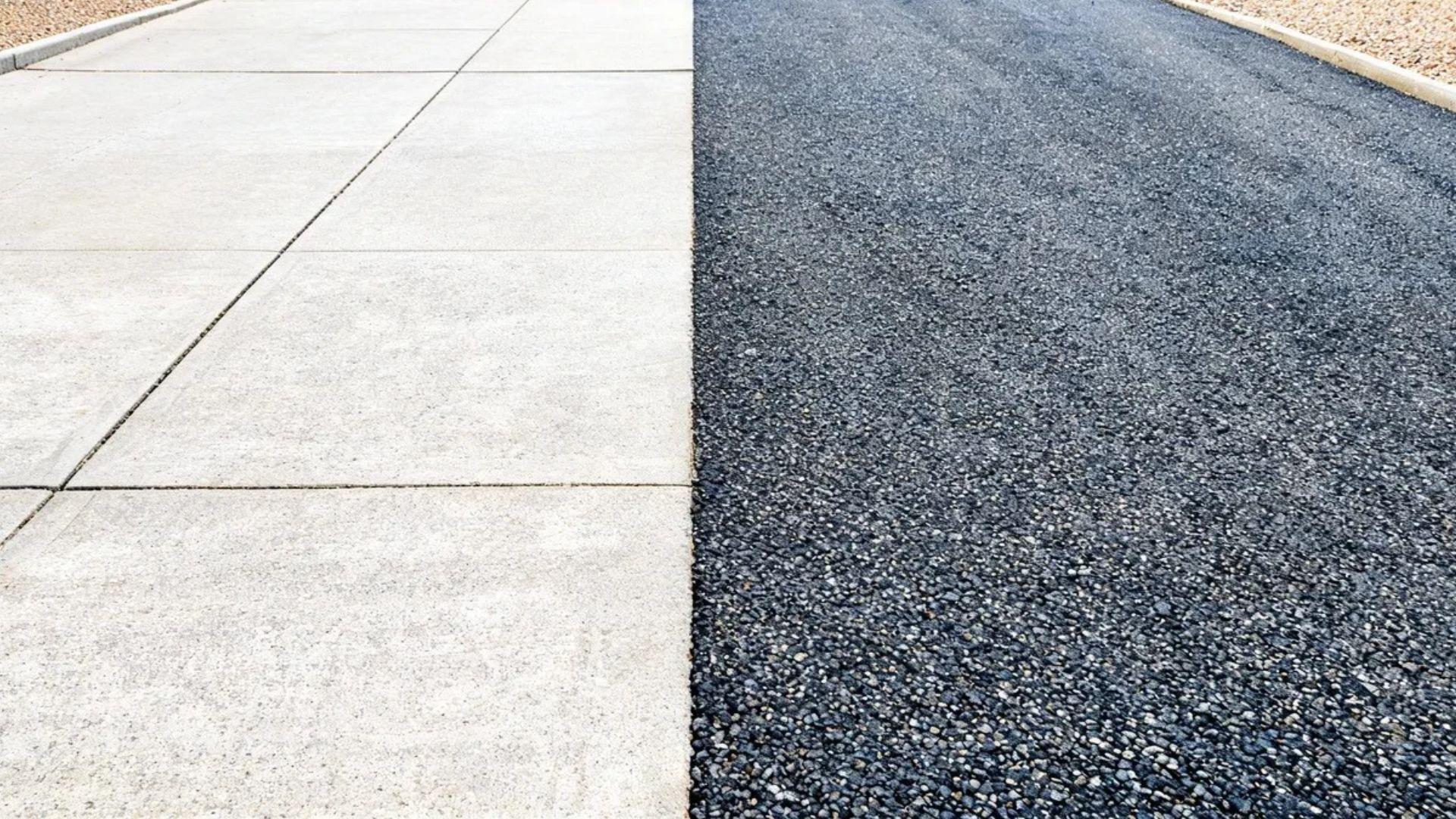
Concrete generally outlasts asphalt, though the gap depends on climate, load, and installation quality.
Driveway guides put asphalt at roughly 15 to 30 years and concrete at 30 to 50 years.
For public roads, the engineering firm Ayres Associates cites typical service lives of about 18 years for asphalt and 25 for concrete (figures it draws from the Wisconsin DOT design manual), and says both can reach 40 years with good care.
Lifespan and Heavy-Load Performance
The wide spread in those numbers comes from how the surface is used.
A stiff slab spreads repeated heavy loads, such as delivery trucks, across more ground, so the concrete advantage grows as loads increase.
It shrinks when the slab has weak joints or sits on soft ground, because a cracked slab loses the stiffness that gave it the edge.
Asphalt tolerates minor settlement better since it can flex, but a thin asphalt layer over a weak base will rut under the same trucks.
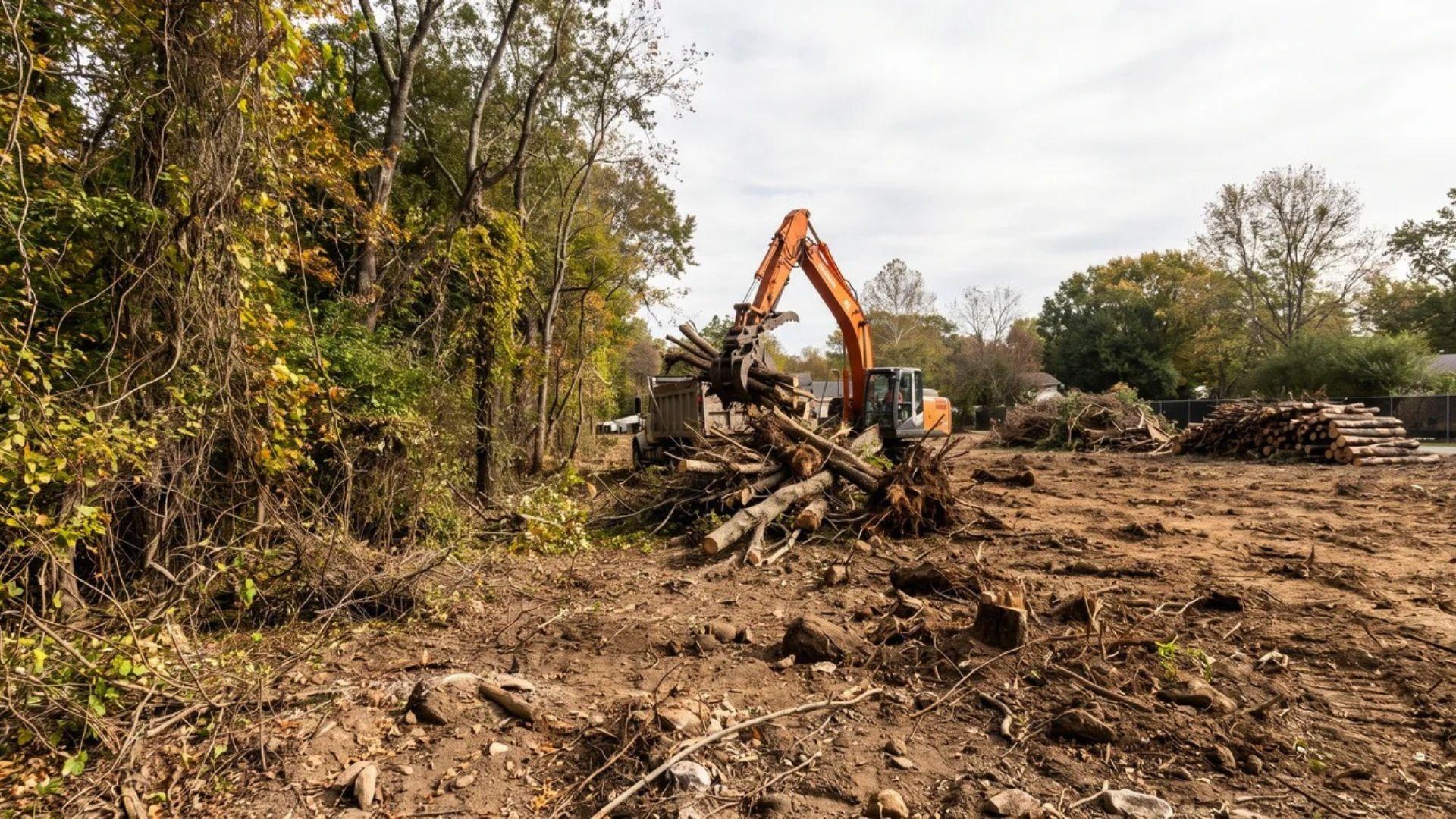
Before either material goes down, the ground needs the attention covered in the guide to site preparation in construction, because grading and compaction set the starting point for both.
Heat, Cold, and Freeze-Thaw Behavior
Each material has a weather weakness, and local conditions still count, since a shaded driveway and a south-facing parking lot in the same town heat up and drain differently.
- Extreme heat: Asphalt can soften, rut, and turn tacky, while a concrete slab holds its shape, so hot climates with heavy truck traffic suit concrete well.
- Cold and snow: Asphalt stays flexible in winter, and Ayres Associates notes that a plowed asphalt road warms in sunlight and melts leftover snow, and that asphalt tolerates road salt better than new concrete.
- Freeze-thaw cycles: Concrete can crack when water enters poor joints or an unprepared base and freezes, since ice expands in the space it fills. Proper jointing and drainage reduce that risk.
Concrete vs Asphalt Maintenance, Repair, and Cost
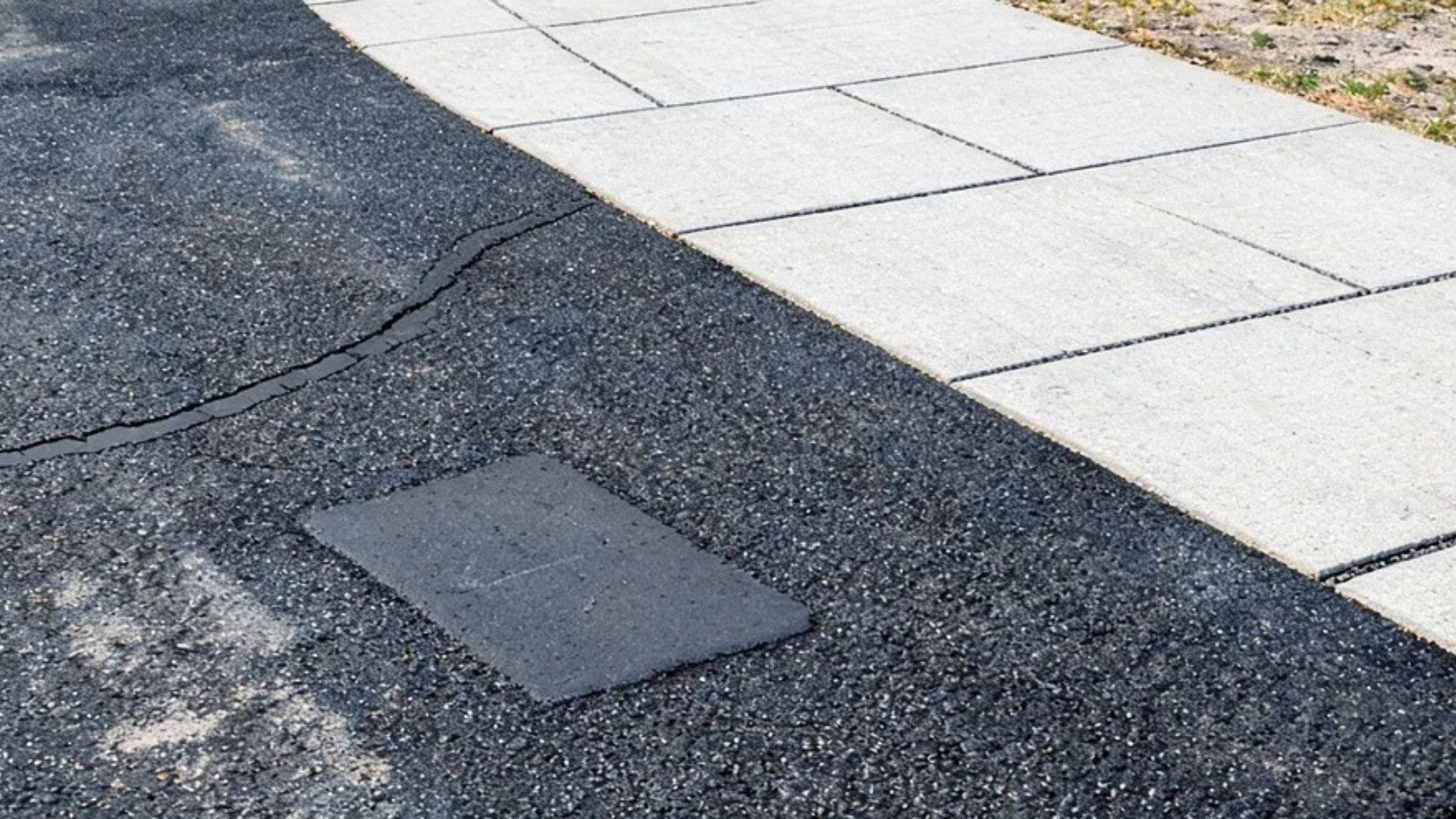
Asphalt costs less to install but needs more frequent upkeep, while concrete costs more upfront and needs less maintenance, so the lifetime cost gap is smaller than the installation gap.
In any pavement vs concrete cost comparison, the figures below come from 2026 driveway cost guides and swing widely by region, so treat them as planning ranges and not quotes.
Maintenance and Repair Needs
Asphalt should be sealed once it cures. Guides say to wait at least 90 days, and many contractors recommend six months to a year.
After that, reseal every two to five years, closer to every two or three in climates with freezing winters.
Patching and overlays take less time and cost less than concrete repairs. Concrete needs little regular care, but damage usually means replacing a whole slab section instead of patching it.
Joints deserve attention because they are where water gets in.
Sealant in the gaps between concrete slabs keeps water and grit out of the base, and a joint that has lost its seal lets the soil underneath soften, which recreates the weak-subgrade problem described earlier.
- Asphalt: fill cracks early, reseal every three to five years, and overlay when the surface wears out.
- Concrete: renew joint sealant, replace cracked slab sections, and consider resealing about every five years to slow surface wear.
Upfront Cost vs Lifetime Cost
| Factor | Asphalt | Concrete |
| Installed cost per square foot | $3 to $15 | $8 to $20 |
| Driveway lifespan | 15 to 30 years | 30 to 50 years |
| Sealing | Every 3 to 5 years after the first seal | Optional, about every 5 years |
| Typical repair | Crack filling, patching, overlay | Slab section replacement |
The installation gap narrows once upkeep is counted.
A Los Gatos life-cycle cost analysis for ten streets in its Almond Grove project assumed slurry seals at years 7 and 14 for asphalt and replacement of 3% of concrete slabs every 14 years, and it estimated future maintenance at $3.95 million less for concrete over 50 years.
One municipal project does not settle every driveway, and Ayres Associates notes that petroleum price spikes can pull asphalt costs close to concrete, but the example shows why the lowest bid is not always the lowest-cost surface over time.
Asphalt Pavement vs Concrete: Pros, Cons, and the Right Pick
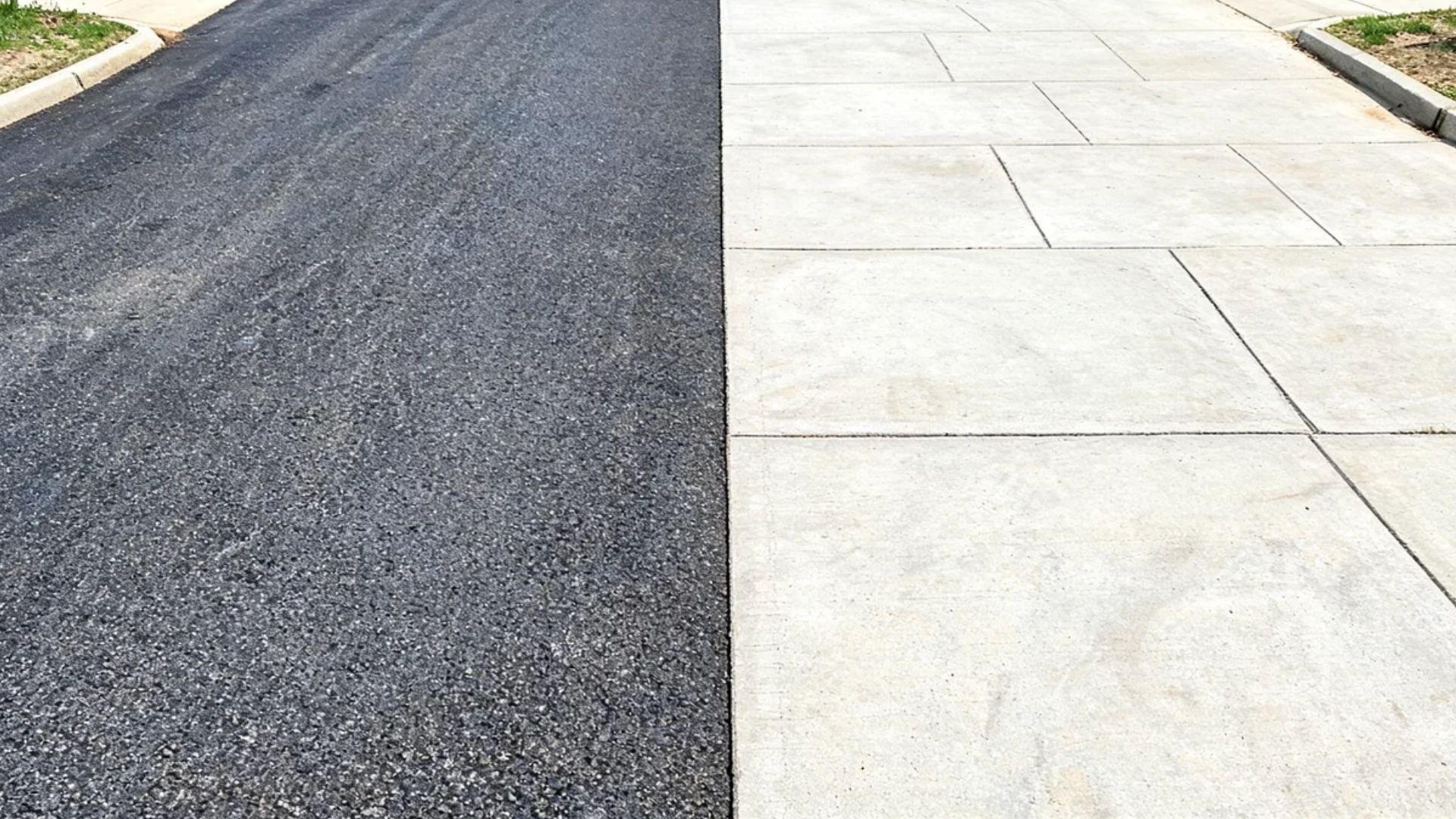
Concrete suits long-term, heavy-load, and hot-climate projects, and asphalt suits lower upfront budgets, faster installation, and cold climates.
Any pavement vs concrete pros and cons list comes down to that split, and four conditions can flip it: Traffic load, climate, how long you plan to own the surface, and subgrade quality.
When Concrete Is the Better Choice
For a pavement vs concrete driveway decision, concrete fits owners who want a long service life, low routine upkeep, and design control, since concrete can be reinforced, textured, stamped, or colored in ways asphalt cannot.
It also holds up under heavy vehicles and in hot weather.
The drawback is cost and repair:A higher installation price, days of curing before vehicles can use it, and slab replacement when a section cracks badly.
When Asphalt Is the Better Choice
Asphalt fits tighter budgets and projects that need to reopen soon, since it can take traffic once it cools.
It flexes with small ground movements, warms in winter sun, and is patched with less effort than a slab is replaced.
The drawback is a shorter lifespan, resealing every few years, and softening in extreme heat, which makes the upkeep schedule part of the real price.
Choose the Surface Your Ground Can Support
Pavement vs concrete comes down to matching the surface to the ground and to how long you plan to own the property, not to a single winner.
The details that decide the outcome sit out of sight: How a contractor prepares and drains the subgrade, what thickness they specify, and how they handle joints or sealing.
Two bids for the same material can perform differently on those points alone.
Before you sign, ask each contractor to put those specifics in writing, then compare the bids side by side.
Frequently Asked Questions
Is Pavement the Same as Concrete?
No. Pavement describes the surface and can be made of asphalt, concrete, brick, or pavers. Concrete is also used for foundations, walls, and floor slabs that are not pavement at all.
Why Don’t We Pave Roads With Concrete?
Concrete is used on many roads, especially busy highways. Agencies often pick asphalt because it costs less to install and reopens lanes sooner, and budget, traffic volume, and underground utilities all shape the choice.
Why Does Texas Use Concrete Instead of Asphalt?
Texas uses both. The TxDOT pavement design manual covers flexible and rigid design, and the state commonly builds jointed and continuously reinforced concrete pavement, so traffic, soils, and life-cycle cost decide each project.