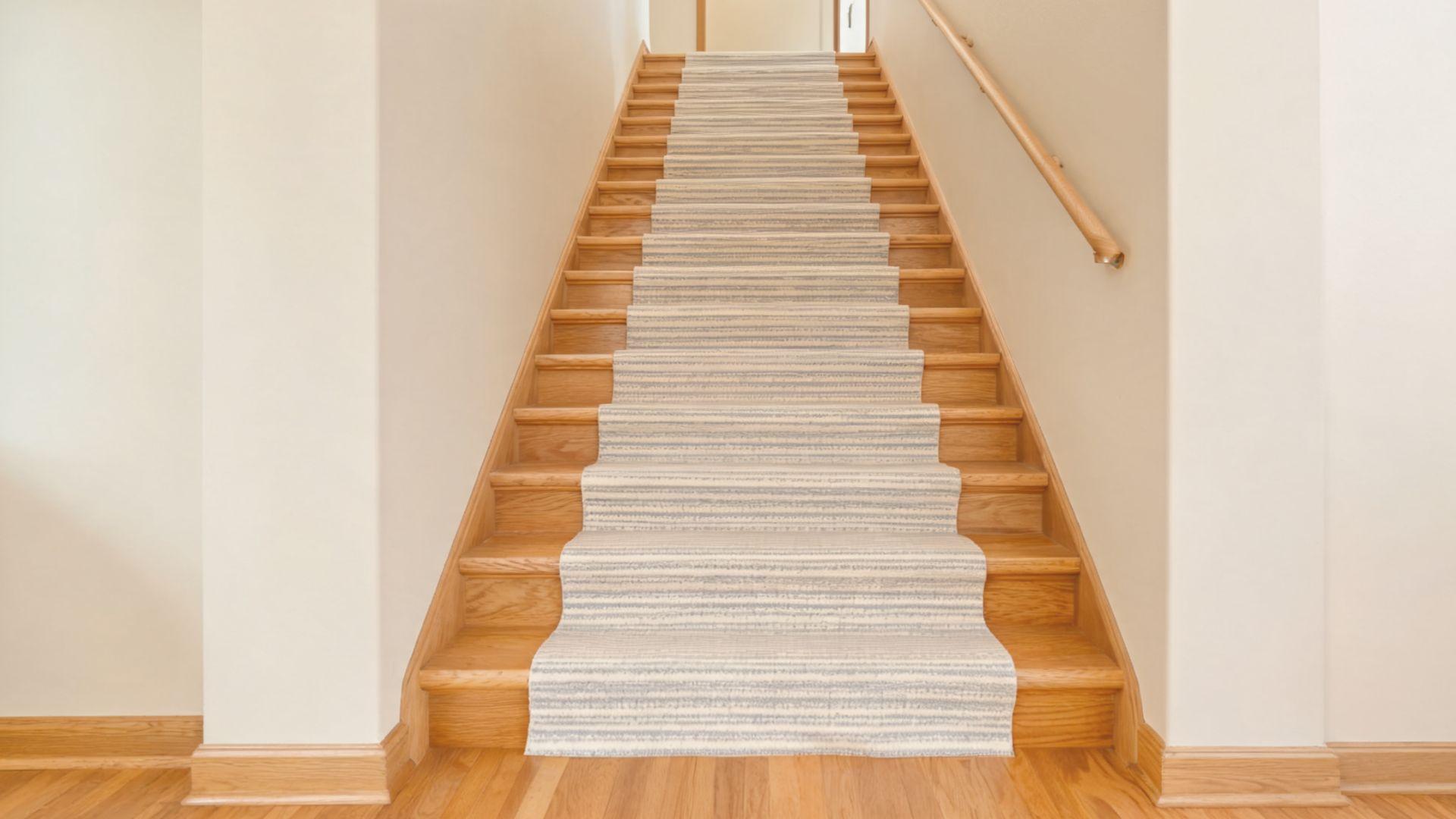
A stair runner is a strip of carpet or woven material that covers the center of each step, leaving bare tread visible on either side, and the right one can turn a plain staircase into the focal point of a home.
Staircases are having a moment: Yelp’s 2026 Home, Beauty, & Lifestyle Trends report found that searches for “stair runner installation” rose 402% year over year.
Hard-surface stairs are loud, slippery underfoot in socks, and quick to show scuffs, while a runner softens the sound, adds grip, and gives an overlooked stretch of the house some personality.
For a refresher on treads, risers, and landings before picking a design, the parts of a staircase guide covers the basics.
Below, you will find runner ideas sorted by style, pattern, color, and layout, along with guidance on materials, installing over existing carpet, and choosing the right one for your home.
Popular Stair Runner Ideas for Different Homes
The style already in your home is usually the fastest way to narrow down a runner before looking at pattern or color at all.
Modern Stair Runner Ideas
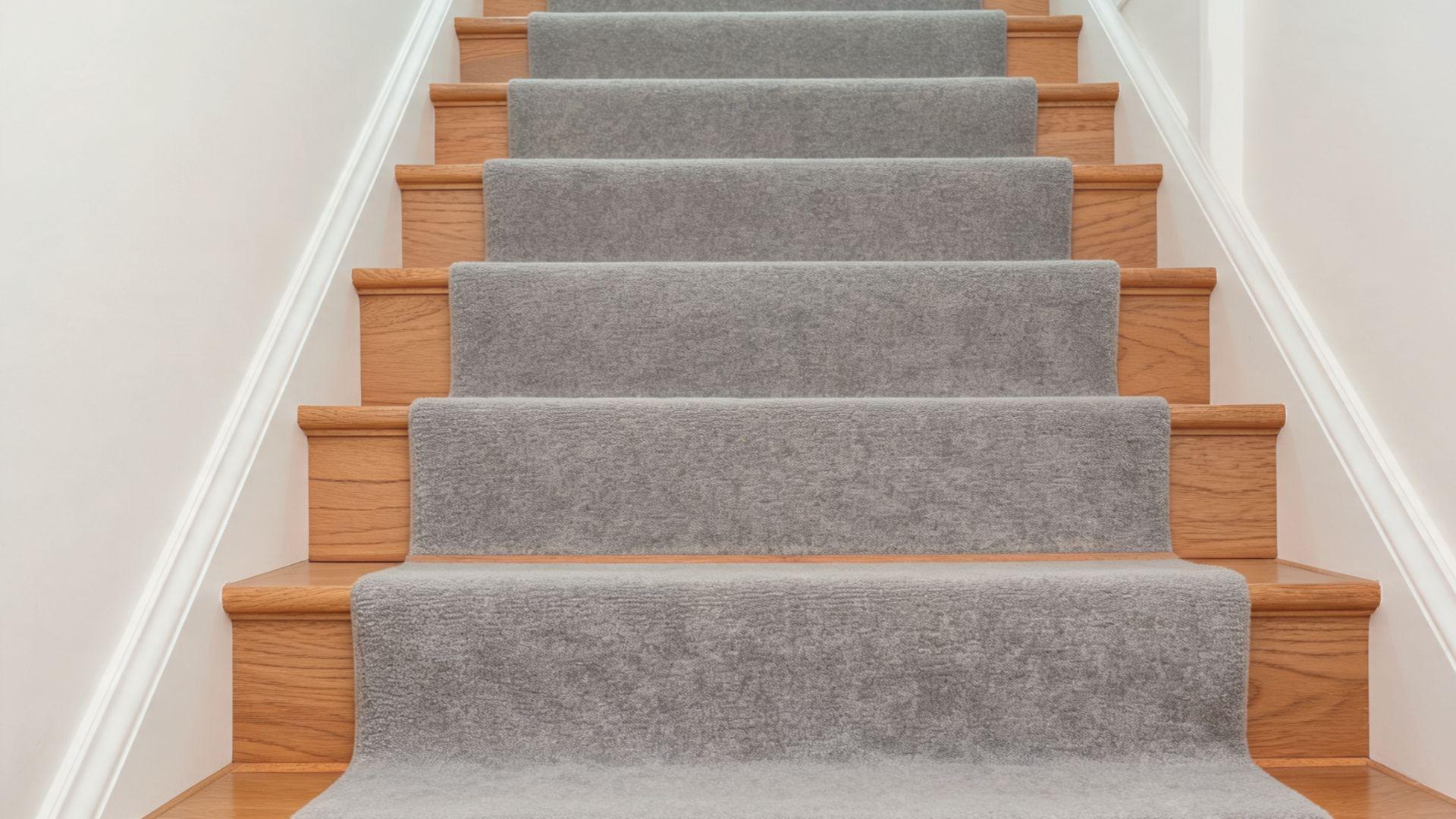
Modern staircases often use a narrower runner, commonly in the 26 to 32 inch range, with a single solid color or a restrained geometric print, leaving a clean band of exposed wood or painted tread on each side.
Low-pile wool or wool-blend flatweaves hold that crisp edge better than thick cut piles, which tend to round off the clean lines a contemporary stair depends on.
Traditional and Vintage Stair Runner Ideas
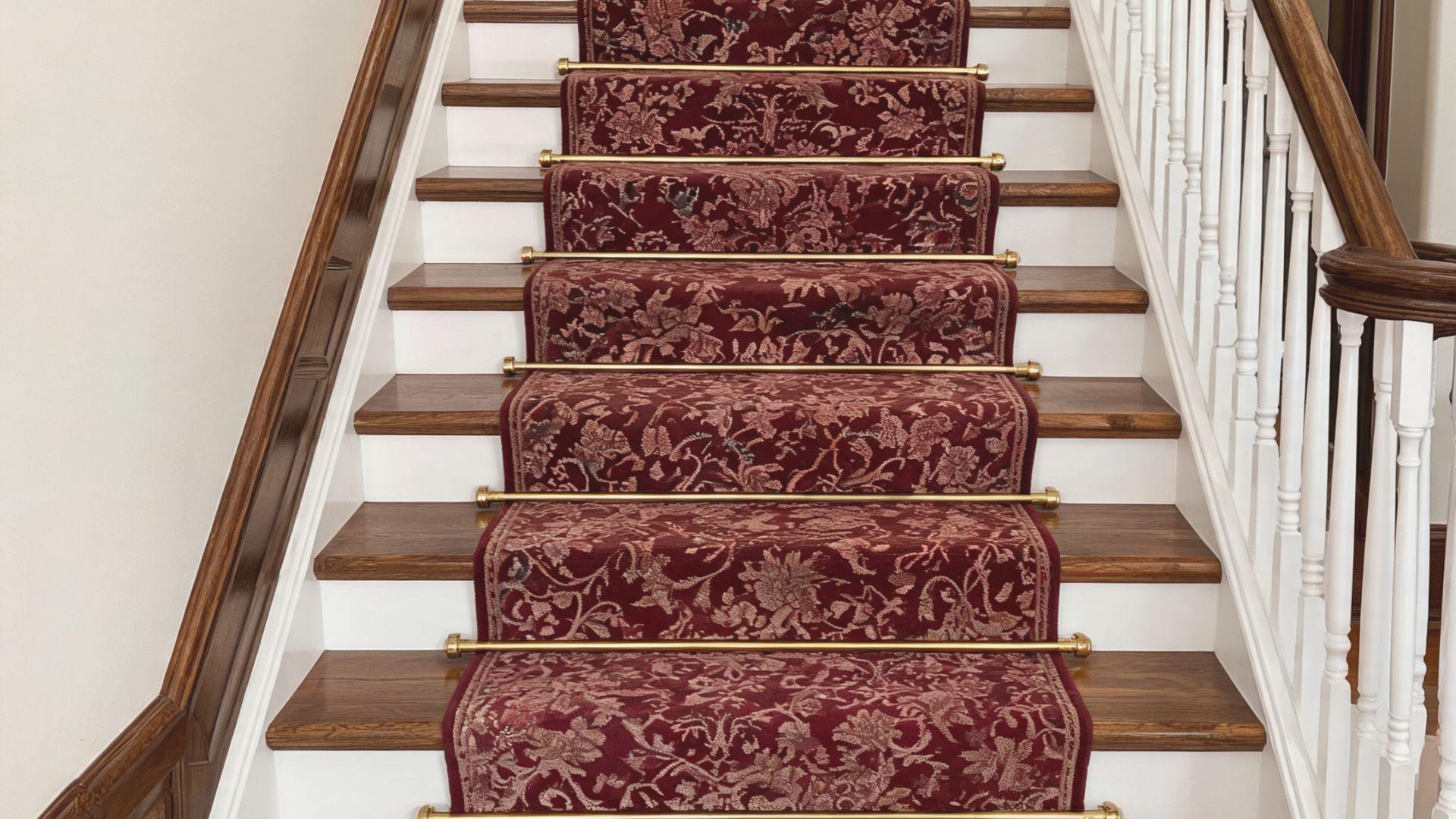
Traditional homes lean into richer patterns, from classic florals to tartan-style checks, often paired with brass stair rods at the base of each riser.
A tan or burgundy runner against white painted risers reads as a classic combination that works in older homes with original millwork.
Farmhouse and Natural-Fiber Stair Runner Ideas
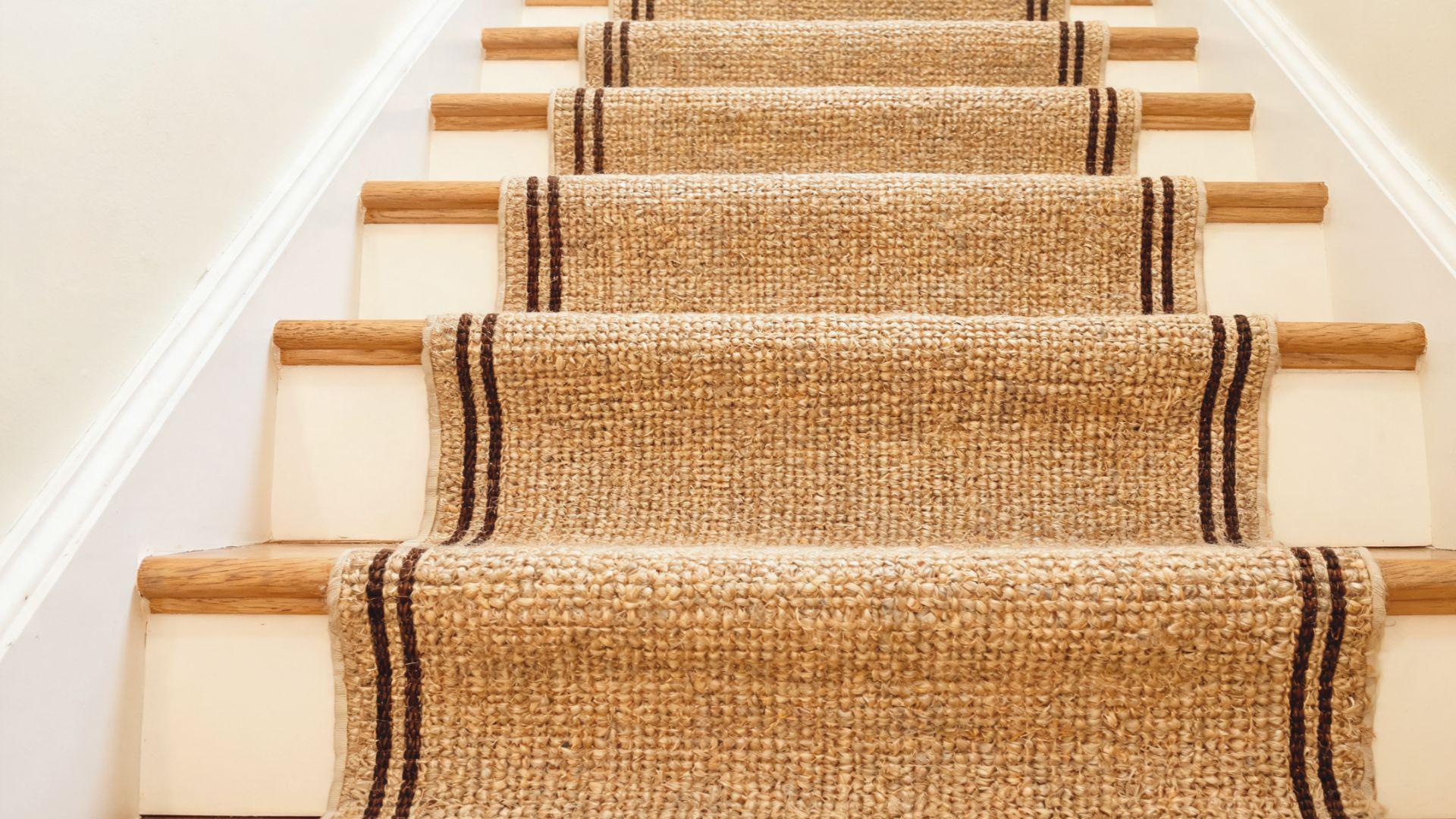
Sisal, jute, and wool-sisal blends suit farmhouse and country interiors because of their visible weave and warm, undyed tones.
These runners pair naturally with wood stairs and work well with striped or herringbone borders for added texture without introducing bold color.
Minimalist Stair Runner Ideas
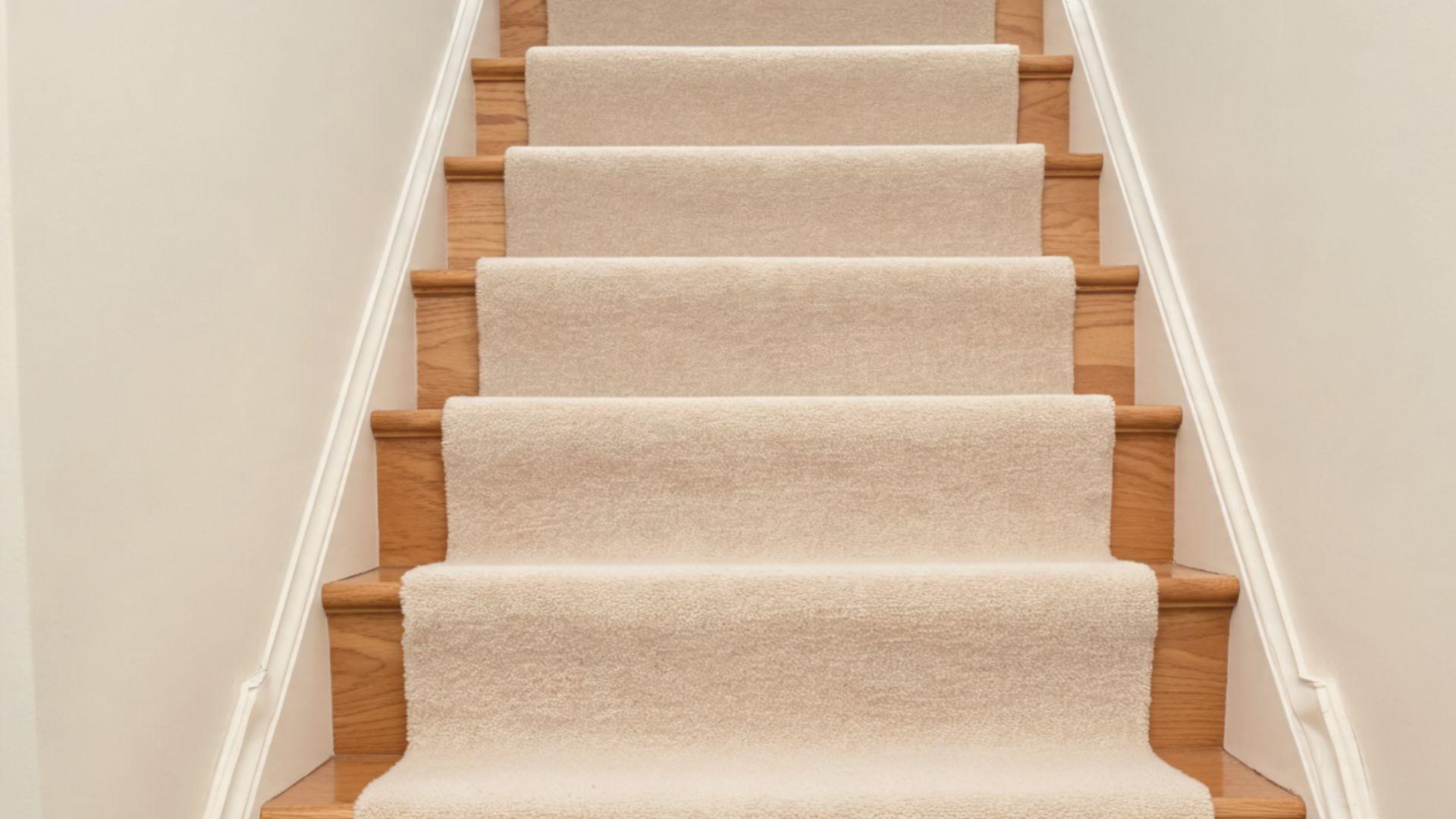
A minimalist staircase calls for one solid, muted color and no border detail at all, letting the staircase itself, not the runner, do the visual work.
Gray, oatmeal, and soft taupe are common picks because they read as neutral without going stark white, which shows dirt fast on stairs.
Stair Runner Pattern Ideas
Patterns do more to set a staircase’s personality than color or material on their own.
Striped Stair Runners
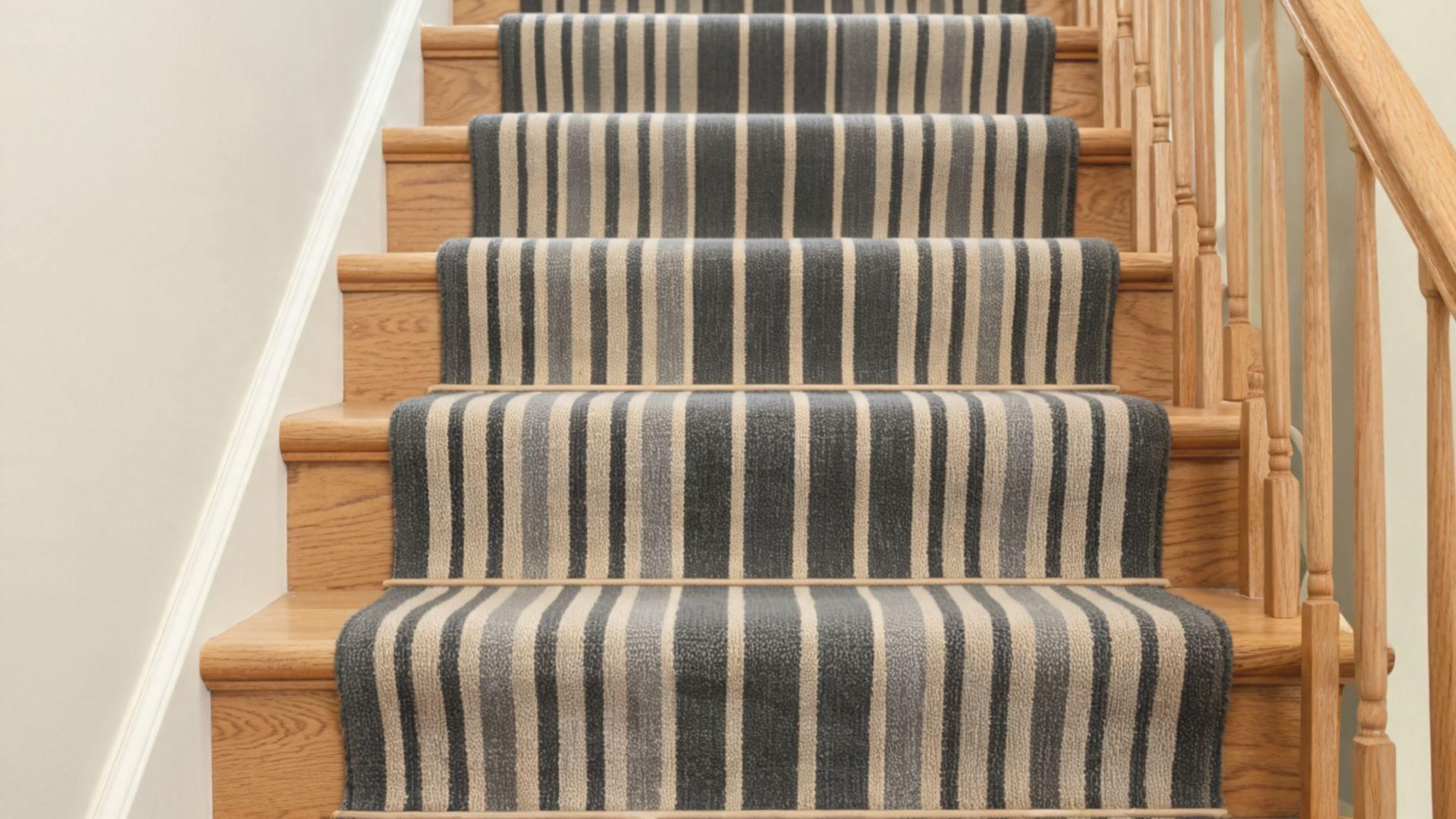
Stripes are one of the most popular stair runner patterns because they read as intentional on a vertical surface and suit both traditional and modern homes.
A narrow stripe in two tones tends to look more current, while a wide, bold stripe pairs well with period homes and brass stair rods.
Herringbone and Chevron Patterns
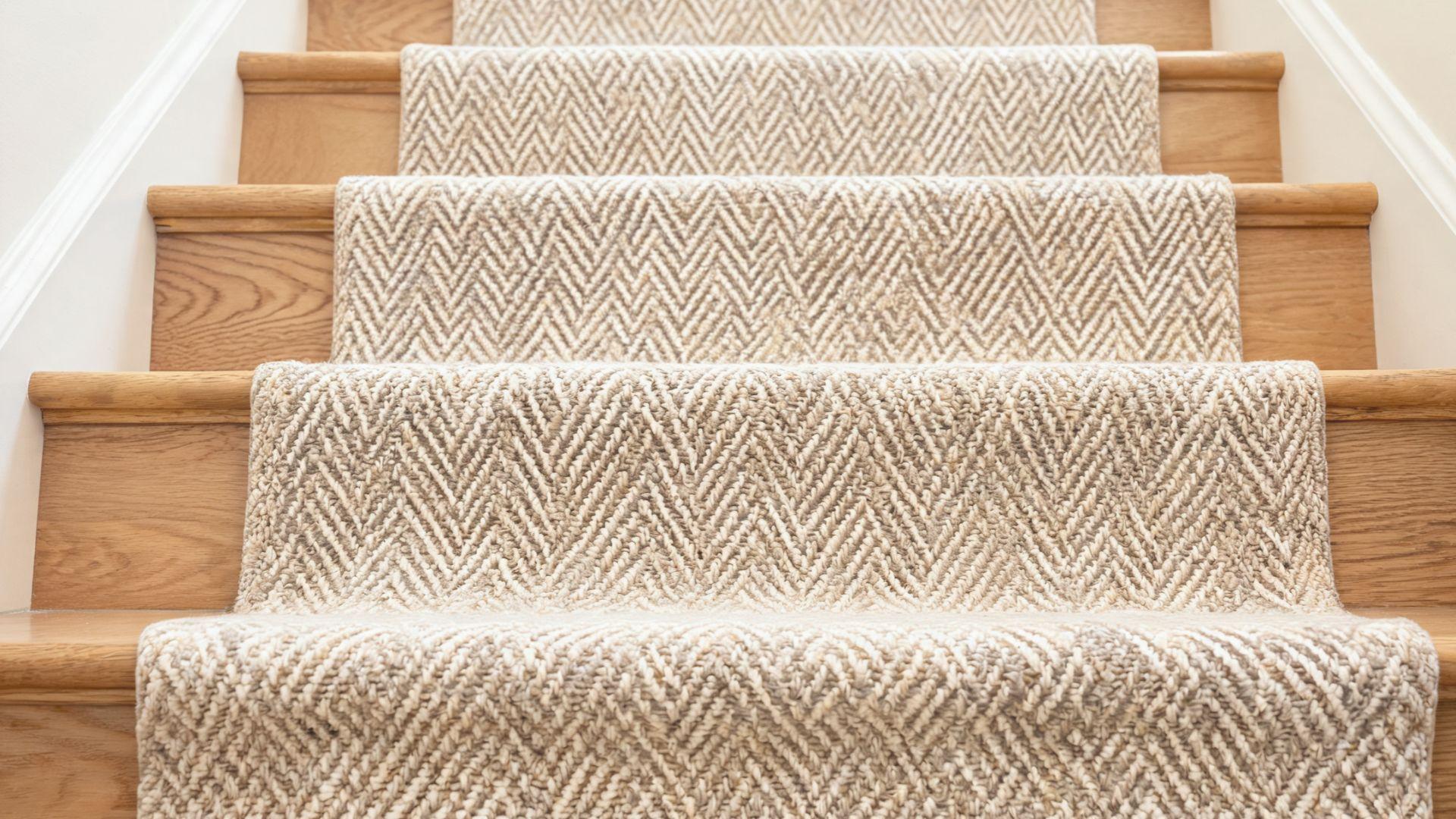
Herringbone and chevron weaves add movement to a staircase without relying on color, which makes them a good fit for homes that already have a lot of pattern elsewhere.
The angled weave also helps disguise wear in the center of each tread, where foot traffic concentrates.
Geometric and Checkerboard Designs
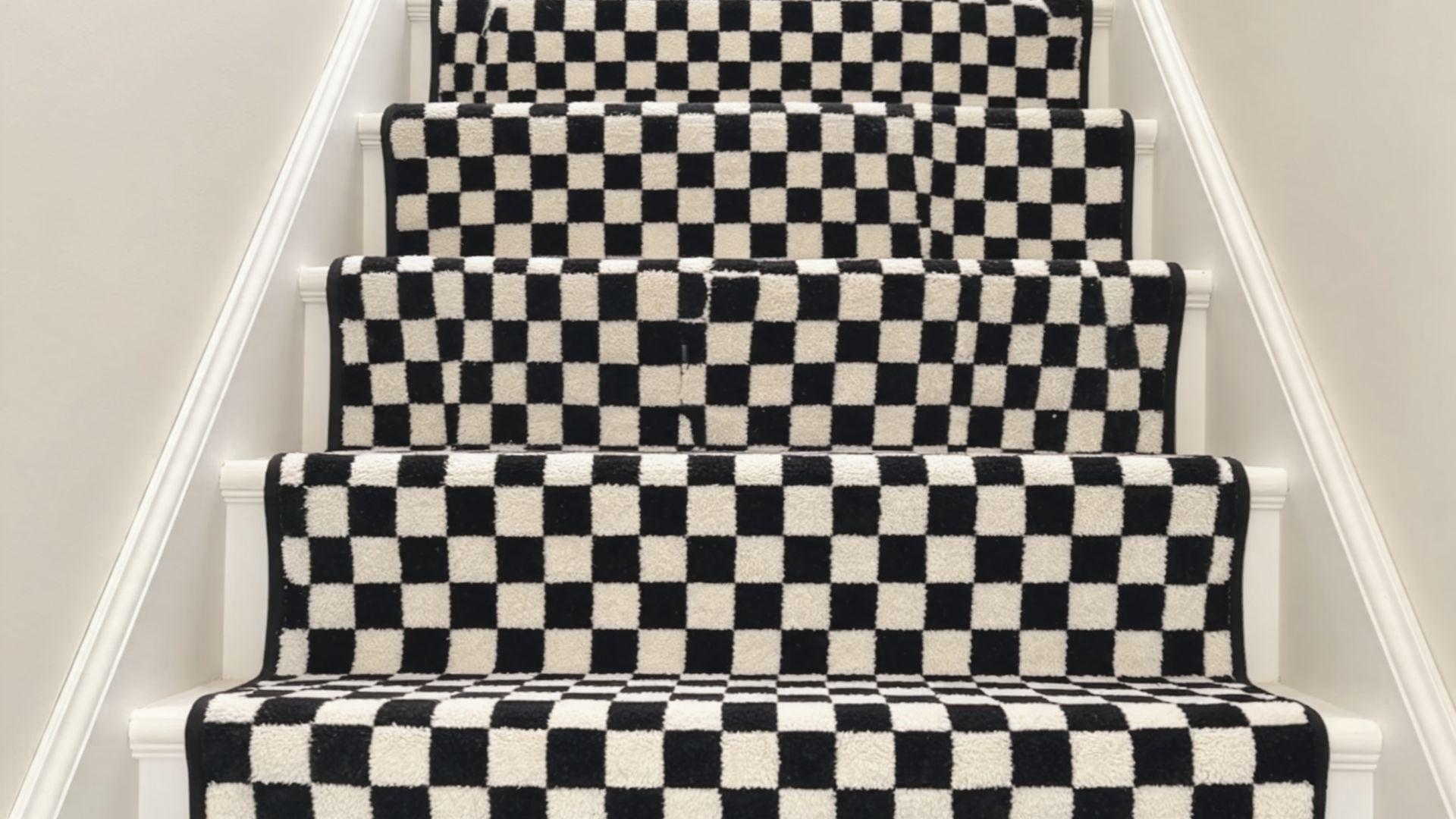
Checkerboard and other graphic geometric prints work best on straight staircases with simple white or black trim, since the pattern itself carries the design.
These runners photograph well and suit entryway staircases meant to make a strong first impression.
Floral and Classic Printed Runners
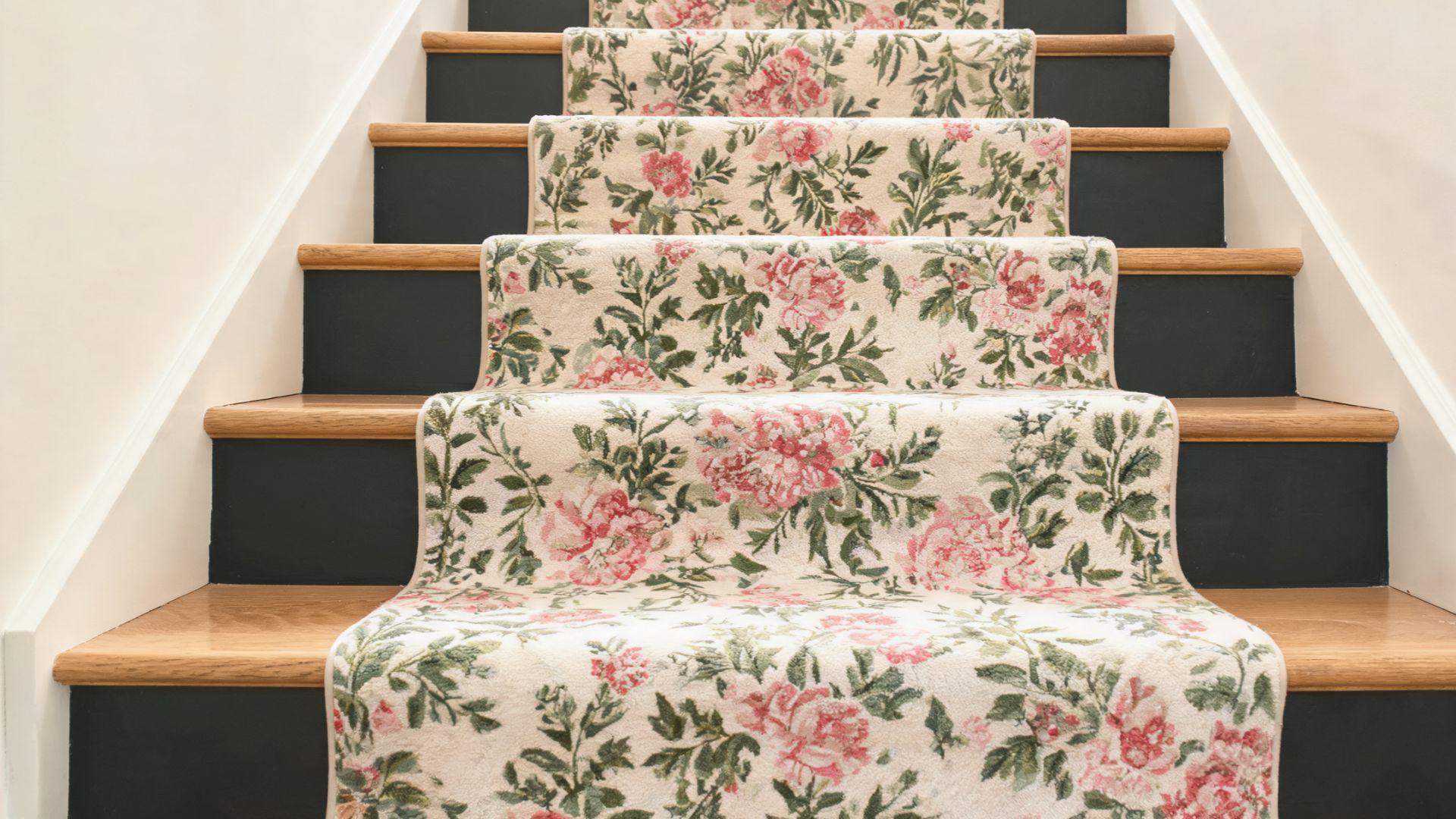
A floral runner, inspired by the animal-print and botanical looks turning up in current stair makeovers, adds personality to a hallway staircase and works particularly well against solid wood tones or dark painted risers.
Keep the surrounding decor simpler when the runner carries a busy print.
Solid Colors and Textured Patterns
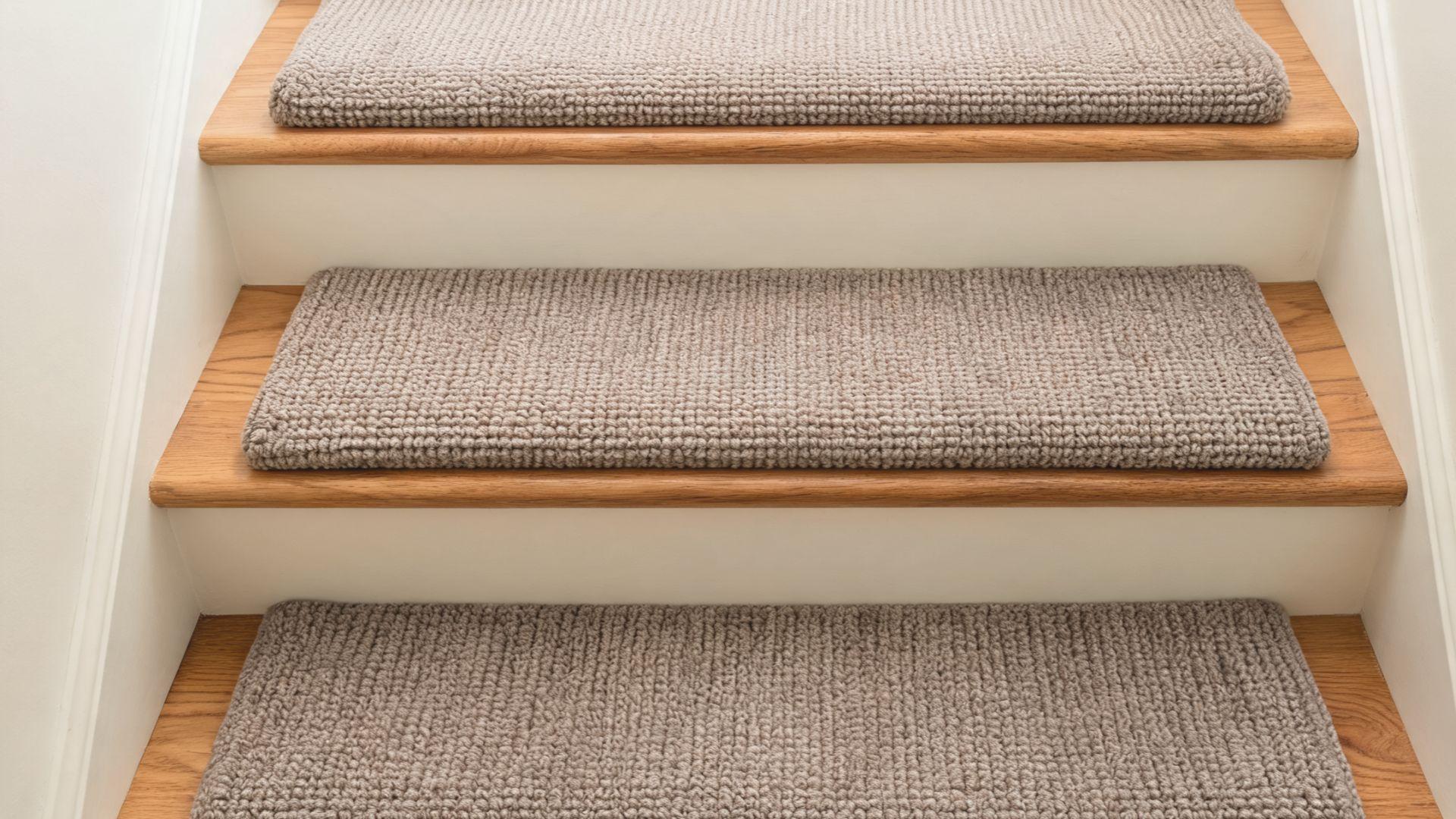
A solid-color runner in a textured weave, like a cut-and-loop or ribbed wool, adds visual interest through texture rather than print, which makes it a flexible choice for a home that changes its decor often.
Solid runners also show less visible wear than flat patterns over time.
Stair Runner Color Ideas
Color choice usually comes down to how much contrast you want against your stairs, walls, and trim.
Neutral Stair Runners in Beige, Gray, and Cream
Neutral tones remain the safest long-term choice because they work with changing wall colors and furniture over the years.
Beige and warm gray in particular hide everyday dust and light soiling better than pure white or very dark shades.
Bold Colors Like Navy, Green, and Burgundy
Navy, forest green, and burgundy runners have become a signature move in recent staircase makeovers, adding drama to an entryway without the commitment of painting an entire wall.
These colors also tend to hide stains and pet hair better than pale neutrals.
Black-and-White Stair Runner Combinations
A black-and-white runner, whether striped, checked, or geometric, gives a staircase strong contrast and pairs with nearly any trim color.
This combination works especially well on painted white stairs, where the contrast reads cleanly from the entryway.
Runner Colors for Light and Dark Wood Stairs
Light oak and maple stairs generally pair best with mid-tone or darker runners, since pale colors on pale wood tend to wash the staircase out.
Dark walnut or stained stairs have more flexibility and can carry anything from a cream runner to a bold jewel tone.
Stair Runner Ideas for Different Staircase Layouts
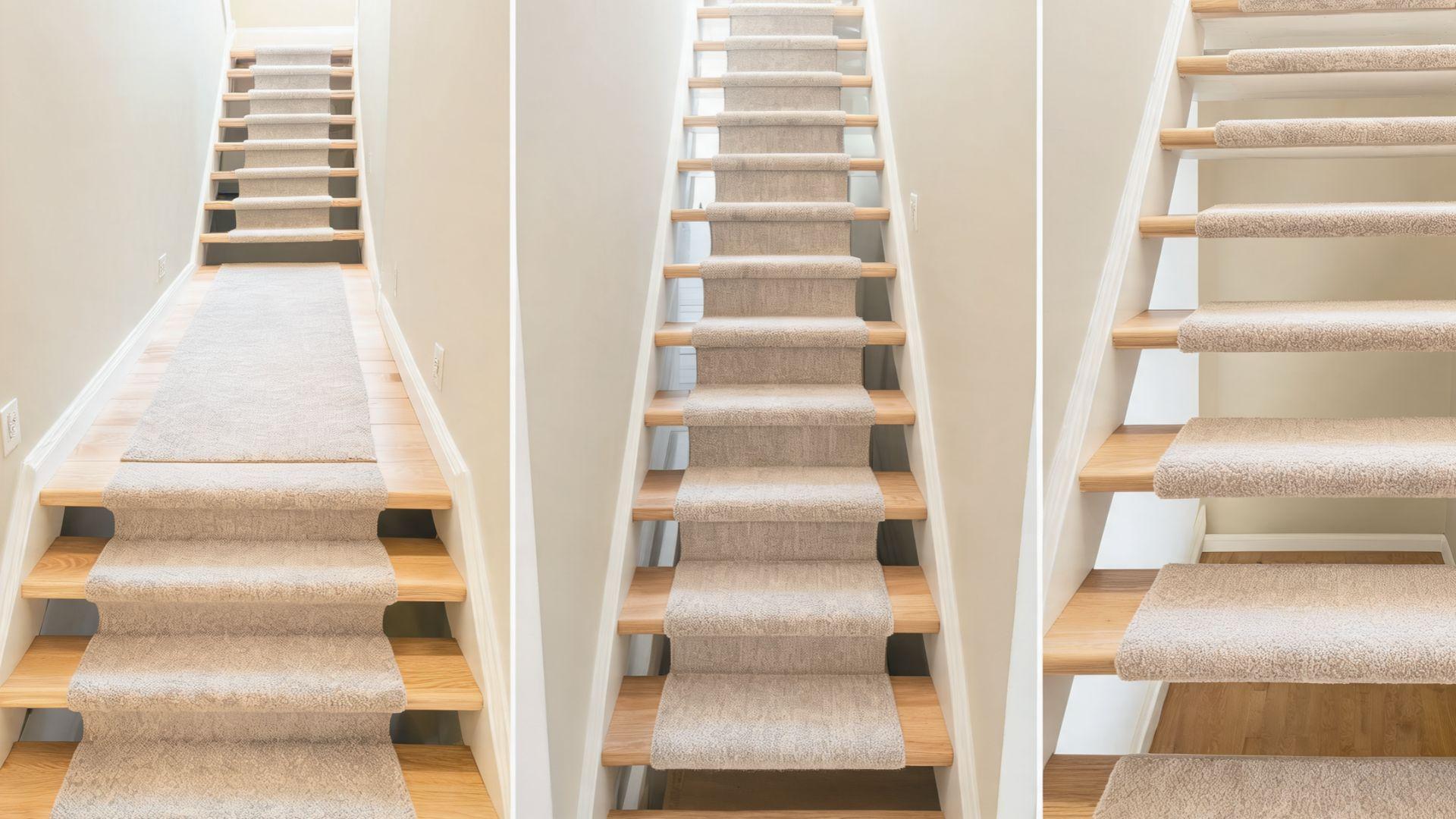
A staircase’s shape has as much say in which runner works as the style of the home around it.
Stair Runner Ideas With a Landing
A landing breaks the visual line of a runner, so many homeowners choose a design where the pattern or stripe direction shifts slightly at the turn, or the runner simply continues straight across the landing floor before resuming on the next flight.
Matching the runner width to the landing’s available space keeps the look continuous.
Runner Ideas for Narrow Staircases
On a narrow staircase, a runner in the 24 to 26 inch range with a simple stripe or solid color tends to look more balanced than a wide, busy pattern, which can make the space feel tighter.
Leaving at least two to three inches of visible tread on each side also keeps the stairs from feeling closed in.
Stair Runner Ideas for Open-Riser Stairs
Open-riser stairs, where the back of each step is left exposed, need a runner that is securely stapled or tacked on the tread’s underside edge rather than relying on grippers alone.
A flatweave material works better here than a thick pile, since there is less material to secure at that open edge.
Can You Put a Stair Runner Over the Carpet?
Yes, a runner can go directly over existing stair carpet if it’s measured to leave one to two inches of carpet visible on each side and secured with staples or carpet tacks, not just adhesive tape.
This works best when the carpet underneath is still in good shape but looks dated, or when a household wants extra cushioning on high-traffic stairs without replacing the whole covering.
Measure each tread wall to wall, subtract two to four inches total so the runner sits centered, then staple it where the tread meets the riser, or use a double-sided rug pad rated for stairs.
Two unsecured layers can shift underfoot, and stairs, ramps, landings, and floors made up 69% of all home injuries in the “home, structures and construction” category in 2024, according to a National Safety Council analysis of CPSC injury data.
If the old carpet is worn or loose, replace it first, or skip layering and install a single new runner instead.
Stair Runner Materials and Finishing Details
Material affects how a runner feels underfoot and how well it holds up over years of daily use.
Wool and Wool-Blend Runners
Wool holds color well, resists crushing under daily foot traffic, and is a common choice for homes going for a traditional or farmhouse look.
Wool-blend runners mix in nylon for added durability at a lower price point than pure wool.
Sisal, Jute, and Other Natural-Fiber Runners
Natural-fiber runners bring texture and a casual, grounded look but can be rougher underfoot and less forgiving of spills than wool or synthetic options.
They tend to suit lower-traffic staircases or homes without small children walking the stairs barefoot.
Nylon and Synthetic Runners
Nylon and polypropylene runners resist stains, cost less than wool, and hold up well in households with kids or pets.
A nylon cut-pile in the 0.15 to 0.25 inch range is a common recommendation for stairs because it balances cushioning with a stable, non-bunching surface.
Contrasting Borders, Binding, and Stair Rods
A contrasting binding, whether a thin cotton tape or a wider fabric border, frames a runner and gives it a finished, tailored look.
Stair rods, typically brass or matte black, hold the runner in place at the back of each riser and add a decorative detail that also keeps the runner from shifting.
How to Choose the Right Stair Runner
Narrowing the final decision down comes to three practical factors, not just which design you like most.
- Match durability to foot traffic and pets: A high-traffic staircase used daily by a large household or active dogs needs a tight, low-pile wool-blend or nylon weave in a darker or patterned color that hides soil. A lightly used staircase has more room for delicate natural fibers or pale solid colors.
- Compare cost, cleaning, and maintenance: Polypropylene and nylon runners are generally the least expensive option and clean easily with regular vacuuming. Wool and custom bound runners cost more upfront but tend to last longer and resist matting.
- Check grip and installation requirements: Confirm whether the staircase needs a runner pad for cushioning and grip, or whether the material and attachment method alone provide enough traction. Winding or curved stairs generally need a professional fitter, since pattern matching around the turn is difficult to get right.
Choosing a Stair Runner That Fits Your Home
A stair runner should match three things at once:The staircase’s own proportions, the style of the rooms it connects, and the amount of traffic it needs to survive.
Working through pattern, color, and material in that order, rather than picking a runner on looks alone, tends to produce a staircase that still works five years from now.
Whether the goal is a bold striped runner for a traditional entryway or a simple wool-blend solid for a busy family stairway, measuring correctly and securing the runner properly will do as much for the finished look as the design itself.
Frequently Asked Questions
What are the top stair runner trends for 2026?
Bold colors like navy and green, wool and wool-blend flatweaves, and statement patterns such as checkerboard or animal print are leading 2026, alongside a sharp rise in homeowners installing runners on bare staircases.
What can you put on stairs instead of carpet?
Alternatives include refinished hardwood, painted treads, tile, vinyl plank, or rubber stair treads. A partial runner over exposed wood also works, adding grip and sound control while keeping wood visible on both sides.
Is it a good idea to put a carpet runner on the stairs?
Yes, when measured and secured correctly. A runner adds grip, cuts noise, and protects the stair surface, though a poorly fastened or oversized runner can become a trip hazard instead of a safety upgrade.
Are stair runners suitable for homes with dogs?
Yes. Low-pile nylon or wool-blend runners in a darker or patterned color hide hair and dirt well and resist claws better than thick, loose-pile materials, which tend to snag.
Can you install a stair runner yourself?
Yes, for straight staircases with basic tools, staples, and stair rods. Winding staircases or runners that need a pad underneath are harder to fit and usually better left to a professional.